Bibb County Georgia Mulberry Street Arts and Crafts Festival
For one spring weekend, a stretch of downtown Macon becomes an open-air gallery. The Bibb County Georgia Mulberry Street Arts and Crafts Festival fills Mulberry Street with juried makers, handmade goods and families moving slowly from booth to booth. Macon is the county seat of Bibb County, and the gathering trades traffic lanes for display tables and conversation. A single street becomes a temporary marketplace for Middle Georgia craft, where a shopper can compare leatherwork, ceramics and clothing within a few steps and speak directly with each maker.
About the Festival
The festival is organised by the Middle Georgia Art Association. The organiser presents the gathering under the published name Mulberry Street Arts & Crafts Festival on its own site. Local news and magazine coverage use the form Mulberry Street Arts and Crafts Festival, while the organiser shortens the name to Mulberry Street Festival and to MSF on parts of its own page. Those forms are kept distinct here because they are printed distinctly in the sources, but none describes a separate event.
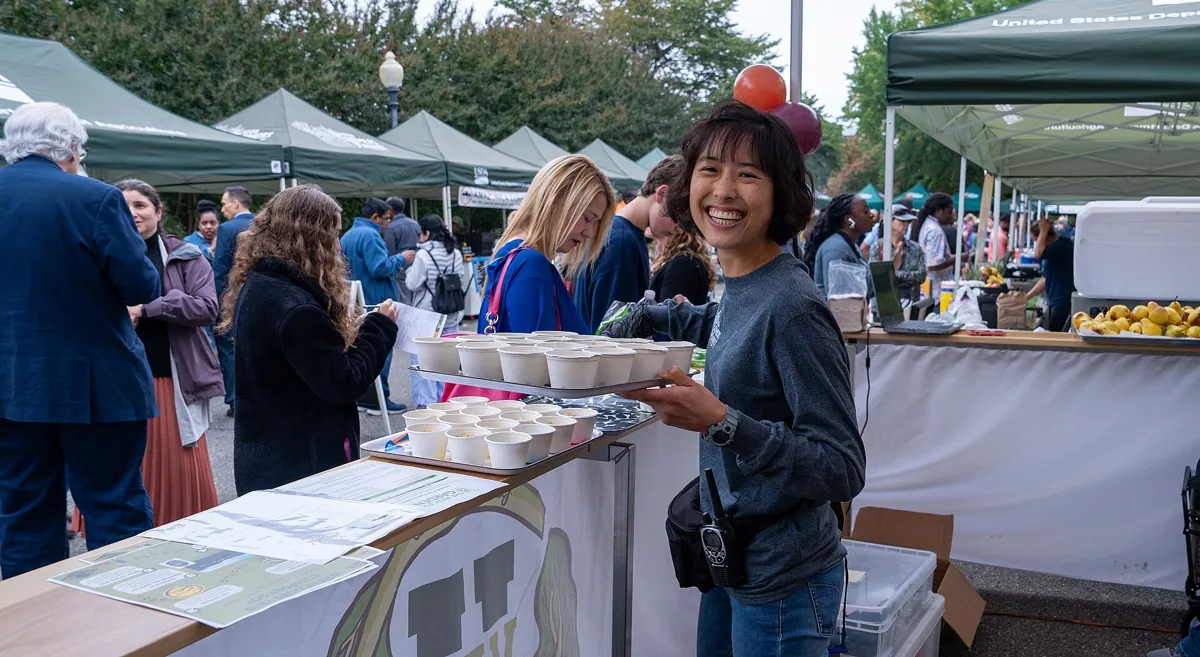
At its core, the occasion is a juried arts and crafts market held outdoors. The organiser describes it as family-friendly, and entry is billed as free. Because no ticket stands between a passerby and the first row of booths, the crowd mixes committed collectors with downtown visitors who stayed after seeing the displays.
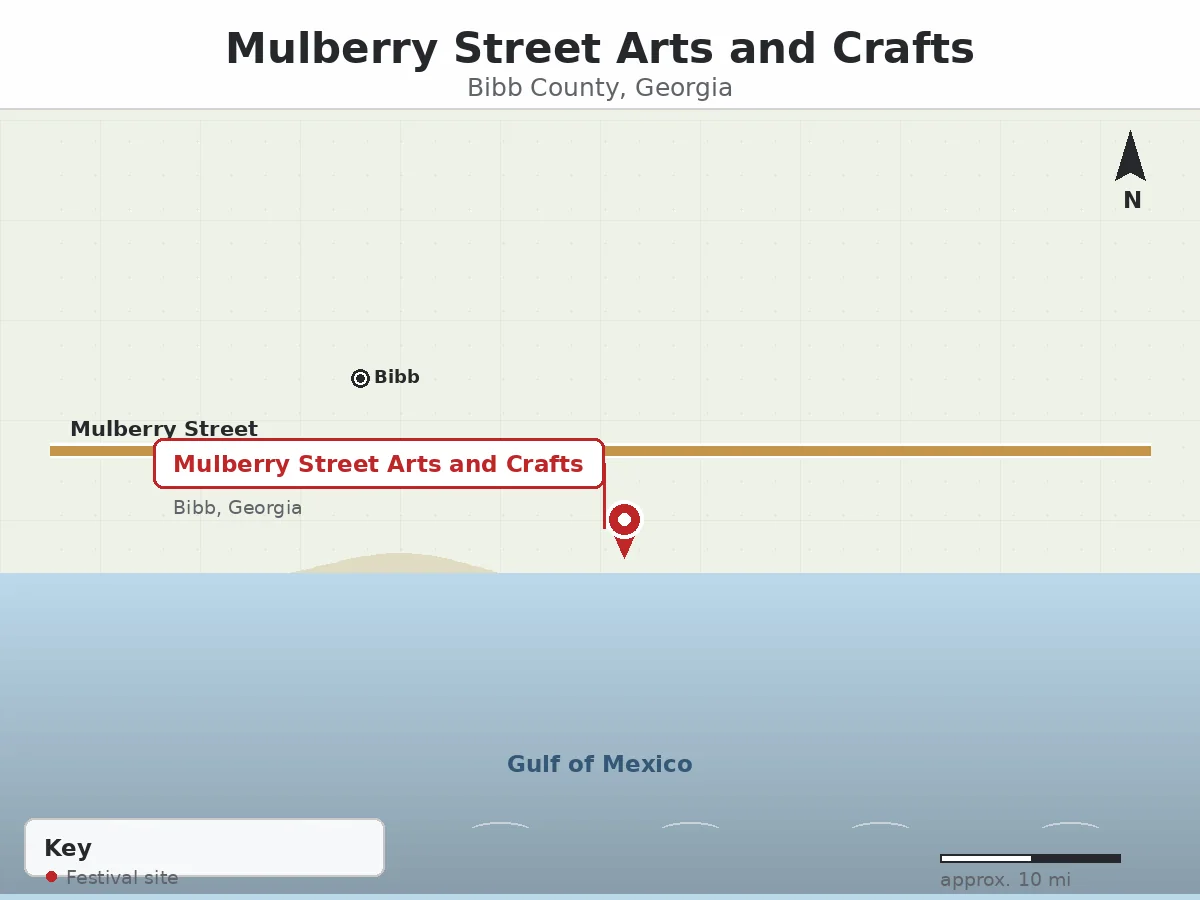
A listing that reproduces organiser wording places the festival on Mulberry Street between Second Street and Broadway in downtown Macon, and magazine coverage likewise locates it along Mulberry Street downtown. The street itself becomes the venue, so the experience unfolds as a walk rather than a single hall.
Quick Facts
| Item | Detail |
| Published name | Mulberry Street Arts & Crafts Festival |
| Organiser | Middle Georgia Art Association |
| Host city | Macon, the county seat of Bibb County |
| Venue | Mulberry Street between Second Street and Broadway, downtown Macon |
| Admission | Free, as billed by the organiser |
| Organiser billing | Oldest arts and crafts festival in Middle Georgia |
| Edition billed as fiftieth year | The 2020 edition, in a magazine layer |
| Documented 2021 edition | March twenty-seven and twenty-eight, with controlled entry points |
| Documented 2025 edition | March twenty-nine and thirty |
| Next edition as published | March twenty-seven and twenty-eight, 2027 |
History and Background
Any honest history of this festival begins with a limit, because the material gathered does not state a founding year. Instead, the published record offers two billings, and both must be left exactly as billings. The organiser calls the gathering the oldest arts and crafts festival in Middle Georgia, using capital emphasis for the superlative on its own page. A Macon magazine published in February and March of 2020 billed that year’s edition as the fiftieth year. Neither statement supplies a founding date, and this account does not manufacture one from arithmetic.
For a useful comparison, see the Montgomery County Alabama Pumpkin Festival for another county festival.
Those claims still form part of the festival’s public identity, but readers should hold them as the organiser’s and the magazine’s characterisations rather than as a verified timeline, because the underlying early editions are not documented in the material at hand.
The dated record becomes firmer nearer the present decade. The magazine layer gives planned dates of April four and five in 2020, yet the wider 2020 season was disrupted by the pandemic, so those dates are recorded here as plans rather than proof that the weekend unfolded exactly as announced.
By the following spring, a local news layer documents an edition that plainly did take place. The festival was held on March twenty-seven and twenty-eight in 2021, and the precautions of that period shaped its layout, including four entrance and exit points for the street. That detail anchors the festival’s modern history in a specific, reported adaptation.
Later editions extend the documented line without filling every gap. A listing reproducing organiser wording records March twenty-nine and thirty in 2025, running from Saturday morning at ten o’clock through Sunday afternoon at five o’clock in that layer’s printed form. The organiser’s own site then publishes March twenty-seven and twenty-eight in 2027 as the next edition.
One further thread belongs to the 2020 layer alone. A local magazine named Theresa Trail and Elaine Foy as festival directors for the 2020 edition. Those names are fenced to that year and that layer, and they are not carried forward here as standing leadership for later editions.
What to Expect
Expect a street market first and a spectacle second. The pleasure lies in browsing at close range and finding objects that carry the mark of a single pair of hands. Because the displays stand outdoors along a downtown street, the atmosphere stays informal, and the order of your discoveries can be set by curiosity rather than by a stage programme.
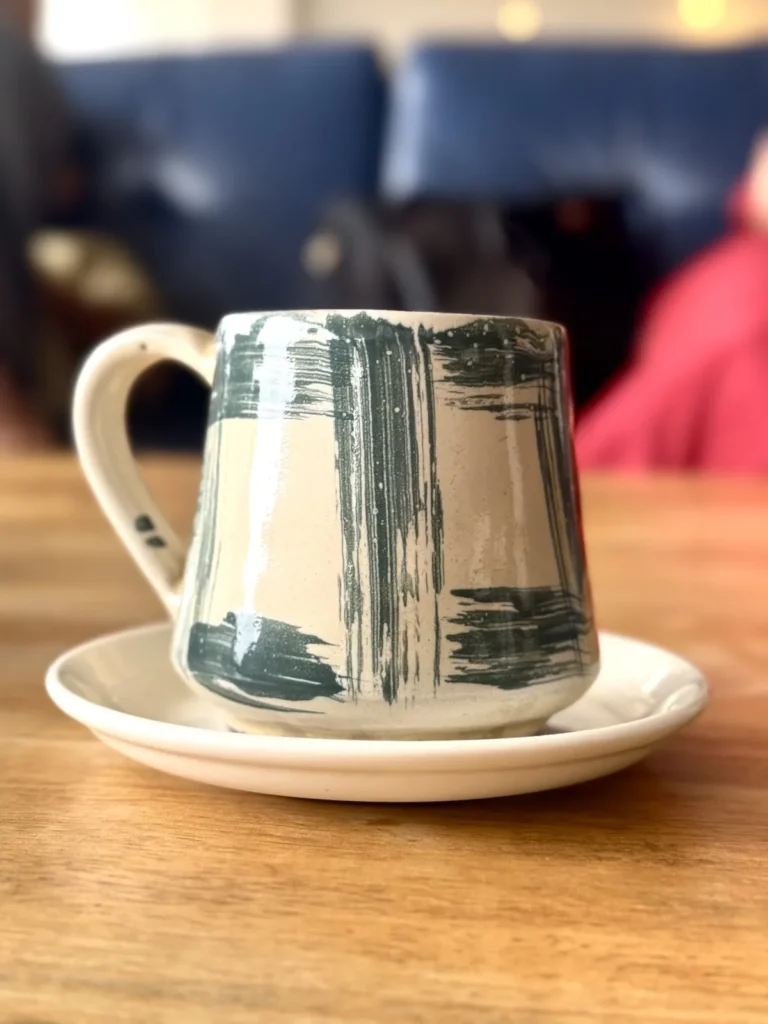
The clearest picture of the range on sale comes from the 2025 layer. A local magazine reported more than one hundred juried vendors that year and singled out leatherwork, painted ceramics and handcrafted clothing. The word juried matters, because it tells visitors that sellers were selected rather than simply admitted. That vendor figure belongs to the 2025 account, not to every edition.
An earlier layer offers a different inventory. Local news coverage of the 2021 edition listed rugs, rings, soaps, hand-painted art, ceramic pieces and jewelry among the wares. Set beside the 2025 examples rather than merged with them, the two lists suggest recurring breadth while respecting that each was reported for its own year. A visitor should anticipate variety without assuming that a category named in one year will reappear in the next.
Hands-on activity appears through the 2020 magazine layer, which mentioned face painting, henna tattooing and candle making. Those elements point to a family dimension beyond shopping, but they are documented for 2020 only, not as guaranteed features of a future weekend.
Crowd size is the one expectation to hold most loosely. No counted attendance figure is published. The organiser speaks of thousands of visitors and hundreds of vendors as a typical claim, reproduced here only as the organiser’s billing, never as a measured total for any single year.
Planning Your Visit
Good planning begins with the street itself. Because the venue is Mulberry Street between Second Street and Broadway, picture the visit as a downtown walk with a defined spine, entering at one end and working along the booths rather than arriving at a single gate.
The next edition as published by the organiser falls on March twenty-seven and twenty-eight in 2027, and earlier documented editions also sat in late March or, in the planned 2020 case, in early April. Spring weather in Middle Georgia can shift across a weekend, so removable layers, comfortable shoes for pavement and a bag for purchases will serve you well. Confirm the hours for the edition you plan to attend, because the hours printed for 2025 belong to that year alone.
Budgeting is straightforward at the gate and open-ended at the booths. Admission is billed as free by the organiser, and a listing layer repeats that free admission, so no ticket purchase stands at the start of the visit. Spending depends on what catches your eye, which is why it helps to walk the full street once before buying.
Families will find the format forgiving. The organiser bills the gathering as family-friendly and the setting is outdoors, but the most reliable family plan stays flexible, with breaks built in and no assumption that a specific activity from a past year will be running.
One address warning is worth stating plainly. The Middle Georgia Art Association maintains a gallery address on Ingleside Avenue, and that address belongs to the association. It is not the festival venue. For the festival itself, the destination is Mulberry Street downtown, between Second Street and Broadway.
A Sample Day at the Festival
Begin mid-morning, when the booths are open and the street still allows unhurried browsing. Walk the full length between Second Street and Broadway without buying anything, noting which makers draw you back. That first circuit tells you where your real interest lies.
Late morning is the moment to return to your shortlist. Speak with the makers whose work you marked, ask how a piece was made, and make your main purchases while you still have energy to choose well. If an activity for younger visitors is running during the edition you attend, pause for it here.
Take lunch away from the busiest stretch, rest your feet, and then make a final, slower pass in the afternoon. The last walk often reveals small pieces missed earlier, such as soap, jewelry or a modest print.
How It Compares
The most important comparison is also the easiest to misunderstand. A local magazine layer notes that this festival runs at the very end of, and alongside, Macon’s International Cherry Blossom Festival. The overlap makes the two feel like parts of one long celebration, and visitors may well encounter both. They remain entirely separate events. This gathering is organised by the Middle Georgia Art Association, an art association, while the cherry blossom celebration belongs to a different organisation altogether. Nothing from that neighbouring festival, not its dates, its prices, its programme or its published visitor estimates, belongs in an account of the Mulberry Street market, and none is imported here. Shared season, shared city, different organisers and different purposes.
Two further events help define this festival by contrast, and they are named here for comparison only. The Macon Mural Festival and the First Street Art & Wine Festival are distinct Macon arts occasions associated with the Macon Arts Alliance. Neither is a version of the Mulberry Street gathering and neither shares its organiser.
Measured against a gallery exhibition, the difference is one of movement and encounter. A gallery asks you to stand before finished work in a quiet room. This festival asks you to walk, compare and converse, with the maker often present beside the display.
Visitor Checklist
- Confirm the dates of the edition you plan to attend from the organiser’s current published listing
- Head for Mulberry Street between Second Street and Broadway in downtown Macon
- Do not navigate to the association gallery address on Ingleside Avenue by mistake
- Wear shoes suited to a long walk on city pavement
- Bring a sturdy bag for carrying purchases back along the street
- Walk the full route once before making your first purchase
- Carry a layer you can add or remove as spring weather changes
- Note the booth positions of makers you want to revisit
- Keep past years’ activity lists as background rather than promises
- Allow unplanned time simply to browse and talk with makers
Beyond the Festival
A visit to Mulberry Street naturally opens onto the rest of downtown Macon. Because the market occupies a central street rather than a fenced ground, the boundary between festival and city stays porous, and the hours before or after browsing can be given to the surrounding blocks. Macon is the county seat of Bibb County, and its downtown carries the everyday business of the county alongside its cultural life, so a festival weekend shows visitors both faces at once.
The trip also offers a way into Middle Georgia’s wider making culture. The goods documented in the festival’s own layers reflect skills practised across the region all year, not invented for a single weekend. A purchase made here therefore travels home as more than a souvenir.
Why the Festival Matters
The significance of this gathering rests on three grounded points. First, it gives independent makers a juried, public setting in the middle of the county seat, where their work meets an audience that might never enter a gallery. Second, it keeps a downtown street in active cultural use, as a place of exchange that is commercial, social and artistic at once. Third, it carries a public identity built on longevity, expressed through the organiser’s billing as the oldest arts and crafts festival in Middle Georgia and the magazine billing of 2020 as a fiftieth year. Those billings are claims rather than a documented founding record, but they still show how a community regards its own tradition.
There is also a quieter significance in the festival’s adaptability. The 2021 edition, held with four entrance and exit points under pandemic precautions, shows a market adjusting its form while continuing to trade.
Frequently Asked Questions
Who organises the Mulberry Street gathering in Macon?
The Middle Georgia Art Association organises the festival. A local magazine named Theresa Trail and Elaine Foy as festival directors, but that credit belongs specifically to the 2020 edition and is not presented as the leadership of any later year.
Which part of Mulberry Street does the market occupy?
A listing that reproduces organiser wording places the festival on Mulberry Street between Second Street and Broadway in downtown Macon. The association’s gallery address on Ingleside Avenue is a separate location and is not where the festival happens.
What kinds of handmade goods have been reported on sale?
The answer depends on the year being described. A 2025 magazine layer reported more than one hundred juried vendors and named leatherwork, painted ceramics and handcrafted clothing, while 2021 news coverage listed rugs, rings, soaps, hand-painted art, ceramic pieces and jewelry. The lists are kept apart by year rather than blended.
Is there a documented founding year for the festival?
No. No source in the material gathered states one. The organiser bills the event as the oldest arts and crafts festival in Middle Georgia, and a 2020 magazine billed that edition as the fiftieth year, but neither billing is converted into a founding date here.
What to Expect From the Next Bibb County Georgia Mulberry Street Arts and Crafts Festival
How often is Bibb County Georgia Mulberry Street Arts and Crafts Festival held?
The documented modern editions fall in spring, with a held edition recorded in March 2021, another across March twenty-nine and thirty in 2025, and the next edition published for March 2027. The planned 2020 dates sat in early April. Readers should rely on the organiser’s published dates for any given year rather than assuming an unbroken yearly record.
When is the next Bibb County Georgia Mulberry Street Arts and Crafts Festival?
The organiser’s site publishes March twenty-seven and twenty-eight in 2027 as the next edition. Those dates are the ones to plan around until the organiser prints anything newer.
Will the dates change?
Published dates can always be revised by an organiser, and this festival’s own record shows why caution is sensible, since the 2020 season was disrupted after April dates had been printed in a magazine layer. Checking the organiser’s current listing close to the weekend remains the surest confirmation.
A Final Word
The Bibb County Georgia Mulberry Street Arts and Crafts Festival earns its place in Macon’s calendar without needing exaggeration. Its record already contains a juried market on a downtown street, an art association as organiser, free admission as billed, and editions that adapted to hard years. Go for the makers, walk the street slowly, and let a handmade object carry the memory home.