Berrien Michigan Krasl Art Festival
Anyone who goes looking for a Berrien County event under the wording Krasl Art Festival will not find that name on the fair’s own publicity. The gathering that fills Lake Bluff Park in Saint Joseph each July is published as the Krasl Art Fair on the Bluff, shortened in news and university layers to Krasl Art Fair, and it is a juried outdoor art fair rather than a festival in the sense the sheet title implies. That distinction is worth stating plainly at the outset, because the fair has built a long and specific identity under its printed name, and visitors arrive expecting rows of juried artist booths above Lake Michigan rather than the stages and midway rides the word festival might suggest.
About the Fair
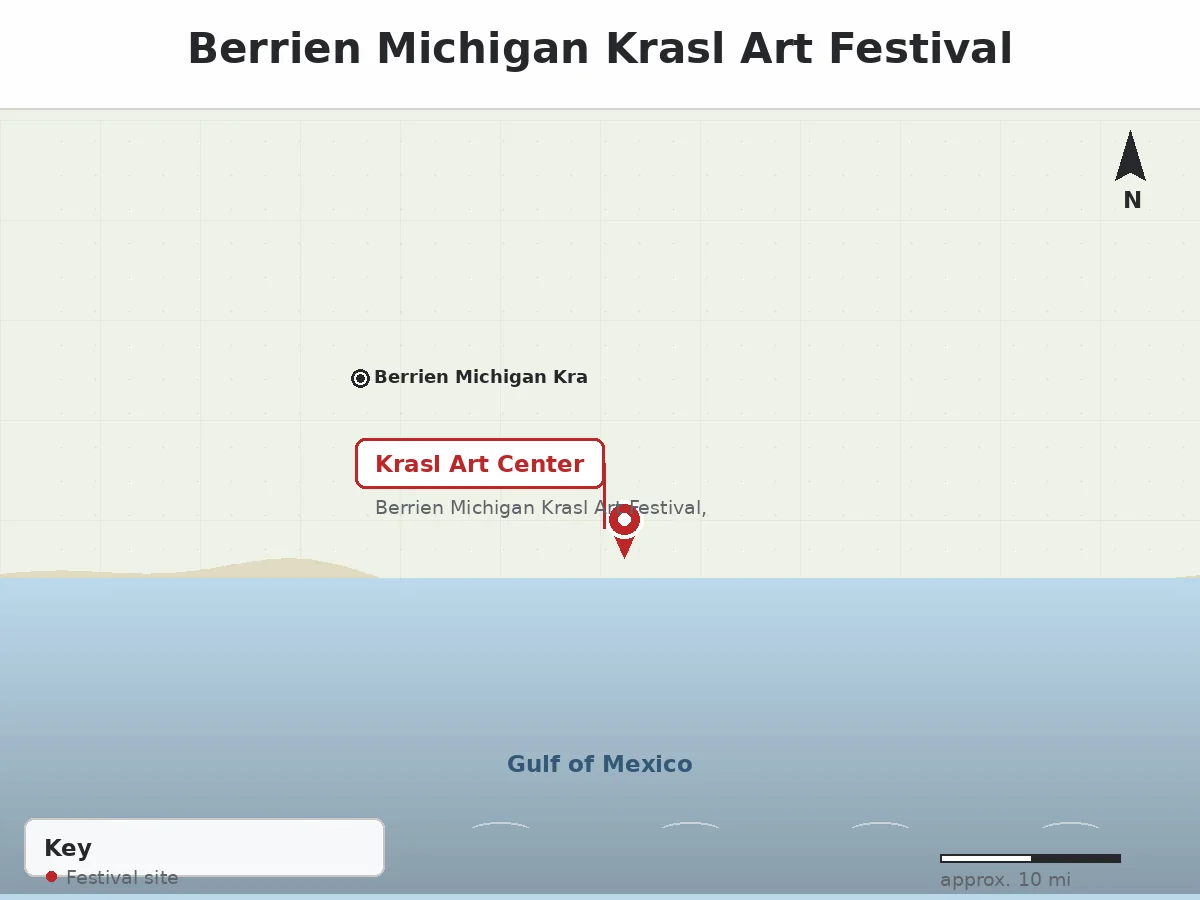
The organiser’s own layers and destination layers carry the full published form, Krasl Art Fair on the Bluff, while news and university layers use the shorter Krasl Art Fair. Printed billings vary across the material gathered: a sixtieth fair appears as “60th Krasl Art Fair on the Bluff”, another edition is billed “62nd Annual Krasl Art Fair on the Bluff”, and the most recent documented fair is printed both as “64th Krasl Art Fair” and as “64th annual Krasl Art Fair on the Bluff”. Those billings are reported here exactly as printed and are not merged into a single house style. The Krasl Art Center organises the fair. A bank wealth-advisory sponsor presents it, and that presenter billing changes from year to year, so the sponsor is described here by role rather than treated as part of the event’s name or as its organiser. Saint Joseph hosts the fair, and a county-seat reference layer lists Saint Joseph as the county seat of Berrien County, so the fair sits in the seat itself. The grounds are Lake Bluff Park, which overlooks Lake Michigan and stands across from the Krasl Art Center, while the Friday evening block party spreads over the art centre’s own grounds.
Destination layers present the bluff setting as part of the fair’s appeal, pairing the booths with the park’s open view over the lake, and the organiser’s own material returns to that setting whenever it describes the weekend. The art centre across the road is more than a neighbour, too: it organises the fair, hosts the opening party on its grounds and supplies an indoor counterpoint of galleries and free activities while the trading happens outdoors.
Quick Facts
| Item | Detail |
| Sheet title | Berrien Michigan Krasl Art Festival |
| Published name | Krasl Art Fair on the Bluff |
| Shorter published form | Krasl Art Fair |
| Host community | Saint Joseph, Berrien County |
| County seat status | Saint Joseph is the seat of Berrien County |
| Venue | Lake Bluff Park, across from the Krasl Art Center |
| Organiser | Krasl Art Center |
| Fair hours in 2026 | Ten in the morning until six in the evening on Saturday, ten until five on Sunday |
| Admission in 2026 | No admission fee in the organiser’s 2026 layers |
| Origins | Began as a clothesline art fair in 1962 |
History
The organiser’s layers and destination layers trace the fair back to a clothesline art fair organised in 1962 by local artists in Saint Joseph. Among those local artists, the layers name Olga Krasl, and the event’s later growth is tied in the same accounts to the progression of the art centre that now bears her family name and runs the fair. A clothesline fair is a modest format, with work hung for display outdoors, and the distance between that beginning and a juried fair of well over one hundred and seventy artists is the central arc of the event’s history. The annual billings printed in recent layers sit comfortably alongside the stated 1962 start: the fair held in 2022 was billed as the sixtieth, and the fair held in 2026 was billed as the sixty-fourth annual. The layers also preserve a “62nd Annual Krasl Art Fair on the Bluff” billing among the printed forms, recorded here exactly as it appears, without a dated edition being pinned to it in the material read. Those numbers are quoted here as printed billings only. They are consistent with the 1962 beginning the organiser describes, but this article does not use subtraction on edition numbers to manufacture a founding date, because the founding year is already stated directly in the layers themselves. What the layers do not supply is a detailed year-by-year chronicle of the intervening decades, so the history that can honestly be told is one of a stated beginning, a growing art centre, and a fair that kept its July place on the bluff while it expanded.
What to Expect
Rows of booths cover Lake Bluff Park for the fair weekend, each one holding the work of a juried artist, and the judging standard is described in the layers as rigorous, which means the artists on the grass have passed a selection process rather than simply renting space. For the 2026 fair the organiser’s announcement layers counted one hundred and seventy-two artists, and the wider material describes editions running from that figure up to nearly two hundred booths, with work spread across many media. The weekend starts before the fair proper opens: a kick-off Block Party runs on the Friday evening, from five until nine, on the grounds of the Krasl Art Center across from the park. On the Saturday and Sunday the booths are the main business, with visitors moving slowly along the rows, talking with artists and buying work directly from its makers. The art centre itself adds free art activities during the weekend, per the organiser and guide layers, giving children and casual visitors something to make as well as plenty to look at. A beer garden operates on the art centre’s grounds, and a 2026 guide layer notes a fee to enter it, separate from the fair at large. Across the street on the Saturday, a farmers market trades as a neighbouring event in its own right, close enough to combine with a fair visit but not part of the fair.
For a useful comparison, see the Berrien Michigan Blossomtime Festival for another county festival.
Browsing here is unhurried by design, since each booth amounts to a small one-person exhibition and many visitors treat a first circuit as reconnaissance before committing to a purchase. Work changes hands directly between artist and buyer, so questions about technique, materials or a possible commission go straight to the person who produced the piece standing in front of you.
Planning Your Visit
The best-documented recent edition is the sixty-fourth annual fair, held on Saturday 11 and Sunday 12 July 2026, with hours of ten in the morning until six in the evening on the Saturday and ten until five on the Sunday, preceded by the Friday block party on 10 July. For that 2026 edition, the organiser’s own layers state there is no admission fee and the fair is free to attend, with donations suggested or encouraged rather than required. That statement belongs to 2026 and is not carried backwards here: no admission position is documented in the layers read for earlier editions, so anyone checking an older year should treat its arrangements as unstated. Two paid extras sit alongside the free entry in the 2026 material. Collector and VIP packages are offered as paid options in the organiser’s layers, and the beer garden on the art centre grounds carries its own entry fee, noted in a 2026 guide layer. Shuttle service runs from two stops, according to the organiser and guide layers, which is worth knowing in a lakeside town where July parking fills quickly. Practical questions about a coming edition can be directed through the contact routes the organiser’s own layers carry, which include staff email and office contact routes; those routes exist, and this article notes them without printing any address or number.
Because the documented hours and the free-entry statement both come from the 2026 layers, a visitor planning for a different year should recheck each point against the organiser’s current announcement rather than treating this account as a standing promise. The block party’s five-to-nine Friday slot is likewise a 2026 detail, useful as a guide to the weekend’s shape but not a guarantee about how a future edition will be arranged.
A Sample Weekend Itinerary
Friday evening belongs to the Block Party on the art centre grounds, a relaxed first look at the weekend with the fair rows waiting across the way for the morning. Saturday works best started at the opening hour of ten, when the light on the bluff is good and the booths are at their freshest; a slow circuit of the rows, with a pause for the free art activities inside the art centre, fills the morning comfortably. Saturday afternoon can take in the farmers market across the street before returning to the booths for a second, more deliberate pass at pieces noticed earlier. Sunday runs from ten until five and suits a shorter visit: revisit favourite artists, settle any purchase left undecided, and leave time to enjoy the lake view from the park before heading out of Saint Joseph.
How the Fair Compares
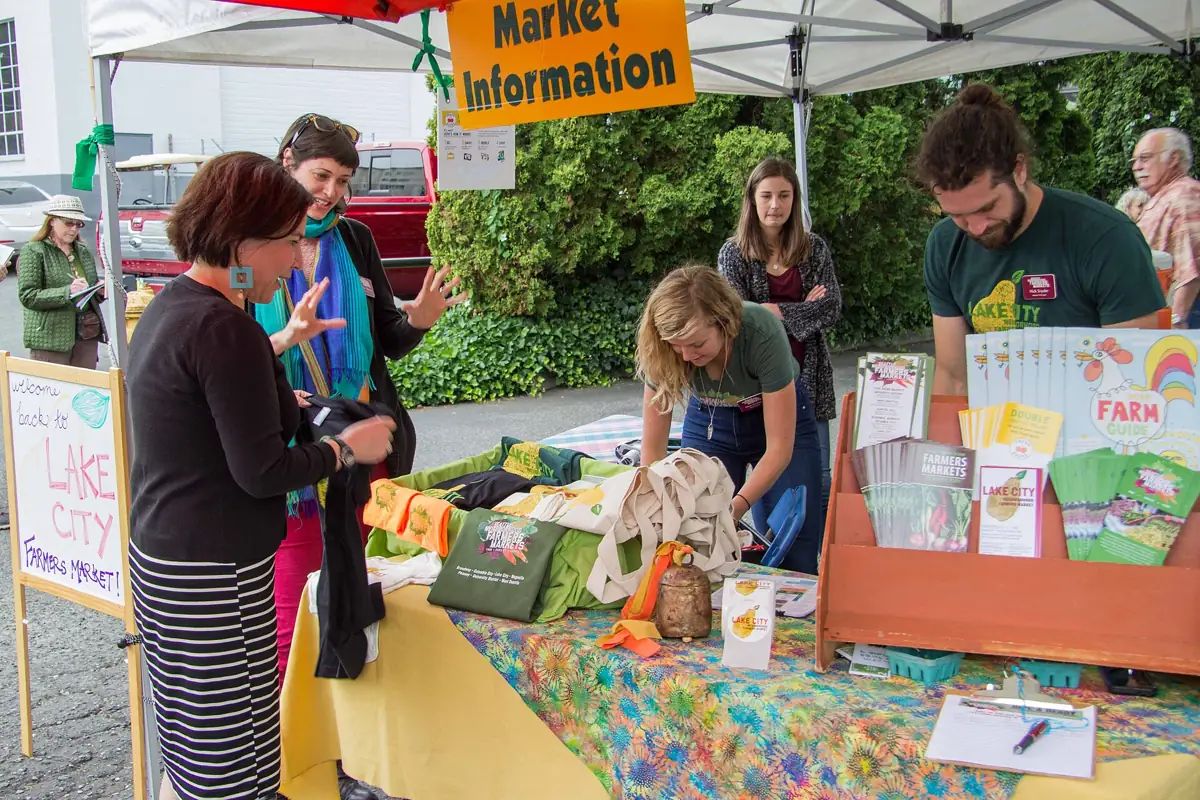
The fair is easy to confuse with two different things, and separating them sharpens what it actually is. The first is the Krasl Art Center’s own year-round programme of exhibitions, classes and other offerings, including its members’ show; those activities run through the calendar under the art centre’s roof, whereas the fair is a single July weekend outdoors on the bluff, built around visiting juried artists rather than the centre’s own walls. The second is the Saint Joe Farmers Market, which trades across the street on the fair’s Saturday and can feel like part of the same occasion; it is a neighbouring event with its own identity, and the layers treat it as separate from the fair itself. Set against a general summer festival, the fair is narrower and more focused: no headline concerts or carnival rides are documented in its programme, and its energy goes into the booths, the judging standard behind them and the chance to buy work from the person who made it.
Visitor Checklist
- Search for the fair under its published name, Krasl Art Fair on the Bluff
- Keep the Friday block party in mind as the weekend’s opening event
- Arrive near the ten o’clock opening for the calmest first circuit
- Carry a payment method for buying work directly from artists
- Budget separately for the beer garden, which charges its own entry
- Consider the shuttle stops if lakeside parking looks scarce
- Leave time on Saturday for the farmers market across the street
- Check the art centre’s free activities if children are in the group
Beyond the Bluff
Lake Bluff Park is itself part of the draw, a green terrace above Lake Michigan in a town whose summer identity is bound up with the water. A fair visit can stretch naturally into time along the lakefront, a wander through downtown Saint Joseph, or a longer look inside the Krasl Art Center, whose exhibitions continue through the year once the booths have gone. Berrien County’s seat makes an easy base for the weekend, and the fair’s mid-July timing places it in the fullest stretch of the local summer season, when the town’s visitor rhythm is at its height. Downtown Saint Joseph sits a short walk from the park, so a meal and an evening stroll fit around the fair without any driving, and the lake supplies a second focus once the booths close for the day.
Why the Fair Matters
A juried fair that began with artwork hung on clotheslines in 1962 and now draws one hundred and seventy-two artists to a single park carries a genuine civic weight for Saint Joseph. It gives the county seat a summer weekend defined by making and buying art rather than by spectacle, it feeds visitors toward the art centre whose own development the fair’s history follows, and it keeps a format alive in which buyers meet makers face to face. The continuity is the point: the same bluff, the same July slot and the same organising centre connect the clothesline beginning to the present fair, and each printed billing, from the sixtieth to the sixty-fourth annual, marks another year of that connection holding.
Frequently Asked Questions
What title does the event use in its own publicity?
Search under Krasl Art Fair on the Bluff, or the shorter Krasl Art Fair. The sheet wording, Krasl Art Festival, is never printed exactly in the layers read, and the event is presented throughout as a juried art fair rather than as a festival.
Where in Saint Joseph does the fair set up?
The booths stand on Lake Bluff Park, overlooking Lake Michigan and across from the Krasl Art Center. The Friday block party uses the art centre’s grounds, and a shuttle service from two stops is described in the organiser and guide layers.
How large was the most recent documented fair?
The 2026 fair was billed as the sixty-fourth annual and counted one hundred and seventy-two artists in the organiser’s announcement layers, with hours of ten until six on Saturday 11 July and ten until five on Sunday 12 July.
Which parts of the 2026 weekend carried their own cost?
Entry to the fair itself carried no admission fee in the organiser’s 2026 layers, with donations encouraged. The beer garden on the art centre grounds charged its own entry fee, per a 2026 guide layer, and collector and VIP packages were paid extras.
What to Expect From the Next Berrien Michigan Krasl Art Festival
How often is Berrien Michigan Krasl Art Festival held?
The printed billings describe an annual fair: the edition held in 2022 was billed as the sixtieth, a further edition was billed as the sixty-second annual, and the 2026 fair was billed as the sixty-fourth annual, so the numbering itself records a fair returning year after year each July.
When is the next Berrien Michigan Krasl Art Festival?
The layers gathered for this article run through the fair of 11 and 12 July 2026, and they carry no date for the edition that follows it. Anyone planning beyond that point should watch for a fresh announcement from the Krasl Art Center rather than assuming the same weekend repeats.
Will the dates change?
Recent documented editions have kept to a mid-July weekend, with the 2022 fair on 9 and 10 July and the 2026 fair on 11 and 12 July, so the slot has been steady even though the exact days shift with the calendar. Nothing in the layers read promises a fixed weekend, and each year’s dates rest on the organiser’s own announcement.
The fair rewards a visitor who comes ready to look slowly: a clothesline beginning in 1962, a bluff above the lake, and one hundred and seventy-two artists waiting in rows are a combination Saint Joseph has kept faith with for a very long time.