Ben Hill County Georgia Ebony-in-Arts Festival
In Fitzgerald, spring arrives with a certain rhythm. Folding chairs appear downtown, a stage goes up, and the smell of barbecue and fried fish drifts through the blocks around the civic heart of the county seat. The occasion is Ebony-in-Arts, the festival that has become one of Ben Hill County’s most anticipated gatherings — a homegrown showcase of African-American art, music, food, and heritage in a county of 17,194 people, counted in the 2020 census, in the middle of south-central Georgia.
Ask anyone who has been and they tend to say the same thing: Ebony-in-Arts feels less like a produced event and more like a family reunion that happens to have a gospel choir, a row of vendor tents, and a gallery’s worth of paintings leaning against the rails. That character is the point. Fitzgerald is the county seat of Ben Hill County, and the festival draws on the town’s own talent first — painters and quilters, church choirs and soul singers, home cooks and food trucks — before it looks anywhere else.
Ebony-in-Arts and the Fitzgerald Story It Tells
Ebony-in-Arts is a community arts festival built around the work and culture of Black artists and families in and around Ben Hill County. It is the kind of event that is easy to describe and hard to capture: part art show, part concert series, part cookout, part reunion. The festival name itself says what it values. Ebony points to Black heritage and Black creativity. Arts points to the wide tent of expression that heritage takes — canvas and clay, quilts and photography, spoken word and drums, gospel and jazz and the low, rolling sound of a bass line carrying across an open lawn.
What makes the event distinctly Fitzgerald is how local it stays. The artists are often people you see at the grocery store. The singers are often people you have sat behind in church. The food tastes like somebody’s grandmother got the recipe right, because somebody’s grandmother did. For a county of 254 square miles with a population of just over 17,000, that intimacy is not a limitation — it is the whole appeal. Visitors who come in from neighboring counties and from much farther away are not watching a community perform itself. They are being let into a room where the community already is.
The setting matters, too. Ben Hill County was founded in 1906 and named for Benjamin Harvey Hill, and Fitzgerald has long served as its county seat. That history gives the festival a natural anchor: a courthouse town where people gather downtown, where the streets are wide and walkable, and where a Saturday can stretch from morning coffee to an evening encore without anyone needing to move a car. Ebony-in-Arts takes that civic habit — the habit of showing up in the middle of town — and fills it with art.
For first-time visitors, the best advice is to arrive with no particular plan and a willingness to talk to strangers. Sit for one act. Wander the vendor row. Buy something small from a painter who is standing right there and can tell you where the light was when the scene was painted. Eat something you cannot pronounce. That is the festival working exactly as designed.

Ebony-in-Arts Essentials for Ben Hill County Visitors
If you are deciding whether the drive to Fitzgerald is worth your Saturday, this is the short version. Details shift a little from year to year, so treat the table below as a general guide rather than a schedule.
| Town | Fitzgerald, Georgia |
| County | Ben Hill County |
| County seat | Fitzgerald |
| Population | 17,194 (2020 census, countywide) |
| Region | South-central Georgia |
| Typical timing | Spring, on dates set by the organizers each year |
| Admission | Typically free and open to the public |
| Setting | Downtown Fitzgerald and nearby community gathering spaces |
| Features | Visual art, live music, soul food and Southern cooking, family activities |
| Organizer | Local volunteers and community partners in Ben Hill County |
The Story Behind Ebony-in-Arts in Ben Hill County
Community arts festivals rarely begin with a grant application. They begin with a handful of people who are tired of driving an hour to see art made by people who live twenty minutes away.
That is the impulse Ebony-in-Arts grew from. Across south Georgia in the late twentieth century, Black artists, musicians, and educators in small towns began building their own platforms rather than waiting for one to be built for them. Churches already had choirs. Schools already had talent shows. Families already had reunions. What was missing was a single day, or a single weekend, when all of that energy landed in one place and was treated as art worth gathering around. Ebony-in-Arts became that day in Fitzgerald.
The festival took shape the way most enduring local traditions do — incrementally, by people who kept showing up. A first year with a modest stage and a few tables. A second year with more vendors. A third year with a visual art display that filled a room. Over time the event settled into a recognizable shape: art on display, music on stage, food on the grounds, and children moving through all of it at high speed. The details were never fixed. The purpose was.
A short timeline of the forces that shaped it:
1906 — Ben Hill County is founded, named for Benjamin Harvey Hill, with Fitzgerald as its county seat, establishing the civic identity the festival later celebrates.
Twentieth century — Black churches, schools, and family networks in and around Fitzgerald sustain a deep tradition of music, cooking, quilting, and storytelling that becomes the raw material of the festival.
Late twentieth century — Community arts celebrations take root across south Georgia, creating a regional model for locally organized, locally staffed festivals.
Ongoing — Ebony-in-Arts continues as a volunteer-driven gathering that puts Ben Hill County artists and performers in front of their own neighbors.
What a Spring Weekend at Ebony-in-Arts Feels Like
Picture a warm Georgia Saturday. The morning is for setup and slow arrivals. By midday the grounds have filled in, and the afternoon moves in long, unhurried waves: a performance, a browse, a plate of food, a conversation that runs longer than expected. Evening brings the biggest crowd and the strongest sets.
Food: Southern Plates and Fitzgerald Favorites
Food is not a side attraction at Ebony-in-Arts; for many visitors it is the headline. Expect the Southern canon done properly — smoked and grilled meats, fried fish, baked and stewed vegetables, rice, beans, cornbread, and the kind of macaroni and cheese that starts arguments about whose version is correct. Church-style desserts tend to appear in force: pound cake, sweet potato pie, banana pudding, and sheet cakes sliced thick.
Vendors are typically a mix of local cooks, family operations, and food trucks from the surrounding region. Bring cash as a backup even if cards are widely accepted, and come hungry enough to try more than one thing. The lines move fastest in the early afternoon and slow to a pleasant crawl around dinnertime, which is part of the experience.
Music and Entertainment: Gospel, Soul, and Local Stages
The entertainment side of the festival leans on the deep musical traditions of the region. Gospel choirs and ensembles are a centerpiece, often opening the day with the kind of harmony that makes people stop mid-sentence. From there the program typically widens into soul, R&B, blues, jazz, and contemporary sounds, with local and regional acts carrying most of the load.
There is also usually room for the less formal arts. Spoken word, dance, drumming, and youth performances all fit naturally into a lineup that is deliberately varied. Because the festival is volunteer-organized, the schedule can shift. Treat set times as approximate, and let the day carry you rather than the other way around.
Family Activities: Something for Every Generation
Ebony-in-Arts is a genuinely family-oriented event, which is one reason grandparents, parents, and children all show up together. Expect activities aimed at younger visitors — craft tables, art-making stations, games, and open space to run — alongside the kind of unstructured freedom that small-town festivals do better than anyone.
Strollers handle the downtown setting well, though some surfaces are uneven. Bring water, sunscreen, and a folding chair if you plan to camp out in front of the stage. If you have children who like to make things, this is the kind of festival where they may come home with a painted rock, a beaded bracelet, and a strong opinion about which act was best.
Planning Your Trip to Fitzgerald for Ebony-in-Arts
Getting There: Routes Into Ben Hill County
Fitzgerald sits in south-central Georgia, and most visitors arrive by car. The town is reachable from several directions via the state highway network that links Ben Hill County with its neighbors, and regional routes connect it to larger hubs for anyone coming from farther out. If you are traveling a long distance, plan your final approach for daylight if you can — the last stretch into town runs through farmland and pine woods, and the drive is prettier when you can see it.
Fuel up before you get close to downtown on festival day. Small-town stations can get busy when a county turns out for an event.
Where to Stay Near Fitzgerald
Lodging in Fitzgerald itself is limited, which is normal for a county seat of this size. Options typically include a small number of local and chain motels plus short-term rentals in and around town. Because the festival draws visitors from across the region, book early once dates are announced. If everything local is taken, larger neighboring towns within driving distance make a reasonable base, and the drive back after the evening sets is straightforward.
Campers and RV travelers should check availability directly with local providers, since capacity is modest and fills quickly on event weekends.
Parking Around the Festival
Parking is generally handled the way it is at most downtown community festivals: find a legal space on a nearby street or in a public lot and walk in. Arrive before the midday rush and you will have an easy time of it. Arrive at dinnertime and you may park several blocks out, which is not a hardship — the walk through downtown is part of the fun. Follow any directional signs and volunteer instructions on the day, and never block a driveway or a business entrance.
Admission and What Things Cost
Admission to Ebony-in-Arts is typically free, which is central to its mission as a community event. Your spending goes to vendors, artists, and food sellers instead. Bring a mix of cash and card. Small art purchases and food stands sometimes prefer cash, and having small bills makes everything faster. Set a budget for art if you are the type to fall in love with a painting, because you probably will.
Weather in South-Central Georgia
Spring in this part of Georgia is warm and variable. Days can be mild and breezy or suddenly humid and hot, and an afternoon shower is always possible. Dress in layers, wear comfortable shoes, and bring a hat. If rain moves in, most festivals of this kind adapt rather than cancel, but check local updates before you make the drive. Evening temperatures can drop enough to make a light jacket welcome.
A Sample Ebony-in-Arts Weekend Itinerary
Friday evening. Arrive in Fitzgerald, check in, and take a slow drive or walk through downtown to get your bearings. Eat a relaxed dinner and turn in early. Festival weekends reward people who are rested.
Saturday morning. Get to the grounds as things open. Vendor rows are calmest early, artists have time to talk, and you can see the full range of work before the crowd thickens. Grab coffee and something baked.
Saturday midday. Eat early, before the longest lines form. Then work the art displays and buy that piece you keep circling back to. Sit for a gospel or choir performance — this is usually the emotional high point of the day.
Saturday afternoon. Bring the kids to the activity tables, or settle into a folding chair and let the lineup roll. This is the stretch for second helpings and unhurried conversation.
Saturday evening. Stay for the headlining sets. The crowd is at its largest and the energy at its best. Plan to walk a few blocks to your car and take your time leaving.
Sunday. If the festival continues into Sunday, a morning visit is quieter and gentler. Otherwise, use the day to explore Ben Hill County’s countryside, drive through the farmland and pine woods that surround Fitzgerald, and head home with a full stomach and a car full of art.
Ebony-in-Arts Beside Other South Georgia Towns
Fitzgerald is not the only small town in this part of Georgia that throws a good party, and knowing the differences helps you plan a weekend.
Ocilla is a nearby county seat town with a compact, friendly downtown and a strong agricultural identity. Its community events tend to be tight and local in the same way Ebony-in-Arts is, but with a smaller arts footprint and less of a performance lineup.
Tifton is the larger hub of the region, with more dining, more lodging, and more retail. If you want a festival day paired with a full restaurant scene and easier hotel options, basing yourself there and driving over is a sensible plan. What you trade is the intimacy — Fitzgerald’s festival is small enough that you will recognize faces by the end of the day.
Douglas offers another nearby option with its own civic calendar and downtown core. Like Fitzgerald, it is a county seat town where community events are built by volunteers and attended by neighbors.
The honest comparison is this: Ebony-in-Arts is not trying to be the biggest festival in south Georgia. It is trying to be the most rooted one. For visitors who value that, it wins the comparison easily.
A Practical Checklist for Ebony-in-Arts Weekend
— Confirm the current date, times, and location through local community channels before you drive in.
— Book lodging early if you are staying overnight.
— Bring cash in small bills alongside a card.
— Pack sunscreen, a hat, water, and a light jacket for the evening.
— Wear shoes you can stand and walk in for hours.
— Bring folding chairs or a blanket if you plan to watch performances.
— Charge your phone and consider a battery pack for a long day out.
— Bring a tote bag for art purchases and vendor finds.
— Keep children close in crowded areas and agree on a meeting point.
— Leave pets at home unless organizers say otherwise.
— Plan your exit route before the final set ends.
— Tip generously and buy directly from artists when you can.
Beyond the Festival: More of Ben Hill County to See
Make a weekend of it and the county rewards you. Fitzgerald’s downtown is worth a slow walk on its own — the kind of courthouse-square commercial district where you can still see the bones of an early twentieth-century railroad town. Ben Hill County’s 254 square miles are largely working land, so a drive out of town takes you through fields, pasture, and stands of pine, with the flat, wide horizon that defines this part of Georgia.
Local restaurants in and around Fitzgerald are the natural complement to festival food, and small-town diners and meat-and-three kitchens tend to be where the conversation is best. For a longer stay, the region’s larger towns — Ocilla, Tifton, Douglas — are all within an easy drive and give you more shopping, more dining, and more ways to fill a Sunday afternoon before heading home.
Photographers should plan a golden-hour drive. Late light over south Georgia farmland is a genre of its own, and it pairs nicely with a quiet evening after a loud, joyful Saturday.
What Ebony-in-Arts Means to Ben Hill County
In a county of 17,194 people, a festival is never just a festival. It is a calendar anchor, a reunion date, a chance for local artists to sell work without leaving home, and a statement about whose culture counts as culture. Ebony-in-Arts makes that statement plainly and warmly: Black art in Ben Hill County is not a niche interest or a historical footnote. It is the living, working, singing, cooking present.
There is also an economic dimension that matters in a small town. Every vendor who sells out, every artist who takes a commission, every food stand that runs out of plates is money staying local. The festival turns civic pride into something tangible.
And there is the quieter value: the young person from Fitzgerald who sees a painter from their own town being applauded, and files that away as a possibility. Festivals like this one change what children believe is available to them. That is difficult to measure and impossible to replace.
Where Ebony-in-Arts Happens in Fitzgerald
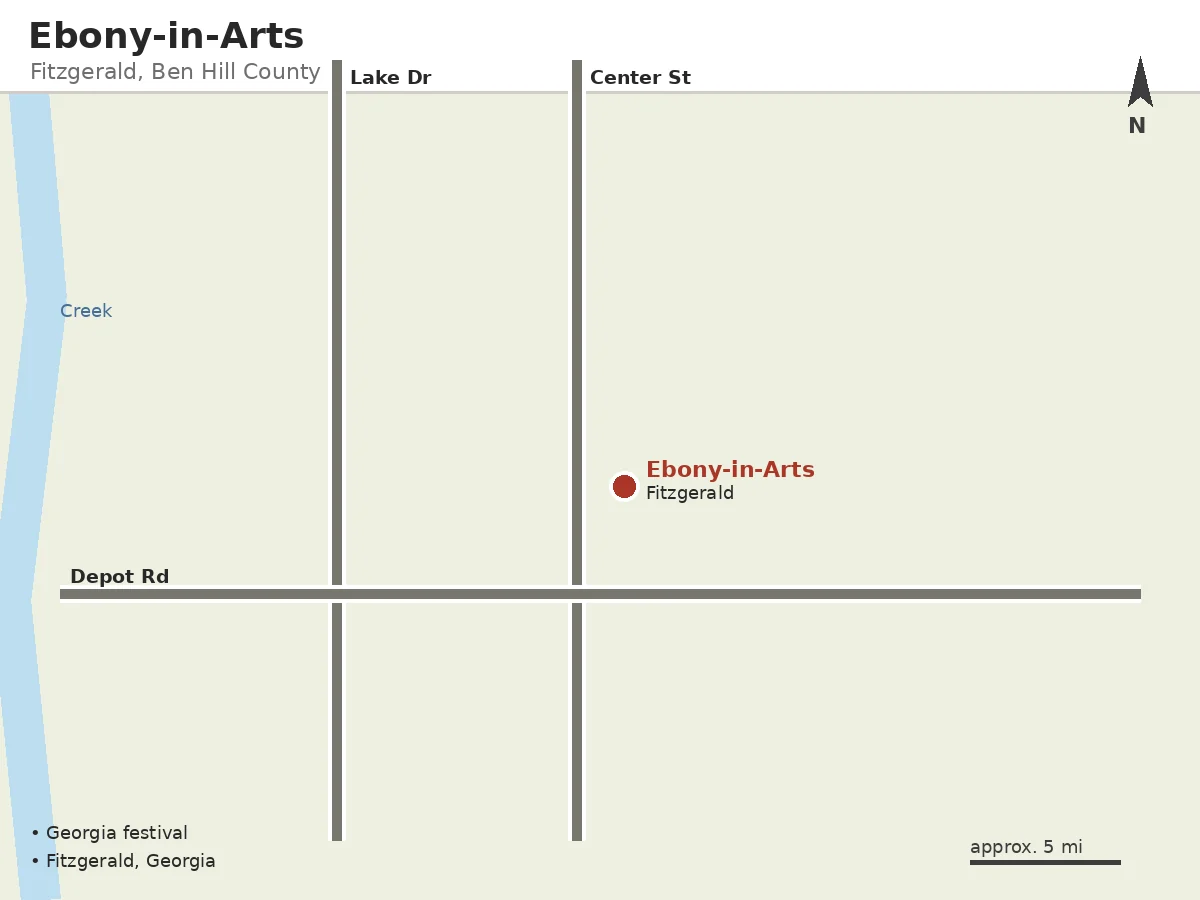
Ebony-in-Arts takes place in Fitzgerald, the county seat of Ben Hill County in south-central Georgia, with activities centered on the downtown area and nearby community gathering spaces.
Answers for First-Time Ebony-in-Arts Visitors
Is there an admission fee for Ebony-in-Arts?
Admission is typically free, in keeping with the festival’s community-focused mission. You will spend money if you buy food, art, or merchandise, and that spending is what supports local vendors and artists. Bring both cash and a card so you are covered either way.
When is the festival usually held in Fitzgerald?
Ebony-in-Arts is generally a spring event, with exact dates set by the organizers each year. Because the schedule is announced locally rather than fixed to a permanent calendar date, confirm the current weekend through community sources before you plan travel or book a room.
Where exactly does the festival take place?
Activities center on downtown Fitzgerald, the county seat of Ben Hill County, along with nearby community gathering spaces used for performances, art displays, and vendor areas. Specific street closures and venue assignments vary by year, so check local announcements for the current layout.
Is Ebony-in-Arts a good event for children?
Yes. The festival is designed as a family event, with activities aimed at younger visitors alongside the main performances and vendor areas. Bring water, sunscreen, and a stroller if you have little ones, and set a meeting point in case anyone wanders off in the crowd.
What should I bring with me?
Comfortable shoes, a hat, sunscreen, water, and a folding chair or blanket if you plan to sit through performances. A tote bag helps for art purchases, and a light jacket is smart for the evening. Cash in small bills speeds up food and vendor transactions.
Are the artists and performers local?
Largely, yes. The festival is built around talent from Fitzgerald and the surrounding Ben Hill County area, supplemented by performers and vendors from nearby south Georgia communities. That local emphasis is one of the things that distinguishes Ebony-in-Arts from larger regional events.
How hard is parking on festival day?
Parking is generally a matter of finding street or public lot space near downtown and walking in. Arriving in the morning makes it easy. Arriving near the evening headline sets may mean a few blocks of walking, which is a small price for a good spot in the crowd.
How can local artists get involved?
Artists, performers, and vendors typically connect with the festival through its local organizing volunteers and community partners. If you make art, cook, or perform in or around Ben Hill County, reach out through community channels well before the event so there is time to work you into the program.
Looking Ahead: The Future of Ebony-in-Arts in Fitzgerald
The next chapter for Ebony-in-Arts looks a lot like the last one, only broader. The most valuable growth for a festival this size is not a bigger stage — it is more local artists participating, more young people getting a first chance to perform, and more families making the weekend a standing tradition. Volunteer energy remains the engine, and that means the festival’s future depends on people in Ben Hill County continuing to show up, both to attend and to help organize.
There is room, too, for the festival to deepen its role as a regional draw, pulling visitors from across south-central Georgia who want a weekend that feels personal rather than packaged. Fitzgerald has the ingredients: a walkable county seat, a strong cultural base, and a genuine reason to gather each spring. As long as the community keeps claiming it, Ebony-in-Arts will keep being the kind of event that small towns do better than anyone else.
Last updated: October 2026
If you go, go early, eat well, talk to the person beside you, and buy something made by hand in Ben Hill County. That is the whole spirit of Ebony-in-Arts — a county of 17,194 people, gathered in its own county seat, celebrating art that was here all along.
One Comment