Antelope County Nebraska Fair Festival
For one full week at the turn of July into August, the east edge of Neligh belongs to the Antelope County Fair. The grounds sit along Highway 275 in the county seat, and the week follows an architecture the fair itself publishes in advance: horse shows first, a ladder of livestock shows through the middle days, a beef show and premium auction on Saturday, and a Sunday that begins with pancakes and ends with a truck and tractor pull at the grandstand. Behind the whole production stands an unusual organiser: the Antelope County Ag Society, a body whose board elections are open to the registered voters of Antelope County, so the fair is, in a literal sense, run by the county it serves.
An Ag Society Fair on the East Edge of the Seat
The Antelope County Fair is the county’s own fair, presented under its plain published name and organised by the Antelope County Ag Society. The society’s presence runs through the fair’s machinery rather than above it: its annual meeting and board elections are noticed on the fair’s own pages, and its rule changes reach down to how the livestock pens are bedded. Alongside the society, the 4-H side of the week runs with Nebraska Extension in Antelope County, whose office sits in the courthouse basement in Neligh.
The grounds are the Antelope County Fairgrounds, set on the east edge of town along Highway 275. The Event Building holds the static and open class exhibits, and the show arena anchors the livestock programme. Fair week also reaches back across town to Riverside Park, where the Sunday church service and pancake feed sit in the fair’s documented shape, a quiet acknowledgement that the park was once the fair’s home. Open class competition is notably welcoming: the fair’s own rules open it to residents of Antelope County and every bordering county, with livestock the exception, reserved for Antelope County residents only. The county paper’s record of one edition counted more than 1,100 static entries on display — a measure of how much of the county ends up on the Event Building’s tables.
Quick Facts
| Detail | What the record shows |
| Event name | Antelope County Fair |
| Organiser | Antelope County Ag Society, with Nebraska Extension in Antelope County running the 4-H side |
| Fair town | Neligh, the county seat |
| Grounds | Antelope County Fairgrounds, east edge of Neligh along Highway 275 |
| Season | Late July into early August, a full week |
| Main buildings | Event Building for static and open class exhibits; show arena for livestock |
| Open class | Open to residents of Antelope County and all bordering counties; livestock open class for Antelope County residents only |
| Admission | No current gate price is published in the fair’s own record |
| Closing shape | Premium Auction on Saturday afternoon; truck and tractor pull closes the fair on Sunday evening |
A Paper Trail That Starts on a Farm in 1883
The fair’s early history survives because the county paper, the Antelope County News, has told it, and the story is carried here exactly as that account gives it. The first Antelope County Fair was held in 1883 on the farm of Hans Schutt, two miles north of Neligh, a beginning the paper recounts on the word of Emanuel Wolfe, a Neligh merchant who remembered it. The first four fairs stayed on Schutt’s land. In 1886 the agriculture association bought 26 acres from Lyman Bailiey for $900, and in the fall of 1887 the fair moved to Riverside Park. That season was no triumph: only 60 percent of the premiums could be paid. Drought then halted the fair for a time.
The line from that farm fair to the present grounds on the east edge of town is long, and the paper frames the modern fair as celebrating more than 130 years of agricultural heritage in the county. That framing is the paper’s own: no edition number is derived from 1883 here, because a fair interrupted by drought and moved between grounds carries its continuity in the community rather than in an unbroken count. What the record does show plainly is a fair that began as a farm gathering, bought its first real grounds for $900, survived lean years when premiums were paid at sixty cents on the dollar, and eventually settled where it sits today.
For a useful comparison, see the Adams County Nebraska Fairfest Festival for another county festival.
What to Expect
Horse Shows Open the Core Week
The core week begins in the arena. The fair’s published schedule gives the horse shows the first two days: on the opening day, all classes except the speed events, working ranch and roping; on the second day, those very events take their turn. Before the core week starts, the fair’s machinery is already turning: a shooting sports contest, a pre-fair clean-up day, dog and cat shows, and judging for textiles and photography all sit in the days ahead of the Monday opening. Clover Kid entries, for the youngest exhibitors, have their own entry day, and food and preservation classes and favorite foods are entered and interviewed as the week builds.
Species Shows Build Toward Saturday
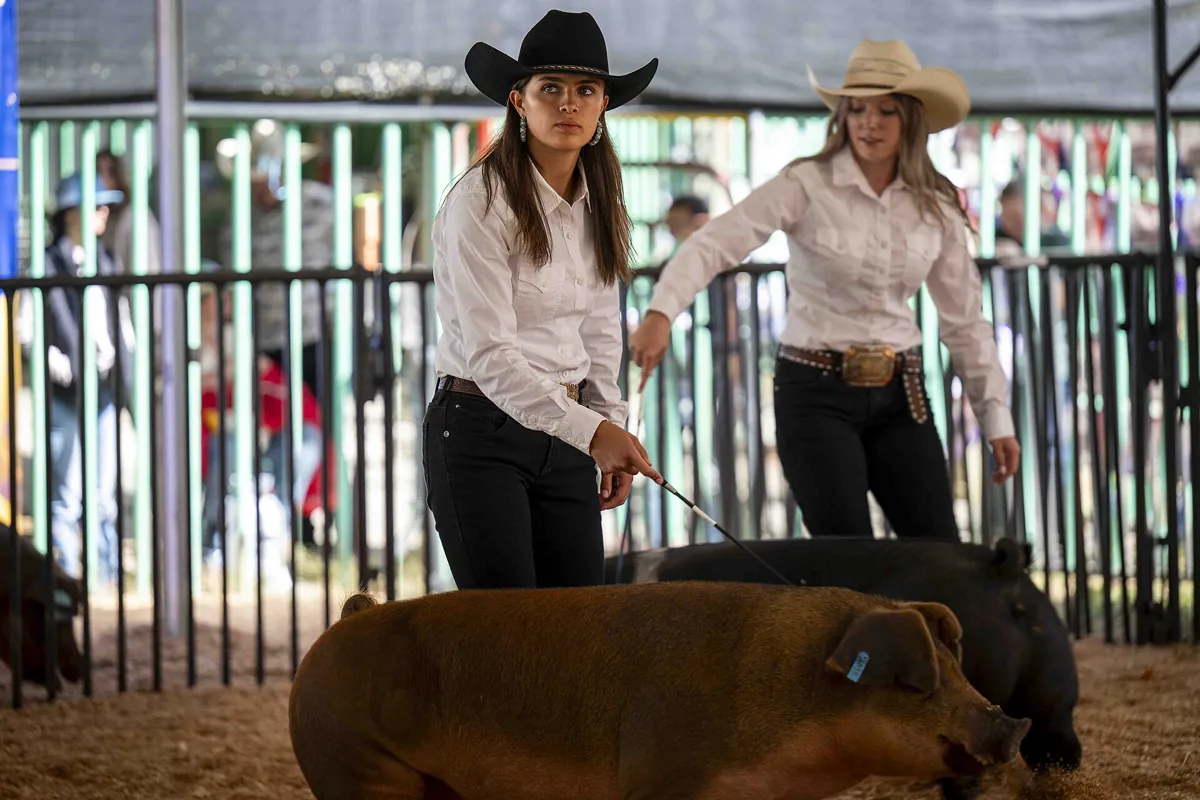
The middle of the week belongs to the barns. The dairy show takes Wednesday at noon, with livestock check-in around it, and Thursday brings the rabbit, sheep and goat shows together with a livestock judging contest. Friday is the swine show and the poultry judging and show. Saturday is the week’s summit: the beef show, with open class and peewee exhibitors in the ring as well, and then, at 4 p.m., the Premium Auction, where the week’s work meets its buyers. This is cattle country, and the beef show’s Saturday billing reflects it.
The Event Building and Open Class
Static exhibits fill the Event Building, and their judging has its own rhythm: textiles, quilts and apparel are judged with modeling and clothing construction alongside, while food and preservation entries go through interviews. Because open class reaches into every bordering county, the tables hold work from well beyond the county line, and the display that results is among the fullest rooms a visitor will find at a county fair of this size.
Grandstand Nights and the Sunday Close
Evenings belong to the grandstand. The county paper’s fair coverage records a demolition derby on Saturday night, and the fair closes on Sunday evening with the truck and tractor pull, the Outlaw Truck and Tractor Pullers at the grandstand with the beer garden open, in the closing shape the fair’s own schedule page carries. Sunday itself is the fair’s most distinctive day: a pancake feed, the Small Animal and Large Animal Round Robin contests — where champion showmen try their hands across species — Round Robin Roping and an Open Horse Fun Day in the paper’s account, and the 4-H Fashion Revue and Awards Ceremony, before the pull brings down the curtain.
Planning Your Visit
Finding the Grounds on Highway 275
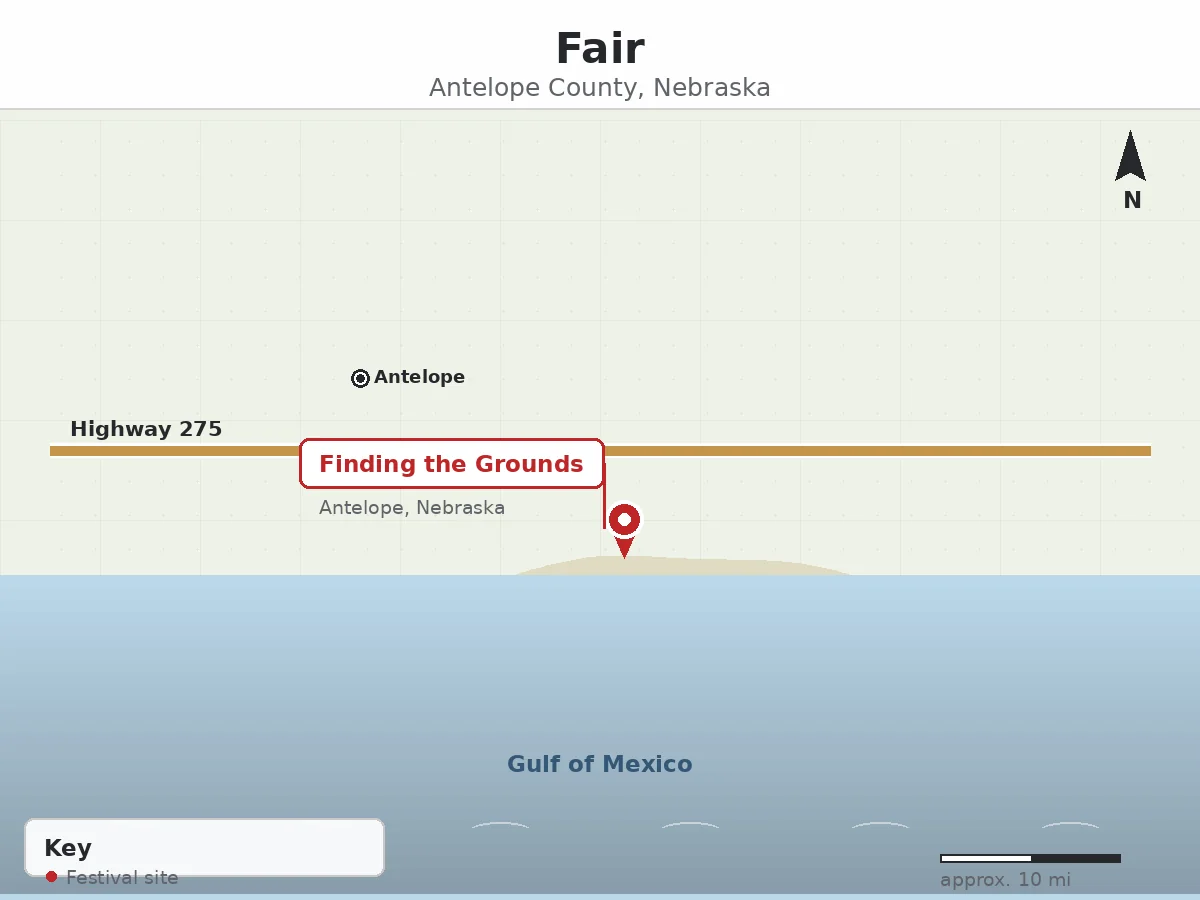
Aim for the east edge of Neligh. The fairgrounds sit along Highway 275 as it passes the county seat, so most visitors arrive by simply following the highway into town and watching for the grounds at its edge. Neligh is the county seat, and the Extension office sits in the courthouse basement — a useful landmark if you need to reach the fair’s people during the week. Sunday’s pancake feed and church service sit over in Riverside Park, so a visitor staying for the full closing day should expect to move between the park and the fairgrounds.
What Admission Costs, Answered Honestly
The fair’s own published record does not state a current gate, pass or parking price, and this article will not invent one. Anyone budgeting a trip should check the fair’s own notices close to the week rather than rely on a figure repeated from an old edition. The caution matters because an older price does circulate: the county paper’s coverage of the 2019-era fair recorded ticket books for the entire fair at $30. That was that edition’s offer, printed then, and it says nothing reliable about what entry costs now. Treat any price not published by the fair itself for the current year as unconfirmed.
Entering Exhibits and Staying the Week
Exhibitors should note the shape of the entry week: open class static entries are taken on the Tuesday of fair week under the fair’s published rules, bordering-county residents are welcome in open class outside the livestock classes, and the Ag Society’s own bedding rule governs the livestock pens. On camping, the fair’s published record offers no fair-week camping arrangement, so visitors planning to stay over should arrange lodging in or around Neligh rather than count on a pitch at the grounds. Arrive with the week’s schedule in hand — the fair publishes it day by day, and at this fair the day you choose decides what you see more than at most.
A Saturday at the Fair
Start in the show arena, where the beef show takes the morning with open class and peewee exhibitors sharing the ring. Late morning, walk the Event Building while the judging dust settles and read the static exhibits properly — quilts, preserved foods, photography and the bordering counties’ best work. Take lunch in town or at the grounds, then drift back through the barns as exhibitors prepare for the afternoon. At 4 p.m., be in place for the Premium Auction, the week’s commercial heartbeat. Stay into the evening: the demolition derby fills Saturday night in the county paper’s account of the fair, and the grounds after dark are the fair at its most sociable.
How This Fair Compares
Many Nebraska county fairs are long weekends; Antelope County’s runs a full published week, with pre-fair contests and judging reaching back further still. Its open class policy is broader than most — a standing invitation to every bordering county — where many fairs restrict their tables to their own residents. And its governance sets it apart from both the private-association fair and the county-board fair: an agricultural society whose electorate is the county’s registered voters gives the event a town-meeting character that shows in details like a board rule about bedding the pens. Against the city festivals on Neligh’s calendar — Old Mill Days at the Fourth of July and Novemberfest later in the year, both separate events run by other organisations — the fair is the county’s agricultural week, not a street celebration, and it carries the working livestock programme to prove it.
Fair Checklist
- Pick your day by the species schedule: horses early in the week, beef on Saturday
- Walk the Event Building for the open class and static exhibits
- Be ringside at 4 p.m. on Saturday for the Premium Auction
- Catch the Round Robin contests on Sunday to see champion showmen swap species
- Leave room for the Sunday pancake feed in Riverside Park
- Stay for the truck and tractor pull that closes the fair on Sunday evening
- Confirm entry prices from the fair’s own current notices before budgeting
- Bring sun protection and patience for a full day on gravel and grass
Beyond the Fairgrounds
Riverside Park is the natural first stop: it held the fair from 1887, and it still hosts the fair week’s Sunday pancake feed and church service, so a walk there connects the modern week to its nineteenth-century ground. Neligh itself is a working county seat, and fair week is a good time to see it busy — the courthouse, with the Extension office in its basement, anchors the town’s official life. The surrounding county is farm and ranch country, and the drive in along Highway 275, past the fields the exhibitors farm, is part of the fair’s context rather than just its approach. Visitors who time a second trip differently will find Neligh keeps other celebrations — the Fourth of July Old Mill Days and Novemberfest — but those belong to other organisations and other weekends.
Why the Antelope County Fair Matters
A county fair is one of the few institutions that asks a whole county to show its work in public, and Antelope County’s version has been doing that, in the county paper’s telling, since a farm gathering in 1883. Its significance is partly economic — the Premium Auction turns a week of youth work into real money for real families — and partly civic: an organiser elected by the county’s own voters, an open class that invites the neighbours in, and a Sunday that still makes room for pancakes, a church service and awards before the engines start. In a county of small towns, the fair week is the one week the whole map gathers in a single place.
Frequently Asked Questions
Where in Neligh is the Antelope County Fair held?
The fair is held at the Antelope County Fairgrounds on the east edge of Neligh, along Highway 275. Its main exhibit space is the Event Building, and some Sunday fair-week activities, including the pancake feed, take place in Riverside Park across town.
Can people from outside Antelope County exhibit at the fair?
In open class, yes. The fair’s published rules open open class competition to residents of Antelope County and every bordering county, but livestock classes are the exception: those are open to Antelope County residents only.
Why is there no admission price listed for this fair?
Because the fair’s own published record does not state a current one. An older county-paper report recorded $30 ticket books for a fair held several years ago, but that figure belongs to that edition alone, so visitors should confirm the current position from the fair’s own notices.
Which day offers the most for a first-time visitor?
Saturday is the fullest single day: the beef show fills the arena, the Premium Auction runs at 4 p.m., and the evening brings grandstand entertainment. Sunday runs it close, with the pancake feed, Round Robin contests, Fashion Revue and the closing tractor pull.
What to Expect From the Next Antelope County Nebraska Fair Festival
How often is the Antelope County Nebraska Fair Festival held?
Once a year. The Antelope County Fair returns each summer as a full week of shows, exhibits and grandstand events organised by the Antelope County Ag Society in Neligh.
When is the next Antelope County Nebraska Fair Festival?
The next fair will fall in the fair’s standing season at the turn of July into August, and the Ag Society has already announced the dates of its next edition through the fair’s own channels. Expect the same shape: a full week running from the opening horse shows to a closing Sunday.
Will the dates change?
The fair’s season has been consistent — late July into early August — and the week’s internal architecture changes little from year to year. Exact dates are set for each edition, so a small shift within that season is always possible and worth checking against the fair’s published schedule.
The Antelope County Fair asks little of a visitor beyond choosing the right day, and it gives back a great deal: a week’s worth of a county’s work, judged in public, on grounds its people have kept for well over a century. Come for the beef show or the auction, stay for the pancakes and the pull, and you will have seen Neligh at its most itself.
One Comment