Crisp County Georgia Watermelon Days Festival
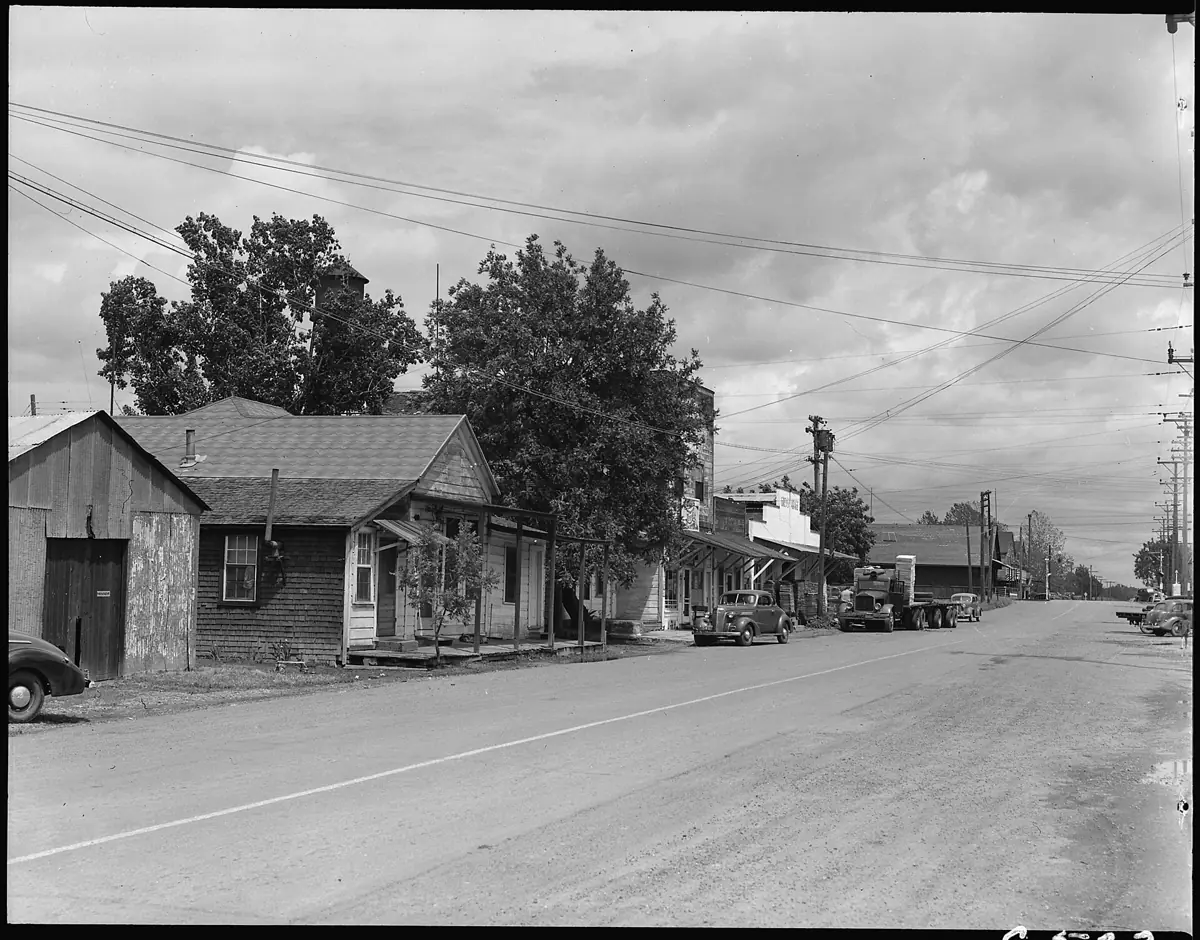
Crisp County has one flavor that defines its summer. In Cordele, the county seat, that flavor shows up in wedges so cold they fog your sunglasses, in juice that runs past your elbow, and in the sweet, faintly grassy scent that hangs over a field just before harvest. Watermelon Days is the festival built around that single taste — a community gathering in central Georgia where the food isn’t an afterthought but the whole reason everyone shows up.
If you have ever wondered what a genuinely food-forward small-town festival looks like, this is the answer. The melon is the mascot, the menu, the contest, and the conversation. What follows is a practical, appetite-first guide to the festival, the town that hosts it, and the corner of Georgia that grows it.
Watermelon Days Field Notes: Cordele, Crisp County, Georgia
Before the details, here is the short version for anyone planning around the festival.
| Town | Cordele, Georgia |
| County | Crisp County |
| County seat | Cordele |
| County population | 20,128 (2020 census) |
| Region | Central Georgia |
| Typical timing | Summer, timed to the local watermelon harvest |
| Admission | Typically free to enter; food and drinks sold separately |
| Setting | Outdoor, small-town festival grounds in Cordele |
| Signature features | Watermelon tastings, food vendors, live entertainment, family activities |
| Organizer | Local community organizations and volunteers |
What Watermelon Days Is, and Why Cordele Hosts It
Crisp County covers 281 square miles of central Georgia, and Cordele — its county seat — sits at the middle of it. The county was founded in 1905 and named for Charles Frederick Crisp, a Georgia congressman. More than a century later, the landscape is still overwhelmingly agricultural, and watermelon remains one of the crops that residents point to with real pride. Watermelon Days is the annual expression of that pride: a festival that treats a single fruit the way other towns treat a whole cuisine.
The structure is familiar in the best way. There is a gathering space, a stage, vendors, and crowds that swell through the hottest part of the day and thin out toward evening when the light turns gold. Admission is typically free, which means the festival functions as a genuine town square rather than a ticketed attraction. You wander in, you eat, you run into people, you stay longer than you planned.
What sets it apart is the focus. There is no hedging here — no sense that the melon is one booth among many. Watermelon shows up sliced, chilled, blended, and baked into things you would not expect. Growers and families who have farmed the surrounding land for generations are part of the crowd, not a separate attraction. For a visitor, that means the food has context: the person handing you a slice may well be the person who grew it.
It also means the festival is honest about what it is. This is not a polished tourism production with corporate sponsors lining a concourse. It is a county of roughly twenty thousand people throwing a party around its best-known crop, and the charm is exactly that.
Crisp County’s Story and How a Melon Festival Grew From It
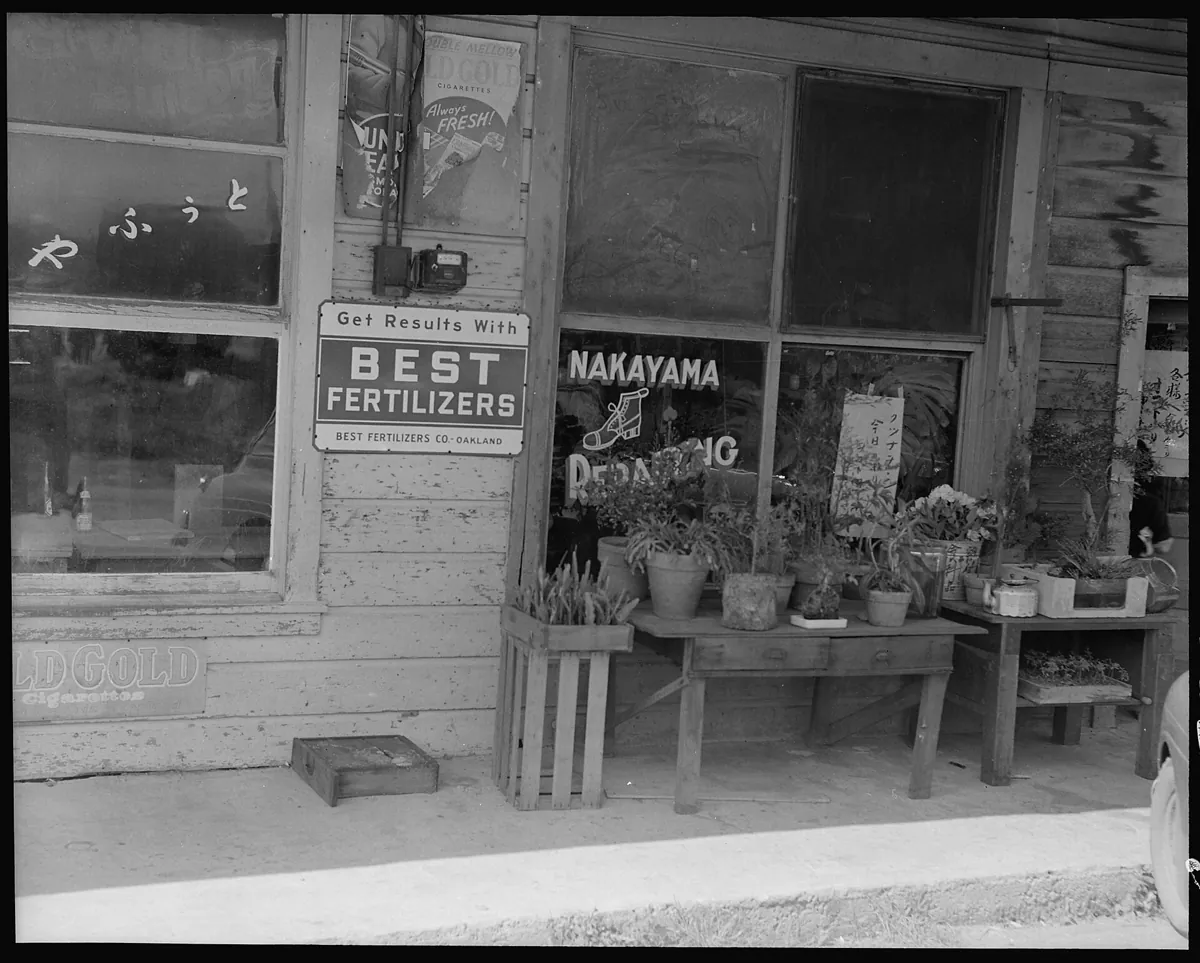
Crisp County is a relatively young Georgia county, carved out and organized in 1905, and it took its name from Charles Frederick Crisp, a congressman whose career left a mark on the state’s political history. Cordele was designated the county seat, and from the beginning the town functioned as the commercial hub for the farms around it — the place where crops were bought, sold, hauled, and celebrated.
That agricultural identity is the soil the festival grew in. Watermelon has long been one of the crops that define summer in this part of central Georgia, and a harvest that arrives all at once creates its own kind of community rhythm: weeks of intense work followed by a moment when there is suddenly far more fruit than any one family can eat. Watermelon Days emerged from that rhythm as a way to mark the end of the hardest stretch of the season and to share the results.
Over the decades, the shape of the event has shifted the way small-town festivals do. Contests came and went. Vendors multiplied. Music moved from a single pickup truck bed to a proper stage. What stayed constant was the timing — tied to the crop, not to a tourism calendar — and the food, which has always been the center of gravity.
The result is a festival with a long memory. Families who attended as children now bring their own children, and the recipes and rituals have been passed along with the land. That continuity is rare, and it is the reason the event feels less like a production and more like a reunion that happens to be open to the public.
Tasting Your Way Through Watermelon Days in Cordele
Come hungry, come early, and pace yourself. The festival rewards grazing, and the food is the main event rather than a side attraction.
Watermelon First: What to Eat at Watermelon Days
Start with the fruit itself. Chilled slices and wedges are the anchor of the entire menu, usually cut and served on the spot, and the difference between a supermarket melon and one picked nearby and eaten within a day is not subtle. Expect juice, expect seeds, and expect to need more napkins than you take.
Beyond the slices, the food-forward side of the festival shows up in the vendors. Watermelon appears in drinks, in frozen and slushy form, in salads paired with salty cheese and herbs, and in desserts where its sweetness does the work of sugar. Around those melon-centric items you will find the standard Southern festival menu — grilled and fried favorites, barbecue, funnel cakes, snow cones, and sweet tea by the gallon. Local civic groups often run food stands, which means the money circulates back into the community rather than out of it.
A practical tip: eat your watermelon earlier in the day when it is coldest and the lines are shortest, then move on to the heavier food once the heat peaks and you want something substantial to sit with in the shade.
Music, Stages, and Entertainment in Cordele
Live entertainment runs through the festival, typically with local and regional acts rather than national headliners — which suits the setting. Expect country, gospel, and rock from bands that know how to play to a summer crowd on a warm evening. Between sets, the entertainment comes from the crowd itself: contests, announcements, and the informal competitions that spring up around anything involving a melon.
The best listening spot is usually wherever you can find shade and a breeze. Bring a folding chair, claim a patch of grass, and let the music be background to conversation. That is how these festivals are meant to be experienced.
Family Activities for Every Age
Watermelon Days is built for families, and the activities skew toward the hands-on. Seed-spitting contests, eating contests, games, and craft or agricultural displays keep kids occupied while adults work the food line. Younger children do well with a stroller and a shaded spot to retreat to; older kids tend to disappear into the crowd and reappear when they are hungry.
Grandparents are a common sight, often stationed in chairs near the stage with a view of everything. That mix of ages is one of the festival’s best qualities — it is genuinely a whole-community event rather than something aimed at a single demographic.
Planning a Cordele Watermelon Days Weekend
A little preparation makes a hot Georgia festival far more enjoyable. Here is what to think through before you go.
Getting to Cordele for Watermelon Days
Cordele sits in central Georgia along the Interstate 75 corridor, which makes it an easy drive from most of the state and a natural stop for anyone traveling between Atlanta and the Florida line. Once you are in town, the festival area is compact enough to navigate on foot, and local signage typically directs traffic toward event parking. Arriving before the midday heat is the single best decision you can make, both for parking and for comfort.
Where to Stay Near Crisp County
Cordele has lodging options convenient to the interstate, and because the town sits on a major travel route, rooms are generally available for a summer weekend with a little advance planning. Campers and RV travelers often use the area as a base for exploring the region. If you are coming from a nearby town, a day trip is entirely reasonable — the festival fits comfortably into a single day without feeling rushed.
Parking Around the Festival
Expect street parking and designated lots near the event area, with volunteers or local police often guiding traffic at peak times. The earlier you arrive, the closer you park. Wear shoes you can walk in, because the walk from the car is part of the experience and the ground is likely to be grass, gravel, or pavement that has been baking in the sun.
Admission and What You’ll Spend
Admission to Watermelon Days is typically free, which means your budget goes almost entirely to food, drinks, and any crafts or merchandise you decide to bring home. Bring both cash and a card — smaller vendors sometimes prefer cash, and there is nothing worse than standing in front of a watermelon stand with no way to pay. Set a rough spending limit for the kids, then let them loose.
Summer Weather in Central Georgia
Central Georgia in summer is hot and humid, with afternoon temperatures that can climb well into the nineties and a real chance of an afternoon thunderstorm. Plan your heaviest activity for the morning and early afternoon, drink more water than you think you need, and keep a poncho or small umbrella handy. Storms usually pass quickly, and the festival continues once they do.
A Sample Watermelon Days Weekend, Hour by Hour
Saturday, mid-morning: Arrive in Cordele before the heat sets in. Park, walk the grounds once to get oriented, and grab a cold slice of watermelon as your first official act. It sets the tone.
Saturday, late morning: Work through the food vendors while lines are still short. Try a watermelon drink alongside something savory. Browse any craft, agricultural, or community displays and talk to the people running them — this is where the local knowledge lives.
Saturday, early afternoon: Find shade. Watch or enter a contest. Let the kids burn energy on the games while you sit with a cold drink and listen to whoever is on stage.
Saturday, evening: The light softens, the temperature drops, and the crowd loosens up. This is the best hour for music, conversation, and one last dessert. Eat dinner from a vendor rather than leaving town.
Sunday morning: Sleep in, then take a slow drive through the farmland around Cordele. Seeing the fields that produced yesterday’s food closes the loop. Stop for a late breakfast or an early lunch before heading home.
Sunday afternoon: If you have time, explore downtown Cordele on foot. Small downtowns in this part of Georgia reward unhurried wandering, and the pace is a welcome contrast to the festival crowd.
Watermelon Days Beside Its Neighbors: Vienna, Ashburn, and Perry
Crisp County does not exist in isolation. It sits in a cluster of small central Georgia communities, each with its own identity and its own calendar of gatherings. Vienna, the seat of neighboring Dooly County, and Ashburn, the seat of Turner County, are both close enough to pair with a Cordele trip. Each has a quieter, more residential feel and its own local traditions, which makes them pleasant add-ons rather than substitutes.
Further north, Perry hosts the Georgia National Fair, a much larger event with a statewide draw. The contrast is instructive. Perry offers scale, rides, and big-name entertainment; Watermelon Days offers intimacy, a single crop as its through-line, and a crowd where you will likely recognize the same faces twice in one afternoon.
Which one is better depends entirely on what you want. If you are chasing a food-focused, low-cost, genuinely local experience, Cordele wins. If you want a full-scale fairground production, head north. Many travelers do both in the same summer.
Cordele Watermelon Days: A Practical Prep Checklist
| Reusable water bottle | Heat is the biggest comfort issue; refill often |
| Sunscreen, hat, sunglasses | Shade is limited at peak hours |
| Cash and a card | Vendors vary in what they accept |
| Folding chair or blanket | Seating near the stage fills quickly |
| Cooler in the car | Useful if you buy melons to take home |
| Comfortable walking shoes | Grass, gravel, and hot pavement |
| Charged phone or battery pack | Long days drain batteries fast |
| Small umbrella or poncho | Afternoon storms move through quickly |
Beyond the Festival: More of Cordele and Crisp County
The festival is the anchor of a Cordele weekend, but the surrounding county is worth a few extra hours. Crisp County’s 281 square miles are mostly working land — fields, farm roads, and small settlements tied together by Cordele, the county seat. Driving those roads in summer gives you a sense of the scale behind the crop.
Downtown Cordele rewards a slow walk, with the kind of compact commercial blocks that once served as the retail backbone for an entire agricultural county. Local restaurants and shops give you a taste of everyday life rather than festival life, and the pace is markedly slower. For families, the farmland itself is the attraction: open horizons, red dirt, and the occasional roadside stand selling whatever came in that morning.
If you are traveling with a cooler, plan to stop on the way out of town. Buying a melon directly from the area that grew it is the most satisfying souvenir the festival offers, and it keeps the food story going for another week at home.
What Watermelon Days Means to Cordele and Crisp County
In a county of just over twenty thousand people, a festival is not a tourism product — it is infrastructure. It is the annual occasion when the whole community occupies the same few acres at the same time. That matters in a place where the population is spread across farmland and small communities, and where the nearest larger city is a drive away.
It also matters economically. Vendors, civic groups, churches, and local organizations use the event to raise money and visibility. Food sales fund scholarships, youth programs, and community projects. Every slice sold is a small contribution to something that outlasts the weekend.
And it matters culturally. Watermelon Days is a way of saying that the work of growing food is worth celebrating out loud. In a region where agriculture is often taken for granted, the festival makes the harvest visible, edible, and shared.
Where Watermelon Days Happens in Cordele, Georgia
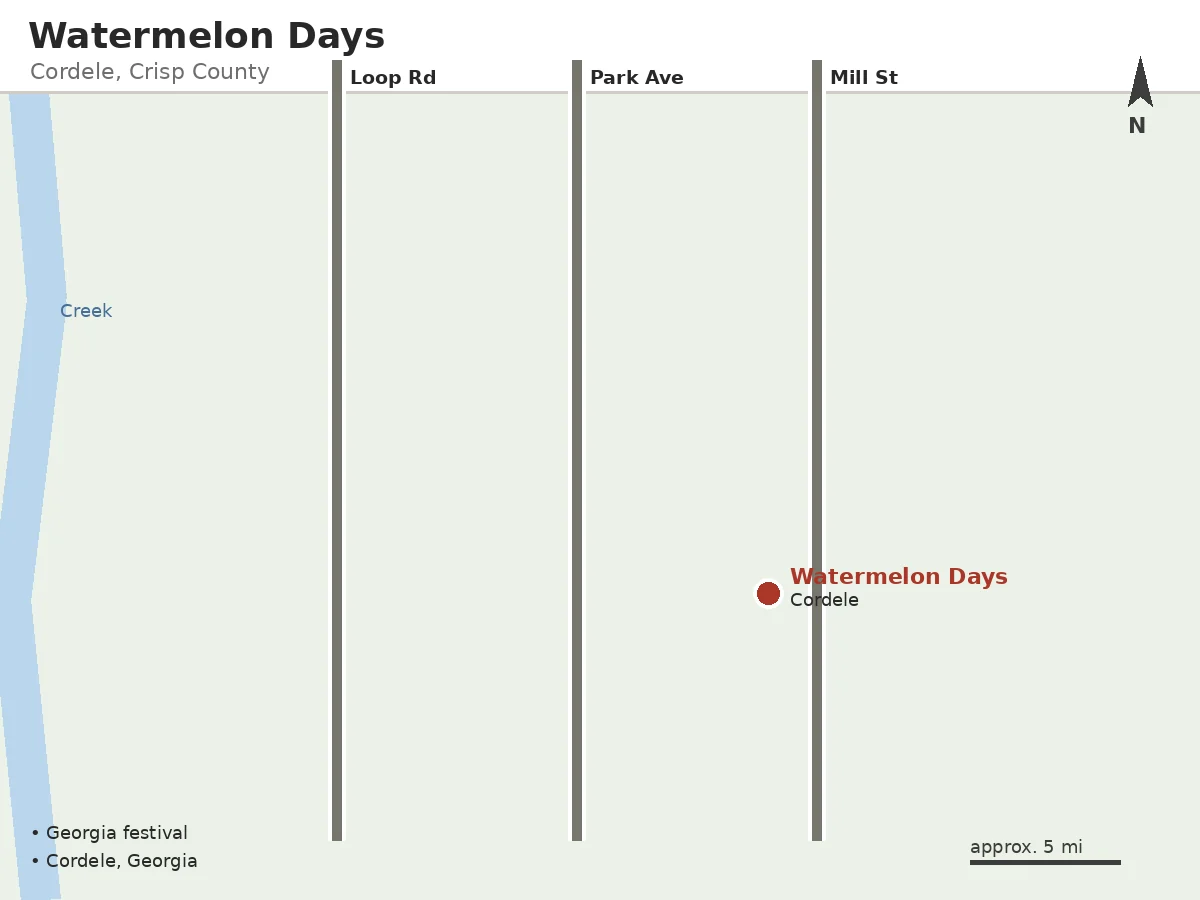
Watermelon Days takes place in Cordele, the county seat of Crisp County in central Georgia, with the festival grounds and surrounding streets serving as the gathering space for the event.
Watermelon Days Questions, Answered
When does Watermelon Days usually take place?
It is held in summer, timed to the local watermelon harvest rather than to a fixed holiday weekend. Because the crop sets the schedule, the exact dates shift from year to year, so check local listings and community announcements as the season approaches before you lock in travel plans.
Where in Cordele does the festival happen?
The event is centered in Cordele, the county seat of Crisp County. The town is compact and walkable, and the festival area is laid out so that food, entertainment, and family activities are all within easy strolling distance of one another.
Do I need to buy a ticket?
Admission is typically free, so there is no gate to worry about. Your spending will be on food, drinks, and any merchandise or crafts. Bringing both cash and a card covers the widest range of vendors, since payment preferences vary from stand to stand.
What food should I plan to try first?
Start with a chilled slice of locally grown watermelon, eaten early in the day when it is coldest. From there, work through watermelon drinks and desserts, then move on to the broader Southern festival menu. Pace yourself — the food is the point, and there is a lot of it.
Is Watermelon Days a good fit for kids and grandparents?
Yes. The festival is designed around family participation, with contests, games, and activities for children and plenty of seating and shade for older visitors. The mix of ages is one of its defining features, and strollers are manageable given the compact layout.
How do I get to Cordele?
Cordele sits in central Georgia along the Interstate 75 corridor, making it a straightforward drive from most of the state. Once you arrive, park and plan to walk. Arriving before midday makes both parking and the heat far more manageable.
What happens if it rains?
Summer thunderstorms in central Georgia are common but usually brief. Bring a small umbrella or poncho, find shelter or shade, and expect the event to continue once the weather clears. Rain rarely cancels the day; it just rearranges it.
Can I make a full weekend of it?
Easily. Pair the festival with a slow drive through the surrounding farmland, a walk through downtown Cordele, and a meal at a local restaurant. The county is large enough to explore and small enough that nothing feels like a production.
What Comes Next for Watermelon Days in Cordele
The festival’s future is tied to the same things that built it: farmland, families, and volunteers willing to spend a hot weekend making something good happen. As long as watermelon remains a crop worth celebrating in Crisp County, there will be a reason to gather in Cordele each summer.
The most likely evolution is a gradual one. Food-focused events continue to draw travelers looking for authentic regional experiences, and a festival that treats a single crop with this much seriousness sits squarely in that trend. That could mean more visitors, more vendors, and more attention — all of which need to be balanced against the intimacy that makes the event worth attending in the first place.
For now, the formula works. Come for the melon, stay for the town, and leave with a cooler full of the best of central Georgia’s summer.
Last updated: October 2026
Watermelon Days is one of those rare festivals where the food tells you exactly where you are. In Cordele, in the middle of Crisp County, a single crop carries an entire community’s summer — and for a weekend, anyone who shows up gets a seat at the table.


One Comment