Banks County Georgia Homer Pumpkin Festival
Autumn reaches Banks County slowly. The mornings sharpen, the pastures along the county’s farm roads shift from green to gold, and Homer — the county seat — starts stacking pumpkins on porches, wagon beds, and church steps. That slow turn of the season is the setting for the Homer Pumpkin Festival, a fall gathering that pulls people in from across a county of 18,035 residents and from the highways beyond it.
Homer sits in Northeast Georgia, in a county that spreads across 234 square miles of rolling farmland, pine woods, and small communities. The festival borrows its name from the town and its theme from the crop that defines the season here. It is not a theme-park production or a giant fairground spectacle. It is the kind of event where the town itself is the venue, where the smell of fried dough and cinnamon drifts down the street, and where a kid carrying an oversized pumpkin is the most photographed thing in the county that weekend.
This guide covers what the festival is, how it fits into the rhythm of a Northeast Georgia autumn, and how to build a weekend around it without missing the parts of Banks County that make the trip worth more than a single afternoon.
Homer Pumpkin Festival Essentials: Town, County, and Season
Before you plan a route or pack the car, here is the short version of where this festival lives and what it involves.
| Town | Homer |
| County | Banks County, Georgia |
| County seat | Homer |
| County population | 18,035 (2020 census) |
| Region of Georgia | Northeast |
| County land area | 234 square miles |
| Typical timing | Autumn, generally in October |
| Admission | Typically free to enter; vendors set their own prices |
| Setting | Small-town streets and open ground in and around Homer |
| Signature features | Pumpkin displays, seasonal food, live entertainment, family activities, and a community atmosphere |
The table is deliberately plain, because the appeal of this festival is plain too. There is no gate price to weigh against a list of headliners. What you spend depends on how many pumpkins you carry home and how many times you walk past the food row.
A Banks County Autumn Tradition in the Town of Homer
The Homer Pumpkin Festival is a seasonal celebration built around the harvest, staged in a town that has served as the Banks County seat since the county’s earliest days. Homer is small and central, the kind of place where the courthouse square, the schools, and the surrounding farmland all sit within a short drive of one another. That geography matters. When the festival takes over, it does not feel like an event dropped into a town — it feels like the town doing what it does every October.
The pumpkin is the organizing idea. Expect displays of the crop in every size and shade, from palm-sized decorative gourds to the heavy, ribbed giants that require two people and a wagon. Expect pumpkin in the food, too: pies and breads, pumpkin rolls, spiced coffee drinks, and the occasional creative twist that only shows up at a small-town fall festival. Expect children running between bales of hay while parents negotiate over which pumpkin is “the one.”
What the festival is not is a tightly scripted production. It moves at the pace of a Northeast Georgia autumn weekend — unhurried, friendly, and built for wandering. Visitors who arrive expecting to be entertained on a schedule may need to adjust. Visitors who arrive expecting to talk to people, eat something warm, and leave with orange in the trunk will find exactly what they came for.
Because Homer is the county seat of a county with roughly eighteen thousand residents, the festival also functions as a homecoming. People who grew up in Banks County and moved toward Atlanta or Athens for work often time a visit back around pumpkin season. That gives the crowd a mix that is hard to manufacture: local families, returning graduates, day-trippers from neighboring counties, and travelers who happened to see a sign on the road and pulled off.
Pumpkins, Farm Roads, and the Making of a Homer Tradition
Banks County’s identity has always been agricultural. The county’s 234 square miles sit in Northeast Georgia, where the land rolls rather than climbs, and where cattle pastures, hay fields, poultry houses, and small farms have long shaped the local economy. Harvest celebrations are not a novelty in a place like this; they are the natural expression of a calendar that has always been organized around planting and gathering.
The Homer Pumpkin Festival grew out of that pattern. Across small towns in the region, autumn has long been marked by church fall festivals, school carnivals, and community suppers. Over time, Homer’s version found its own identity around the pumpkin — a crop that is easy to grow locally, easy to display, and impossible to take seriously in a bad way. A pumpkin contest, a pie table, and a few craft vendors can turn an ordinary Saturday into something a town talks about all year.
As the festival matured, it settled into a familiar seasonal rhythm. Vendors arrived earlier. Entertainment grew from a single speaker and a microphone to a small stage with local musicians. Families began treating it as a fixed point on the fall calendar, the way they treat the first cold snap or the end of the high school football season. That continuity — the same faces, the same foods, the same argument over who grew the biggest pumpkin — is the real history of the event, and it is why people return.
Nothing about that story is unique to Homer in the abstract, but it is specific to Homer in practice. The town’s role as county seat gives the festival a natural gathering point. The surrounding farmland gives it authenticity. And the size of Banks County — small enough that neighbors recognize each other, large enough to sustain a real crowd — gives it a scale that larger festivals in bigger cities cannot replicate.
What a Day at the Homer Pumpkin Festival Feels Like
Plan on a day that unfolds in stages. The early hours are calm and good for browsing. Midday brings the heaviest crowds and the longest food lines. Late afternoon softens everything again, with the light turning gold across the fields and the pumpkin displays, which is when the photographs get good.
Pumpkin Bread, Funnel Cakes, and the Homer Food Row
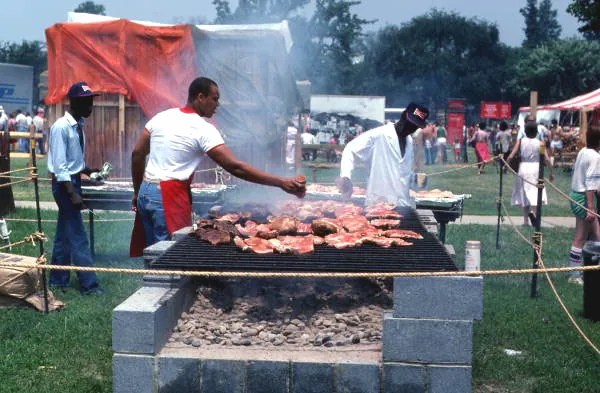
Food is central to any fall festival in Northeast Georgia, and Homer’s version leans into the season. Vendors typically offer the classics — pumpkin pie, pumpkin bread, pumpkin rolls, spiced cider, hot chocolate, and coffee — alongside fair-style staples like funnel cakes, corn dogs, barbecue, and boiled peanuts. Church groups and civic organizations often run their own tables, which is usually where the best homemade baking ends up.
Bring cash even if most vendors take cards, because small nonprofit booths sometimes do not. And pace yourself. The mistake first-timers make is eating a full meal at the first stand they see, then discovering three better options fifty yards later.
Local Music and Entertainment Around the Homer Stage
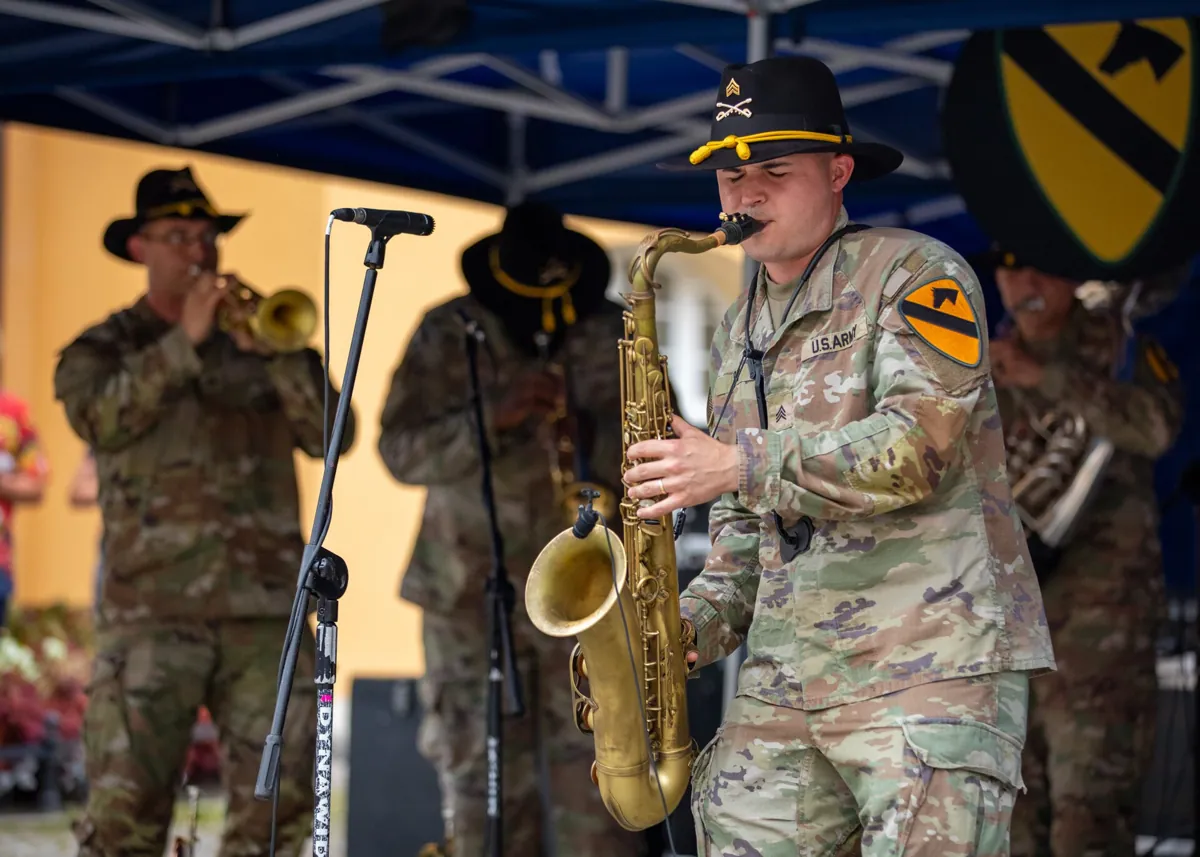
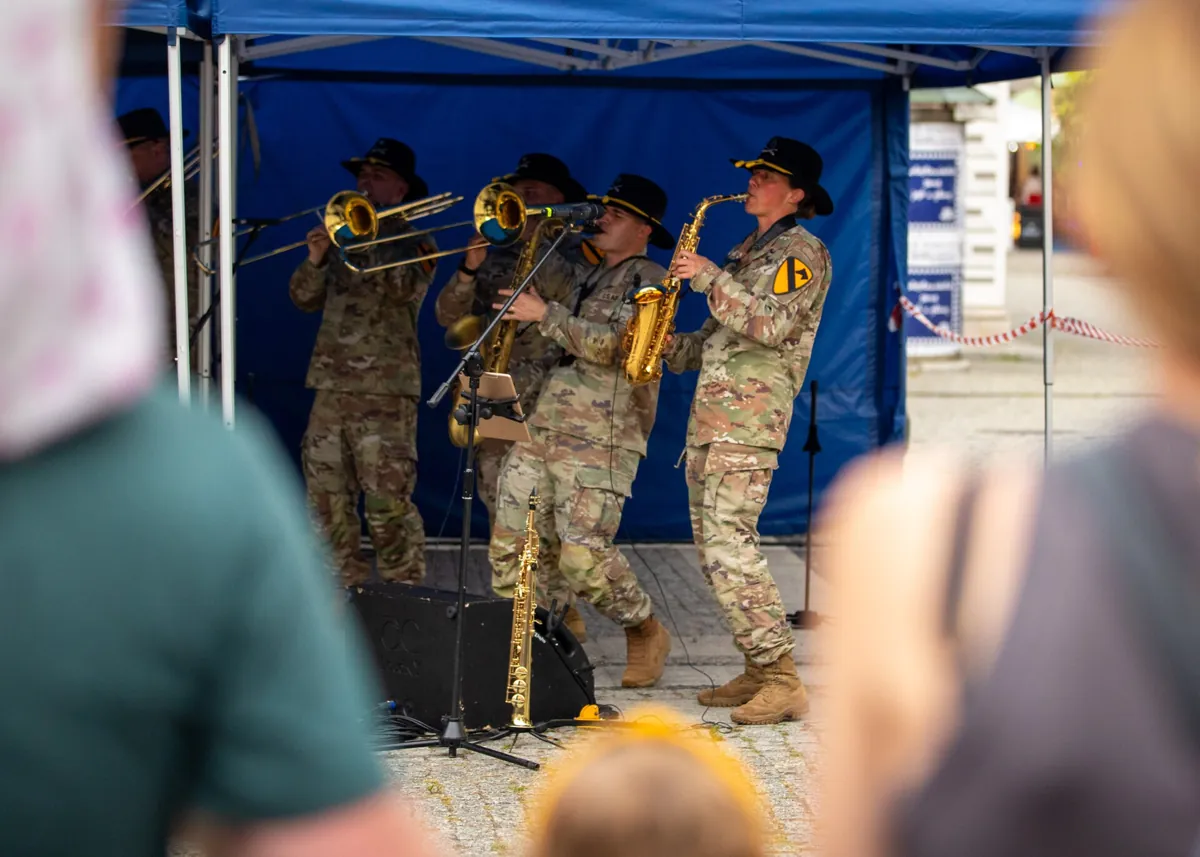
Entertainment at a festival this size is usually homegrown: acoustic duos, church choirs, bluegrass and country acts from around the region, dance studios, and school groups. The lineup changes from year to year, so it is worth checking local listings closer to the date. What stays consistent is the atmosphere — people spread out on lawn chairs, kids dancing near the front, and a sound that carries across the grounds without overwhelming conversation.
Family Activities for Kids of Every Age
This is where the festival earns its reputation. Pumpkin decorating, hay bales, games, face painting, and photo spots built around the season keep younger children busy for hours. Older kids gravitate toward the competitive side of things — pumpkin contests, seed-spitting, and whatever good-natured challenge the organizers have set up that year.
Because the setting is a small town rather than a sprawling fairground, it is easier to keep track of children here than at a large amusement park. Still, agree on a meeting point early, especially if your group splits up between the food row and the activity area.
Planning a Fall Trip to Homer, Georgia
Homer is not a hard place to reach, but it is a place worth approaching with a little planning. Fall weekends in Northeast Georgia are busy, and the region’s two-lane roads fill up quickly when the leaves start turning.
Getting to Homer from Atlanta, Athens, and the Mountains
Homer sits in Banks County in Northeast Georgia, positioned between the Atlanta metro area and the mountain counties to the north. Most visitors arrive by car, and the final approach is through countryside — farmland, tree lines, and small communities that give the trip its own character. If you are coming from a larger city, treat the drive as part of the outing rather than dead time. Fill the tank before you get close, and download your map in advance, because cell coverage can be uneven once you leave the main corridors.
Where to Stay in and Around Banks County
Lodging directly in Homer is limited, which is typical for a county seat of this size. Most visitors build their stay around nearby towns with more hotel and cabin inventory, or they book a rental property in the surrounding countryside. Camping and state park options exist elsewhere in Northeast Georgia, and a stay of that kind pairs well with a pumpkin festival weekend if you do not mind a longer drive in the evening. Book early for October weekends — leaf season and festival season overlap.
Parking and Getting In and Out of Town
Expect to park and walk. Small-town festivals usually rely on a combination of street parking, church and business lots, and open ground pressed into service for the day. Arrive before the late-morning rush if you want a spot close to the action, and be patient on the way out — the roads leading into Homer are not built for a sudden surge of traffic. Carpooling helps everyone.
Admission, Costs, and What to Carry in Your Wallet
Admission to the Homer Pumpkin Festival is typically free, with the cost of the day coming from food, crafts, pumpkins, and activities. That structure makes it an easy festival to sample: you can spend an hour and a few dollars, or make a full day of it. Bring a mix of cash and cards, set a rough budget for the kids, and remember that the pumpkin you buy at 10 a.m. has to be carried around all afternoon.
Reading the Northeast Georgia Autumn Weather
October in this part of Georgia is unpredictable in the best way. Mornings can be genuinely cool, afternoons can be warm enough for short sleeves, and a passing shower is always possible. Layer your clothing, bring a light rain jacket, and wear shoes you do not mind getting dusty. If rain is forecast, check local listings before you drive out — outdoor events sometimes adjust hours or shift activities.
A Sample Pumpkin Weekend in Homer and Banks County
Friday evening: Arrive in the area before dark and settle in. Have dinner in a nearby town, then take a slow drive along the county’s back roads as the light fades. This is when the season announces itself — hay bales in fields, decorations on porches, and the first real chill in the air.
Saturday morning: Get to Homer early. Park once, walk the grounds before the crowds build, and let the kids pick their pumpkin while the selection is still deep. Grab coffee and something baked for breakfast.
Saturday midday: Eat your way down the food row, catch whatever is happening on stage, and enter the contests you can still sign up for. This is the busiest stretch, so plan for lines and enjoy the crowd rather than fighting it.
Saturday afternoon: Slow down. Find a shady spot, listen to music, and let the day stretch out. Buy a few craft items, take the family photos, and load the pumpkins into the car before you forget.
Sunday: Use the second day to explore rather than repeat. Drive the surrounding countryside, visit a nearby town for lunch, and take the long way home. The festival is the anchor of the weekend, not the whole of it.
Homer, Helen, and Other Northeast Georgia Fall Stops
It helps to know what kind of fall festival you are choosing. Helen, in the mountains to the north, is the region’s best-known autumn destination, with a Bavarian-themed downtown and a heavily visited Oktoberfest season. It is bigger, busier, and more commercial. Homer is the opposite: smaller, quieter, and rooted in the agricultural life of Banks County rather than in tourism.
Towns such as Clarkesville and Cornelia, in neighboring Habersham County, offer their own fall character — historic squares, local shops, and easy access to mountain scenery. They make good half-day companions to a Homer weekend. Closer to home, the Banks County communities around the county seat give you a sense of what daily life looks like here once the vendors pack up.
If you have only one autumn weekend available and you want maximum spectacle, the larger mountain destinations will deliver it. If you want a pumpkin festival where you can park without a struggle, talk to the person selling you a pie, and still be home before dark, Homer is the better call.
Homer Pumpkin Festival Checklist: What to Bring and Know
A short list makes a long difference on a fall Saturday in Northeast Georgia.
| Layers and a light jacket | Cool mornings often turn into warm afternoons |
| Cash and a card | Small nonprofit booths may not take cards |
| Comfortable walking shoes | You will be on your feet and on uneven ground |
| A tote or reusable bag | For crafts, baked goods, and small pumpkins |
| Sunscreen and a hat | Fall sun in Georgia is still strong at midday |
| A charged phone and a backup battery | Photos drain batteries fast |
| A cooler left in the car | Useful for anything perishable you buy |
| A meeting point for your group | Crowds split families up quickly |
One more item that does not fit in a bag: patience. Small towns handle big weekends well, but they handle them at their own pace. Plan for a slower exit than you expect and you will enjoy the day more.
Beyond the Pumpkin Displays: Banks County and the Surrounding Hills
The festival is a reason to come to Banks County, but it is not the only thing worth doing once you are here. The county’s 234 square miles are mostly rural, which means the appeal is the landscape itself: farm roads that rise and fall, tree lines turning color, and small communities where a country store still functions as a gathering place.
Northeast Georgia rewards wandering. To the north, the land climbs toward the Blue Ridge and the region’s mountain towns, state parks, and overlooks. To the south and west, larger towns offer shopping, restaurants, and a different pace. Historic courthouse squares, old churches, and family cemeteries dot the countryside and quietly tell the story of a county that has been farmed for generations.
For a slower afternoon, consider a scenic drive with no particular destination, a stop at a local produce stand, or a walk through Homer itself once the festival crowds thin. County seats in places like this tend to be compact and walkable, with the kind of architecture that rewards a second look.
Why the Pumpkin Festival Matters to Homer and Banks County
In a county of 18,035 people, a festival is not just entertainment. It is an economic event, a social event, and a statement of identity all at once. Vendors earn a day’s revenue. Churches and civic groups raise money. Local businesses see traffic they would not otherwise get. And residents get something harder to measure: a Saturday when the whole county is in the same place at the same time.
There is also a practical benefit. Festivals like this one give small towns a reason to be visited rather than passed through. Travelers heading to the mountains or back to Atlanta often do not know what Banks County holds. A pumpkin festival puts Homer on the map for a weekend, and some of those visitors come back later for the quiet version of the town.
Most of all, the festival keeps a seasonal rhythm alive. In a world where almost anything can be bought in any month, a pumpkin festival insists that October is October. That is a small thing, and it is not a small thing at all.
Locating Homer in the Banks County Landscape
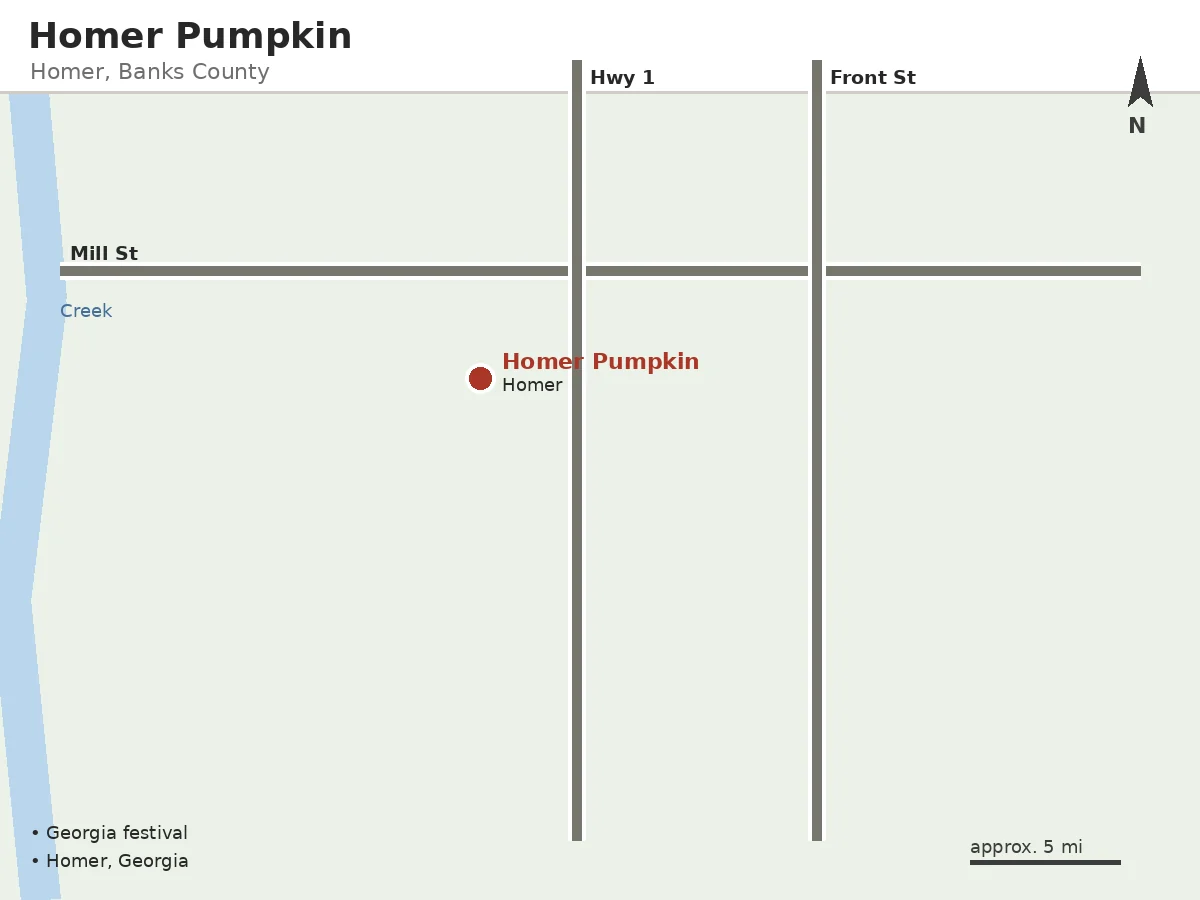
The Homer Pumpkin Festival takes place in Homer, the county seat of Banks County in Northeast Georgia, at the center of a 234-square-mile county of farmland and small communities.
Homer Pumpkin Festival: Visitor Questions, Answered
When is the Homer Pumpkin Festival held?
It is an autumn event, generally falling in October, when the pumpkin harvest and the region’s fall color arrive together. Exact dates shift from year to year, so confirm the current schedule through local listings before you plan your trip.
Where in Homer does the festival take place?
Activities are centered in and around the town of Homer, using the kind of spaces small county-seat towns have available — streets, lots, and open ground near the center of things. Because the footprint is compact, most visitors park once and walk the rest of the day.
Is there an admission charge?
Admission is typically free. Your spending is concentrated in food, crafts, pumpkins, and activities, so you can tailor the day to your budget. Bring both cash and a card, since smaller vendors and nonprofit booths may only accept one or the other.
Is the festival a good fit for young children?
Yes. The scale of the event works in families’ favor — it is easy to navigate, easy to keep an eye on kids, and full of activities designed for them. Strollers handle most of the ground reasonably well, though some areas may be grass or gravel.
What should I wear to a Banks County fall festival?
Dress in layers. Northeast Georgia mornings in October can be cool enough for a jacket, while afternoons often warm up considerably. Comfortable closed-toe shoes are the right choice for walking on grass, gravel, and uneven pavement.
Can I bring my dog?
Pet policies vary by year and by location within the event, so check with organizers or local announcements before you load the leash into the car. If dogs are allowed, keep them leashed, keep them away from food areas, and be mindful that crowds and children can stress animals.
How crowded does the Homer Pumpkin Festival get?
Midday Saturday is generally the busiest stretch, particularly if the weather is clear and the leaves are turning. Early morning and late afternoon tend to be calmer. If you want space to browse and shorter food lines, arrive close to opening.
Will there be food options for different diets?
Festival food tends toward the traditional and the indulgent, but vendor lineups change each year and often include a range of choices. If you have specific dietary needs, plan to ask at each booth and consider bringing a backup snack.
What’s Ahead for Pumpkin Season in Homer
Small-town festivals survive by staying recognizable. The Homer Pumpkin Festival’s future likely depends less on growing bigger than on staying true to what it already does well: a seasonal gathering in the Banks County seat that feels local even when visitors arrive from three counties away.
That said, growth brings its own pressures. Parking, traffic flow, and vendor space are the usual pinch points for an event staged in a compact town center. Expect organizers to keep refining those logistics year by year while protecting the unhurried feel that makes the festival worth attending.
For visitors, the practical advice will not change much: come early, bring layers, carry cash, and plan to spend more time than you intended. Northeast Georgia’s autumn is short, and a pumpkin festival in Homer is one of the better ways to spend a Saturday inside it.
Last updated: October 2026
If you go, go for the pumpkins, but stay for the town. Homer is a county seat of modest size in a county of 18,035 people, and for one weekend each fall it becomes the center of Northeast Georgia’s autumn — a place where the harvest, the food, the music, and the neighbors all show up at once. Bring a jacket, bring a friend, and leave room in the trunk.


One Comment