Monterey County California Rodeo Salinas Festival
The California Rodeo Salinas is the largest and most popular rodeo in the state, and it has been running since 1911, when it began as a Wild West show on the site of an old racetrack. Today it draws the top competitors on the Professional Rodeo Cowboys Association circuit to the Salinas Sports Complex every July.
The rodeo’s roots reach further back than the event itself, into the cattle roundups of the Spanish rancheros who once worked this valley. Those gatherings, part work and part festival, gave rise to the roping and bronco riding competitions that became the modern rodeo.
This guide covers what the California Rodeo Salinas is, how the weekend works, and how to plan a visit to the Salinas Valley for it.
What the California Rodeo Salinas Is
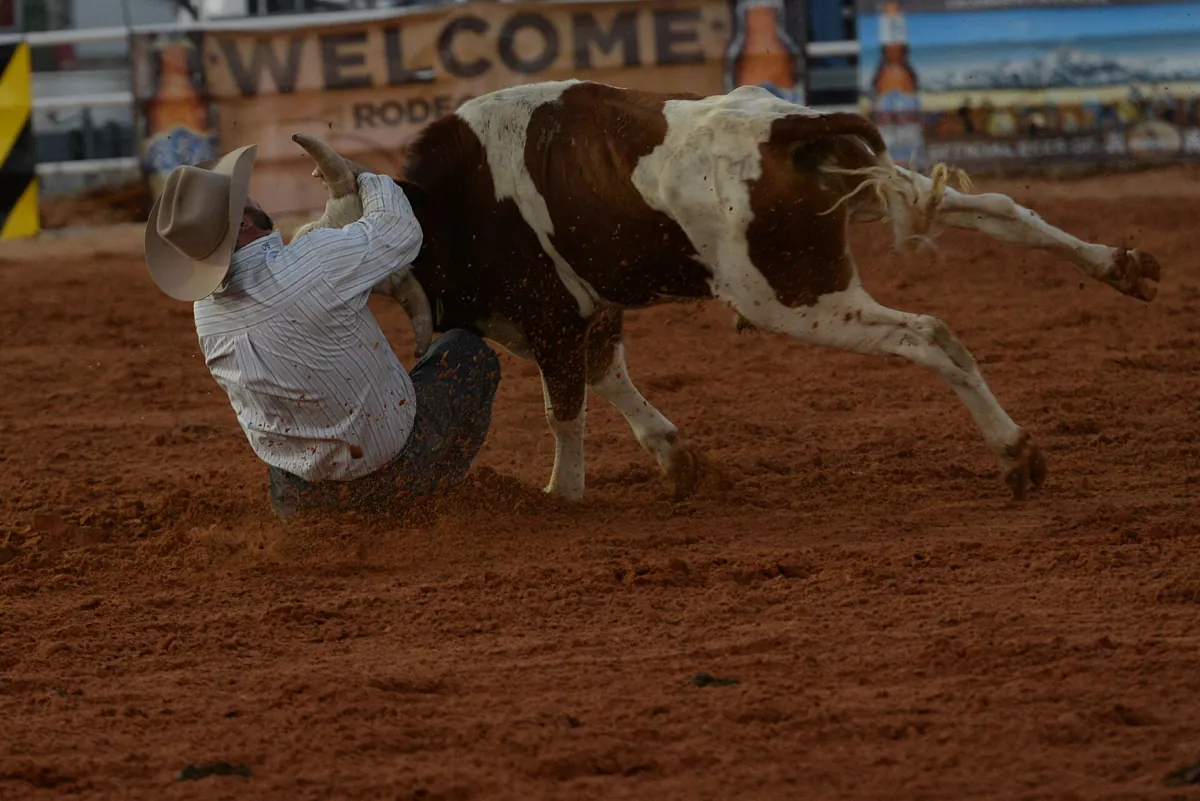
The California Rodeo Salinas is a multi-day professional rodeo held each July at the Salinas Sports Complex. It is a major stop on the PRCA circuit, which means the field includes some of the best cowboys and cowgirls in the sport, competing in the standard events: bareback riding, saddle bronc, bull riding, steer wrestling, tie-down roping, team roping and barrel racing.
Around the arena, the rodeo offers a full fairground experience, with food, vendors, a carnival atmosphere and the traditions that have grown up around the event over more than a century. It was inducted into the ProRodeo Hall of Fame in 2008.
For a nearby comparison, see the Monterey County California Monterey Jazz Festival.
A Century of Rodeo History
The event’s origins lie in the roundups of the Spanish and Mexican ranching era. Cattle were semi-wild and herds mixed animals from many owners, each distinguished by a brand. Twice a year, in spring and fall, owners tracked and gathered the animals to a central valley for branding, marking and slaughter. Those roundups, or rodeas, could last more than a week and included barbecues, fandangos and competitions in roping and bronco riding.
The Salinas rodeo began in 1911 as a Wild West show on the old race track ground. In the 1920s it found a permanent home at Sherwood Park, where a new grandstand of 8,000 seats, a half-mile racetrack, barns and bucking chutes were built in 1924. The rodeo was incorporated a year later, and Bernice Donahue became its first Rodeo Queen.
The 1930s brought record attendance despite the Depression, and by the end of that era professional cowboys outnumbered the locals who had once filled the field. In the 1990s, the rodeo underwent a major makeover, with new grandstands more than doubling seating, the addition of the Long Branch Saloon, and the return of the Chuck Wagon races.
Where and When
The rodeo is held each July at the Salinas Sports Complex in Salinas, the seat of Monterey County and the heart of the Salinas Valley, one of the most productive agricultural regions in the country.
| Location | Salinas Sports Complex, Salinas, California |
| Typical timing | A four-day run in July |
| Founded | 1911, as a Wild West show on an old racetrack |
| Status | Largest rodeo in California; ProRodeo Hall of Fame (2008) |
| Sanctioning | Professional Rodeo Cowboys Association circuit |
| Signature events | Bull riding, bronc riding, roping, steer wrestling, barrel racing |
| Traditions | Rodeo Queen, Chuck Wagon races, the Long Branch Saloon |
The Events
A professional rodeo is a series of timed and judged events, each with its own rules and its own specialists. Bareback and saddle bronc riders are scored on how well they ride a bucking horse, bull riders on how they handle the rankest stock, and the timed events, from steer wrestling to team roping and barrel racing, are decided by fractions of a second.
The Salinas rodeo draws a deep field because of its standing on the circuit. A strong showing here matters in the season standings, and the crowds know the difference between a good run and a great one. The Chuck Wagon races and the Professional Bull Riding event add spectacle beyond the standard program.
Planning Your Visit
Salinas is inland from Monterey, about an hour’s drive from the coast, and the rodeo weekend is one of the busiest times of the year for the town. Lodging fills early, and tickets to the popular performances sell out, so planning ahead matters.
- Book lodging and tickets well in advance; the rodeo draws large crowds.
- Expect hot inland summer weather, and dress for it.
- Arrive early to explore the grounds before the performance starts.
- Check the schedule for the events you most want to see, including the PBR night.
- Pair the trip with the Monterey Peninsula, about an hour away.
Beyond the Rodeo
The Salinas Valley is one of California’s agricultural heartlands, and the region around the city rewards exploration. The National Steinbeck Center celebrates the author John Steinbeck, who grew up in Salinas and set much of his work in the valley. The Monterey Peninsula, with Carmel, Pebble Beach and the aquarium, is a short drive west.
For visitors who want to understand the landscape behind the rodeo, the valley’s fields, ranches and small towns offer a glimpse of the working West that gave the sport its name.
The Arena and the Events
A professional rodeo program is a sequence of timed and judged events, and the Salinas schedule packs them across several performances. Bareback riding opens the program, followed by steer wrestling, team roping and saddle bronc riding, with tie-down roping, barrel racing and bull riding rounding out the card.
Each event has its own specialists and its own standards. A bareback or saddle bronc rider is scored on how well they ride a bucking horse, while bull riders face the rankest stock in the sport. The timed events are decided by hundredths of a second, and the margins between a paycheck and a no-score are tiny.
The Salinas rodeo also stages traditions that go beyond the standard card. The Chuck Wagon races returned in the 1990s and have become a crowd favorite, and the Professional Bull Riding event on the Wednesday before the main rodeo brings its own audience. The Long Branch Saloon anchors the social side of the grounds.
The Rodeo and the Salinas Valley
The California Rodeo is inseparable from the place that hosts it. Salinas sits in the middle of one of the most productive agricultural valleys in the world, and the surrounding ranches and fields are the reason the rodeo feels rooted rather than staged.
The city is also the hometown of John Steinbeck, whose novels drew on the valley’s farms, ranches and working people. The National Steinbeck Center celebrates that legacy, and visitors who come for the rodeo can spend a morning understanding the landscape that produced both the writer and the sport.
For the community, the rodeo is a civic institution as much as an entertainment. Local volunteers and committees run it, generations of families have attended, and the event raises money for scholarships and community programs through the year.
The Grounds and the Traditions
The Salinas Sports Complex is built for crowds, with grandstands that more than doubled in capacity during the 1990s makeover, a half-mile racetrack and the barns and chutes that give a rodeo its working character. Between performances, visitors can walk the grounds, watch stock being moved, and see the sport’s practical side up close.
The social traditions matter as much as the competition. The Long Branch Saloon, added on the south end of the arena, gives the grounds a gathering place, and the Chuck Wagon races bring a historic spectacle to the card. Food vendors and a carnival atmosphere round out the experience for families.
The rodeo also maintains a museum and historical collection, formed by a committee in 1979 and housed in a building donated for the purpose. It is open during the rodeo and by appointment, and it preserves the photographs, programs and artifacts that document more than a century of the event.
The Sport and Its Athletes
Professional rodeo is a demanding, physically punishing sport, and the cowboys and cowgirls who compete at Salinas are among the best in the world. Many travel the circuit full time, competing week after week across the country, and a strong Salinas performance can shape a season.
The animal welfare standards that govern the sport have evolved considerably over the decades, and PRCA events operate under rules designed to protect both contestants and livestock. Veterinarians and stock contractors are part of every performance, and the care of the horses and bulls is a professional responsibility the sport takes seriously.
For audiences, the appeal is the combination of skill, courage and unpredictability. A bull ride or a bronc ride is decided in seconds, and a barrel racing run can turn on a single tight turn. That immediacy is what has kept rodeo audiences coming back for more than a century.
Getting to Salinas
Salinas sits on Highway 101, roughly an hour south of San Jose and an hour inland from the Monterey Peninsula. That central location makes it reachable from much of the Bay Area and the Central Coast, and the rodeo weekend draws visitors from across the region.
The fairgrounds and sports complex are close to the city center, and parking is available around the site, though it fills quickly on the busiest days. Shuttles and local transit offer alternatives, and arriving early makes the whole day easier.
Summer weather in the Salinas Valley is warm and often hot, with little of the coastal fog that cools Monterey. Sun protection, water and light clothing are essential for a day at the rodeo, and visitors planning to pair the trip with the coast should pack for two climates.
Festival Area Map
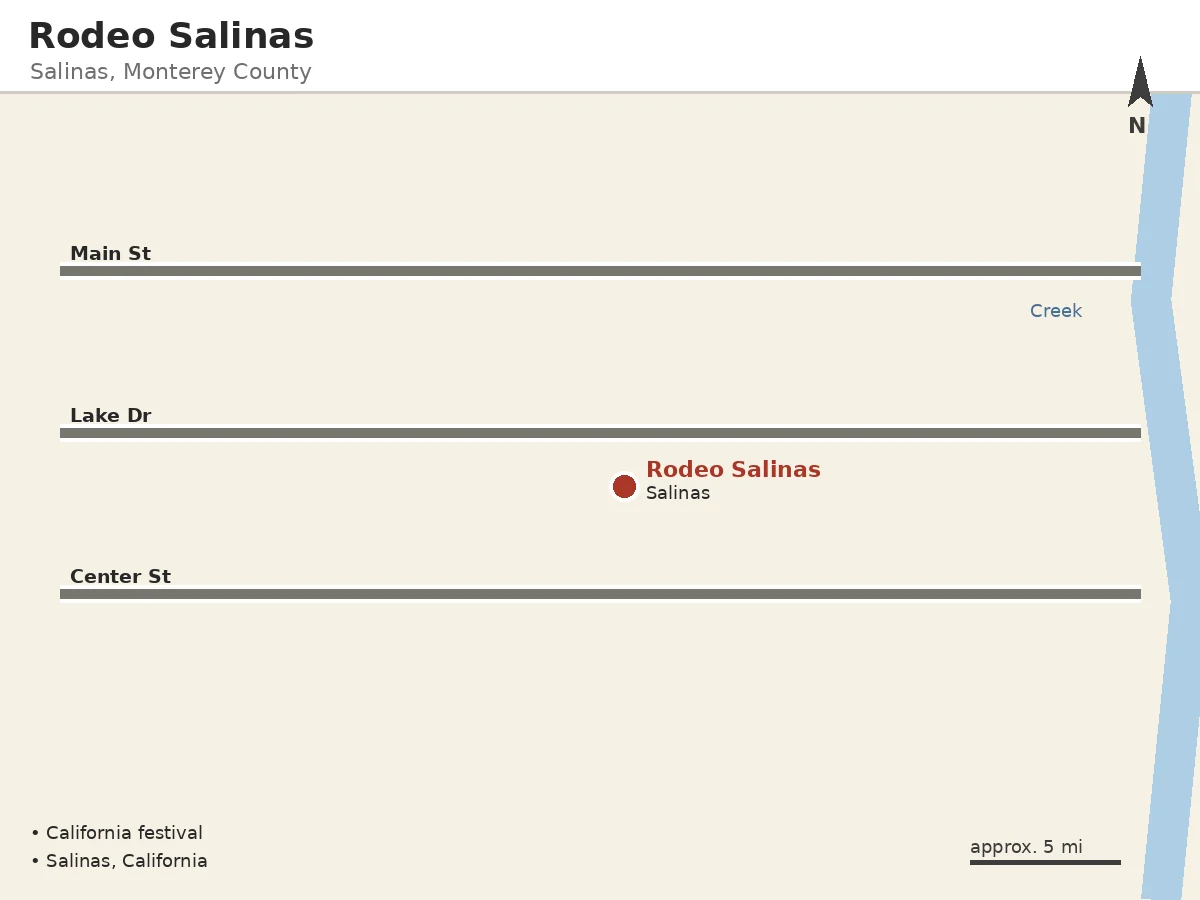
The map below marks the Salinas Sports Complex, with the approach from Highway 101 for planning your visit to the rodeo.
Frequently Asked Questions
When is the California Rodeo Salinas?
It is held over several days in July, typically a four-day run.
Where is it held?
At the Salinas Sports Complex in Salinas, California.
How long has the rodeo been running?
Since 1911, making it one of the oldest and largest rodeos in California.
Is it a professional rodeo?
Yes. It is a major stop on the Professional Rodeo Cowboys Association circuit.
What events are held?
Bareback and saddle bronc riding, bull riding, steer wrestling, tie-down and team roping, and barrel racing.
Is there more than rodeo?
Yes. The grounds include food, vendors and a full fairground atmosphere around the arena.
What to Expect From the Next Rodeo
How often is it held?
It is an annual event, held each July.
When is the next rodeo?
The next edition is expected in July. Confirm dates and ticket details with the organizers.
Will the format change?
The core rodeo events and traditions have been consistent, though the schedule and added attractions vary from year to year.
Last updated: October 2026
The California Rodeo Salinas is more than a sporting event. It is a link to the ranching history of the Salinas Valley, carried forward by a community that has staged it for more than a century. For anyone curious about the working West, it is one of the best places in California to see the sport at its highest level.