Somerset County Maryland Crisfield Heritage Festival
Crisfield sits low on the water at the southern edge of Somerset County, a working waterfront town where boats, marsh and seafood shape daily life in a direct and visible way. The Crisfield Heritage Festival gathers that identity into a single autumn day of food, craft, music and hands-on activity for children. Run by the Crisfield Heritage Foundation, the gathering has been documented in two recent editions that share the same daytime hours yet used two different waterfront settings. Anyone drawn to Chesapeake Bay culture, to small-town craft traditions or to a relaxed family outing beside the marina will find the shape of the day easy to understand from those two editions alone.

About the Festival
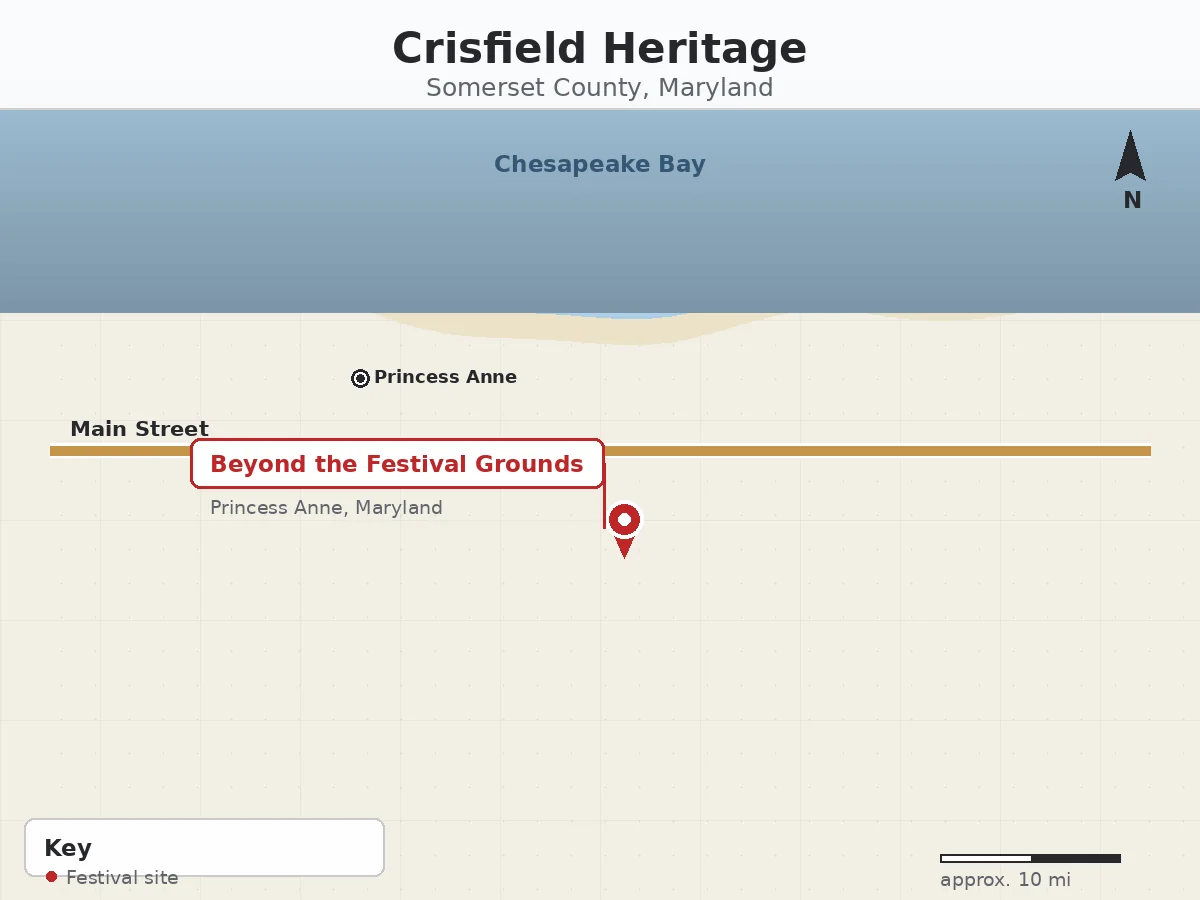
The published name is Crisfield Heritage Festival, and the sheet title is printed exactly in that form. The organiser is the Crisfield Heritage Foundation, the same body that operates the J. Millard Tawes Historical Museum in Crisfield. Crisfield itself is the host town, set in Somerset County on Maryland’s Eastern Shore. Crisfield is not the county seat, a point worth stating plainly because visitors sometimes assume the largest festival in a place must sit in its administrative centre. Princess Anne holds that seat role for Somerset County. Crisfield’s claim here rests instead on its waterfront, its museum and its long association with Chesapeake Bay working life.
The fourth annual edition took place on Saturday 27 September 2025, running from ten in the morning until three in the afternoon. The fifth annual edition followed on Saturday 10 October 2026, with identical hours. Both editions were presented as free to attend, a position stated in the foundation’s own layer and in a regional events-directory layer. At its core the programme mixes celebration with recognition, from children’s making activities and craft stalls to Bay culture demonstrations and the announcement of the Legacy Award and Heritage Awards recipients. Food anchors the social side, with crabcakes from the Crisfield Lions and Lioness Club alongside local barbecue, and live entertainment runs through the day.
The autumn timing is also part of the appeal. By late September the height of the summer boating season has eased, yet the waterfront remains active and the weather usually still invites outdoor gathering. An October date pushes that feeling a little further towards harvest season, when food, craft and community recognition sit comfortably together. In either month the festival occupies the gentler end of the Crisfield calendar, offering a daytime outing that does not demand an entire weekend.
Visitors coming from elsewhere in Somerset County or from further across the Eastern Shore can treat the event as the centrepiece of a single day trip. The short running time leaves the late afternoon free, and the free admission removes one barrier for larger family groups deciding whether to make the journey. That practical combination helps explain why a heritage gathering run by a museum foundation can draw beyond the town’s own residents.
For a useful comparison, see the Queen Anne’s County Maryland Sudlersville Peach Festival for another county festival.
Quick Facts
| Item | Detail |
| Published name | Crisfield Heritage Festival |
| Host town | Crisfield, Maryland |
| County seat note | Crisfield is not the Somerset County seat; Princess Anne is |
| Organiser | Crisfield Heritage Foundation |
| 2025 edition | Fourth annual, Saturday 27 September 2025, ten in the morning to three in the afternoon |
| 2025 venue | J. Millard Tawes Historical Museum and Somers Cove Marina |
| 2026 edition | Fifth annual, Saturday 10 October 2026, ten in the morning to three in the afternoon |
| 2026 venue | West Main Street down by the waterfront |
| Admission | Free, as stated for the documented editions |
| Programme highlights | Children’s activities, live entertainment, food, craft vendors, Bay culture demonstrations and awards announcements |
History
No founding narrative accompanies the festival in the layers read. What survives instead is a pair of consecutive annual billings, fourth annual in 2025 and fifth annual in 2026, presented consistently by the foundation and by a regional directory.
Those billings should be handled with care. Counting backwards from fifth annual in 2026 to declare an opening year would go beyond the evidence, so no founding year is derived here from billing arithmetic. A billing shows how an organiser numbered an edition; it does not by itself supply a verified founding date.
The awards woven into the festival carry their own separate numbering, and separating them prevents a common confusion. In 2026 the foundation’s recognition scheme involved the fifth annual Legacy Award and the seventh annual Heritage Awards. Those figures belong to the awards themselves, not to the festival’s own annual count, even though the recipients were announced during the festival gathering. A reader who merges the three sequences into one timeline would misread all three.
The venue shift also forms part of the recent history. In 2025 the festival sat at the museum and Somers Cove Marina. For 2026 it moved to West Main Street down by the waterfront because of renovations at Somers Cove Marina, a practical response to works at the marina rather than a permanent redefinition of its home.
Beyond those points, the history is one of continuity across two autumn Saturdays: same hours, free admission, and the same blend of activity, food, craft, demonstration and awards, even after a forced change of site.
For a small foundation led event, reaching a fourth and then a fifth annual billing already signals a degree of organisation and local support. Each edition requires vendors willing to return, volunteers to run children’s tables, food providers ready to serve a lunchtime crowd and demonstrators prepared to give up a Saturday. The documented continuity across 2025 and 2026, through a change of venue, shows those pieces being assembled successfully more than once.
What to Expect
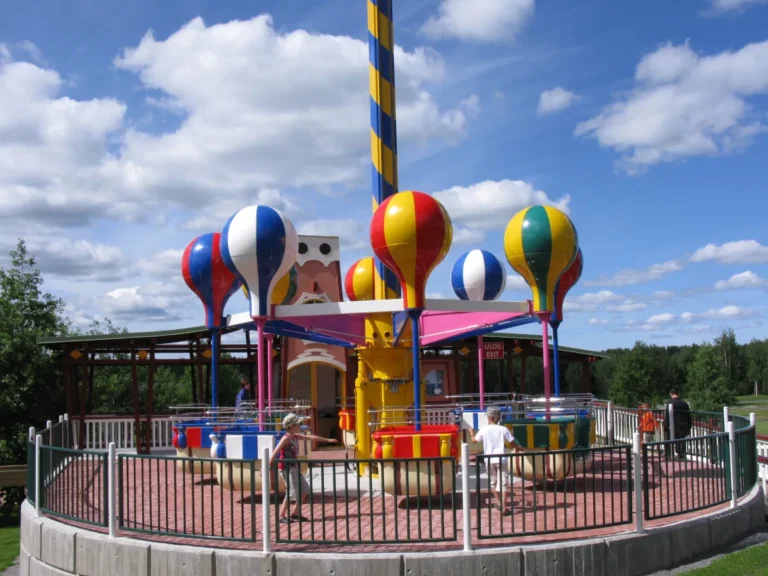
Children’s activity forms the most detailed strand. Young visitors could paint bird houses, work with sand art, try a fishing pond and join games laid on for the day. Those tactile occupations suit a short daytime festival where families arrive and leave at different points.
Live demonstrations showcasing Chesapeake Bay culture provide the second strand. The layers describe them in general terms rather than naming individual demonstrators, so visitors should expect presenters showing skills and practices connected with life on and around the Bay.
Food is straightforward and local. The Crisfield Lions and Lioness Club supplied crabcakes, a fitting centrepiece in a crab town, and local barbecue stood alongside as the other documented offering.
Arts and craft vendors fill another part of the grounds, and live entertainment runs through the day, though neither documented edition names its performers. Attention also turns to the awards announcement, when recipients are named publicly. Because both editions ran for only five hours, a visitor arriving near opening can sample every strand before the three o’clock close.
The awards announcement also changes the rhythm of the day in a welcome way. Much of the festival is informal, with visitors drifting between tables and stalls at their own pace, but a public presentation gathers everyone towards a shared focus. Arriving visitors who time their browsing around that moment will experience both sides of the event, the relaxed fair atmosphere and the more formal recognition of heritage work.
Planning Your Visit
Confirm the venue from the foundation’s current information before travelling. The 2025 museum and marina pairing and the 2026 position on West Main Street sit in the same harbour side part of Crisfield, yet parking and layout would follow whichever site is in use.
Timing rewards an early start. Arriving in the first hour leaves room for children’s activities before midday crowding around food stalls, so families should head to the fishing pond and craft tables first.
Admission for both documented editions was free, so spending concentrates on food, craft purchases and travel to Crisfield.
Dress for an outdoor waterfront setting in early autumn. Wind across open water can cool the afternoon quickly, so comfortable shoes and a light extra layer are wise.

Anyone combining the festival with the museum should check museum arrangements separately. In 2025 the museum formed part of the setting, but the 2026 move means museum visiting cannot be assumed to sit inside the festival footprint in every edition.
Travel planning should allow extra minutes for finding the correct waterfront area, especially in a year when the site differs from the previous edition. Crisfield is not a large town, yet a first time visitor following an old venue description could easily start in the wrong place. A quick check of the foundation’s latest details on the morning of travel is a small step that protects the short festival window.
A Sample Itinerary for the Day
Arrive shortly before ten and begin with a slow circuit, noting where vendors, food stalls and demonstration spots sit. That first loop prevents discovering a favourite stall only as packing away begins.
From ten thirty, settle children at the bird house painting and sand art tables, then move to the fishing pond and games. By late morning, watch at least one full demonstration sequence, because the techniques behind Bay culture unfold gradually.
Take lunch around midday, choosing crabcakes or local barbecue, listen to the live entertainment, and keep an ear open for the awards announcement.
Spend the early afternoon among the vendors, and if the museum is open during that edition, an hour inside adds context. Finish with a walk towards the water before the three o’clock end.
How This Festival Compares
Crisfield hosts larger celebrations, and keeping this gathering distinct clarifies what it offers. The National Hard Crab Derby is a different occasion built around crab racing, and the J. Millard Tawes Crab and Clam Bake is a separate event centred on a communal seafood feast.
Against those neighbours, the Heritage Festival is the more deliberately educational gathering. Its demonstrations show how Bay culture works, and its awards honour people who have preserved local heritage. A visitor wanting to understand Crisfield’s watermen and foodways will find this smaller autumn day more focused.
It also differs from a conventional county fair, with no documented midway or livestock judging. Its ground is a museum, marina or waterfront street rather than a fairground, and its running time is a single short day.
Within Somerset County, the festival gives Crisfield a heritage led occasion distinct from events in Princess Anne, the county seat.
Beyond the Festival Grounds
After the three o’clock close, visitors can linger by the water, watch boats around the marina and absorb the flat, open light of this corner of the Chesapeake.
The museum deserves attention whenever it is open, since the foundation operates it as a year round expression of the same mission. Its exhibits deepen the background to the demonstrations seen during the festival.
Eating in town extends the food theme, with crab the obvious speciality, and a relaxed early supper suits the afternoon finish. Crisfield also works as a base for exploring southern Somerset County, where marsh roads reward slow driving.
The surrounding waters and wetlands support birdlife and wide skies, and a short walk away from the harbour changes the mood to quiet observation.
Even without a camera, pausing to watch the water traffic after the crowds thin gives the heritage theme a living context.
Why the Festival Matters
Small heritage festivals gather neighbours, hand children a brush or a fishing line, feed everyone food rooted in local practice and pause to honour residents whose efforts might otherwise pass without public thanks. This festival does each of those inside five hours.
By announcing the awards recipients during a public celebration rather than at a closed ceremony, the foundation turns private gratitude into shared recognition, and younger visitors absorb a lesson about sustained care for local history.
Demonstrations also keep practical knowledge visible, preserving skills that survive only when shown and passed on. In a working waterfront town facing continual change, presenting that culture yearly is itself a form of stewardship.
Finally, relocating in 2026 rather than cancelling when renovations affected the marina speaks to the event’s place in the local calendar.
There is also a simple social value in a free event. Removing the ticket barrier means neighbours can drop in briefly, grandparents can bring several children without calculating entry costs, and curious passers by can join without commitment. That openness suits a heritage festival whose purpose includes widening, not narrowing, the circle of people who feel local history belongs to them.
Frequently Asked Questions
What happens during the five hours of the festival?
The documented programme packs children’s activities such as bird house painting, sand art, a fishing pond and games together with live entertainment, food, arts and craft vendors and live demonstrations of Chesapeake Bay culture. The Legacy Award and Heritage Awards recipients are also announced during the gathering.
Which venue should visitors expect in Crisfield?
Venue depends on the edition. The 2025 festival used the J. Millard Tawes Historical Museum and Somers Cove Marina, while the 2026 festival moved to West Main Street down by the waterfront because of renovations at Somers Cove Marina. Checking the foundation’s current details before travelling is the safest course.
Who organises the gathering and runs the museum?
The Crisfield Heritage Foundation organises the festival and also operates the J. Millard Tawes Historical Museum. That single heritage body links the event to the town’s museum based preservation work throughout the rest of the year.
What food is documented at recent editions?
Recent editions featured crabcakes from the Crisfield Lions and Lioness Club and local barbecue. Those two offerings capture the festival’s flavour well, pairing the town’s signature seafood with a hearty alternative cooked by local hands.
What to Expect From the Next Somerset County Maryland Crisfield Heritage Festival
How often is Somerset County Maryland Crisfield Heritage Festival held?
The documented billings present the festival as an annual autumn gathering, with a fourth annual edition in September 2025 followed by a fifth annual edition in October 2026. Those consecutive numbered editions show the intended rhythm, although each future edition still depends on the foundation confirming its own arrangements.
When is the next Somerset County Maryland Crisfield Heritage Festival?
No date for an edition after the fifth annual gathering on Saturday 10 October 2026 is given in the layers read for this article. Readers planning ahead should watch for the foundation’s own announcement rather than assuming the same Saturday pattern will repeat exactly.
Will the dates change?
Dates have already varied between the two documented editions, falling in late September in 2025 and in early October in 2026, so movement within the autumn season is clearly possible. Venue may shift as well, as the 2026 relocation during marina renovations demonstrated. Any future date or site should therefore be treated as provisional until the foundation publishes it.
The Crisfield Heritage Festival succeeds by staying close to its subject. It does not inflate itself into a regional mega event or borrow the identity of Crisfield’s bigger seafood occasions. Instead it offers one free autumn day where a museum foundation, a waterfront town and its visitors meet around craft, food, demonstration and public thanks, and that modest clarity is exactly what makes the gathering worth the trip down to the water.