Evangeline Parish Louisiana Mardi Gras Festival
Before the sun is properly up on Fat Tuesday, the country roads around Mamou already carry the sound of hooves and feet, laughter and accordions, and the bright, patched costumes of riders who have been up since before dawn. The courir has set out to ride from house to house through the countryside, gathering the makings of a gumbo that the whole town will share before the day is done. By afternoon the riders are back in downtown Mamou, the parade winds through the streets, and the town settles into a street party. This is not a festival in the usual sense of a gated ground with a stage and headline acts. It is a season, a custom, and a day of riding, chasing, cooking and dancing that belongs to Mamou and to the older ways of Mardi Gras in the Louisiana prairie country.
The name at the top of this article is the working title under which the event is filed, but no layer read prints that exact name for the celebration. The published names are “Mamou Mardi Gras”, “Courir de Mardi Gras de Grand Mamou” and “Courir de Mardi Gras”, and this article uses the published “Mamou Mardi Gras” name in the body and explains the difference honestly.
About
Mamou Mardi Gras is the Carnival-season celebration of Mamou, a town in Evangeline Parish in south-central Louisiana. Its centrepiece is the courir de Mardi Gras, a traditional run in which masked riders travel the country roads on horseback and on foot, stopping at homes to beg, sing, dance and collect the ingredients for a communal gumbo. The run ends back in downtown Mamou, where a parade and a street party close out Fat Tuesday. The celebration begins on the last Saturday of Mardi Gras and runs through Fat Tuesday, so the courir is the climax of several days.
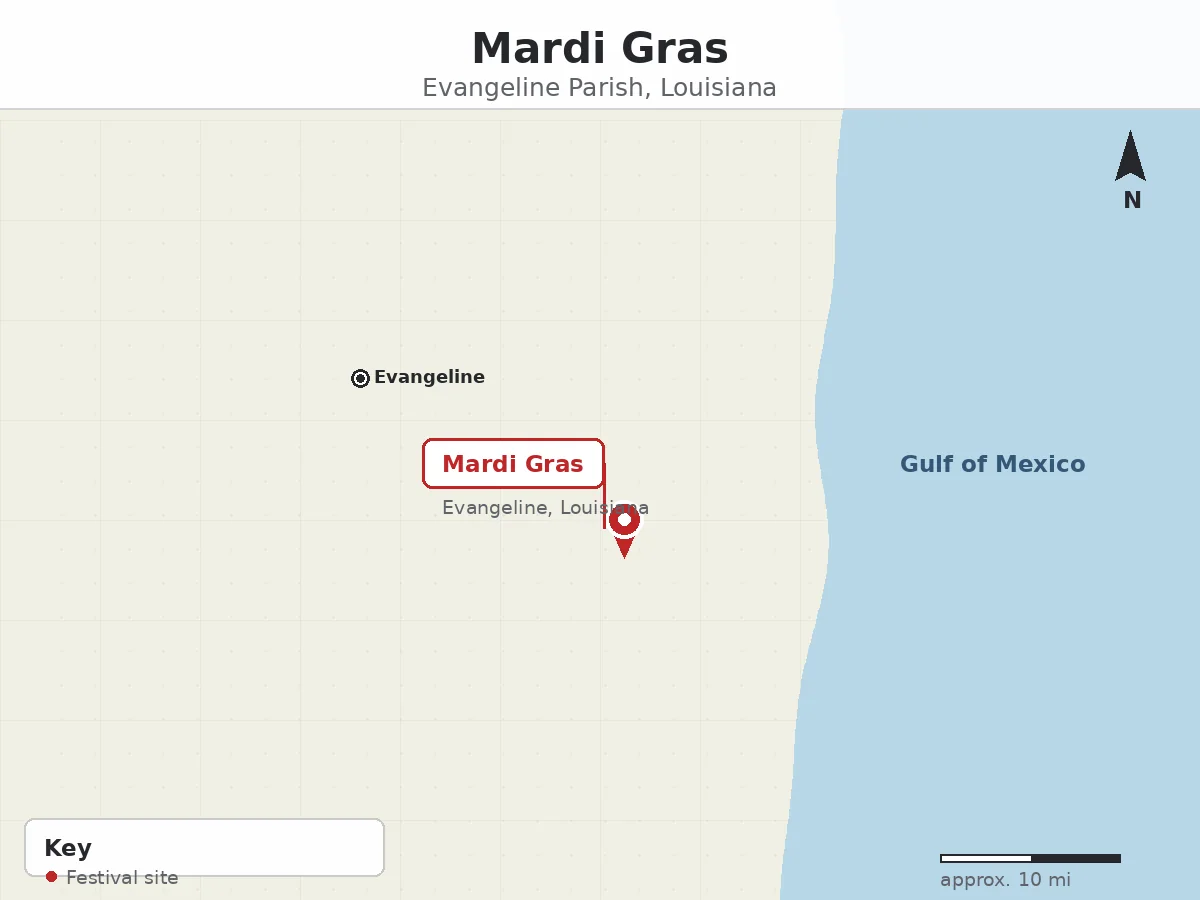
The seat of Evangeline Parish sits in Ville Platte, the larger town to the east, while Mamou carries its own identity as a centre of Cajun music in the west of the parish. No organiser name form is documented in the layers read for the Mamou courir, and this article invents none. The run is a community custom carried by its riders, its capitaines and the households that receive them. The venue is the town and the countryside together: downtown Mamou holds the parade and the street party, while the country roads carry the courir itself.
Quick Facts
| Detail | Information |
| Published name | Mamou Mardi Gras |
| Longer published form | Courir de Mardi Gras de Grand Mamou |
| Host town | Mamou, Louisiana |
| Parish seat | Ville Platte, not Mamou |
| Venue | Downtown Mamou and surrounding country roads |
| Season | Last Saturday of Mardi Gras through Fat Tuesday |
| Fat Tuesday 2026 | 17 February 2026 |
| Courir start | Half past six in the morning |
| Parade return | Around three in the afternoon |
| Admission | No price or free status stated |
History
The Mamou courir abides by the older traditions of the rural Mardi Gras. In the old form, the capitaines who lead the run go unmasked, while every other rider wears a mask. The capitaines are the authority of the day, speaking for the group at each house, while the masked riders are the revellers, the beggars and the dancers, in handmade patched costumes and painted, fringed masks.
For a useful comparison, see the Evangeline Parish Louisiana Cajun Music Festival for another county festival.
The tradition declined by the middle of the nineteen forties, when the old rural runs were fading across the region, and it was revived thereafter by people in Mamou who did not want it to disappear. The layers give no single date for the revival, and this article does not invent one. What they record is a pattern of loss and return: a custom that nearly slipped away, then was taken up again and now anchors the town’s Carnival season each year.
The event was suspended twice in its history, during the American Civil War and during World War Two, and those two suspensions are recorded in an encyclopedia layer. A celebration set aside in wartime and taken up again afterwards carries a different weight from one that has run without a break. Mamou grew up as a Cajun town in the prairie country of Evangeline Parish, and the courir belongs to that setting: farm roads, farmhouses, country homes, and a gumbo cooked from what the countryside gives up.
What to Expect
A visit to Mamou Mardi Gras begins early, and visitors who arrive late will miss the heart of it. On Fat Tuesday the courir starts at half past six in the morning, when the masked riders set out from town on foot and on horseback. The riders travel from house to house, singing, dancing and begging for the ingredients of the end-of-day gumbo, and the most famous part of the run is the chicken chase, in which a chicken is released and the riders chase it down.
The riders collect goods as they go, and the gumbo they are gathering for is communal: the ingredients begged along the route become the meal the town shares when the run is done. It is not a parade that passes and is gone, but a working journey that gathers a meal, and the meal is the point. Visitors will see masked figures on horseback and on foot, costumes patched and bright, music from accordions and fiddles, and a company that is half procession and half party.
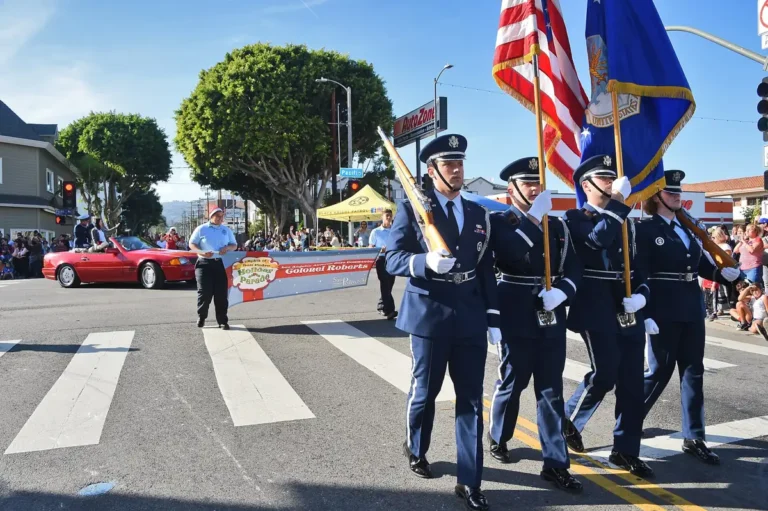
The parade reaches downtown Mamou around three in the afternoon, when the courir returns and the run gives way to the street party. A regional news layer also lists the Mamou Mardi Gras Parade at ten in the morning on the same day, and the two listings are recorded here as printed, unmerged. Visitors should check the timing of the year they attend. The street party carries the celebration to its close, with Cajun food, music and dancing in the downtown streets, and the Monday evening before Mardi Gras brings a street dance.
Planning Your Visit
Mamou sits in the western part of Evangeline Parish, with Ville Platte, the parish seat, to the east, and is best reached by road through the prairie country of south-central Louisiana. Visitors planning a trip should aim for the last Saturday of Mardi Gras through Fat Tuesday, since the celebration runs across those days, and the Tuesday courir is the centrepiece that everything else builds toward.
Because no layer read states a price or a free status for the Mamou celebration, this article takes no position on admission. The courir and the street party take place on public roads and downtown streets, and visitors should confirm any arrangements with the town before travelling. Food, drink and goods bought from vendors are the heart of the spending at the celebration, so bringing cash and a card covers most needs.
Comfortable shoes matter more than anything else, since the day is spent on foot, following riders along country roads and standing in downtown streets. The February weather in south-central Louisiana is usually mild, but mornings can be cool and the day can turn warm, so dressing in layers suits the long hours outdoors. Parking follows the usual pattern for a small-town celebration, with spaces near the downtown filling first, so an early arrival repays itself.
A Sample Itinerary
A good visit to Mamou Mardi Gras begins on the last Saturday of the season, when the town starts its Carnival celebrations and the streets begin to fill. Spend the Saturday getting to know downtown Mamou, walking the streets where the parade will return on Tuesday, and eating the Cajun food the town is known for.
Monday evening brings the street dance, the gathering that carries the season into its final day.
Tuesday begins before dawn. Be in downtown Mamou well before half past six in the morning to see the courir set out. Follow the run as far as you can, watching the riders stop at houses along the route and chase the chicken through the open ground.
The parade reaches downtown Mamou around three in the afternoon, when the courir comes home. Stay for the gumbo, the communal meal the riders spent the day gathering, and for the food, music and dancing that close out Fat Tuesday.
A Comparison
Mamou Mardi Gras belongs to the older, rural branch of the Louisiana Carnival tradition, best understood against the better-known urban parades of the state. The great city parades are built around floats, throws and grand stands, with crowds lining a fixed route. The Mamou courir is the opposite: the crowd is the procession, the riders travel the countryside rather than a city avenue, and the meal at the end is gathered by the participants themselves rather than bought from a vendor.
That difference is the point of the Mamou celebration. It is a courir, a run, not a parade in the urban sense, and its pleasures are the pleasures of participation: riding, chasing, begging, cooking and dancing, done by the people of the town and their guests together. A visitor looking for floats and marching bands will find something older and stranger than a parade.
The Mamou celebration is also distinct from the other Mardi Gras events of the region. The Tee-Mamou Iota Mardi Gras Folklife Festival in Iota is a different event, held on the same Fat Tuesday in 2026 in downtown Iota, and it does not rescue or confuse the Mamou record. Lafayette’s Mardi Gras parades are different events again, urban parades in a larger city with their own routes and traditions.
Checklist
- Plan for the last Saturday of Mardi Gras through Fat Tuesday, not a single day.
- Be in downtown Mamou well before half past six on Tuesday morning to see the courir set out.
- Wear comfortable shoes and dress in layers.
- Carry both cash and a card for food and stalls.
- Keep younger children close when the riders and the chicken chase come through.
- Respect the households along the country roads, which open their yards to the riders.
- Confirm any entry arrangements with the town before travelling.
- Stay for the communal gumbo and the Fat Tuesday street party.
Beyond the Festival
Mamou rewards visitors who look past the courir itself. The town is a centre of Cajun music in Evangeline Parish, and its music tradition runs through the year.
Ville Platte, the parish seat to the east, offers a different view of the parish, with its courthouse and its own traditions, including the smoked meat festival that the town is known for. A drive between the two towns crosses the prairie country that the courir rides through.
Significance
Mamou Mardi Gras matters because it keeps alive one of the oldest forms of Carnival in Louisiana. The urban parades of the state are famous, but the rural courir is older, stranger and more fragile, and it survives only because towns like Mamou choose to keep it. The masked riders, the unmasked capitaines, the chicken chase and the communal gumbo are not a show put on for visitors. They are a custom the town practises for itself, and visitors are welcome to join it rather than merely to watch it.
The history of the courir gives that custom its weight. A tradition that declined by the middle of the nineteen forties, was revived by the people who missed it, and was suspended twice in wartime carries the memory of interruption and return. The riders who set out on Fat Tuesday are carrying forward something that was nearly lost, and the town’s decision to revive it is renewed each year when the masks come out and the horses are saddled before dawn.
The courir also matters because of what it gathers. The gumbo at the end of the day is not bought but begged, collected house by house from the countryside, and shared by the whole town. It is a meal the community makes together, through the work of the riders and the generosity of the households along the route, and the sharing of it is the point of the run.
Frequently Asked Questions
What makes the Mamou courir different from a city Mardi Gras parade?
The courir is a run, not a procession past a grandstand. Masked riders travel the country roads on foot and on horseback, stopping at houses to sing, dance and beg for the ingredients of a communal gumbo, and the chicken chase is a scramble through open ground. The celebration ends with a meal the riders gathered themselves and a street party in downtown Mamou.
Why do the capitaines go unmasked while the other riders wear masks?
The older tradition gives the capitaines a distinct role: they lead the run, speak for the group at each house, and carry the authority of the day, so they go unmasked while every other rider is masked. The distinction marks the capitaines out from the masked revellers who follow them.
How does the celebration fit into the wider Carnival season?
The celebration begins on the last Saturday of Mardi Gras and runs through Fat Tuesday, with a street dance on the Monday evening before Mardi Gras and the courir, parade and street party on the day itself. It is a season that builds toward the Tuesday run.
What should a first-time visitor plan around on Fat Tuesday?
The courir starts at half past six in the morning, when the masked riders leave downtown Mamou for the country roads, and the parade reaches downtown again around three in the afternoon, when the run gives way to the street party and the communal gumbo. A regional news layer also lists a parade at ten in the morning on the same day.
What to Expect From the Next Evangeline Parish Louisiana Mardi Gras Festival
How often is Evangeline Parish Louisiana Mardi Gras Festival held?
The Mamou courir is tied to the Carnival season, which returns each year, and the celebration runs from the last Saturday of Mardi Gras through Fat Tuesday. The layers document the Fat Tuesday run of 17 February 2026 in full.
When is the next Evangeline Parish Louisiana Mardi Gras Festival?
A later edition carries no date in the layers read. The most recent edition documented here was held on Fat Tuesday, 17 February 2026, with the courir setting out at half past six in the morning and the parade returning around three in the afternoon. Visitors should watch for announcements from the town.
Will the dates change?
The dates follow the Carnival calendar, so Fat Tuesday moves from year to year and the courir moves with it. The season always runs from the last Saturday of Mardi Gras through Fat Tuesday, but the exact dates shift each year with the season itself.
The Mamou courir sets out before dawn on Fat Tuesday, rides the country roads, chases the chicken, gathers the gumbo and comes home in the afternoon, and the town eats together what the riders brought back: a season, a ride, a meal and a town that has chosen, more than once, to keep an old custom alive.