Ballard County Kentucky Archaeology Day Festival
On a Saturday in September, the quiet grounds of Wickliffe Mounds State Historic Site fill with the scrape of trowels, the thud of thrown spears and children’s questions about what a broken shard of pottery can tell them. Archaeology Day is the park’s contribution to Kentucky Archaeology Month, and for a single day it turns a preserved mound site in Wickliffe, the seat of Ballard County, into an open-air classroom. The published name of the occasion is simply Archaeology Day, and although the gathering carries the bustle of a festival, the layers that document it never attach that word to the title. What follows gathers what the official record preserves: two editions described in detail by state government press releases, earlier appearances in national and international archaeology celebrations, and the story of the ground on which it all takes place.
About Archaeology Day at Wickliffe Mounds
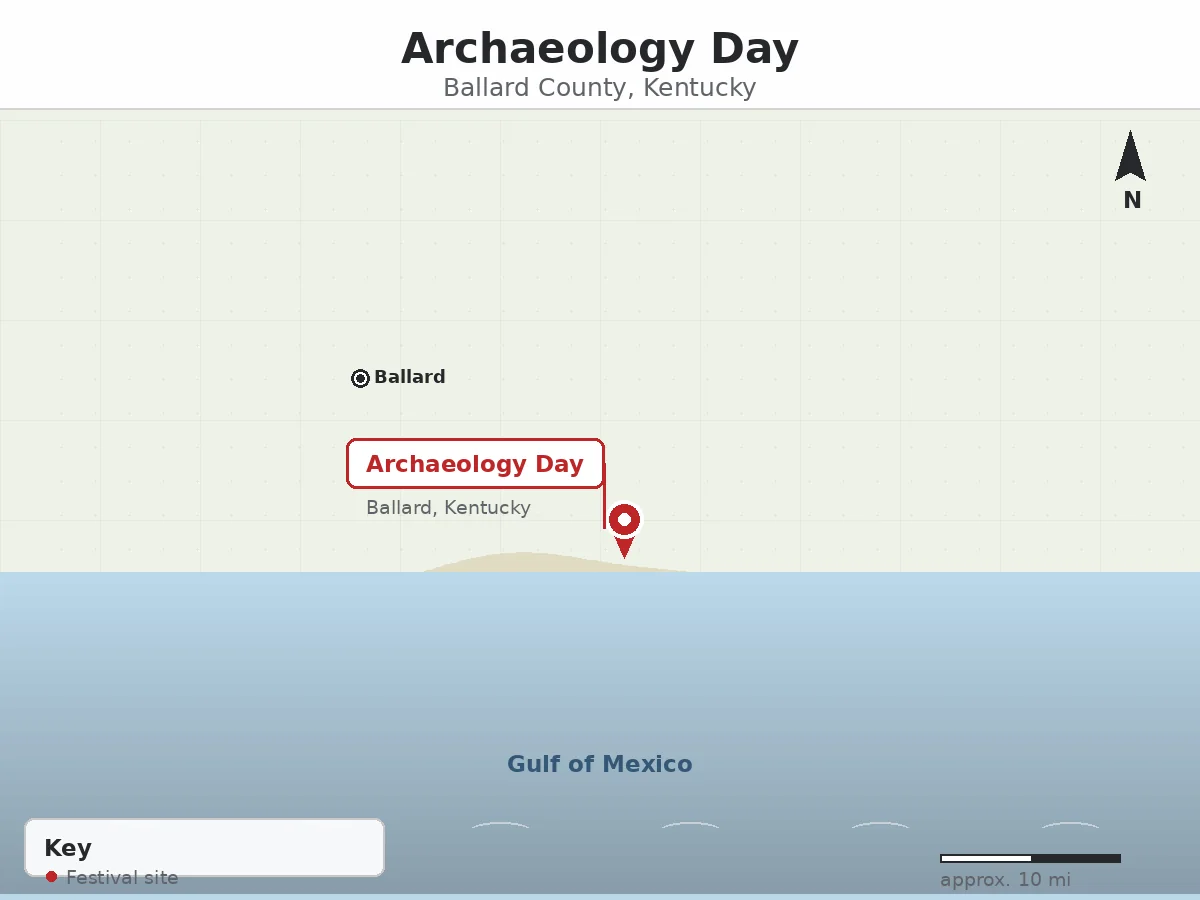
Archaeology Day is a one-day public event hosted by Wickliffe Mounds State Historic Site in Wickliffe, Kentucky. A county chamber and history layer confirms that Wickliffe is the seat of Ballard County, and an encyclopedia layer records that the seat was transferred to Wickliffe in eighteen eighty-two. The site itself combines a museum, preserved mounds, a walking trail and a visitor centre, and the day spreads its programme across those grounds. Its September timing sits inside Kentucky Archaeology Month, linking the town to a statewide season of programmes about buried history. Sponsorship, as printed in the official releases, came from the Kentucky Heritage Council, joined in two thousand eighteen by the Ballard Bottoms Tourism Council; the two thousand nineteen release again names the Kentucky Heritage Council as a sponsor in part. The host is the state historic site, which operates within Kentucky State Parks, and the releases present the day as the park’s own popular September fixture rather than a travelling show that moves from town to town. The activities draw their meaning from the mounds a short walk away.
Quick Facts
| Detail | What the record shows |
| Published name | Archaeology Day |
| Host | Wickliffe Mounds State Historic Site (Kentucky State Parks) |
| Location | Wickliffe, the seat of Ballard County, Kentucky |
| Season | September, as part of Kentucky Archaeology Month |
| Two thousand eighteen edition | Saturday the twenty-second of September, half past nine to four |
| Two thousand nineteen edition | Saturday the twenty-first of September, ten to four |
| Sponsors named in the releases | Kentucky Heritage Council; Ballard Bottoms Tourism Council (two thousand eighteen) |
| Signature activities | Mock excavation, artifact laboratory, atlatl throwing, flint knapping, stickball |
| Admission arrangement | Activities included in museum admission in the two thousand eighteen release |
| Grounds | Museum, mounds, walking trail and visitor centre |
History
The past of Archaeology Day and the past of its host site are two different stories, and the record keeps them carefully apart. Nothing in the layers read gives the event a founding year or describes a first edition. What the layers show instead is a September fixture that the park offered as part of Kentucky Archaeology Month, described most fully in two state government press releases from consecutive years. Before those releases were written, the site had already joined wider celebrations of the discipline: an archaeological institute layer records Wickliffe Mounds taking part in National Archaeology Day in two thousand twelve, and a layer of the same kind records its part in International Archaeology Day on the nineteenth of October two thousand thirteen. The ground beneath the event carries a far longer documented timeline. Reference layers record that the mound site was excavated in nineteen thirty-two and afterwards opened to visitors under the name Ancient Buried City. In two thousand four the property came under Kentucky State Parks, which cares for it today as Wickliffe Mounds State Historic Site. That sequence belongs to the site, not to the event; Archaeology Day inherited the mounds, the museum and the trail rather than creating them. A state magazine layer from two thousand twenty-three still describes Archaeology Day as the park’s popular September event held in conjunction with Kentucky Archaeology Month, although that year’s particulars were not yet finalised when the magazine went to press. Continuity is therefore the strongest historical claim the record supports: the day kept returning each September, even though the surviving descriptions differ in detail.
What to Expect
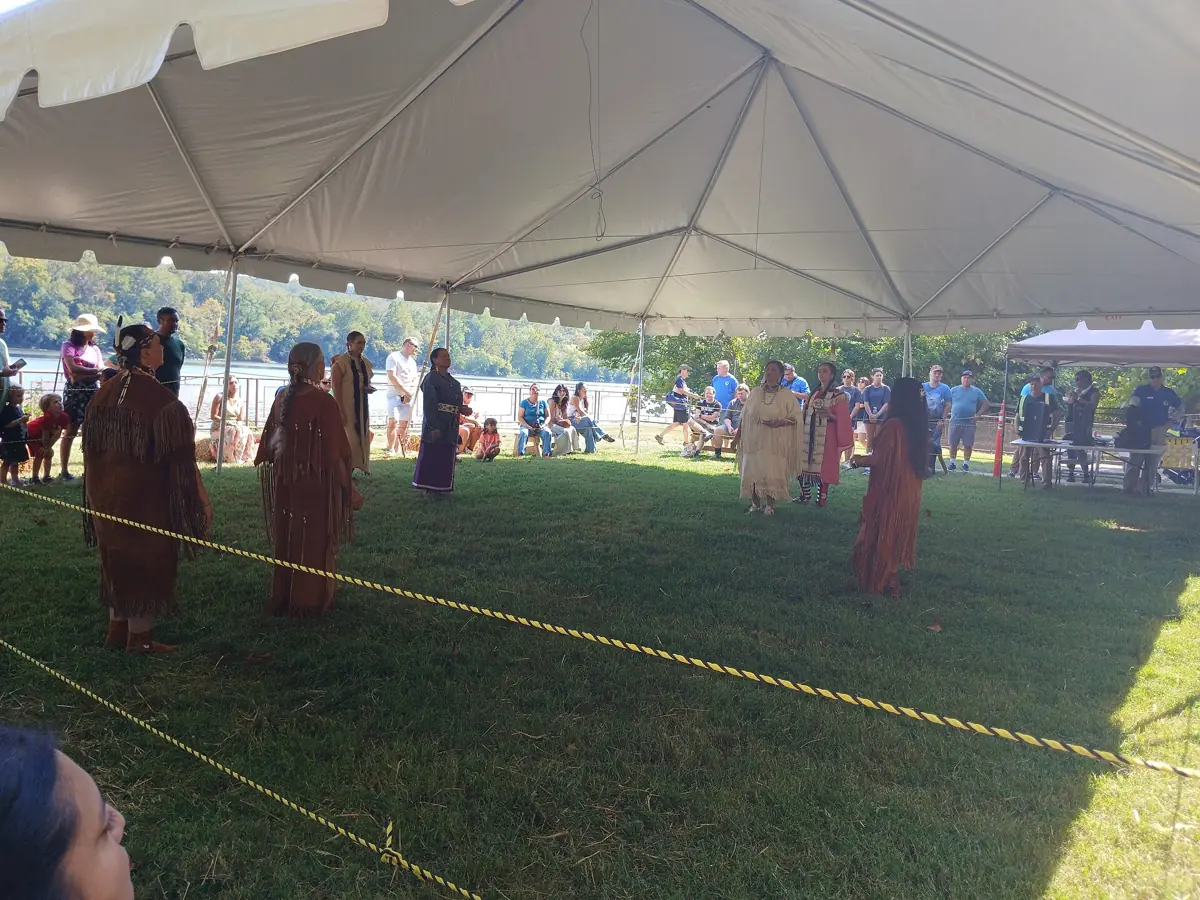
Hands get dirty early at Archaeology Day, because the programme is built around doing rather than watching. The state government press release for Saturday the twenty-second of September two thousand eighteen, when activities ran from half past nine in the morning until four in the afternoon, lists demonstrations and hands-on stations spread across the grounds. Children could dig in a mock excavation and carry their finds to an artifact laboratory station, where sorting and studying real discoveries was explained. Nearby, visitors tried spear and atlatl throwing, the atlatl being a throwing tool that extends the arm’s leverage, and watched a stickball game area in use. Flint knapping demonstrations showed how stone becomes a blade edge by patient striking, while gentler crafts filled other tables: youth bow and arrows, finger weaving, basket weaving, corn shuck dolls, a foods and plant uses display, and a make-and-take pottery craft that sent families home with something they had shaped themselves.
The following year kept the same skeleton and added music to the mix. The state government press release for Saturday the twenty-first of September two thousand nineteen, running from ten in the morning to four in the afternoon, again names the mock excavation, the artifact laboratory, atlatl throwing, stickball, flint knapping, bow and arrows, weaving and corn shuck dolls, and adds crafts, music and games, a drum circle and the pottery craft. Read together, the two releases describe a day pitched at families: spectacle in the spear throwing and stone working, quieter handwork for small children, and the museum waiting whenever anyone wants genuine artifacts behind glass.
For a useful comparison, see the Anderson County Kentucky Stave Fest Festival for another county festival.
Planning Your Visit
The documented shape of the day rewards an early arrival. The two thousand eighteen edition opened at half past nine in the morning, while the two thousand nineteen edition began at ten, and both closed at four in the afternoon, so the full programme fits inside a single unhurried visit. On admission, the record must be read by layer. The two thousand eighteen state press release states that entrance to the activities is included in the museum admission, and that release prints adult rates alongside reduced rates for children, seniors and military visitors. The two thousand nineteen release read for this article does not restate a price, and no separate gate fee for the event itself is documented in any layer. A prudent visitor budgets for the museum’s ordinary admission and treats the day’s stations as part of that ticket, while checking the park’s current information before travelling, using the park manager’s telephone number and email address printed in the state magazine layer, details that exist but are not reproduced here.
September in western Kentucky can still feel like summer by midday, so dress for warm sun, carry water, and give children clothes that can survive a mock dig. The grounds mix indoor and outdoor time, so the museum offers shade and context between outdoor stations. Because the documented editions fell on different late-September Saturdays, families should watch for the park’s announcement each year rather than assuming a fixed date.
A Suggested Day at the Mounds
A family following the two thousand nineteen pattern might arrive at the ten o’clock opening and begin at the mock excavation, while the soil is fresh and the youngest diggers are keen. Late morning suits the artifact laboratory station, where the morning’s finds can be compared with the real work of the discipline. Before lunch, the atlatl and spear throwing area delivers the day’s loudest applause, and the stickball ground shows a game with roots far older than the park itself. The middle of the day belongs indoors: the museum galleries explain what the mounds are and why they matter, and the visitor centre answers the questions the digging raised. Early afternoon is craft time, with finger weaving, basket weaving and corn shuck dolls at the tables and the pottery craft as the souvenir stop. If a drum circle forms, as it did in two thousand nineteen, it makes a natural finale before a last walk on the trail and one final look across the mounds at the four o’clock close.
How the Two Documented Editions Compare
Set side by side, the two thousand eighteen and two thousand nineteen editions show an event refining itself rather than reinventing itself. The earlier day started half an hour sooner and leaned heavily on demonstration: the foods and plant uses display and the youth bow and arrows appear in its list, and its admission arrangement is spelled out in full. The later day traded a little of that breadth for atmosphere, adding music, games and a drum circle, and its release trusts the audience to know the format. Both editions anchor on the same core stations: the mock excavation, the artifact laboratory, the atlatl, stickball and flint knapping.
Archaeology Day also needs separating from the park’s other programming. The Hands On History Saturdays summer programme, documented in two thousand eighteen, is a distinct recurring series and is not this event, and archaeology field days at mound sites in other states are separate occasions run by other custodians. What distinguishes the Wickliffe day is its place inside Kentucky Archaeology Month and its setting on a genuine excavated site.
What to Bring
- Curiosity about buried history, since every station is built around questions
- Clothes that can handle soil from the mock excavation
- Sun protection and water for a September day spent largely outdoors
- A bag or box to carry home the make-and-take pottery craft
- Time set aside for the museum, whose admission covered the activities in two thousand eighteen
- Patience for popular stations such as atlatl throwing, which draw a crowd
- A plan to walk the trail and see the mounds between demonstrations
Beyond the Day Itself
A visit need not end when the stations pack away. The museum at Wickliffe Mounds State Historic Site interprets the excavated ground year-round, and the walking trail leads visitors among the mounds that give the site its name, with the visitor centre tying the finds to the people who made and used them. Wickliffe itself gives the visit a small-town frame, and the park’s other programmes, including the separate Hands On History Saturdays, give families a reason to return in another season.
Why This Day Matters
Archaeology suffers from an image of locked cabinets and distant experts, and a day like this one answers that image with soil under fingernails. The event also binds a small county seat to a statewide conversation: Kentucky Archaeology Month gives Wickliffe’s mounds a share of attention that a single local programme could never command, and the sponsorship of the Kentucky Heritage Council, named in both documented releases, ties the park’s day to the state’s wider heritage work. Perhaps most valuably, the day teaches respect for context. The mock excavation and artifact laboratory exist to show that an object lifted from the ground without record loses most of its story, the central lesson the genuine mounds embody a short walk away.
Frequently Asked Questions
Why does no source call this event a festival?
Because the official record simply never uses that word for it. State parks press releases from two thousand eighteen and two thousand nineteen both print the name as Archaeology Day, and the state magazine layer from two thousand twenty-three does the same.
Which activities could a child join during the documented editions?
The two thousand eighteen release lists a mock excavation for children, a make-and-take pottery craft, youth bow and arrows, finger weaving and corn shuck dolls among its hands-on offerings, and the two thousand nineteen release repeats the excavation, weaving and dolls while adding games. The artifact laboratory station welcomed young finders in both years as well.
What did admission cover in the year it was explained?
The two thousand eighteen state press release states that entrance to the activities was included in the museum admission, with adult rates and reduced rates for children, seniors and military visitors printed in that release. The two thousand nineteen release does not restate any price, and no separate event gate fee appears in the layers read.
How does the mound site’s own past differ from the event’s history?
The site’s timeline is documented in dates: excavation in nineteen thirty-two, opening to visitors as Ancient Buried City, and transfer to Kentucky State Parks in two thousand four. The event has no equivalent founding date in the record. Archaeology Day appears in the layers as an established September fixture of Kentucky Archaeology Month, not as an occasion whose first edition anyone dated.
What to Expect From the Next Ballard County Kentucky Archaeology Day Festival
How often is Ballard County Kentucky Archaeology Day Festival held?
The documented pattern is a single September day each year, held as the park’s contribution to Kentucky Archaeology Month. State press releases describe full editions in two thousand eighteen and two thousand nineteen, and a state magazine layer from two thousand twenty-three still presents the day as the park’s popular September event.
When is the next Ballard County Kentucky Archaeology Day Festival?
The layers gathered for this article end with the two thousand twenty-three magazine description, which noted that year’s specifics were not yet finalised at publication, so no confirmed future date can be quoted from this record. The two fully documented editions fell on late-September Saturdays, the twenty-second in two thousand eighteen and the twenty-first in two thousand nineteen, which is the pattern to watch when the park announces its next September programme.
Will the dates change?
The two documented editions already differ slightly on this point. The two thousand eighteen edition ran on Saturday the twenty-second of September from half past nine, while the two thousand nineteen edition ran on Saturday the twenty-first of September from ten, so the exact date and even the opening hour move slightly between years. The September placement inside Kentucky Archaeology Month is the constant; the precise Saturday is set edition by edition.
Closing Thoughts
Archaeology Day at Wickliffe Mounds succeeds because it refuses to separate the fun from the evidence. The spears, the stickball, the woven baskets and the clay pots are all gateways, but the destination is a real excavated landscape and a museum that explains why that landscape must be handled with care. For Ballard County, the day turns its county seat into a classroom for the whole region once each September; for visitors, it offers the rare pleasure of learning a science by practising its gestures. Anyone who arrives with questions and leaves with dusty hands has understood the event exactly as its hosts, sponsors and press releases present it.