Shawnee County Kansas Book Festival
The event documented under this title is published everywhere in the record simply as the Kansas Book Festival, a one-day gathering of authors and readers staged in Topeka each September. No layer in the research prints the county-first form used in the title above, so the honest place to begin is with the name the festival actually carries, and with the city that hosts it: Topeka, the seat of Shawnee County and the capital of Kansas.
Across three documented editions — in two thousand twenty-three, two thousand twenty-five and two thousand twenty-six — the festival has filled a Saturday from nine in the morning until four in the afternoon with author panels, talks, exhibitor tables and award ceremonies, all of it on the campus of Washburn University and centred on the university library. It is organised by the Kansas Book Festival and its board, and a university press layer describes every event on its programme as free and open to the public, a description a state news layer repeats in its own wording.
About the Kansas Book Festival
The festival belongs to Topeka in a particular way: it is a book event anchored to a university library rather than to a fairground or a convention hall. A writers’ organisation layer records the two thousand twenty-three edition as hosted by the Mabee Library at Washburn University, and the library remains the centre of the event in the later documented editions, with the two thousand twenty-six keynote placed at the Bradbury Thompson Alumni Center elsewhere on the campus.
The organising picture is a named one. The layers credit the Kansas Book Festival and its board with the event, and individuals surface in the correspondence around it: a writers’ organisation layer names an executive director, Tim Bascom, in connection with the festival’s two thousand twenty-five correspondence, while a local newspaper letter names a festival director, Lara Avery, for the two thousand twenty-six edition. Those names and roles are recorded here exactly as their layers print them and are not merged into a single leadership account.
The programme the layers describe is broad rather than narrow. Author panels and talks run across fiction, nonfiction, poetry and children’s books. Exhibitor tables give publishers, booksellers and literary organisations a physical presence through the day. Two award elements give the schedule its ceremonial peaks: the Kansas Notable Books awards, and a youth writing contest awards ceremony that brings younger writers into the same rooms as the professionals.
For a useful comparison, see the Seward County Kansas Little World’s Fair Festival for another county festival.
One measure of the festival’s character is the company its programme keeps. At one end of the day stands the State Library’s honours selection, a statewide judgement about the year’s Kansas books; at the other end stands a contest ceremony for writers still in school. The layers present both as ordinary parts of the same Saturday, which says something about the event’s self-understanding — it treats the student with a prize certificate and the novelist on a panel as participants in a single literary culture, separated by experience rather than by kind.
Quick Facts
| Fact | Detail |
| Published name | Kansas Book Festival |
| Host city | Topeka, seat of Shawnee County and capital of Kansas |
| Venue | Washburn University, centred on the Mabee Library |
| Organiser | The Kansas Book Festival and its board |
| Documented editions | Two thousand twenty-three, two thousand twenty-five and two thousand twenty-six |
| Billing in the record | Twelfth annual, fourteenth annual and fifteenth annual respectively |
| Hours | Nine in the morning to four in the afternoon |
| Admission | Free and open to the public, per a university press layer and a state news layer |
| Programme strands | Fiction, nonfiction, poetry and children’s books |
History
The record offers a chronology of billings rather than a founding story. The two thousand twenty-three edition was billed as the twelfth annual festival, the two thousand twenty-five edition as the fourteenth annual, and the two thousand twenty-six edition as the fifteenth annual, and those numbers are the whole of what the layers say about the event’s age. No layer read for this article states a founding year in words, and it would be a guess — not research — to work backwards from the numbering and present the result as a birth date, so this article leaves the numbering standing as billing and nothing more.
What the dated editions show is a shape that holds steady while its details move. In two thousand twenty-three the festival sat at Washburn University under the Mabee Library’s hosting, running the standard Saturday hours. By two thousand twenty-five the documented shape had grown an evening: the Kansas Notable Books medal reception took place on the Friday, the nineteenth of September, ahead of the Saturday festival day at the Washburn University Library. In two thousand twenty-six the panels again ran through the Saturday, and the keynote — given that year by Topeka native Ben Lerner — was placed at the Bradbury Thompson Alumni Center, a second campus venue alongside the library.
Threaded through all three editions is the Kansas Notable Books connection. That programme is a selection made by the State Library, and its medals are presented at the festival; it is a component honour inside the festival’s day, not a rival event with its own separate existence, and the record treats it that way.
What to Expect
Panels are the engine of the day. From nine in the morning onward, authors talk about their work in sessions organised across the programme’s four strands — fiction, nonfiction, poetry and children’s books — so a visitor can follow a single strand through the day or wander between them as curiosity dictates. The two thousand twenty-six edition layered a keynote address on top of that panel structure, with Topeka native Ben Lerner speaking at the Bradbury Thompson Alumni Center.
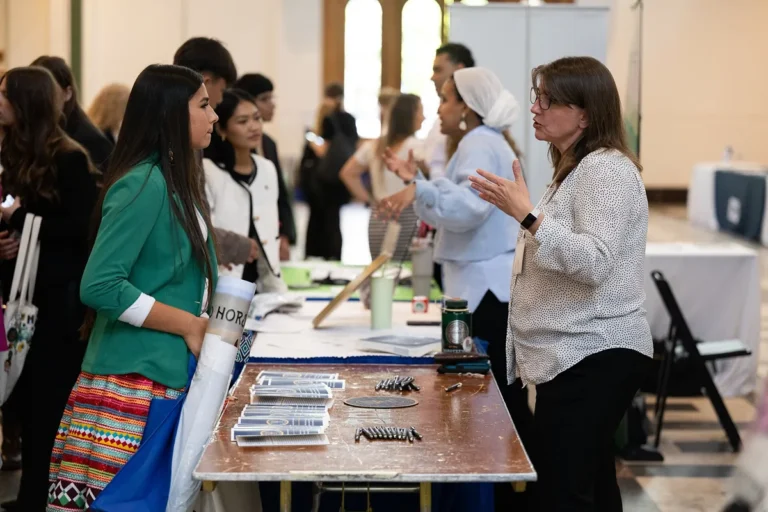
Between sessions, the exhibitor tables fill the gaps. Publishers, booksellers and literary groups staff them, and they turn the library’s spaces into a working marketplace of Kansas writing — a place to handle books, ask questions and discover presses that a bookshop shelf might never surface. The awards moments punctuate the day at the other end of the scale: the Kansas Notable Books awards honour the State Library’s chosen titles for the year, and the youth writing contest awards ceremony gives student writers a stage of their own inside an adult professional programme.
Planning Your Visit
A single Saturday is the whole time commitment, and the documented hours — nine in the morning to four in the afternoon — make the festival an easy day trip rather than a weekend project. Entry costs nothing: the university press layer’s statement that all festival events are free and open to the public is the clearest planning fact in the record, and the state news layer backs it with the same description.
Because the programme runs several strands at once, a little choosing in advance pays off. Decide which strand matters most to you — fiction, nonfiction, poetry or children’s books — and let the panels in that strand anchor your day, leaving the spaces between them for the exhibitor tables. If your visit follows the two thousand twenty-five pattern, remember that the Kansas Notable Books medal reception belongs to the Friday evening before the festival day, so a traveller who wants the full ceremonial arc should plan for two days in Topeka rather than one. Exhibitor registration routes are printed on the organiser’s own site for those who want a table rather than a seat.
A Sample Day at the Festival
Arrive as the doors open at nine and take a first panel in your chosen strand while the rooms are fresh. Spend the late morning drifting to the exhibitor tables, where the presses and booksellers are easiest to talk with before the midday crowd thickens. Take a second panel around the middle of the day — perhaps in a different strand, since the festival’s breadth is its argument — and leave room afterwards for the awards ceremonies, where the Kansas Notable Books honours and the youth writing contest results give the afternoon its formal moments. In a year shaped like two thousand twenty-six, the keynote at the alumni center is the natural close before the four o’clock end. Nothing in this sketch invents a schedule; it simply arranges the elements the record documents into the order a visitor might meet them.
How the Editions Compare
Set the three documented editions side by side and the differences are matters of emphasis rather than of kind. The two thousand twenty-three festival is the baseline in the record: a twelfth annual billing, the Mabee Library as host, and the standard Saturday hours. The two thousand twenty-five edition keeps that frame and adds a documented prelude — the medal reception on the Friday evening — which stretches the event from a single day into something closer to a weekend. The two thousand twenty-six edition, billed as the fifteenth annual, keeps the Saturday frame but spreads the programme across a second named venue for its keynote, suggesting an event comfortable using more of its campus. Inside any single edition, the components divide by temperament: panels reward listeners, exhibitor tables reward browsers, and the ceremonies reward anyone who wants to see the state’s literary honours handed out in person.
Your Festival Checklist
- Pick one programme strand to anchor the day before you arrive
- Note the Saturday hours, nine in the morning to four in the afternoon
- Check whether a medal reception is planned for the Friday evening
- Leave unplanned time for the exhibitor tables between panels
- Bring a notebook for titles and presses you want to follow up
- Stay for the youth writing contest awards if young writers are in your party
- Confirm the keynote venue, which may sit apart from the library
- Carry a bag for books bought directly from exhibitors
Beyond the Festival Day
The festival’s setting does quiet work of its own. Topeka is not only the county seat of Shawnee County but the state capital, and the festival sits inside that civic identity: a state library’s honours list presented on a university campus in the capital city. Washburn University’s library gives the event an academic home rather than a commercial one, and the two thousand twenty-six use of the Bradbury Thompson Alumni Center shows the festival drawing on the wider campus when a session needs a different kind of room. A visitor who comes for the panels is also, whether they plan it or not, spending a day in the city where Kansas government and Kansas letters formally meet.
Why the Festival Matters
A state needs occasions where its writers and readers occupy the same room, and the record shows this festival built to be exactly that. The Kansas Notable Books tie matters here: because the selection belongs to the State Library, the festival becomes the public, in-person moment of a state-level literary judgement, and the youth writing contest ceremony extends the same courtesy to the next generation of Kansas writers. The free admission described by the university press and state news layers is part of the significance too — the festival’s doors, on the documented evidence, are open to anyone who walks up to them, which suits an event whose subject is the reading life of an entire state.
Frequently Asked Questions
Which writers take part in the panels and talks?
The documented programme spans authors working in fiction, nonfiction, poetry and children’s books, with panels and talks running through the day in each strand. The record names one speaker outright: Topeka native Ben Lerner, who gave the keynote at the two thousand twenty-six edition. Beyond that keynote, the layers describe the strands and the format rather than printing a roster of panelists for the editions covered here.
What happens at the Kansas Notable Books part of the day?
Kansas Notable Books is a selection made by the State Library, and the festival is where its medals are presented. In the documented two thousand twenty-five pattern, the medal reception fell on the Friday evening, the nineteenth of September, ahead of the Saturday festival, so the honour has its own ceremonial moment rather than being folded anonymously into the panel schedule.
Is there anything at the festival aimed at young writers?
Yes — the programme includes a youth writing contest awards ceremony, documented in the state library and writers’ organisation layers. It sits inside the same day as the professional panels, which means student writers receive their awards in the middle of a working literary festival rather than at a separate school occasion.
Does attending cost anything?
On the evidence of the layers, no. A university press layer states that all festival events are free and open to the public, and a state news layer describes the Book Festival in the same terms, calling it a free event open to the public. That is the admission position this article relies on, fenced to those two layers.
What to Expect From the Next Shawnee County Kansas Book Festival
How often is Shawnee County Kansas Book Festival held?
The documented pattern is a single edition each year, placed on a Saturday in September. The three editions in the record — two thousand twenty-three, two thousand twenty-five and two thousand twenty-six — all follow that shape, each running from nine in the morning to four in the afternoon, and the annual numbering in their billings rises by the year as an annual event’s should.
When is the next Shawnee County Kansas Book Festival?
The latest edition the layers document is the fifteenth annual festival on Saturday the twenty-sixth of September two thousand twenty-six, at Washburn University. The layers read for this article name no date beyond that edition, so the next gathering would be expected to follow the established September pattern, with its exact Saturday to be confirmed by the organiser in due course.
Will the dates change?
The day of the month already has changed across the record — the sixteenth of September in two thousand twenty-three, the twentieth in two thousand twenty-five and the twenty-sixth in two thousand twenty-six — while the month, the Saturday placement and the hours stayed constant. A future edition could therefore sit on a different September Saturday without breaking the festival’s documented pattern, even though its shape would remain recognisably the same.
A Last Word
The Kansas Book Festival keeps a modest footprint and a serious purpose: one September Saturday, a university library, four strands of panels, tables of exhibitors, and the state’s own book honours handed out in public. The record behind it is thick and consistent, and the only liberty this article has taken is its title — the festival itself, in every layer, answers to its simpler published name.