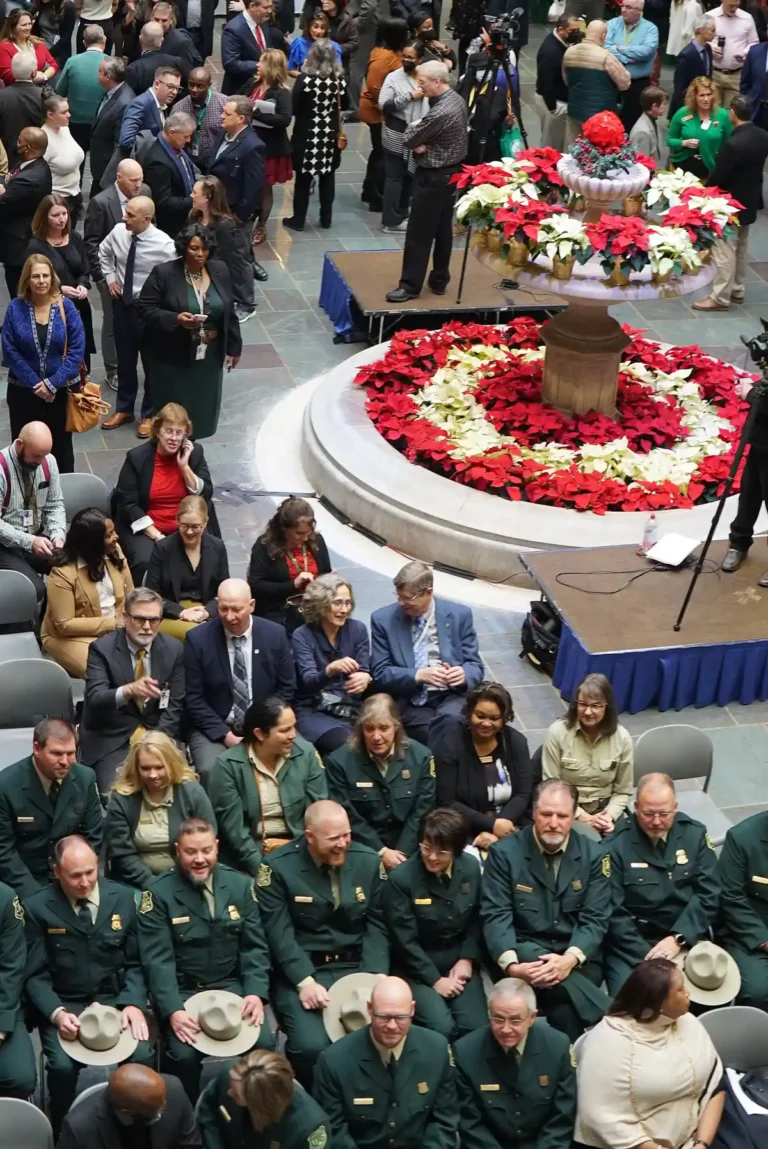
Morris County Kansas Voices of the Wind People Festival
On certain September evenings in Council Grove, the banks of the Neosho River become a stage, and the town’s oldest story is told outdoors by the people whose ancestors lived it. The production is called Voices of the Wind People, and honesty about its name matters from the start: no layer consulted for this article prints the word Festival as part of its name, and none presents it as a fair or a street celebration. What the record documents is an outdoor historical pageant, staged at intervals of roughly two years, in which Kanza citizens and local volunteers perform the meeting of Native American and Euro-American cultures at one of the Santa Fe Trail’s crossings.
That distinction shapes everything a visitor should understand before planning a trip. There is no midway, no row of vendor booths and no weekend-long programme attached to this name in the layers read. Instead there is a single dramatic production, mounted by about one hundred twenty-five volunteers and performers, narrated by two figures from the town’s past and performed beside the river where much of the history unfolded. Readers looking for a conventional annual festival will not find one under this title, and this article does not pretend otherwise; what they will find is a long-running piece of community theatre with a performance history reaching back to nineteen ninety-two.
About
Every layer read for this article, whether published by the organiser side, a tribal source or a regional tourism writer, prints the name in the same form: Voices of the Wind People. The host town is Council Grove, which reference layers confirm as the county seat of Morris County, so the pageant plays in the county’s seat of government and in one of its most storied trail towns. The setting is part of the production’s identity, because the drama concerns events that happened in this very community when the Santa Fe Trail carried traders and settlers past the Kanza homeland.
The venue is printed in two forms that this article keeps separate rather than merging. An organiser layer places the performance at the Neosho Riverwalk Amphitheater, near the Santa Fe Trail crossing on the Neosho River. A regional tourism layer calls the same kind of riverside setting the Old Riverbed Amphitheater, near the Neosho Riverwalk. Both descriptions point to an open-air amphitheater beside the river in Council Grove, yet the names are not interchangeable in print, and the article preserves each layer’s own wording when it cites that layer.
Responsibility for the production is likewise described from more than one side. The event page is published by the city’s tourism bureau, whose printed masthead form appears exactly as the brief section records it. A tribal layer adds that the Kaw Nation cosponsors the Council Grove historical pageant, which fits the casting: the organiser layer counts approximately forty-five to fifty Kanza citizens travelling from Kaw City, Oklahoma to take part. The whole undertaking runs on volunteer labour, with about one hundred twenty-five people involved in each performance between cast and crew.
For a useful comparison, see the Morris County Kansas Washunga Days Festival for another county festival.
Quick Facts
| Item | Detail |
| Published name | Voices of the Wind People |
| Kind of event | Outdoor historical pageant |
| Host town | Council Grove |
| County position | Council Grove is the county seat of Morris County |
| Venue as printed by the organiser layer | Neosho Riverwalk Amphitheater |
| Venue as printed by a regional tourism layer | Old Riverbed Amphitheater |
| Cosponsor named by a tribal layer | The Kaw Nation |
| First production | Nineteen ninety-two |
| Recent rhythm | Performances roughly every two years |
| Next announced return | September two thousand twenty-seven |
History
The organiser layer dates the first production to nineteen ninety-two, and a transcript layer agrees on the vintage from a different angle, stating that historian Ron Parks wrote the pageant script in nineteen ninety-two. From that beginning, the organiser layer lists the performance years in full: nineteen ninety-two itself, then nineteen ninety-three, nineteen ninety-six, nineteen ninety-nine, two thousand one, two thousand four, two thousand six, two thousand eight, two thousand ten, two thousand twelve, two thousand fourteen, two thousand sixteen, two thousand eighteen, two thousand twenty-one, two thousand twenty-three and two thousand twenty-five.
Read as a sequence, that list tells its own story about the production’s rhythm. The early years show an irregular cadence, with gaps of one year, then three, then three again. From the middle of the two thousand tens onward the pattern settles into something close to a two-year cycle, interrupted only by the three-year step between two thousand eighteen and two thousand twenty-one. The layers do not explain the spacing, and this article does not invent a reason; what the list establishes is that the pageant has never been an annual fixture, and that its recent habit is biennial.
The best-documented single performance in the record is the one given on Saturday the sixteenth of September two thousand twenty-three. A tribal news layer records that evening’s performance at the city’s Neosho River amphitheater, with tribal citizens among the performers, including the Kaw Nation’s Government Relations Director, who is referred to here by role rather than by name. The two thousand twenty-five performance appears in the organiser layer’s year list, yet no layer read gives it a day-level date or separate particulars, so it stands here as a listed production year and nothing more.
What to Expect
A performance of Voices of the Wind People unfolds as an outdoor historical drama rather than a pageant of floats or contests. Two narrating figures carry the storyline: Chief Allegawaho, the Kanza chief known to the Kaw people, and Seth Hays, remembered as Council Grove’s first Euro-American resident. Through their voices the production moves between the Kanza world on the Neosho and the trail-era settlement that grew up beside it, dramatising the clash of Native American and Euro-American cultures along the Santa Fe Trail.
Around those narrators, the Kanza participants enact village scenes, take on dramatic roles and perform traditional dances, so the evening alternates between spoken storytelling and embodied ceremony. The cast drawn from Kaw City numbers approximately forty-five to fifty citizens, a substantial company for a production of this kind, and their presence is the point: the Kanza side of the story is presented by Kanza people, on ground their ancestors knew. Audiences sit in the amphitheater by the river as darkness comes on; the two thousand twenty-three account describes an evening performance, which suits a drama built on narration, firelight and dance.
Because the production is a single staged work rather than a festival programme, expectations should be set accordingly. The layers read describe no accompanying fair, market or concert series under this name, so a trip should be planned around one significant evening of theatre, with the town and its trail heritage filling the remaining time.
Planning Your Visit
Timing governs everything about attending this pageant. Performances fall in September in the documented recent editions, and the organiser layer announces the next return for September two thousand twenty-seven, but the production does not happen every year, so the first planning step is confirming that a given September holds a performance. The announced return is exactly that, an announcement from the organiser layer, not a record of an edition already held.
Admission needs equal care, because the layers consulted are silent on it. None of them prints a ticket price for the pageant, and none describes entry as free, so this article takes no position on what attending costs and advises readers to confirm arrangements through the town’s tourism channels before travelling. What can be said from the record is practical rather than financial: the performance is outdoors, in the evening, beside a river in mid-September, so warm layers and protection against a cool Kansas night are sensible preparations.
Council Grove rewards an early arrival. The drama’s whole meaning is anchored in the ground around the venue, where the Santa Fe Trail crossed the Neosho, and walking the riverwalk area in daylight gives the evening’s narration a geography the audience can picture. Visitors travelling from outside Morris County should also remember that performances are separated by years, not weeks; missing a production means a long wait, so the announced September two thousand twenty-seven return is worth organising a trip around early.
A Sample Pageant Day
A workable pattern for performance day begins with an unhurried morning in Council Grove, taking in the town at walking pace and letting the trail-era streetscape register before the evening’s story begins. Midday can go to a meal and a rest, since the main event waits for dusk and the day has no competing programme attached to the pageant’s name. In the afternoon, time along the Neosho Riverwalk near the amphitheater helps a visitor connect the crossing point with the scenes the narrators will describe. As evening approaches, settle into the amphitheater early, watch the light go off the river, and give the performance the full attention a two-narrator drama asks for. Afterward, a quiet walk back through a small town that has just watched its own history performed is a fitting end to the night.
How the Pageant Compares
Council Grove also hosts Washunga Days, its June festival, and the comparison clarifies both events. Washunga Days is a festival in the ordinary sense, spread across days in early summer; Voices of the Wind People is one production, staged on a September evening roughly every second year. The Kaw Nation takes part in the life of both, yet the shared participation does not merge them, and the layers keep the two strictly apart, as does this article. A traveller choosing between them is really choosing between a festival weekend and a night of historical theatre.
Set against the wider run of Kansas county festivals, most of which return every year on a fixed weekend, the pageant’s rhythm is its defining difference. Its scarcity is structural, not accidental: a volunteer company of about one hundred twenty-five people, including dozens of Kanza citizens travelling from Oklahoma, cannot be assembled casually, and the year list shows the community has sustained the production across more than three decades by mounting it only when it can be done well.
A Visitor’s Checklist
- Confirm that the September in question actually holds a performance before booking travel
- Note the announced September two thousand twenty-seven return as the next expected staging
- Dress for an outdoor evening beside the river in mid-September
- Arrive at the amphitheater area early enough to see the trail crossing in daylight
- Check admission arrangements through the town’s tourism channels, since the layers print no price
- Plan the rest of the trip around Council Grove’s Santa Fe Trail heritage
- Keep Washunga Days in June separate in your plans; it is a different event
Beyond the Performance
The pageant does not stand alone in Council Grove’s calendar of memory. The town’s identity is bound up with the Santa Fe Trail, and the same river crossing that frames the drama is the reason the settlement existed at all. A visitor who comes only for the performance night still walks streets shaped by that trade route, and the production works as an interpretive key to the place: after hearing Allegawaho and Seth Hays narrate their encounter, the town outside the amphitheater reads differently.
The Kaw Nation’s involvement reaches beyond a single evening as well. Kanza citizens travelling from Kaw City, Oklahoma to perform in their ancestral homeland give the pageant a dimension no purely local casting could supply, and the tribal layer’s description of the Nation as cosponsor signals that this is a partnership rather than a booking. For Morris County, the event links the county seat to a tribal nation whose history in the region long predates the county itself.
Why It Matters
Voices of the Wind People matters because it refuses the easy version of frontier history. Rather than a celebration, the production stages a clash of cultures and lets both sides speak, with the Kanza side spoken by Kanza performers. Sustained by volunteers since nineteen ninety-two, written by a local historian and carried across thirty-odd years of intermittent production, it represents a small Kansas town choosing, again and again, to tell its hardest story outdoors, on the ground where the story happened.
Frequently Asked Questions
Is this an annual event on the Council Grove calendar?
No. The organiser layer’s own list of production years runs from nineteen ninety-two through two thousand twenty-five with gaps, and the recent pattern works out to roughly one production every two years rather than one every year.
Who guides the audience through the story?
Two narrator figures anchor the drama: Chief Allegawaho, the Kanza chief, and Seth Hays, Council Grove’s first Euro-American resident. Their alternating perspectives carry the audience between the Kanza village world and the trail-era settlement.
Where do the Kanza performers come from?
The organiser layer counts approximately forty-five to fifty Kanza citizens travelling from Kaw City, Oklahoma, to enact village scenes, dramatic roles and traditional dances, within a total company of about one hundred twenty-five volunteers and performers.
When did the production first reach the stage?
Both the organiser layer and a transcript layer point to nineteen ninety-two: the organiser dates the first production to that year, and the transcript states that historian Ron Parks wrote the script in nineteen ninety-two.
What to Expect From the Next Morris County Kansas Voices of the Wind People Festival
How often is Morris County Kansas Voices of the Wind People Festival held?
The production is not annual. Its printed year list shows performances in two thousand twenty-one, two thousand twenty-three and two thousand twenty-five in the recent run, a rhythm of about one staging every two years, and no layer describes a yearly schedule.
When is the next Morris County Kansas Voices of the Wind People Festival?
The organiser layer announces a return in September two thousand twenty-seven, phrased as the pageant returning that month. That is an announcement of intent rather than a held edition, and no day-level date for it appears in the layers read.
Will the dates change?
September has been the production month in the documented recent editions, including the evening performance on the sixteenth of September two thousand twenty-three, so the month looks settled even though the exact day is fixed production by production. The announced two thousand twenty-seven return keeps that September placement.
Closing
Voices of the Wind People asks something different of its audience than a festival does: a single evening, a riverbank, and attention. In return it offers Morris County’s most considered piece of storytelling, performed by the descendants of both peoples whose meeting it dramatises. When the amphitheater lights come up in September two thousand twenty-seven, if the announced return holds, Council Grove will once again let its oldest voices do the talking.