McPherson County Kansas Scottish Festival
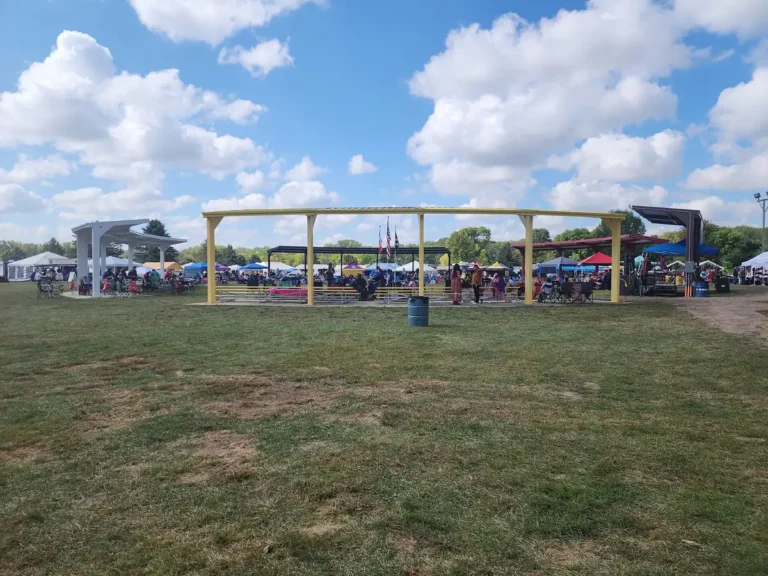
For more than two decades, late September in McPherson carried the sound of bagpipes drifting across the grass at Lakeside Park. Clan tents rose along the grounds, athletes heaved the caber end over end, dancers competed in careful formations, and pipe bands marched in ceremony while crowds moved between food stalls and competition fields. The gathering travelled under several printed names, most fully as the McPherson Scottish Festival and Highland Games, and its story no longer runs into the present tense. Organisers broadened the event and gave it a new name in two thousand sixteen, and reference material records the Scottish Festival itself as discontinued as of two thousand seventeen. What survives is a documented past: two editions described with full particulars, a programme preserved in listings and a newsletter, admission terms belonging to one era, and a clear ending. This article keeps those pieces in their proper places and resists dressing a finished festival up as a living one.
About
No layer consulted for this article prints the title exactly as it appears at the head of this page. Travel and reference layers use the shorter form McPherson Scottish Festival, while an older event-listing layer and the festival’s own newsletter from two thousand fourteen both print McPherson Scottish Festival and Highland Games. A reference layer’s area events list offers yet another arrangement, Scottish Festival & Highland Games, with the ampersand standing as printed. These forms are left unmerged here because each belongs to its own layer, and smoothing them into one tidy name would hide how the event was actually presented across the years. The host town was McPherson, which serves as the county seat of McPherson County, and the setting throughout the documented record is Lakeside Park within that town. Sponsorship in the event-listing layer is credited to the McPherson (KS) Scottish Society, parentheses and all. The festival’s newsletter layer, by contrast, speaks for the festival directly and prints no second organisational form, so the two voices are recorded side by side rather than combined into a single invented credit. That distinction matters for readers comparing sources, because a layer quoting the society’s sponsorship and a layer speaking in the festival’s own voice can describe the same weekend with quite different emphases.
Quick Facts
| Item | Detail |
| Published names | McPherson Scottish Festival; McPherson Scottish Festival and Highland Games; Scottish Festival & Highland Games |
| Host town | McPherson, Kansas |
| County role | McPherson is the county seat of McPherson County |
| Venue | Lakeside Park, McPherson |
| Sponsor form | McPherson (KS) Scottish Society, as printed in an event-listing layer |
| Traditional timing | The fourth weekend of September, per a reference layer |
| Fullest documented editions | Nineteen ninety-nine and two thousand fourteen |
| Admission in the listing era | Ten dollars for adults on Saturday, six dollars on Sunday, reduced rates for children |
| Present status | Recorded as discontinued as of two thousand seventeen |
| Separate successor | McPherson Festival of Cultures, a different event that also later ended |
History
The earliest particulars reach back to the twenty-fifth and twenty-sixth of September in nineteen ninety-nine, when the event-listing layer billed the gathering as the sixth McPherson (KS) Scottish Festival and Highland Games. Fifteen years later, the festival’s own newsletter billed the edition of the twenty-seventh and twenty-eighth of September, two thousand fourteen, as the twenty-first Annual McPherson (KS) Scottish Festival. Both numbers are reported here strictly as billings, the way their layers printed them, because no layer gathered for this article states a founding year outright and none should be manufactured from arithmetic. A reference layer adds the rhythm rather than a beginning, saying the festival occupied the fourth weekend of September each year. A lodging layer looks back over a longer span and reports that McPherson was home to the annual Scottish festival for more than twenty years, which fits the two billings without pinning down a first edition. The ending arrives in two steps. In two thousand sixteen the organisers widened the event to embrace all nationalities and renamed it the McPherson Festival of Cultures, keeping the Highland games and the pipe band competitions within the broader programme. A local-news layer bills that successor’s edition for the twenty-third to the twenty-fifth of September, two thousand sixteen, again at Lakeside Park. The reference layer then closes the original story by stating that the Scottish Festival & Highland Games were discontinued as of two thousand seventeen, and a local-news item cited there reports the Festival of Cultures itself discontinued, in coverage dated two thousand eighteen. Scattered travel-guide layers still describe the Scottish gathering in the present tense; those passages read as outdated boilerplate and are set aside here.
What to Expect
A festival weekend at Lakeside Park took a shape the surviving layers describe in consistent detail. The event-listing layer lists Scottish athletic competitions, with the caber toss singled out among the heavy events, alongside a Highland Dance competition, clan tents, games for children, and ceremonies fronted by marching bagpipe bands. National and regional entertainers performed, ethnic and festival foods were served, a British car display drew its own circle of admirers, and the evening brought a ceilidh together with Scottish country dancing. The nineteen ninety-nine edition matches that outline closely, adding named national performers to the athletics, the dance competition, the clan tents, the car display and the ceilidh. The two thousand fourteen newsletter fills in the clock. Gates opened at nine in the morning on both days, sixteen venues of games and activities ran across the grounds, and piping, drumming and dance competitions threaded through the schedule. Closing ceremonies ended Saturday at half past four in the afternoon and Sunday at four in the afternoon, giving the weekend a formal full stop rather than a drift toward the exits. Between the field events and the stage acts, visitors could wander among sixteen venues without exhausting the programme, and the blend of contest, ceremony and social dancing gave each day several distinct tempers.
Planning Your Visit
Anyone leafing through old listings today should read them the way an attendee in the documented years had to plan: as a two day commitment with different terms on each day. The event-listing layer priced Saturday admission at ten dollars for adults and Sunday admission at six dollars for adults, with reduced rates for children, and those figures belong to that layer and its era alone. No later layer gathered here prints admission terms at all, so the older prices cannot be carried forward as though they survived the renaming. A visitor planning around the two thousand fourteen schedule would have noted the nine o’clock gate opening, the spread of sixteen venues, and the fixed closing ceremony times when deciding which day suited which interest. Families weighing the fuller Saturday against the cheaper Sunday would also have noticed that children’s rates were reduced on both days, one of the few family particulars the listing takes care to print. All of that belongs to history now. There is no current edition of this festival to arrange travel around, and the honest use of the old material is orientation: understanding what the gathering was, when it stood in the town’s calendar, and why its name keeps surfacing in McPherson’s event lore.
For a useful comparison, see the McPherson County Kansas Midsummer’s Festival for another county festival.
A Sample Day From the Record
Drawn from the two documented editions, a Saturday in the festival’s prime might have begun at the gates when they opened at nine in the morning, with the first hour spent wandering the clan tents before the athletic field grew crowded. Late morning belonged to the heavy events, the caber toss above all, while piping and drumming competitions sounded from their own corners of the park. Midday invited a pass along the food stalls for ethnic and festival dishes, then a seat near the dance platform for the Highland Dance competition through the early afternoon. The British car display rewarded a slower loop before the grounds began to gather themselves for the close. In two thousand fourteen the Saturday programme formally ended with closing ceremonies at half past four in the afternoon. The evening, as the event-listing layer describes the festival generally, turned social: a ceilidh, with Scottish country dancing, carried the gathering past dark in a register quite different from the day’s contests.
The Festival and Its Successor
Setting the Scottish Festival beside the McPherson Festival of Cultures clarifies where one story stops and another starts. The older event drew its identity from a single heritage, filling Lakeside Park with Scottish athletics, dance, music and clan culture on the fourth weekend of September. The successor deliberately widened the frame in two thousand sixteen, opening the celebration to all nationalities while retaining the Highland games and pipe band competitions as part of its programme. That continuity of content tempts writers to treat the Cultures edition as simply the Scottish Festival under fresh paint, but the layers insist on two names, two organising ideas and two endings. The Scottish Festival is recorded as discontinued as of two thousand seventeen; the Festival of Cultures, its own event, was reported discontinued in two thousand eighteen. Readers tracing the lineage should keep the two files separate, crediting each gathering with its own editions and its own close.
A Reader’s Checklist
- Check which printed name a source uses before trusting the details attached to it
- Place the nineteen ninety-nine and two thousand fourteen editions on the fourth weekend of September
- Treat the Saturday and Sunday admission figures as belonging to the listing era only
- Keep the Festival of Cultures in its own column when following events past two thousand sixteen
- Discount present-tense travel-guide descriptions that ignore the discontinuation
- Remember that no founding year appears in the gathered layers, whatever the billings suggest
- Look to the festival’s own newsletter for schedule particulars rather than to later summaries
Beyond the Park
The festival’s footprint in McPherson outlasted any single weekend because the gathering returned to the same ground, Lakeside Park, across a span a lodging layer measures at more than twenty years. Within the town’s calendar it stood as the autumn heritage fixture, the September counterpoint around which clan societies, dancers, pipers and athletes from beyond the county could plan a journey. Its memory now lives in paper and pixels: an event-listing layer that preserved the programme, a newsletter that preserved one full schedule, reference and lodging layers that preserved the outline of its rise and renaming. Beyond McPherson, the story illustrates a familiar pattern among small city heritage festivals, where a celebration rooted in one community’s ancestry eventually faces the choice between holding its original shape and widening its welcome. McPherson tried the widening, and the successor’s own short run suggests how demanding that transition can be. The documentation, at least, remains generous enough to let later readers reconstruct the gathering in unusual detail. Even the admission figures, modest as they were, testify to a celebration priced for its own neighbours rather than for distant tourists.
Significance
For a county seat of McPherson’s size, sustaining an annual Scottish festival across more than twenty years was no small civic achievement. The gathering gave Scottish heritage a public stage in central Kansas, complete with athletics, dance competition, clan representation and ceremonial piping that few towns of comparable scale attempted. Its billings, sixth in nineteen ninety-nine and twenty-first Annual in two thousand fourteen, trace a durable institution even though they cannot name its first year. The two thousand sixteen broadening into the Festival of Cultures marks the moment the organisers judged that a single-heritage frame no longer fitted the community they served, and the quick end of both events leaves the episode oddly complete: a beginning implied, a prime documented, a reinvention attempted, and a close recorded. Preserving that arc accurately matters more than inflating it, because the festival’s real claim on attention is the verifiable one, a long-running Highland gathering that a Kansas town built, enjoyed and eventually laid down.
Frequently Asked Questions
Which printed names did the gathering actually use?
Three forms appear across the layers, none of them identical to the title of this page. Travel and reference layers print McPherson Scottish Festival, an event-listing layer and the festival’s own two thousand fourteen newsletter print McPherson Scottish Festival and Highland Games, and a reference layer’s events list prints Scottish Festival & Highland Games.
What filled the programme on a festival weekend?
The event-listing layer describes Scottish athletic competitions including the caber toss, Highland Dance competition, clan tents, children’s games, a British car display, ethnic and festival foods, national and regional entertainers, ceremonies with marching bagpipe bands, and an evening ceilidh with Scottish country dancing.
What did entry cost in the years the listing describes?
The event-listing layer set Saturday admission at ten dollars for adults and Sunday admission at six dollars for adults, with reduced rates for children. Those prices are fenced to that layer and its era; no later layer in the gathered record prints admission terms of any kind.
Why does the story end with two separate discontinuations?
Because two distinct events ended in turn. The Scottish Festival was renamed and broadened into the McPherson Festival of Cultures in two thousand sixteen, and a reference layer records the Scottish Festival & Highland Games as discontinued as of two thousand seventeen; the successor itself was then reported discontinued in two thousand eighteen.
What to Expect From the Next McPherson County Kansas Scottish Festival
How often is McPherson County Kansas Scottish Festival held?
It is not held at all in the present record. During its documented life the gathering ran annually, placed by a reference layer on the fourth weekend of September, but that rhythm ended with the renaming of two thousand sixteen and the discontinuation recorded as of two thousand seventeen.
When is the next McPherson County Kansas Scottish Festival?
The gathered layers contain no next edition, and this article will not invent one. The festival’s run closed years ago, first through its transformation into the separate Festival of Cultures and then through the discontinuation notices that followed, so readers should treat any undated listing suggesting otherwise as stale.
Will the dates change?
There are no current dates capable of changing. The late September placement preserved in the reference layer belongs to the festival’s finished run, and nothing in the record reopens that calendar for the Scottish Festival under its own name.
A Closed Chapter
McPherson’s Scottish Festival survives now as an unusually well papered memory: a sixth billing in nineteen ninety-nine, a twenty-first Annual billing in two thousand fourteen, a programme of cabers, clans, dancers and pipes, and an ending that the layers state without ambiguity. Keeping the names unmerged, the prices in their era and the successor in its own story is the respect the record is owed. The pipes have fallen silent at Lakeside Park, and the honest article is the one that says so.