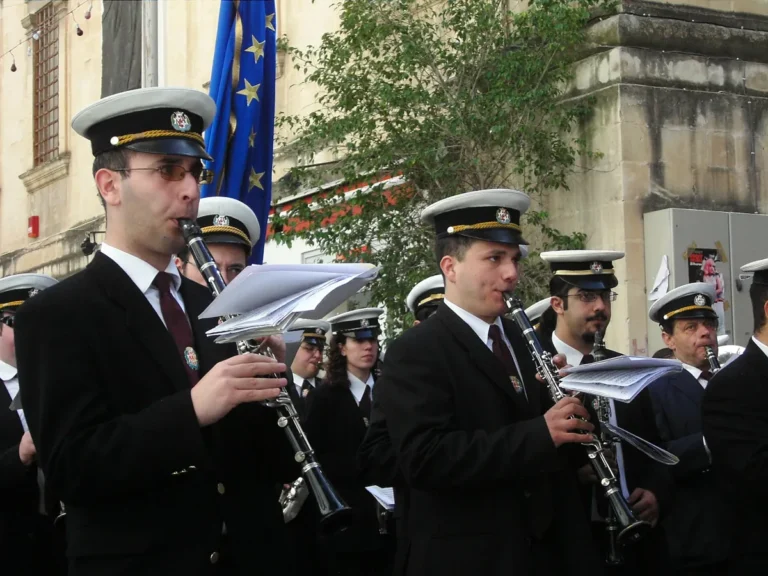
Barton County Kansas Cinco de Mayo Festival
On an early May Saturday in Great Bend, the seat of Barton County, the documented day runs from a late morning parade to a mid afternoon close. The parade sets off down Main Street at eleven in the morning, the street is closed for the parade hour, and afterwards the blocks around Jack Kilby Square fill with music, vendors, food, dancing and entertainment until four in the afternoon. A local-news layer recorded that pattern for May seventh, twenty twenty-two.
The celebration is published under several name forms, kept separate here rather than blended. The local-news layer writes of “Great Bend’s Cinco De Mayo festival”, keeping its capital D in the middle word. A Kansas festival guide for twenty twenty-six prints the tidier form “Cinco de Mayo Festival”. An archived newspaper account, carried by a library asset layer, calls the event “Great Bend Cinco de Mayo”. No layer read uses the county-first word order of the sheet title above; that ordering is the sheet’s own framing. The record is also thin: one dated news edition from twenty twenty-two, one archived account whose year cannot be pinned down, and one guide listing for twenty twenty-six.
About the Festival
Great Bend is the town documented in every layer relied on here, and a county-seat reference layer confirms it as the seat of Barton County. The celebration belongs to the town’s downtown: Jack Kilby Square, which the local-news layer identifies as the courthouse square, together with Main Street.
No incorporated organiser name is printed in the layers read. The local-news layer instead names a person: Fernando Delgadillo, organiser of the edition it describes, who together with his wife obtained the beer licence for that edition. His wife is not named in the layer, and no company, committee or association name stands behind the event in any source used here. The festival thus appears as a downtown celebration carried by named individuals rather than by an institution.
Three pieces of documentation carry the event: the dated local-news account of twenty twenty-two; the archived account of a thirteenth annual Great Bend Cinco de Mayo, whose year the layer read does not pin down; and the twenty twenty-six festival guide, which lists the event on May first but marks that date with its own asterisk as unconfirmed.
For a useful comparison, see the Barton County Kansas Home for the Holidays Festival for another county festival.
Quick Facts
| Item | Details |
| Published name forms | “Great Bend’s Cinco De Mayo festival” (local-news layer); “Cinco de Mayo Festival” (twenty twenty-six guide); “Great Bend Cinco de Mayo” (archived account); the sheet title’s county-first order appears in no layer |
| Host town | Great Bend, the seat of Barton County |
| Setting | Jack Kilby Square, the courthouse square, and downtown Main Street |
| Dated edition documented | Saturday, May seventh, twenty twenty-two |
| Parade | Down Main Street from eleven in the morning, with Main Street closed for the parade hour |
| Afternoon programme | Music, vendors, food, dancing and entertainment downtown until four in the afternoon |
| Archived account | A thirteenth annual edition on a Saturday in the courthouse square; the account’s year is not pinned in the layer read |
| Guide listing | May first, twenty twenty-six, marked with the guide’s own asterisk for an unconfirmed date |
| Organiser named | Fernando Delgadillo, an individual; no incorporated organiser name is printed in the layers read |
| Admission | No layer read states an admission charge for the celebration |
History
The honest starting point for this festival’s past is how little of it the layers actually fix. No founding year is stated in any source read for this article. The single number that might tempt a reader to work one out is the archived newspaper account’s billing of its edition as the thirteenth annual Great Bend Cinco de Mayo, but that billing is recorded here as a billing only. The account describes its Saturday in the courthouse square in detail, yet the layer read does not pin the account to a year. Because the year floats, the edition cannot be placed before or after the dated twenty twenty-two celebration, and no first year is counted backwards from the billing.
What can be anchored is the twenty twenty-two edition itself. The local-news layer records that the first beer garden was added that year, approved at the organiser’s request, and that Fernando Delgadillo and his wife obtained the beer licence for the edition described. That gives twenty twenty-two a genuine place in the event’s development: a downtown street party that had grown a licensed beer garden alongside its parade and afternoon entertainment. Beyond that, the layers offer no earlier editions and no founder story, and none has been supplied here.
What to Expect
The day opens on Main Street. In the twenty twenty-two account, the parade begins at eleven in the morning and Main Street is closed for the parade hour, so the late morning belongs to the procession and the crowds along the downtown route.
After the parade, the twenty twenty-two layer moves the celebration into its afternoon form: music, vendors, food, dancing and entertainment spread through downtown until four. The same year added the event’s first beer garden, approved at the organiser’s request, so from twenty twenty-two onward the documented programme includes a licensed garden alongside the open street festivities.
A second layer adds texture of a different kind. The archived newspaper account, describing its thirteenth annual edition on a Saturday in the courthouse square, lists food vendors and music, children’s activities, four piñatas and prize drawings at four in the afternoon. Those elements belong to that account’s edition, whose year remains unpinned in the layer read, so they are not presented as guaranteed features of any other year. Together, the two accounts describe a family-weighted afternoon, with activities aimed at children and drawings to close the day at four.
Planning Your Visit
The practical pattern the record supports is an early May Saturday in downtown Great Bend. Both narrative accounts describe a Saturday event, one dated precisely to May seventh, twenty twenty-two, and the twenty twenty-six festival guide lists the celebration on May first of that year. The guide, however, marks its own date with an asterisk for an unconfirmed date, so that listing is best treated as a pointer to check rather than as a fixed appointment. No layer read states that the event has ended or paused, but no organiser page in the record confirms a coming edition with particulars either.

Geography is simpler than the dating. The documented celebration sits in two connected downtown spaces: Jack Kilby Square, the courthouse square, and Main Street, where the parade runs and the street closes for its hour. A visitor following the twenty twenty-two account would watch the parade late in the morning, then drift into the afternoon’s vendors, food, music and dancing nearby, all wrapped up by four.
On cost, the record is silent in a way worth respecting. No layer read states an admission charge, and this article does not convert that silence into a promise of free entry.
A Sample Itinerary
This itinerary follows the shape of the dated twenty twenty-two edition, with one element borrowed openly from the archived account. Arrive in downtown Great Bend before eleven in the morning and take a place along Main Street, because the parade opens the day and the street closes for the parade hour itself.
Once the procession has passed, the twenty twenty-two account gives the afternoon to the downtown blocks: music, vendors, food, dancing and entertainment until four. That stretch is the day’s main body, best spent moving between the food vendors and the music around Jack Kilby Square, with the beer garden that was new that year part of the documented scene.
For the close, the archived newspaper account offers its four o’clock prize drawings, alongside its children’s activities and four piñatas, as the way its edition wound down. Those drawings belong to that account’s Saturday rather than to the twenty twenty-two layer, but both accounts end at four, so plan on that finish.
How It Compares
Cinco de Mayo is marked in many places, and celebrations in other Kansas towns and elsewhere are separate events. Nothing from any of those namesake events has been carried into this article. Where larger events elsewhere may publish full programmes and confirmed dates well ahead, Great Bend’s appears through one dated news account, one archived newspaper description and one asterisked guide listing. Its identity rests on local particulars: a courthouse square setting, a Main Street parade, and a beer licence obtained by a named resident and his wife.
Checklist
- Aim for downtown Great Bend on an early May Saturday, following the pattern both accounts describe.
- Treat the guide’s May first, twenty twenty-six date as unconfirmed, since the guide asterisks it that way.
- Be along Main Street before eleven in the morning for the parade, and expect the street to close for the parade hour.
- Allow the whole afternoon, since the documented programme runs until four in the afternoon.
- Spend time around Jack Kilby Square, the courthouse square at the centre of the celebration.
- Look for the children’s activities and piñatas described in the archived account, without assuming every element appears every year.
- Note that the first beer garden arrived in twenty twenty-two, approved at the organiser’s request.
- Do not rely on any admission arrangement, because no layer read states an admission charge either way.
- Remember that the archived account’s thirteenth annual edition cannot be assigned a year.
- Keep other towns’ Cinco de Mayo events separate; this record covers Great Bend’s celebration only.
Beyond the Festival
The layers say little about Great Bend beyond the celebration itself, and this section stays inside those limits. What the record establishes is a county seat whose downtown can hold a Saturday parade and an afternoon street programme between its courthouse square and its Main Street, and a community in which an individual organiser and his wife could add a first beer garden to an established local date.
Why It Matters
Within its modest documentation, the celebration carries a clear significance. The archived account’s thirteenth annual billing shows a Great Bend Cinco de Mayo that had already repeated many times by the year of that account, whenever exactly it fell, and the guide’s listing of the event again for twenty twenty-six shows the date still on the state’s festival map. A parade that closes Main Street for its hour, a courthouse square given over to food, music and children’s activities, and a beer garden added through one resident’s request together describe a small city’s own way of holding a widely shared celebration.
Frequently Asked Questions
Which year did the thirteenth annual Great Bend Cinco de Mayo take place?
The archived newspaper account bills its edition as the thirteenth annual Great Bend Cinco de Mayo and describes a Saturday in the courthouse square with an eleven o’clock parade, food vendors, music, children’s activities, four piñatas and prize drawings at four in the afternoon. The layer read does not pin that account to a year, though, so the edition is recorded here without one, and no founding year is worked out from the billing.
Who is named as organising the Great Bend celebration?
The local-news layer names Fernando Delgadillo as the organiser of the edition it describes, and records that he and his wife obtained the beer licence for that edition. His wife is not named in the layer, and no incorporated organiser name is printed in any layer read, so the event is presented as the work of named local individuals.
When did a beer garden first become part of the day?
The local-news account of the twenty twenty-two edition records that the first beer garden was added that year, approved at the organiser’s request. The beer licence behind it was obtained by Fernando Delgadillo together with his wife, and it is described here in words only, as the layer presents it. The beer garden is thus a feature documented from twenty twenty-two onward, not part of the celebration from its beginning.
Is the May first, twenty twenty-six date a confirmed one?
No. The twenty twenty-six Kansas festival guide lists a Cinco de Mayo Festival in Great Bend on May first, but marks that date with its own asterisk, its symbol for an unconfirmed date. The entry is therefore a guide listing only: it shows the event still carried in the state’s listings for twenty twenty-six, while leaving the actual day to be confirmed by a source this record does not contain.
What to Expect From the Next Barton County Kansas Cinco de Mayo Festival
How often is Barton County Kansas Cinco de Mayo Festival held?
The layers describe a celebration tied to an early May Saturday. The archived newspaper account shows one such Saturday billed as a thirteenth annual edition, so the event had been repeating for some years by the time of that account, and the dated local-news layer fixes another edition on Saturday, May seventh, twenty twenty-two. The twenty twenty-six guide then lists the event once more. Beyond those points, the record sets out no formal schedule, so the pattern is exactly that: an early May Saturday celebration documented across several years, with gaps between them.
When is the next Barton County Kansas Cinco de Mayo Festival?
The only forward-looking date anywhere in the layers is the twenty twenty-six festival guide’s listing of the event in Great Bend on May first of that year, and the guide itself flags that date with an asterisk as unconfirmed. No organiser announcement in the record confirms a coming edition’s day, time or programme, so no firmer date can be stated from the sources read.
Will the dates change?
The documented dates already sit at slightly different points in early May: May seventh in twenty twenty-two, and May first in the guide’s twenty twenty-six listing. Both belong to the month’s opening days and to the Saturday pattern the accounts describe, but the guide’s entry is expressly unconfirmed, so its exact day carries less weight than the dated twenty twenty-two edition. Whether a future edition settles on one Saturday or another is something the layers do not say; they support expecting an early May Saturday in downtown Great Bend, with the precise date confirmed closer to the time.
Closing
Great Bend’s Cinco de Mayo survives in print as a small, clear picture: a parade down Main Street at eleven, an afternoon of music, food and dancing around the courthouse square until four, a beer garden added in twenty twenty-two through a local organiser’s efforts, and an archived thirteenth annual edition whose year the record leaves open. The name forms differ between layers, the guide’s latest date comes with an asterisk, and no founding year is claimed here because none is stated in the sources. What the layers show, they show consistently: a Barton County seat marking an early May Saturday in its own downtown, in its own way.