Hancock County Iowa Hobo Days Festival
Each August, the small Hancock County town of Britt becomes the gathering point for a tradition unlike anything else in American festival life. For four days the town hosts the gathering that an encyclopaedia layer formally names the National Hobo Convention, while the organiser’s own schedule documents and the town around it simply call the celebration Hobo Days, or Britt Hobo Days. No layer consulted for this article adds the word Festival to that name, and none prefixes it with the county either; the longer title above is the form this series files it under, and the names Britt itself uses are the shorter ones. The weekend opens with a bonfire lit in a campground called the Hobo Jungle and kept burning until Sunday. It includes the crowning of a Hobo King and a Hobo Queen, a parade down Main Street, and a communal pot of mulligan stew large enough that one state history column credits local cooks with five thousand servings. Behind the pageantry sits genuine remembrance: a cemetery where hobos are buried, a Friday memorial service for those who have died, and a museum devoted to a way of life that once moved along the nation’s rail lines.
About the Festival
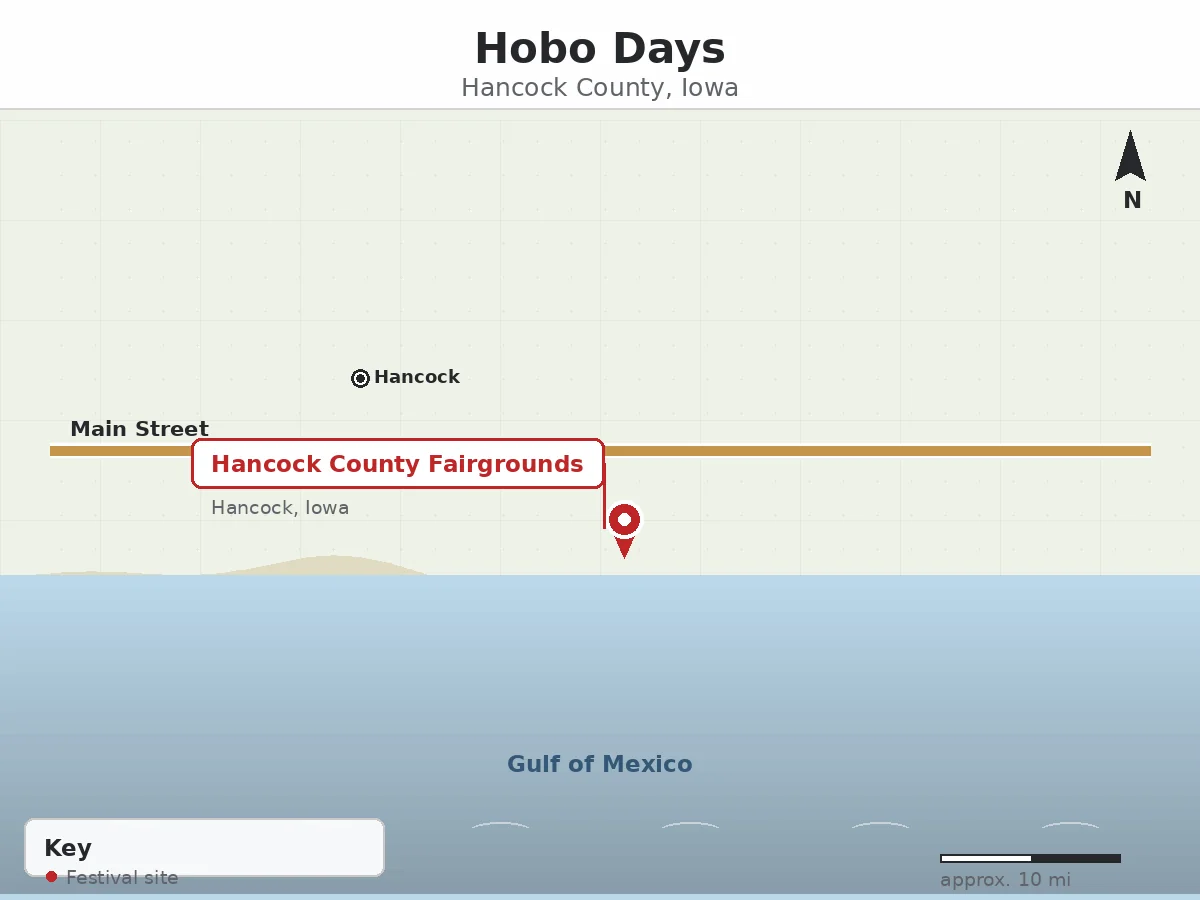
Hobo Days is an annual convention and homecoming for hobos, rail riders and the townspeople who welcome them, held in Britt on the second weekend of August. The encyclopaedia layer describes an event known throughout the town as the annual Hobo Day or Hobo Days celebration, and it credits the local Chamber of Commerce with organising the convention. A magazine layer separately identifies the Hobo Foundation as the body behind the National Hobo Museum in Britt, noting that the foundation purchased the museum’s building in nineteen eighty-nine; the two organisational accounts are recorded here side by side, exactly as their layers give them, rather than merged into one. Nothing about the weekend sits inside one enclosure. It spreads across Britt, taking in the Hobo Jungle campground, City Park, Main Street and, for some events, the Hancock County Fairgrounds, so that for one weekend the whole town functions as the venue. Britt is not the seat of Hancock County; that honour belongs to Garner, a fact confirmed by both encyclopaedia and county gazetteer layers, which makes Britt’s century of hosting the convention a distinction the town earned entirely on its own.
Quick Facts
| Item | Detail |
| Published names | Hobo Days and Britt Hobo Days; formally the National Hobo Convention |
| Host town | Britt, in Hancock County, Iowa |
| County seat | Garner; Britt is not the seat of Hancock County |
| Grounds | The Hobo Jungle campground, City Park, Main Street and the Hancock County Fairgrounds |
| Timing | The second weekend of August |
| First convention | Began on the twenty-second of August, nineteen hundred, in Britt |
| Organising accounts | An encyclopaedia layer credits the local Chamber of Commerce; a magazine layer names the Hobo Foundation behind the National Hobo Museum |
| Permanent institutions | The Hobo Cemetery and the National Hobo Museum, opened in twenty seventeen |
| Signature dish | Communal mulligan stew, reported at five thousand servings by a state history column |
| Admission | No general admission price is stated in any layer read |
History of the Festival
A state history column and magazine layers agree on the beginning: the first official National Hobo Convention opened in Britt on the twenty-second of August, nineteen hundred. It happened because Britt’s newspaper editor and a circle of his friends issued an invitation to the Hobo Tourist Union No. 63, a body that had previously held a convention in Chicago. The gathering took root in Britt rather than moving on, and the encyclopaedia layer states that the convention has been held on the second weekend of every August since nineteen hundred. The organiser’s schedule documents carry the run forward in their own billings: the twenty eighteen gathering was billed as the one hundred eighteenth annual, running from the ninth to the twelfth of August, and the twenty twenty-one gathering as the one hundred twenty-first, from the twelfth to the fifteenth of August. Over that long span the event grew permanent institutions in the town. The Hobo Cemetery became the resting place of hobos who died as Britt’s guests in spirit if not in residence, and the National Hobo Museum gave the culture a year-round home; the magazine layer reports that the museum opened in twenty seventeen, in a building the Hobo Foundation had purchased back in nineteen eighty-nine. All of this belongs to Britt, a town that gazetteer layers confirm is not the county seat, since Garner holds that position for Hancock County. Britt’s claim on August rests on invitation and endurance instead: a newspaper editor’s idea in nineteen hundred that his town simply never stopped honouring.
What to Expect
The weekend has a ceremonial spine that magazine and student-newspaper layers describe in matching terms. On Thursday the Hobo Jungle bonfire is lit with ceremony, and it burns continuously until Sunday, serving as the convention’s hearth. Friday brings the weekend’s most solemn hour, a memorial service at the Hobo Cemetery for hobos who have, in the community’s own phrase, caught the westbound. Saturday carries the spectacle: a parade that runs about an hour and a half, and the coronation of the Hobo King and Queen, the convention’s reigning pair for the year. Around that spine the organiser and encyclopaedia layers fill the days with communal mulligan stew, five-kilometre and ten-kilometre runs, a classic car show, an arts and crafts show, a hobo auction and a carnival. The dated schedules add their own particulars. In twenty eighteen, the organiser’s document lists a craft show, a memorabilia auction, the coronation held in City Park and hobo entertainment at the Jungle. In twenty twenty-one, the schedule places a carnival on Main Street, sets museum hours and again promises entertainment at the Jungle. Crowd figures circulate but rest on single layers: a listicle claims the twenty eighteen convention drew twenty thousand tourists and nearly one hundred hobos, and a magazine guesses that about ten thousand people watch the parade. Both numbers belong to the layers that printed them and are offered here as their claims, not as settled counts.
Planning Your Visit
Timing follows the pattern the encyclopaedia layer states, a second weekend in August, and the two schedules with full particulars sit squarely inside it: the ninth to the twelfth of August in twenty eighteen, and the twelfth to the fifteenth in twenty twenty-one. A visitor should picture the event as a town to move through rather than a gate to pass. The Jungle campground anchors the ceremonial side of the weekend, City Park hosts set pieces such as the twenty eighteen coronation, Main Street carries the parade and the twenty twenty-one carnival, and the Hancock County Fairgrounds takes some events on the schedule’s edge. Because no single grounds holds everything, the sensible rhythm is the convention’s own: Thursday’s lighting, Friday’s memorial, Saturday’s parade and crowning, and the bonfire’s last day on Sunday. On cost, the record is candid in its silence. None of the layers behind this article states a general admission price for the convention, so none is quoted here; anyone budgeting a trip should treat individual activities, food and lodging as the expenses to plan around, and should confirm the current year’s schedule, since the dated particulars in hand come from twenty eighteen and twenty twenty-one.
For a useful comparison, see the Hamilton County Iowa Fall Festival for another county festival.
A Sample Weekend at the Convention
Thursday belongs to arrival and fire. Reach Britt, find the Jungle, and watch the bonfire lit in ceremony, knowing the magazine and student-newspaper layers say it will not go out until Sunday. Friday turns reflective: attend the memorial service at the Hobo Cemetery, then use the museum hours the twenty twenty-one schedule provided to walk the National Hobo Museum’s rooms while the town is still gathering itself. Saturday is the full public day the schedules describe. Take a place along Main Street for the parade’s hour and a half, follow the crowd to the coronation of the King and Queen, share in the communal mulligan stew the state history column writes about, and browse the craft show and memorabilia auction that the twenty eighteen document lists. Sunday is the convention’s exhale, the bonfire burning down at the Jungle and entertainment closing out the gathering, after which Britt returns to being a quiet Hancock County town for another year. This outline follows the shape the layers document rather than any single year’s printed timetable.
How Britt Compares
There is, on the evidence read, nothing to compare it with. No other town’s Hobo Days appears anywhere in the layers behind this article; the event is unique to Britt. The nearest comparison lies in its own origin story. Before nineteen hundred, the Hobo Tourist Union No. 63 had convened in Chicago, a far larger stage, yet it was the invitation from Britt’s newspaper editor and his friends that fixed the convention’s home. Chicago hosted a meeting; Britt kept a tradition. That contrast explains the formal name’s survival. Plenty of towns host festivals, but only Britt hosts the National Hobo Convention, crowned royalty, commemorative cemetery and all, and the layers treat that singularity as the whole point of the place in August.
A Visitor’s Checklist
- Arrive by Thursday if you can, so the bonfire lighting opens your weekend
- Leave Friday morning unhurried for the memorial service at the Hobo Cemetery
- Settle your parade spot on Main Street well before Saturday’s start
- Try the mulligan stew; the state history column treats it as the convention’s table
- Walk through the National Hobo Museum during its scheduled hours
- Circle back to the Hobo Jungle after dark, while the bonfire still burns
- Bring cash for the auction and craft stalls described in the schedules
- Expect to walk, since the grounds stretch across the whole town
Beyond the Festival Weekend
Britt keeps the convention’s memory standing all year. The National Hobo Museum, opened in twenty seventeen according to the magazine layer, preserves the artefacts and stories of the road in the building the Hobo Foundation bought in nineteen eighty-nine, and the twenty twenty-one schedule’s museum hours show it woven into the weekend itself. The Hobo Cemetery is the quieter institution, the ground where the Friday memorial service gathers and where the phrase about catching the westbound stops being folklore and becomes a list of names. Between those two sites, the Jungle campground waits empty for most of the year, an ordinary patch of Britt that one weekend each August becomes, by firelight, the centre of a national community.
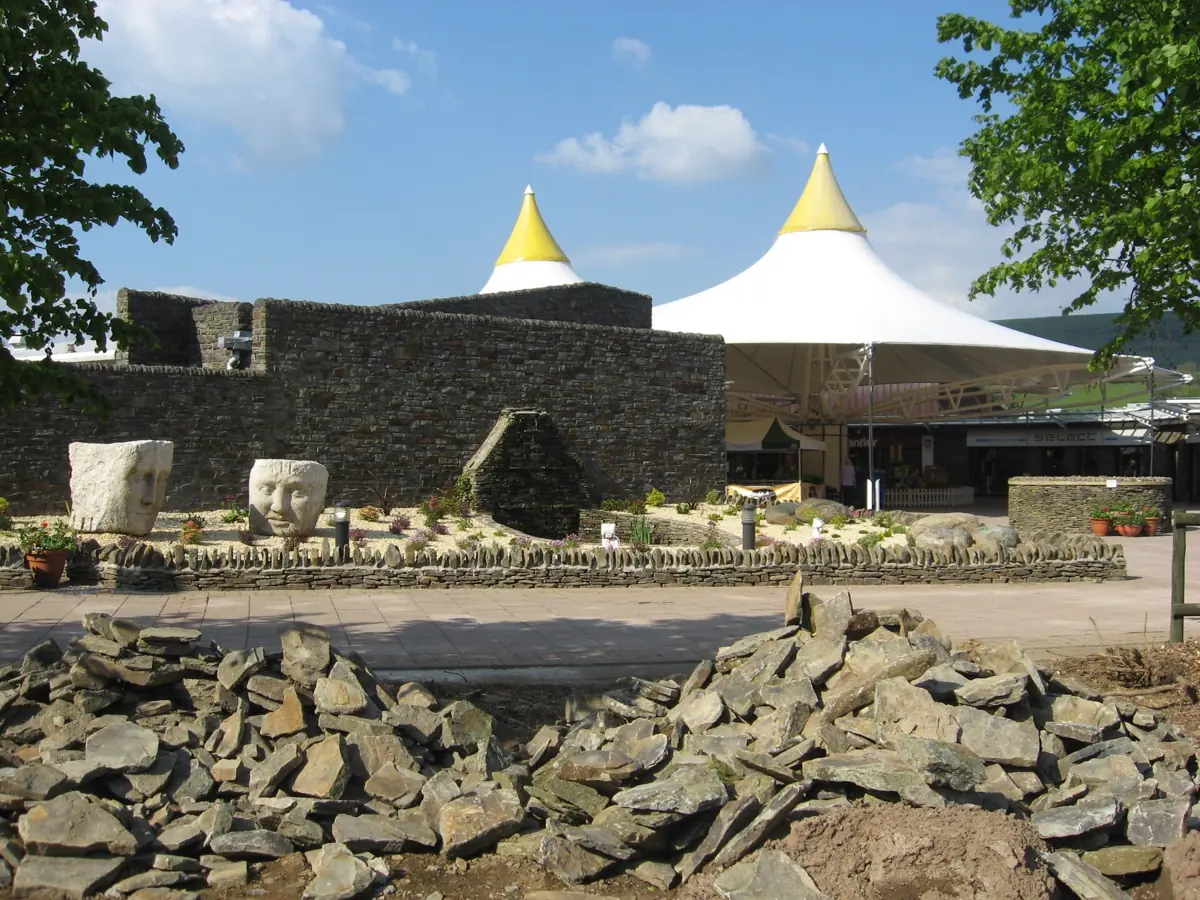
Visitors who arrive outside August will find Britt much as its neighbours are, a farming town in the northern tier of Iowa counties, and that quiet is part of the story the layers tell. The convention did not grow out of a resort or a purpose-built showground. It grew out of an invitation issued from a newspaper office, and its grounds remain ordinary town ground: a campground, a park, a main street and a fairground that spends the rest of its year on county business. The ordinariness is precisely what makes the second weekend remarkable, because nothing in Britt’s everyday face predicts the kingdom that assembles there each summer.
Why the Convention Matters
A festival usually celebrates what a town produces. Hobo Days honours people a town merely welcomed, and it has done so, on the encyclopaedia layer’s account, every August since nineteen hundred. That welcome hardened into institutions no other town built: a cemetery that treats drifters as citizens of somewhere, a museum that treats their culture as history worth shelving, and a coronation that treats their king and queen as genuine royalty for a weekend. The five thousand servings of stew in the state history column’s telling, the bonfire kept alight for four days, the memorial read over the graves: each is a small act of respect repeated until it became a tradition. Britt, which is not even its county’s seat, became the capital of a nation that had no other.
Frequently Asked Questions
What does it mean when a hobo has caught the westbound?
It is the community’s own gentle phrase for a hobo who has died. The layers describe a memorial service held on Friday at the Hobo Cemetery for those who have caught the westbound, where the convention pauses its carnival mood to remember its dead by name.
Why does the event carry the name National Hobo Convention?
An encyclopaedia layer gives that as the event’s formal name, while explaining that around Britt it is known simply as the annual Hobo Day or Hobo Days celebration. The grandeur is earned by the history: a state history column and magazine layers trace it to the Hobo Tourist Union No. 63’s gathering in nineteen hundred.
Who are the Hobo King and Queen, and when are they crowned?
They are the convention’s reigning figures for the year, chosen and crowned during the August weekend. The organiser’s twenty eighteen schedule places the King and Queen coronation in City Park, and the coronation stands among the set pieces of the Saturday programme in the layers’ accounts.
How much mulligan stew does the convention cook?
A great deal, by the one account that counts it. A state history column reports locals cooking five thousand servings of the communal stew, a figure recorded here as that column’s reporting rather than as an organiser’s audited total.
What to Expect From the Next Hancock County Iowa Hobo Days Festival
How often is Hancock County Iowa Hobo Days Festival held?
The encyclopaedia layer states that the convention has been held on the second weekend of every August since nineteen hundred, and the organiser’s own billings, the one hundred eighteenth annual in twenty eighteen and the one hundred twenty-first in twenty twenty-one, march in step with that yearly rhythm.
When is the next Hancock County Iowa Hobo Days Festival?
The layers read for this article print no fixed date for a future edition. What they establish is the pattern: a second weekend in August, running Thursday to Sunday, as the twenty eighteen dates of the ninth to the twelfth and the twenty twenty-one dates of the twelfth to the fifteenth both demonstrate.
Will the dates change?
The documented pattern gives little reason to expect movement. Across the editions the layers describe, from nineteen hundred through twenty twenty-one, the convention holds to August’s second weekend; any change would arrive through the organiser’s future schedules rather than through anything the present record announces.
Closing Thoughts
Some festivals end when the tents come down. Britt’s leaves a museum open, a cemetery tended and a bonfire’s ashes cooling in the Jungle, all of it waiting for the second weekend of next August. Whether a visitor comes for the parade, the stew or the strange tenderness of the Friday memorial, Hobo Days offers a version of American travel that the rail era built and one small town refused to forget.