Wabash County Indiana Bluegrass at Hopewell Festival
On a summer Saturday outside the small town of Lagro, a barn fills with banjos, fiddles and close harmony singing, and for one evening the building works as a concert hall with two floors of music running at once. The event is called Bluegrass at Hopewell in every credible account of it, and that wording matters, because the longer name carried in this article’s title adds a closing word the organisers themselves do not print. Readers picturing a festival in the usual sense should adjust the picture early: this is a single evening of concerts, not a weekend of camping and workshops, and its charm comes from that compact scale. Visit Wabash County, the county visitors bureau, stages the night at a barn just beyond Lagro, drawing its audience from across Wabash County and the surrounding countryside. Three editions are documented in detail, billed as the third year in twenty twenty-three, the fifth year in twenty twenty-five and the sixth year in twenty twenty-six, each one an evening programme of bluegrass bands, local food and a trolley link to a neighbouring church.
About Bluegrass at Hopewell
The bureau sits at the centre of the event in every layer of the record. Local news coverage announces the evening on behalf of Visit Wabash County, a downtown organisation’s listing phrases the invitation as a chance to join Visit Wabash County, and tickets are sold under the bureau’s own name through a ticket platform. That makes the night unusual among county attractions, since the body charged with promoting the area also produces this one directly. Five local firms and a railroad foundation appear in the local news layer as named sponsors for the twenty twenty-six edition, and they are recorded there as sponsors only, supporting the evening rather than running it.
The venue carries two printed name forms that this article keeps separate rather than merging. A ticket-platform layer calls the building the Hopewell Barn, while local news and downtown organisation layers describe it as the Rustic Barn at Hopewell. The barn stands just outside Lagro, a small town in the eastern part of the county. Lagro does not serve as the county seat; that role belongs to Wabash, the city where the bureau is based, a distinction the coverage itself supports and one worth keeping straight when planning the drive.
Quick Facts
| Item | Detail |
| Published name | Bluegrass at Hopewell |
| Event format | A single evening of bluegrass concerts at a barn |
| Venue | Hopewell Barn, also printed as the Rustic Barn at Hopewell |
| Host locality | Just outside Lagro in Wabash County, Indiana |
| County seat | Wabash, a separate town from the host locality |
| Organiser | Visit Wabash County, the county visitors bureau |
| Documented editions | Twenty twenty-three, twenty twenty-five and twenty twenty-six |
| Evening hours | Music begins at six thirty; the twenty twenty-three evening ran to ten, the twenty twenty-six evening to nine thirty |
| Lawn ticket | Twenty dollars in the local news layers for twenty twenty-five and twenty twenty-six |
| Reserved table | A table for eight at two hundred eighty dollars in the ticket-platform layer |
The History Behind the Hopewell Evenings
When the first of these barn evenings took place is a detail the available coverage leaves open. Reporting on the event prefers to count the run rather than date its beginning, labelling the July twenty twenty-three gathering as the third year, the July twenty twenty-five gathering as the fifth year and the August twenty twenty-six gathering as the sixth year. Those labels are billings, a way of saying the evening has become a habit, and this article treats them as nothing more; working backwards from them to name a founding year would invent a fact the sources never state.
What the record does show is a bureau deliberately building a programme rather than simply advertising one. In January twenty twenty-six the visitors bureau issued a press release describing the Hopewell evening as one of its own programmes, a place where roots music and history come together in a scenic setting. That framing helps explain the shape of the night: the music shares the bill with a historic church, homemade food and the barn itself, so the concert doubles as an introduction to a quiet corner of the county. By the sixth year billing, the evening had settled into a recognisable pattern of late summer timing, a six thirty start and a lineup split across the barn’s two levels.
For a useful comparison, see the Wabash County Indiana Wabash Founder’s Festival for another county festival.
What to Expect
Picture the barn working on two levels at once, with a band holding the floor below while another plays above, and the audience drifting between the two. The downtown organisation’s account of the twenty twenty-three edition counts six bluegrass bands across both levels during the evening. The fifth year edition in twenty twenty-five again promised live music on both levels, and the layers name the acts: Rock Bottom Boys of Madison County, Cornfields and Crossroads, Dwayne “Hank” Conaway, The Barrel Scrapers, The Robin Davis Duo and Watershed Ramblers. By the sixth year edition in twenty twenty-six, the bill had shifted while keeping some familiar names, with The Barrel Scrapers and Dwayne “Hank” Conaway joined by Brad McCord, Lorynn Hunt and Fourth Falling.
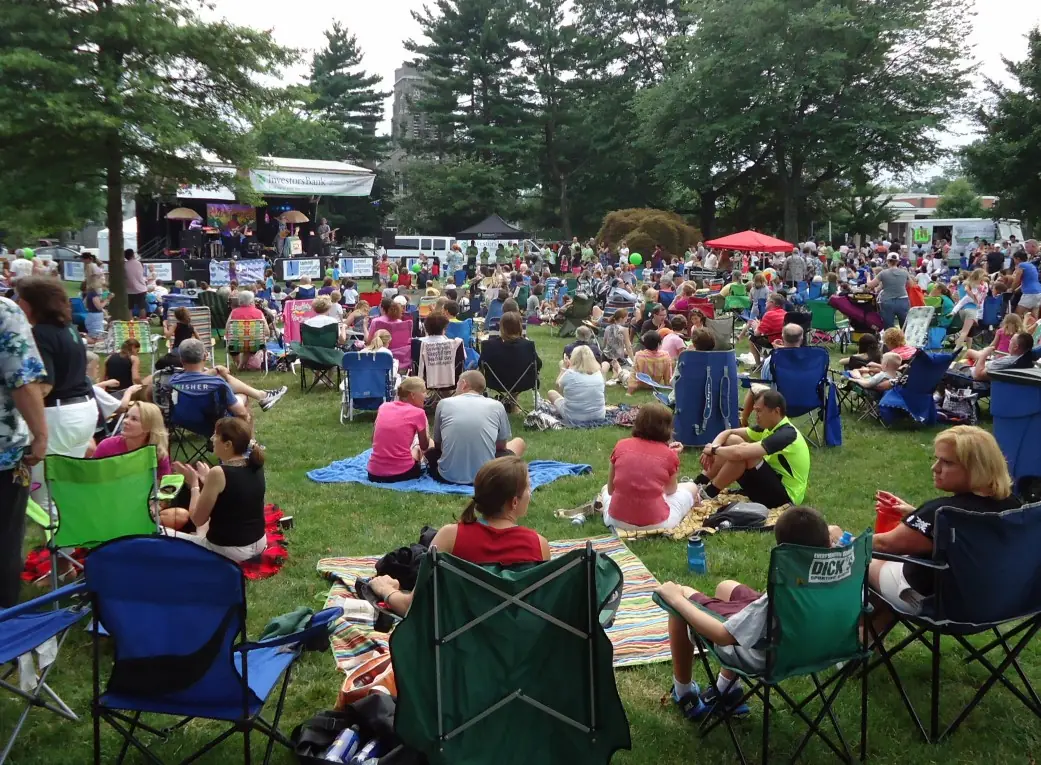
The evening offers more than the stages. Local food and drink vendors serve the crowd, and the programme description mentions food trucks among the options in the grounds. In twenty twenty-three, trolley rides carried visitors to the Antique Boutique at Hopewell, which is the Hopewell Church, where the draws included brandy tastings and complimentary homemade mini pies. Lawn games rounded out that edition’s grounds. Reserved tables inside the barn give groups a fixed base, while most listeners settle on the lawn outside with their own blankets and chairs as the light fades.
Planning Your Visit
Think of the trip as an evening excursion rather than a day out, timed around a six thirty start just outside Lagro. Coming from the county seat at Wabash or from further across the county, the drive leads to a rural barn setting, so arriving with time to park, find a patch of lawn and settle in before the first band is the sensible pattern. Bringing blankets and chairs matches how the audience is described in the coverage, spread across the lawn while the music runs on both floors of the building.
Ticketing is reported in layers that belong to particular editions, and it helps to keep them attached to their years. Local news coverage of both the twenty twenty-five and the twenty twenty-six editions prices a lawn ticket at twenty dollars, a figure that bundles entry with a homemade tasting and the trolley rides. A reserved table for eight, by contrast, appears in the ticket-platform layer at two hundred eighty dollars, suiting a group that wants seating inside the barn guaranteed. Weather holds fewer surprises than at most outdoor concerts: the ticket-platform layer states the event runs rain or shine, and if conditions turn, seating simply moves inside the barn or beneath a tent. Checking the visitors bureau’s current announcements before travelling remains wise, since the month itself has moved between editions.
A Sample Evening at the Barn
A plausible shape for the night can be drawn from the documented editions without stretching any of them. Arrive ahead of the six thirty opening so the lawn spot is claimed and the programme for the evening is in hand. Take in the first band on the ground floor, where the twenty twenty-three edition was one of six acts sharing the building, then climb to the upper level to hear how the same style sounds in a smaller, closer room. Around the middle of the evening, follow the pattern set in twenty twenty-three and ride the trolley to the Antique Boutique at the Hopewell Church, where brandy tastings and homemade mini pies rewarded the short trip. Return to the barn for the closing sets, since the twenty twenty-six edition wound down at nine thirty while the twenty twenty-three evening played on until ten, and plan the drive back through dark county roads at a relaxed pace.
How Hopewell Compares With Larger Indiana Gatherings
Indiana holds bluegrass festivals on a far bigger scale, and the facts file fences those events off from this one for good reason. The gatherings around Bean Blossom and Kendallville belong to the multi-day tradition, where audiences camp, jam sessions run alongside the stage programme and the event occupies a whole weekend or longer. Hopewell works in the opposite direction. Its entire offering fits between supper and bedtime on a single Saturday, in one barn outside one small town, and its returning acts suggest a regional circuit of players rather than a national touring bill. For a listener who wants the sound of bluegrass without committing days to it, that difference is the appeal; for a committed festival camper, it is a pleasant evening rather than a destination. The two kinds of event share a musical language and very little else.
A Checklist for the Evening
- A blanket or folding chairs for the lawn seating
- A layer of warm clothing for after sunset
- Cash or card ready for food and drink vendors
- The current edition’s ticket details checked in advance
- A plan for the trolley ride to the Hopewell Church boutique
- Time allowed for both levels of music inside the barn
- A torch or phone light for the walk back to the car
- A designated driver for the rural roads home
- Curiosity about the small town of Lagro itself
- Room for a homemade mini pie or two
Beyond the Barn
The evening points naturally toward its neighbours. The Hopewell Church, reached by trolley during the twenty twenty-three edition, holds its own place in the outing through the Antique Boutique, and its homemade baking plainly left an impression on the coverage. Lagro itself is the kind of small town many visitors would otherwise pass without stopping, and the concert gives it a summer moment in the county’s calendar. The bureau that stages the night also keeps a Welcome Center in downtown Wabash, the county seat, which anchors the wider visitor picture of the county even though the music happens out at the barn. Visitors who arrive with time in hand can fold the town into the trip, turning a single concert into a fuller acquaintance with the county.
Why a Bureau-Run Barn Concert Matters
A visitors bureau usually spends its energy persuading people to attend other organisations’ events, so a bureau producing its own concert series says something about how Wabash County presents itself. The Hopewell evenings tie the county’s identity to living traditions rather than monuments: bluegrass played by regional bands, food made locally, a church selling homemade pies and a barn reused as a music room. Each documented edition repeats that formula with small variations, and the year billings climbing from third to sixth suggest an audience that keeps returning for it. In a state where the biggest bluegrass gatherings draw crowds to dedicated festival grounds, this modest barn night shows the same music working at village scale, sustained by the county’s own promotional body.
Frequently Asked Questions
Is Bluegrass at Hopewell really a festival, or something smaller?
It is smaller than the word suggests. Every credible layer of coverage describes a single evening of concerts at a barn outside Lagro, running from six thirty until nine thirty or ten, rather than a multi-day festival with camping and workshops. The published name is simply Bluegrass at Hopewell, and the extra word in this article’s title comes from the listing that prompted it, not from the organisers.
Who organises the evening at the barn?
Visit Wabash County, the county visitors bureau, runs the event. Local news layers announce the evening on the bureau’s behalf, a downtown organisation’s listing invites readers to join the bureau, and tickets are sold under the bureau’s name. Local firms and a railroad foundation supported the twenty twenty-six edition as sponsors, which is a separate role from organising it.
Which musicians have played recent editions?
The twenty twenty-five bill named in the layers included Rock Bottom Boys of Madison County, Cornfields and Crossroads, Dwayne “Hank” Conaway, The Barrel Scrapers, The Robin Davis Duo and Watershed Ramblers. The twenty twenty-six edition brought back The Barrel Scrapers and Dwayne “Hank” Conaway and added Brad McCord, Lorynn Hunt and Fourth Falling. Six bands played across the barn’s two levels in twenty twenty-three.
What happens if the weather turns bad on the night?
The evening goes ahead regardless. The ticket-platform layer describes the event as held rain or shine, with seating moved inside the barn or under a tent when conditions require it. Because much of the audience normally sits on the lawn, the indoor fallback is part of the arrangement rather than an emergency improvisation.
What to Expect From the Next Wabash County Indiana Bluegrass at Hopewell Festival
How often is Wabash County Indiana Bluegrass at Hopewell Festival held?
Documented editions fall in twenty twenty-three, twenty twenty-five and twenty twenty-six, and the coverage bills them as the third, fifth and sixth years of the run. That pattern points to a summer evening that recurs most years, though the layers gathered here do not document an edition for every single summer in between.
When is the next Wabash County Indiana Bluegrass at Hopewell Festival?
The documented run of editions ends with the sixth year evening on the twenty-ninth of August, twenty twenty-six. Anyone hoping to attend the following edition should watch for announcements from Visit Wabash County, which has trailed earlier editions through local news coverage, its own calendar and the ticket platform where seats are sold under its name.
Will the dates change?
They already have. The twenty twenty-three and twenty twenty-five editions both fell on late July Saturdays, while the sixth year edition moved to the twenty-ninth of August in twenty twenty-six. The day of the week and the six thirty start held steady across those editions, but the month plainly did not, so assuming a fixed July date would be unwise.
Closing Thoughts
Bluegrass at Hopewell earns its place in the county calendar by doing a small thing well: one barn, two levels of music, local food, a trolley ride to a church full of homemade pies and a summer night outside Lagro. Keeping its published name straight, and remembering that the grander title belongs to listings rather than to the bureau, is part of taking the event on its own terms. For anyone within driving distance of Wabash County, the documented editions suggest an evening that rewards the modest effort of getting there. It is, in the end, exactly what its plain published name promises, and nothing it does not.