Franklin County Indiana Oldenburg Freudenfest Festival
Every July, the small Franklin County town of Oldenburg sets aside a Friday and Saturday for sauerkraut balls, oompah music and a street full of neighbours. The gathering at its heart is published simply as Oldenburg Freudenfest, or just Freudenfest, and it carries a billing that reaches well beyond the town limits: the Biggest Little German Festival in Indiana. Nobody writing about the event, in any layer consulted, adds the word Festival to the end of its name, so this page keeps the published forms as they stand while telling the story of the weekend they describe.
About the Festival
Freudenfest belongs to Oldenburg, a Franklin County community known as the Village of Spires. Oldenburg is not the county seat; that role belongs to Brookville, elsewhere in the same county. The name itself is translated two ways in the layers that cover the event, glossed as Friend Festival in some and as a festival of fun in others, and both renderings fit a weekend built around food, music and company.
Local news coverage from 2026 names the Freudenfest Committee as the body that oversees the annual event. The same coverage notes that money raised through the festival has been applied to developments around the town, which gives the weekend a second purpose beyond entertainment: it is a fundraiser folded into a celebration. A state tourism office blog and a festival directory both print the name as Oldenburg Freudenfest, while local news, a landmarks organisation layer and German American heritage layers use the shorter Freudenfest.
That spread of coverage is itself part of the picture. A village celebration that draws the attention of a state tourism office, a statewide landmarks organisation and heritage writers is one that has outgrown purely local notice, yet the running of it stays local: a named committee, drawn from the community, directing both the weekend and the proceeds that flow from it.
Quick Facts
| Item | Detail |
| Published name | Oldenburg Freudenfest, also shortened to Freudenfest |
| Billing | The Biggest Little German Festival in Indiana |
| Host town | Oldenburg, Franklin County, Indiana |
| County seat | Brookville, a different Franklin County town |
| Town nickname | Village of Spires |
| Organiser | The Freudenfest Committee, per local news in 2026 |
| When | A Friday and Saturday in the third week of July |
| 2026 dates | 17 and 18 July 2026 |
| Centre of activity | Oldenburg Town Hall and Main Street |
| Signature food | Sauerkraut balls |
History
Local news reporting published in July 2026 traces the beginning to 1976, a year when towns across America were holding bicentennial events of every size. Oldenburg joined in, and the gathering that resulted was modest at first. A landmarks organisation layer from 2016 tells much the same story, describing the annual event as having started in 1976 as a small local day of fun.
For a useful comparison, see the Franklin County Indiana Metamora Music Festival for another county festival.
The first edition did not carry the Freudenfest name. According to the 2026 local news account, the name arrived the following year, supplied by a local German teacher before the 1977 festival, and it has been attached to the celebration ever since. The event found its stride a decade later: the same account says it took off in 1987, the year Oldenburg marked its one hundred fiftieth anniversary, and that it settled into its modern form in 2000. The 2026 edition was billed as the festival’s fiftieth year.
Read together, those milestones describe a festival with three lives. It began as a one off patriotic gesture in a bicentennial summer, found a German name and identity in its second year, and then grew in earnest when the town’s own anniversary gave it a bigger stage in 1987. The modern form dated to 2000 in the local news account is the version today’s visitors meet: two days, centred on the town hall and Main Street, with the food, bands and races spread across the middle of the village.
One travel layer offers a different starting point, claiming the festival was first integrated in 1978. That assertion sits against both the local news history and the landmarks organisation account, each of which gives 1976, so it is worth recording only as an outlying claim that the stronger layers do not support. The deeper history of the town also arrives in two versions. Some layers date Oldenburg’s settlement to 1817, while others describe its founding by German settlers in 1837. Both dates circulate, neither is reconciled in the material consulted, and they are best kept apart: one may describe early settlement and the other the town’s formal founding, but no layer consulted settles the question in those terms.
What to Expect
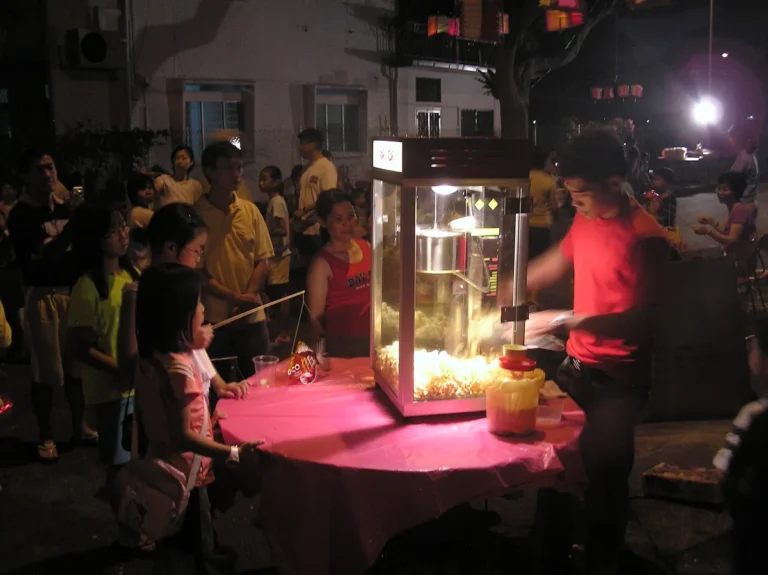
German food anchors the weekend, led by the sauerkraut balls that the layers name as the signature dish. German and American food appear side by side, so a visitor can move between bratwurst style plates and familiar fairground fare within the same block. German beer is poured and a bier garten gives the drinks a home base, while wine tasting widens the choice for anyone not drinking beer.
The wine tasting gives the drinks offer a quieter corner alongside the beer garden’s sociability, and the whole programme is built for drifting: no single stage holds the weekend, and the town centre itself does the organising.
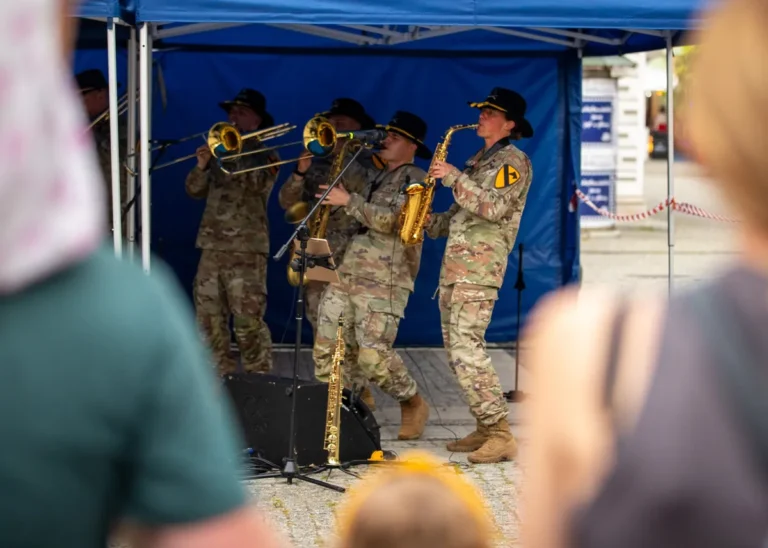
Music runs through the programme in the form of German bands and oompah playing, and folk dancing adds movement to the listening. Two of the most distinctive attractions, the dachshund races and a pie contest followed by an auction of homemade pies, are attested by the landmarks organisation layer and by travel layers covering the event. One travel layer adds two further fixtures: a five-kilometre run routed through Michaela Farm and a Schnitzelbank Salute. Because those two items rest on that single travel layer alone, they should be read as its contribution to the programme rather than as features confirmed across the coverage.
The setting matters as much as the schedule. The 2026 edition was centred at Oldenburg Town Hall, with the festivities spilling onto Main Street, so the whole middle of the village becomes the venue. One travel layer claims the festival draws over ten thousand visitors per day. That figure is that layer’s claim only; no count from the committee or any other body stands behind it in the material consulted.
Planning Your Visit
Oldenburg is a small town, and the festival occupies its centre rather than a fenced fairground. The directory that lists the event states that admission is free and mentions street parking, and that free entry statement belongs to that directory; no layer consulted contradicts it, but it is the directory’s word that carries it. Arriving early on either day is the practical way to secure a space near Main Street before the crowds thicken.
Friday and Saturday each hold a full day, and the third week of July in southeastern Indiana is ordinarily hot, so dress for standing outdoors, carry water and plan shade breaks between the music sets. Because the programme mixes food lines, races and dancing across the town centre, comfortable shoes matter more than a fixed schedule. Anyone especially set on the pie auction or the dachshund races should confirm the day’s running order on arrival, since the layers describe the features without publishing a minute by minute timetable.
Cash is a sensible precaution for food and auction bidding in a small town setting, even though no layer consulted spells out payment arrangements. Visitors making a longer trip of it can treat Brookville, the county seat, as the nearest larger base in the same county, while remembering that Brookville’s own German festival is a separate event on a different date.
A Sample Itinerary
Begin Friday at the town hall end of the grounds, where the festival is centred, and work along Main Street while the evening crowd builds. Graze first: a plate built around sauerkraut balls, something from the American side of the food offer, and a drink from the bier garten. Stay within earshot of the bands for the evening, since the music and folk dancing form the backbone of the night.
Give Saturday a slower start. Return late morning, watch the dachshund races if the day’s order includes them, and follow the pie contest through to the auction of homemade pies, where bidding on a winning entry makes a memorable souvenir of the edible kind. Walkers and runners who have taken up the five-kilometre run described by the travel layer will want the morning for it. Close the day back on Main Street with the bands, treating the second evening as the festival’s farewell.
How Freudenfest Compares
Franklin County holds more than one German themed gathering, and the two should not be confused. Brookville, the county seat, hosts a September event called Third Place Germanfest. It is a separate festival in a different town, in a different month, and no detail from it belongs in a description of the Oldenburg weekend.
Further afield, Jasper’s Strassenfest in Dubois County stands as another of Indiana’s German festivals, larger in reputation and rooted in a different community’s history. Freudenfest’s distinction lies in its scale relative to its billing: a village of spires putting on a celebration confident enough to call itself the Biggest Little German Festival in Indiana, funded and run by a local committee whose proceeds return to the town.
Checklist
- Put the Friday and Saturday of the third week of July on the calendar
- Aim for Main Street and Oldenburg Town Hall as the centre of the action
- Arrive early to make street parking easier
- Bring cash for food stalls and possible pie auction bidding
- Dress for July heat and long spells standing outdoors
- Carry water and plan breaks out of the sun
- Try the sauerkraut balls, the dish the coverage names as the signature
- Leave room for both German and American food
- Ask on arrival about the running order for races and the pie auction
- Build in time for the bands and the folk dancing
- Keep Brookville’s September Germanfest separate in your plans
- Remember the free admission statement comes from the festival directory
Beyond the Festival
Oldenburg rewards a wander even between events. The Village of Spires nickname points to the church towers that rise over the town, and a slow walk through its streets gives a visitor the German character of the place at ground level: the architecture, the food traditions and a community that has kept its heritage visible for generations. The layers consulted date the town’s beginnings variously, with settlement placed in 1817 by some and a founding by German settlers in 1837 by others, and that German inheritance is precisely what Freudenfest celebrates each summer.
Michaela Farm appears in the festival record as the ground crossed by the run described in the travel layer, which places working farmland within the festival’s orbit. Brookville, as the county seat, offers the natural extension for anyone staying in the county, and its September Germanfest gives German food enthusiasts a second, quite separate date in the same county later in the year.
Why Freudenfest Matters
The significance of Freudenfest is written into its own history. A bicentennial era gathering that might have lasted a single summer instead acquired a German name, survived the decades and reached a billed fiftieth year in 2026, because the town kept choosing to hold it. The landmarks organisation account of a small day of fun in 1976 and the modern billing as the Biggest Little German Festival in Indiana describe the same event at two ends of its life, and the distance between them is the measure of what the committee and the town built.
It also matters where the money goes. Local news in 2026 described a committee that has applied festival funds to developments in the town, so the weekend’s spending circulates back into the streets that host it. For a village whose identity rests on German settlement and church spires, an annual celebration of German food, music and dancing is not decoration; it is the community restating, in public and in July, who it is.
There is a quieter point in the name itself. A teacher’s suggestion in the festival’s second year gave a bicentennial party a German word to grow into, and the glosses attached to that word, friendship and fun, describe exactly what the weekend still trades in.
Frequently Asked Questions
What does the name Freudenfest mean?
Layers covering the event gloss the name two ways, as Friend Festival and as a festival of fun. Local news reports that the name itself was not used in the first year, and that a local German teacher supplied it before the 1977 edition.
Which dishes is the festival known for?
Sauerkraut balls are named across the coverage as the signature food. German and American dishes are served side by side, and a pie contest ending in an auction of homemade pies adds a sweeter competitive note to the menu.
Is the festival run by the town or by volunteers?
Local news from 2026 names the Freudenfest Committee as the body overseeing the annual event. The same coverage says festival funds have been applied to developments in Oldenburg, linking the celebration directly to the town’s upkeep.
What happens to the claim that over ten thousand people attend each day?
That figure comes from a single travel layer and stands as that layer’s claim. No committee count or independently verified attendance number appears in the layers consulted, so the safe reading is that the festival draws crowds far beyond the town’s size without treating the number as audited fact.
What to Expect From the Next Franklin County Indiana Oldenburg Freudenfest Festival
How often is Franklin County Indiana Oldenburg Freudenfest Festival held?
The celebration returns each summer on the Friday and Saturday of the third week of July. Local news describes it as an annual event overseen by the Freudenfest Committee, and the pattern of editions running through a billed fiftieth year in 2026 shows a weekend that the town keeps on its calendar without interruption in the coverage consulted.
When is the next Franklin County Indiana Oldenburg Freudenfest Festival?
Following the 2026 edition held on 17 and 18 July, the next gathering would fall on the Friday and Saturday of the third week of July 2027. No layer consulted prints confirmed dates for that edition, so the third week pattern is the guide rather than a promise, and visitors should watch for the committee’s own announcements as the summer approaches.
Will the dates change?
The third week of July anchor has held across the editions described in the layers, and nothing consulted suggests a move. Small festivals do occasionally shift a weekend for local reasons, so treat the pattern as reliable history rather than a guarantee, and confirm the exact Friday and Saturday before booking travel.
Closing
Freudenfest is Oldenburg telling its own story with food, brass and pastry: a bicentennial summer party from 1976 that took a German teacher’s name, grew with the town’s sesquicentennial and now bills itself, with a wink, as the Biggest Little German Festival in Indiana. Come hungry, pace yourself through both days, and let the Village of Spires do the rest.