Hawaii County Hawaii Cherry Blossom Heritage Festival
On the first Saturday of February, the upland town of Waimea gives a morning to cherry blossoms and Japanese culture. Published as the Waimea Cherry Blossom Heritage Festival, it is a county-produced celebration built around blossom viewing at Church Row Park, with activities spread across town venues. Its most recent documented edition, billed as the thirty-third Annual, ran on Saturday, February 7, 2026, from 9:00 a.m. to 3:00 p.m. Waimea hosts the festival but does not govern the county: Hilo, on the island’s eastern side, is the seat of Hawai’i County. Its own record is less tidy than its billing suggests, because the layers documenting it cannot agree on the year the first edition was held — a disagreement this article leaves standing.
About the Festival
The full published name appears in a County of Hawai’i layer, in the Waimea Arts Council’s festival programme for 2026, and in an encyclopedic layer. A shorter form, Waimea Cherry Blossom Festival, circulates in a guide layer and an events guide. The two forms are carried here unmerged. The sheet title above drops the word Waimea and adds a county and state prefix, so the published Waimea name anchors this article throughout.
Production belongs to the County of Hawai’i Department of Parks and Recreation, but even that credit arrives in two wordings: a county release layer from 2018 names its Culture and Education Section, while the Arts Council programme layer from 2026 names its Culture and Education Division; neither is settled over the other. The festival’s organised beginning is credited, in a county layer and the encyclopedic layer, to community member James Tohara of Hāwī, who initiated it with the help of County Parks and Recreation Director George Yoshida.
One further credit needs fencing. The encyclopedic layer points to the Waimea Community Association as host of the festival’s official site. That is that layer’s form only — a note about where the site lives — never treated here as the festival’s organiser.
Quick Facts
| Item | Detail |
| Published name | Waimea Cherry Blossom Heritage Festival; short form Waimea Cherry Blossom Festival in guide layers |
| Host town | Waimea, Hawai’i Island; Hilo is the seat of Hawai’i County |
| Organiser | County of Hawai’i Department of Parks and Recreation — Culture and Education Section (2018 county release) / Culture and Education Division (2026 programme) |
| Initiation | Community member James Tohara of Hāwī, with County Parks and Recreation Director George Yoshida, per county and encyclopedic layers |
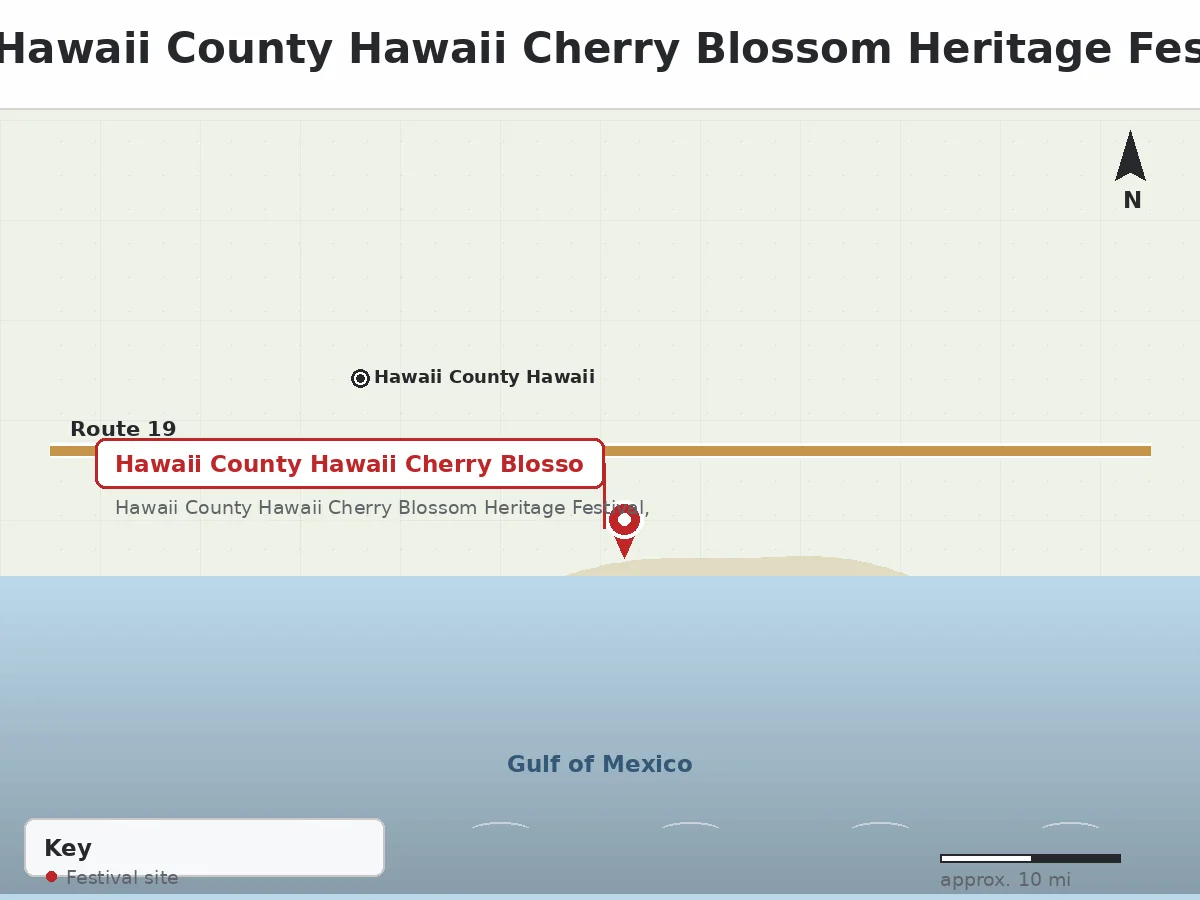
| Venues | Church Row Park, on Hawai’i State Route 19, plus venues across Waimea town; the 2026 programme reaches from the Parker Ranch Historic Homes to the park |
| Beginning | Contested — the county’s 2018 release states 1994; an encyclopedic layer states the first festival was held in 1993 |
| Timing | The first Saturday of February, per multiple layers |
| Recent documented editions | February 3, 2018; February 2023; February 1, 2025; February 7, 2026 |
| Admission | Free — a 2003 newspaper layer states admission is free for all events and activities; no layer gathered publishes a price |
| Attendance | No counted figure; county and programme layers speak of thousands being drawn each year |
History
The trees were in the ground long before any festival was staged beneath them. A newspaper layer from 2003 records the first cherry trees at Church Row planted in 1953 in honour of Fred Makino, with twenty more planted along Church Row by the Waimea Lions Club in 1972 and fifty more in 1975. Those dates belong to the park’s planting history, kept here strictly as tree history — never used to date the festival, which began decades later.
For a useful comparison, see the Hawaii County Hawaii Puna Breadfruit Festival for another county festival.
When the festival itself began is the record’s open question, presented here in all three of its printed forms. The County of Hawai’i’s own 2018 release states that the festival started in 1994 at Church Row Park. An encyclopedic layer states instead that the first festival was held in 1993. A newspaper layer from 2003 adds a third shape, reporting that the festival marked its tenth anniversary that year. No one of these is chosen or quietly preferred, no arithmetic is performed on any of them, and the beginning is stated only as contested.
What can be said is that James Tohara initiated the event with George Yoshida’s help, and that the county layer describes the early festivals including the planting of still more cherry trees — kept to those early editions, never projected onto the modern programme.
The modern billings are carried as billings only. The county layer presents Saturday, February 3, 2018 as the twenty-fifth anniversary edition, 9:00 a.m. to 3:00 p.m. The encyclopedic layer records a broken run: editions in 2020, 2021 and 2022 cancelled for the coronavirus pandemic, the thirtieth festival following in February 2023 after three years of cancellation. A listing layer bills Saturday, February 1, 2025 as the thirty-second year; the Arts Council programme bills Saturday, February 7, 2026 as the thirty-third Annual, again 9:00 a.m. to 3:00 p.m. None of these numbers is converted into a founding year, and none settles the 1993 and 1994 claims.
What to Expect
The heart of the day is hanami — blossom viewing — beneath the cherry trees at Church Row Park, framed by Japanese-themed entertainment. The fullest single programme in the record is the newspaper layer’s account from 2003, its elements fenced to that layer: bon dancing, mochi pounding, sake tasting, kite flying, a bonsai exhibit, and ikebana and calligraphy demonstrations stood alongside the viewing in that year’s description.
The festival is not contained by the park fence. The 2003 layer already placed activities at various venues in Waimea town, and the 2026 layers describe cultural performances, crafts and food spread across Waimea venues. The 2026 programme gives the day its widest geography, speaking of venues sprawling from the Parker Ranch Historic Homes to the historic planting of cherry trees at Church Row Park; Parker Ranch is named in the encyclopedic layer as well. No single venue form is settled here — the record describes a town-wide footprint anchored by Church Row Park, with no street address printed anywhere.
On cost, the record is short and one-directional. The 2003 newspaper layer states that admission is free for all events and activities, and no layer gathered, earlier or later, publishes any admission price at all. Free entry is therefore presented exactly as far as the record carries it: stated once, in that layer, contradicted by no price anywhere else.
Planning Your Visit
Build the trip around the first Saturday of February, the placing multiple layers give the festival, and the hours the documented modern editions share: the 2018 county account and the 2026 programme both run the day from 9:00 a.m. to 3:00 p.m. No edition beyond February 7, 2026 is announced in the record, so confirm the current year’s programme before fixing travel — the pattern is well attested, but it is a pattern, not a promise.
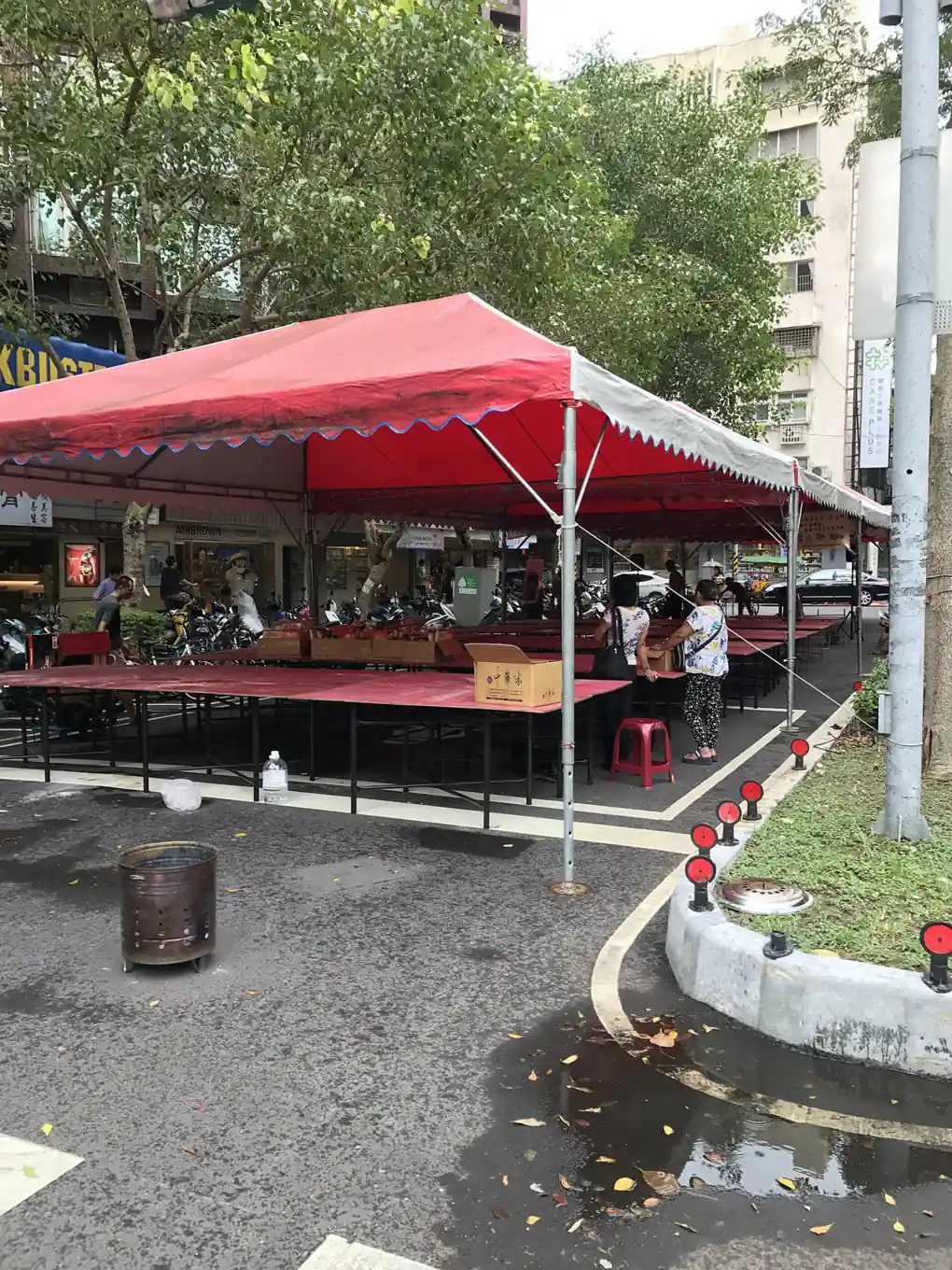
Expect to move around. The documented footprint runs from the Parker Ranch Historic Homes across to Church Row Park, with activities at venues in between, so the day rewards comfortable shoes and a loose sequence over a fixed seat. No street address appears anywhere in the sources gathered, so navigation leans on the town venues themselves and the year’s current programme.
Budgeting is simple on the evidence: the one layer that addresses admission calls every event and activity free, and nothing in the record attaches a price to entry. The blossom display answers to the trees rather than the organisers, so the depth of bloom on any given Saturday is the one element no programme can guarantee.
A Sample Day Itinerary
This outline follows the documented shape of the 2026 edition — Saturday, February 7, 2026, from 9:00 a.m. to 3:00 p.m., with venues reaching from the Parker Ranch Historic Homes to Church Row Park.
Begin at Church Row Park at the 9:00 a.m. opening, while the light is fresh on the blossoms and the viewing is at its calmest. Give the middle of the morning to the cultural performances and the craft and food stalls across the town venues, moving on foot between stops. Around midday, work back toward the park end of the sprawl for whichever demonstrations the current programme has placed there. In the early afternoon, make the Parker Ranch Historic Homes the day’s far point, then let the final hour bring you back under the cherry trees before the 3:00 p.m. close.
How It Compares
Cherry blossom celebrations exist on a far larger stage elsewhere, and the comparison is fenced carefully. Japan’s blossom festivals are the cultural source of the hanami tradition drawn on here, but they are different events in a different country; nothing of their dates, scale or organisation is imported. The celebrated festival in Washington, in the District of Columbia, likewise keeps its own plantings, history and record. Separate cherry blossom events in the Honolulu area are also distinct occasions, and are not merged with this one.
Waimea’s festival stands apart in its own record precisely because of its modesty: a county parks department production, tied to one specific historic planting along a single park row, spread across a small upland town for six hours on one February Saturday.
A Visit Checklist
- Anchor the trip to the first Saturday of February, the placing the layers agree on.
- Confirm the current year’s programme before travelling, since no edition beyond February 7, 2026 is announced in the record.
- Plan on the documented 9:00 a.m. to 3:00 p.m. day shape.
- Start at Church Row Park for blossom viewing while the morning is quiet.
- Wear shoes suited to walking between venues across Waimea town.
- Carry no expectation of an entry fee — the one layer that addresses admission describes all events and activities as free — but bring funds for food and crafts.
- Check the blossom reports close to the day, because the bloom follows the trees, not the programme.
- Leave time for the Parker Ranch Historic Homes end of the festival’s documented sprawl.
Beyond the Festival
The festival borrows two landmarks that stand in Waimea all year. Church Row Park holds the cherry plantings whose story begins in 1953, visible whenever the town is visited, in bloom or out of it. The Parker Ranch Historic Homes, the 2026 programme’s far end of the sprawl, anchor the town’s ranching heritage in the same few streets. The wider island fills any remaining days — Hilo, the county seat, on the wetter eastern coast, volcanic country to the south, the dry Kona shoreline to the west — all separate from the festival and none of it part of the programme.
Why It Matters
The festival matters as living county stewardship: a parks department production tying a Japanese cultural programme to a planting begun in honour of one man in 1953 and extended tree by tree in the 1970s. Its survival through a three-year pandemic interruption, returning in 2023 and reaching the thirty-third Annual billing in 2026, is documented in the record itself. Its popularity is asserted rather than measured — the county layer from 2018 describes it as annually attracting thousands of people from all over the world, and the 2026 programme says the blossoms attract thousands each year. Both are organiser-side claims, unquantified, and kept that way here; no counted attendance figure is published in any layer gathered, and none is invented.
Frequently Asked Questions
Was the first Waimea edition staged in 1993 or in 1994?
The sources give both years and settle neither. The County of Hawai’i’s own 2018 release says the festival started in 1994 at Church Row Park; an encyclopedic layer says the first festival was held in 1993; and a 2003 newspaper layer adds that the festival marked its tenth anniversary that year. All three statements are carried here with their layers, and any single founding year stated flatly would go beyond the evidence.
What backs the statement that entry costs nothing?
One layer, plainly worded: the 2003 newspaper account states that admission is free for all events and activities. The honest limit is that this is a single, older statement — reinforced only by silence, since no layer gathered, from any year, publishes an admission price at all. Free entry is therefore reported as the record presents it: asserted in 2003, priced nowhere.
Did the festival run straight through the pandemic years?
No. The encyclopedic layer records that the editions of 2020, 2021 and 2022 were cancelled because of the coronavirus pandemic, and presents the February 2023 edition as the thirtieth festival arriving after three years of cancellation. No detail about those lost years is invented here; the documented run simply resumes in 2023.
Why does the programme describe the festival as sprawling?
Because its venues do. The 2026 programme describes venues sprawling from the Parker Ranch Historic Homes to the historic planting of cherry trees at Church Row Park, and the 2003 account already placed activities at various venues in Waimea town. Church Row Park is the anchor — it holds the blossoms and appears in every layer — but no layer confines the whole festival to the park, and no single settled venue form exists.
What to Expect From the Next Hawaii County Hawaii Cherry Blossom Heritage Festival
How often is Hawaii County Hawaii Cherry Blossom Heritage Festival held?
Multiple layers place the festival on the first Saturday of February, and every dated modern edition in the record — 2018, 2023, 2025 and 2026 — fits that placing. The rhythm is a February one, though the record shows it can be broken: three consecutive editions, in 2020, 2021 and 2022, were cancelled during the coronavirus pandemic before the festival resumed in February 2023.
When is the next Hawaii County Hawaii Cherry Blossom Heritage Festival?
No edition beyond Saturday, February 7, 2026 is announced in the sources gathered, so no specific next date can honestly be stated. What the record supports is the pattern: the layers consistently set the festival on the first Saturday of February, and any future county announcement would be expected to follow that placing. Until one appears, the pattern is a planning guide, not a confirmed date.
Will the dates change?
The day is anchored by the layers’ shared description — the first Saturday of February — and that anchor has held across every dated edition documented, so a wholesale move to another season has no support in the record. What shifts is the exact calendar date the first Saturday lands on; what can interrupt the sequence is the kind of disruption the pandemic already caused once. Blossom timing, which no organiser controls, is the other open variable.
In the end, this is a small festival with an unusually honest paper trail: a county that prints one starting year, an encyclopedia that prints another, trees that predate both, and a town that keeps walking out on the first Saturday of February to stand under them. The record cannot crown a founding year, but it does not need to: the blossoms, the billings and the modern habit of the day are documented well enough.

One Comment