Colbert County Alabama Oka Kapassa Return to Cold Water Festival
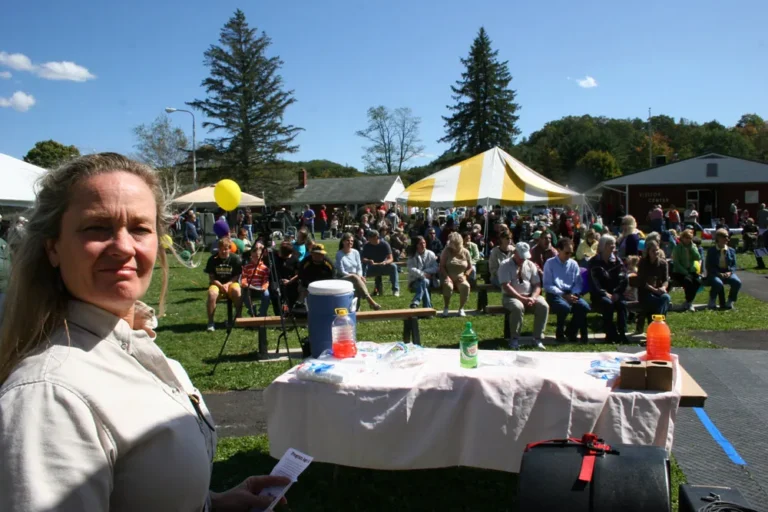
Every September, Spring Park in downtown Tuscumbia fills with drumbeats, flute music, dancers in regalia and the smell of fry bread, as one of northwest Alabama’s most distinctive gatherings returns to the ground where the town itself began. The Oka Kapassa festival is a Native American cultural celebration built around a spring, a chief and a friendship that predates the town’s founding, drawing families and tribal members from several nations into a weekend of dancing, storytelling and living history.
One point of spelling deserves clearing up at the outset. In organiser and tourism sources the festival styles its own name as “Oka Kapassa: Return to Coldwater,” with Coldwater written as a single word. The two-word form used in this article’s title is a variant of that same name, and both forms refer to the same event.
About the Festival
Oka Kapassa is a festival of Native American culture held annually on the second full weekend of September in Spring Park, in the heart of downtown Tuscumbia. Tuscumbia is the county seat of Colbert County, and the park sits in the middle of the town’s historic centre, making the festival as much a civic occasion as a cultural one. Admission is free, confirmed in both the 2023 tourism release and newspaper coverage of the 2026 edition.
The festival’s name carries its meaning in the Muscogee language spoken by the Chickasaw: Oka Kapassa translates as “Cold Water,” a reference to the Big Spring that still forms the centrepiece of Spring Park. Long before there was a town on the site, that cold spring drew people to the spot, and the festival takes both its name and its reason for existing from the water. The gathering commemorates the relationship between Tuscumbia’s citizens and Native Americans during the removal era, approaching that painful history through people rather than abstraction: dancers, storytellers, artisans and living-history interpreters presenting Native traditions in person.
Members of several nations take part — the 2026 programme brought together members of the Chickasaw, Choctaw, Creek and Cherokee Nations, and representatives of the Poarch Creek presented a cultural history event during the 2023 edition. The result functions simultaneously as a celebration, a reunion and an open-air classroom.
For a useful comparison, see the Colbert County Alabama Coon Dog Labor Day Festival for another county festival.
Quick Facts
| Item | Details |
| Festival name (organiser styling) | Oka Kapassa: Return to Coldwater |
| Host town | Tuscumbia, the Colbert County seat |
| Venue | Spring Park, downtown Tuscumbia |
| Rain venue (2023 and 2026) | The Roundhouse at the Tuscumbia Depot |
| Usual timing | Second full weekend of September |
| Admission | Free |
| Grand entry | 11 a.m. on the Saturday public day |
| Signature features | Traditional and fancy dancing, hoop dancing, storytelling, Native music, artisan demonstrations, traditional foods |
| Recognition (2026) | Honoured as a Top Twenty Event in the Southeast |
| 2026 edition | Billed as the 24th annual, held September 11–12 |
History
The deep history begins with the spring itself. European settlers arriving around 1815 were welcomed by Chickasaw Chief Tuscumbia, and the town that grew up beside the Big Spring took the chief’s name. That welcome is the founding gesture the festival remembers: before the removal era strained relationships across the region, this place and the Chickasaw shared a connection rooted in land and water.
The modern festival’s early history is less fully documented in print. The 2026 edition was billed as the 24th annual Oka Kapassa, which shows a substantial run behind it, but a billing of that kind does not by itself establish a founding year, and none is claimed here. What can be described with confidence is the festival’s shape in its recent documented editions.
By 2023, the established shape of the weekend paired a Friday school day for area students with a Saturday public day. On Friday, September 8, 2023, roughly 1,000 students were expected, and that evening at 5:30 p.m. representatives of the Poarch Creek presented a cultural history event at the Tuscumbia Roundhouse. Saturday, September 9 brought festivities from 10 a.m., a grand entry at 11:00 a.m., and a conclusion at 6 p.m.
In 2025 the festival again filled Spring Park across September 12 and 13. The 2026 edition kept the September slot but reshaped the Friday, opening on the evening of September 11 with artisan displays at 5:00 p.m. and a 6:00 p.m. preview concert — a living event, willing to adjust its format while holding fast to its purpose.
The festival has also gathered institutional backing. A 2026 newspaper account listed support from the Alabama State Council on the Arts, the Muscle Shoals National Heritage Area, the Tennessee Valley Authority, the Colbert County Community Development Commission, the Poarch Band of Creek Indians, the City of Tuscumbia, Colbert County and others; the published list was cut short in print, so it is best understood as partial.
What to Expect
Dancing stands at the centre of the public day. Visitors can watch traditional dancing and fancy dancing, along with the athletic, story-laden spectacle of hoop dancing, in which a dancer weaves hoops into shifting shapes. The Saturday grand entry, held at 11 a.m. in both the 2023 and 2026 editions, is the ceremonial high point, when participants process in together and the day formally comes alive.
Music runs through the weekend in several forms. Native flute playing featured prominently in 2026, when Arvel Bird, a Paiute performer, offered his “Celtic Indian” fiddle and Native flute selections during the Friday preview concert, and Chief Louis Johnson of the Seminole paired storytelling with Native flute. Storytelling holds its own place on the programme too: in 2026, members of the Chickasaw, Choctaw, Creek and Cherokee Nations shared stories and traditions, giving visitors history and culture in first-person voices rather than through display panels. Artisan and craft work is demonstrated as well as sold — Native artisans opened their displays on the Friday evening of 2026 — so visitors can watch skills being practised and take the workmanship home.
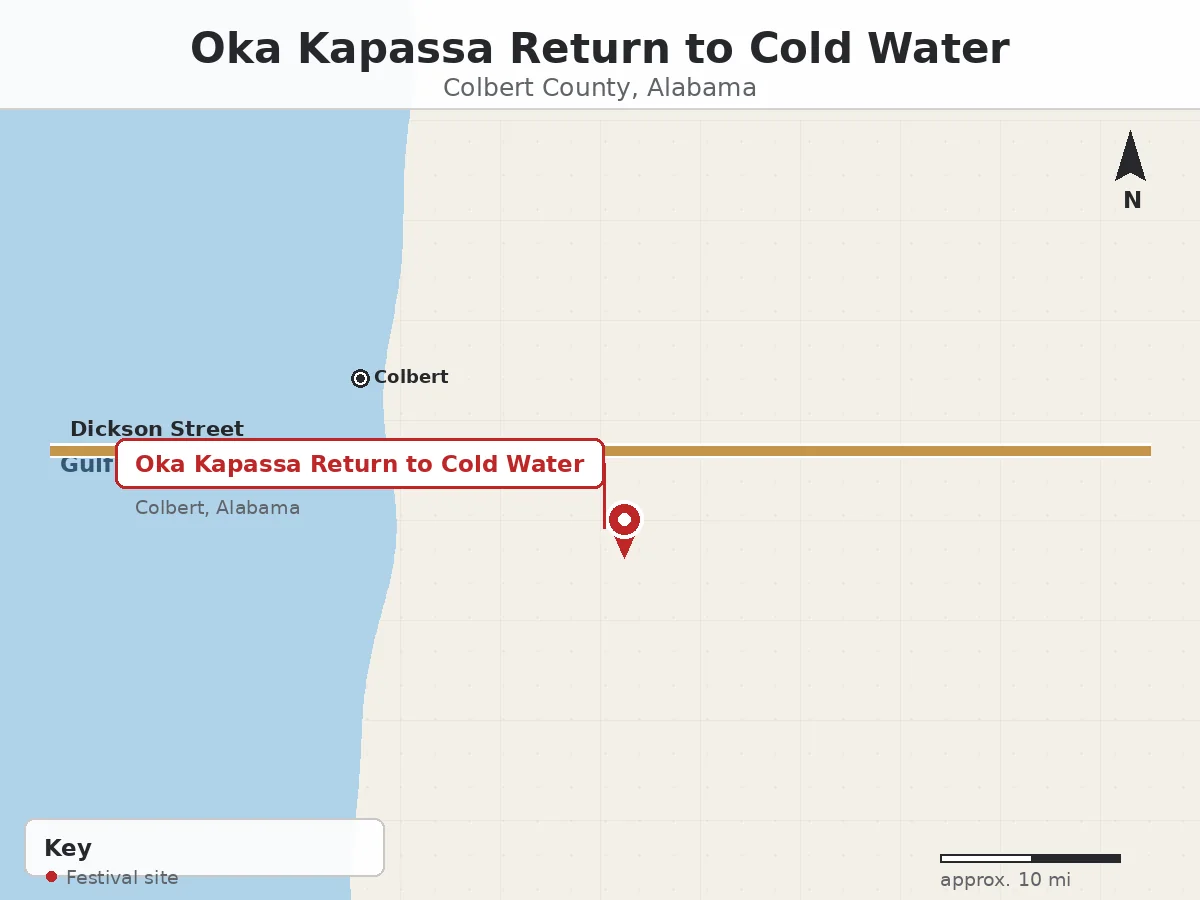
Living history adds another layer. A log cabin site on Dickson Street interprets everyday life in Tuscumbia between 1815 and 1830. In the 2023 layer it appears as the Coldwater Stagecoach Stop, at 301 South Dickson Street; in the 2026 layer it is described as the Pioneer Log Cabin on Dickson Street, open from 10 a.m. to 4 p.m. on Saturday. The two descriptions are recorded side by side rather than merged, since each belongs to its own year’s account.
Food, finally, is part of the education. Traditional dishes served at the festival include buffalo stew, fry bread, Indian tacos and roasted corn, along with pashofa, a stew of pork and cracked corn that Gina Brown, a Chickasaw cook, prepared during the 2023 edition.
Planning Your Visit
Build your plan around the Saturday public day if you can attend only once. Across the documented editions, Saturday carries the fullest programme: festivities have begun at 10 a.m., the grand entry follows at 11 a.m., and the living-history cabin on Dickson Street kept Saturday hours of 10 a.m. to 4 p.m. in the 2026 account.
Admission costs nothing, so the main currencies of a visit are time and attention. The event rewards an unhurried approach: wander between the dance arena, the artisan displays and the food vendors, then step over to Dickson Street for the cabin while its interpreters are on hand.
Keep an eye on the weather. In both 2023 and 2026, the Roundhouse at the Tuscumbia Depot served as the rain venue. The organisers plan for wet weather rather than cancelling outright, but a rainy edition may shift part of the programme under cover at the depot.
Families visiting independently will generally find Saturday the more open and browsable day, since the traditional Friday is arranged for area students. The 2026 evening opening, with artisan displays from 5:00 p.m. and a preview concert at 6:00 p.m., made Friday night a genuine option for working adults as well. Treat the festival as a sequence of encounters — a dancer here, a storyteller there, a bowl of pashofa in between — rather than a single loop of the park.
A Sample Festival Weekend
A well-paced visit might unfold like this. On Friday evening, arrive in time for the artisans opening their displays at 5:00 p.m., browse the craftwork while the light is good, and stay for the 6:00 p.m. preview concert, where flute and fiddle selections set the weekend’s tone.
Return on Saturday ahead of the 10 a.m. start of festivities. Use the first hour to walk the artisan area in daylight and visit the Dickson Street cabin early in its 10 a.m. to 4 p.m. window. Be near the dance arena before 11 a.m. so the grand entry becomes the centrepiece of your day rather than something glimpsed over shoulders.
Spend the afternoon in rotation: a set of dancing, a storytelling session, a plate of fry bread or an Indian taco, then back for the hoop dancing. In the 2026 edition the festival concluded at 5:00 p.m. on Saturday, so a late-afternoon circuit of the craft tables makes a natural farewell.
School Day and Public Day Compared
The festival’s two days serve different audiences. In the traditional format documented in 2023, Friday belonged to education: area students arrived for a school day of cultural learning, capped by an evening cultural history event at the Roundhouse presented by Poarch Creek representatives. Saturday belonged to everyone, with the grand entry, dancing, food and crafts open to the public from mid-morning.
The 2026 edition rearranged that balance. Friday became an evening occasion, opening with artisan displays and a preview concert rather than centring on daytime student programming, while Saturday retained its familiar spine of 10 a.m. festivities and an 11 a.m. grand entry. One detail underlines why the two editions should never be blended: the 2023 Saturday programme concluded at 6 p.m., whereas the 2026 festival concluded at 5:00 p.m.
Planning Checklist
- Put the second full weekend of September in your diary, then confirm the exact dates for your year
- Plan to reach Spring Park before the 11 a.m. grand entry on Saturday
- Check the forecast, and note the Roundhouse at the Tuscumbia Depot as the rain venue
- Set aside time for the living-history cabin on Dickson Street during its Saturday hours
- Bring an appetite for traditional foods such as fry bread, Indian tacos and pashofa
- Leave room in your budget for artisan and craft purchases, since entry itself is free
- If attending Friday evening, arrive by 5:00 p.m. for the artisan displays and preview concert
- Give storytelling sessions the same priority as the dancing
Beyond Spring Park
The festival rewards visitors who widen their lens to the town around it. Tuscumbia’s downtown, wrapped around Spring Park and the Big Spring, is itself the deeper exhibit: ground where Chickasaw history and the town’s founding story occupy the same few streets. A slow walk before or after the festival turns background into something you can stand inside.
The Dickson Street cabin points the same way. Interpreting life in Tuscumbia between 1815 and 1830, it connects the festival’s cultural programme to the domestic world of the removal era, the kitchens, tools and routines of those who lived through it. Treating the cabin as part of the festival rather than a side errand gives the weekend a fuller arc. Even so, the spring remains the anchor: everything at Oka Kapassa leads back to that cold water.
Why Oka Kapassa Matters
Many festivals celebrate a crop, a product or a founding date. Oka Kapassa celebrates a relationship, and a complicated one. By commemorating the bond between Tuscumbia’s citizens and Native Americans during the removal era, it refuses to let the town’s origin story be told in only one voice. Chickasaw heritage is not presented as a preface that ended in 1815; it is presented by living members of Native nations, on the ground where the story began.
That living presence is the festival’s real significance. When a Chickasaw cook prepares pashofa, when a Seminole chief pairs storytelling with flute music, when dancers enter the arena at the grand entry, the culture on display is not a reconstruction but a continuation. For the roughly 1,000 students expected at the school day in 2023, that distinction is the lesson: Native culture in Alabama is present tense.
Its 2026 recognition among the Top Twenty Events in the Southeast suggests this approach resonates far beyond Colbert County.
Frequently Asked Questions
Why does the festival name appear as both Coldwater and Cold Water?
Organiser and tourism sources style the event “Oka Kapassa: Return to Coldwater,” using one word, while this article’s title uses the two-word form. Both refer to the same festival, and the phrase translates from the Muscogee language spoken by the Chickasaw as “Cold Water,” honouring the Big Spring at the centre of Spring Park.
What happens at the grand entry?
The grand entry is the ceremonial opening of the Saturday public day, held at 11 a.m. in both the 2023 and 2026 editions. Participants process in together before the dancing programme unfolds, and it is treated as the day’s high point, so arriving in time to watch it improves any visit.
Which Native nations take part in the festival?
Participation spans several nations. The 2026 programme featured members of the Chickasaw, Choctaw, Creek and Cherokee Nations, while representatives of the Poarch Creek presented the cultural history event during the 2023 edition. Performers have included Arvel Bird, who is Paiute, and Chief Louis Johnson, who is Seminole.
Is there a school programme connected to the festival?
Yes. In the festival’s traditional format, documented in 2023, the Friday was set aside as a school day for area students, with approximately 1,000 expected to attend. The 2026 edition reshaped Friday into an evening opening with artisan displays and a preview concert, so the balance between student programming and public events can vary by year.
What to Expect From the Next Colbert County Alabama Oka Kapassa Return to Cold Water Festival
How often is Colbert County Alabama Oka Kapassa Return to Cold Water Festival held?
The festival returns to Spring Park each September. Organisers have settled on the second full weekend of the month, a slot that has held steady through the 2023, 2025 and 2026 gatherings described in this article.
When is the next Colbert County Alabama Oka Kapassa Return to Cold Water Festival?
Following the established pattern, the next edition would fall on the second full weekend of September, the slot used by the 24th annual festival on September 11–12, 2026. Visitors should confirm the exact dates before travelling, since the festival publishes its programme edition by edition.
Will the dates change?
The September timing and the second-full-weekend slot have been consistent, but the shape of the weekend is not fixed. Friday changed notably in 2026, when an evening opening replaced the traditional daytime emphasis, and Saturday’s closing time has differed between editions, ending at 6 p.m. in 2023 and at 5:00 p.m. in 2026. The weekend’s place in the calendar looks secure; its internal schedule is best confirmed year by year.
For a small festival in a downtown park, Oka Kapassa carries an unusual weight of meaning, and it carries it lightly, through music, food, craft and story. Anyone who spends a September Saturday in Spring Park leaves knowing more about Tuscumbia’s Chickasaw roots than they arrived with.