Delaware County Ohio Fair Festival
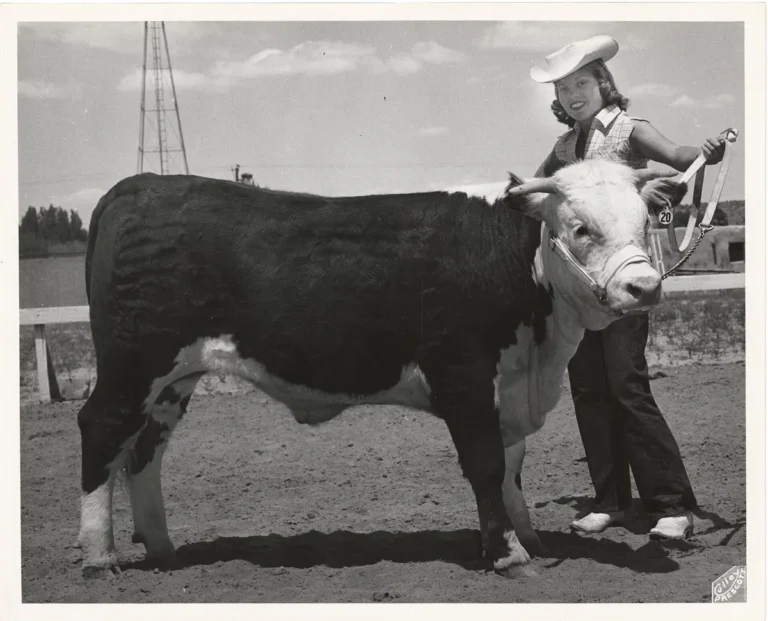
On one Thursday each September, the gate price in Delaware changes for part of the day, showing how completely a horse race can reorganise a county fair. The race is the Little Brown Jug, a Grade 1 contest for three-year-old pacers, wrapped by the Delaware County Fair, a Saturday-to-Saturday September gathering run by the Delaware County Agricultural Society at the fairgrounds on Pennsylvania Avenue. Racing supplies the crown, yet the fair remains larger: junior exhibitors, open-class produce and quilts, evening sales, motor sports, and a horse parade before opening.
Two Societies, One Grounds, Separate Jobs
Two societies share this week without sharing an identity. The Delaware County Agricultural Society organises the fair, a role recorded in its own history, in Auditor of State notes describing it as a county agricultural society corporation under Chapter 1711 of the Ohio Revised Code, and in the exhibitor handbook carrying its constitution. Its board size arrives only in layers: audit notes from 2000 through 2010 describe eighteen directors, the 2012 and 2014 layers twenty-one, so no single number settles the present. The Junior Fair Board handles youth business as a component, never as the organiser.
The Little Brown Jug Society stands apart on purpose, with its own site, a board of twenty-five members, and detention-barn policies for the Jug Barn and the Jugette Barn issued under a joint heading naming both bodies. Tom Wright appears in its layers as president, although other racing layers style him as director of racing for the fair and as a past president of the Agricultural Society board; those roles belong to their layers and should never be collapsed into one title such as fair president. The Agricultural Society never becomes owner of the Jug because the race happens on its grounds, and the Jug Society never organises the fair hosting its race.
Quick Facts
| Item | Detail |
| Event | Delaware County Fair |
| Host town | Delaware, Ohio, which is also the county seat |
| Grounds | Delaware County Fairgrounds, 236 Pennsylvania Avenue, Delaware, Ohio 43015 |
| Fair organiser | Delaware County Agricultural Society |
| Race organiser | Little Brown Jug Society, a separate society |
| Signature race | Little Brown Jug, Grade 1 pacers, Thursday |
| Filly counterpart | Jugette, three-year-old fillies, Wednesday |
| Season | September, Saturday through Saturday |
| Ordinary gate in 2026 layers | Eight dollars, with young children free |
| Camping terms | Unverified beyond documented campers |
History Told in Layers That Refuse to Merge
An Organisation in 1833 and an Exhibition in 1834
The fair’s own history page leans on the Ohio State Gazette of June 28, 1833, which reported a meeting resolving that a society be formed called the Delaware County Agricultural Society. Members paid fifty cents annually, Milo D. Pettibone became president, and William Little was treasurer. Managers then resolved on an exhibition for the first Friday in October 1834, and the page recounts that first exhibition and its premiums. A second exhibition came in 1835, and the record names a Third Annual Cattle Show and Exhibition in 1836. Those dates describe different things: 1833 marks the Society’s organisation, 1834 the first exhibition, so neither is a proven fair founding.
An Audit Record One Year Adrift
Auditor of State notes repeated between 2000 and 2014 describe the Society as founded in 1834 to direct an annual agricultural fair. That wording lands one year away from the fair’s own 1833 account, and neither layer corrects the other here. The same notes add that since 1939 the Society has sponsored the weeklong fair during September, an era statement rather than a founding claim.
For a useful comparison, see the Defiance County Ohio Fair Festival for another county festival.
Gaps, a Reorganisation, and Purchased Acres
Later passages admit a broken thread. Early exhibitions happened partly in the public square, with manufactured goods inside the courthouse, and the history concedes no mention of them was found for the early 1840s. It records a reorganisation under a special act passed during the 1847 to 1848 session, then a February 1854 purchase: seven acres from the Pettibone heirs at one hundred fifty dollars per acre, growing to nearly thirty acres by 1870. No uninterrupted run can be claimed from a telling with gaps inside it.
Powell, a New Track, and a Claim in Its Own Lane
A separate racing-history layer tells a conflicting geography: the county fair held since its inception at Powell, members voting in 1937 to move it to Delaware, a half-mile track in 1939, and the Little Brown Jug Society formed to stage the Grand Circuit meeting. That telling credits the new era with Jug previews in 1944 and 1945 before the initial Jug in 1946. Powell survives only as an earlier home inside that layer, never as the present grounds, and its claim is never blended with the 1830s exhibitions placed in Delaware’s public square and courthouse. Delaware County was founded on February 10, 1808, a county fact only, and no edition number for the fair appears in the record.
What to Expect Across the September Week
Horses Before the Fair Even Opens
The All Horse Parade steps off on Sunday, September 13, 2026, at 3 p.m., the Sunday immediately preceding the opening of the fair in the fair’s own description. Horses, ponies, mules and donkeys join wagons, carriages and marching bands on a circular route that leaves the main gate onto Pennsylvania Avenue, loops through downtown via North Sandusky Street, West Winter Street, North Liberty Street, Lincoln Avenue and Euclid Avenue, and returns through the Euclid Avenue gate. The fair’s page prices parade admission as always free. One local layer billed the 2026 parade as its fortieth year, while the fair calls it one of the largest annual horse parade gatherings east of the Mississippi; both are billing, not measured fact. Even the route length refuses to settle: the fair’s headline gives 2.3 miles, while its route paragraph carries approximately three miles, and both stand here as a conflict.
Opening Saturday and the First Racing Day
Opening day in 2026 fell on Saturday, September 19, with a public opening ceremony at 10 a.m. outside the Merchants Building in the local layer. Alpaca and llama showmanship shared the day with poultry and dairy shows, 4-H and FFA horse events, and crop interviews. The royalty coronation took place at 4 p.m. and the Horse Parade of Colors at 6 p.m. Sunday brought dog showmanship, swine showmanship, horse and pony competition, animal costume contests and youth demonstrations, and opened five days of harness racing.
Sales, Senior Day, and the Motor Sports Complex
Tuesday, September 22 doubled as Senior Day and the first sale evening. The fair’s Junior Fair pages place sales on Tuesday and Wednesday at 5 p.m., Tuesday covering poultry, beef, baked goods, dairy products and rabbits. A guide layer adds Rough Truck action at the motor sports complex at 7 p.m., the complex being the fair’s phrase for ground hosting derbies and rough trucks when the track rests.
Jugette Wednesday and Jug Day Thursday
Wednesday, September 23 belonged to the Jugette, the Grade 1 filly counterpart for three-year-old fillies, placed at noon on the racing card in the racing layers. The second Junior Fair Sale followed at 5 p.m. with lambs, pigs and goats, and a guide layer bills Wiener Dog Racing at 7 p.m. as new this year. Thursday, September 24 was Jug Day: the 81st Little Brown Jug ran for three-year-old pacers, and the United States Trotting Association news service reported Redland Rocket Man winning that 81st edition, a result belonging to that racing report layer alone. A guide layer lists no motor sports event that day.
Military Day, a Veterans Dinner, and a Derby Finish
Friday, September 25 carried Military Day and a guide-layer billing of Figure 8 Races with Trailers at 7 p.m. The fair’s own homepage layer answers with a Veterans Dinner that evening under the banner 2026 Operation: Forever Grateful — Honoring Those Who Have Kept Us Free. Saturday, September 26 closed the fair with a demolition derby at 5 p.m. in the guide layer. Across the week the 2026 book’s open departments cover dairy cattle and goats, farm produce in the Ag Center, quilting, creative arts, baked goods, flowers, food preservation and an open horse show. Junior departments run from market cattle through swine, sheep, goats, poultry, rabbits, alpacas and llamas, dogs and horses. A Butterfly Exhibit appears in the programme layers, and rides run from 11 a.m. to 10 p.m. weather permitting.
Planning Your Visit Without Guessing
Gates, Hours, and Where the Buildings Sit
The fairgrounds stand at 236 Pennsylvania Avenue in Delaware, a town that is both county seat and host, with gates from 8 a.m. to 9 p.m. and buildings from 10 a.m. to 9 p.m. in the homepage layer. A fair phone number, 740-362-3851, survives only inside the 2022 exhibitor handbook layer. Around the track and grandstand cluster the Jug Barn and Jugette Barn, the Ag Center, the Merchants Building, the Horse Show Arena, and barns for pigs and lambs, cattle, and poultry. Powell is never the venue, Ohio Wesleyan hosted only a past Jug Society meeting in one racing layer, and the Extension offices on the Byxbe Campus are never the fairgrounds.
What the 2026 Gate Actually Cost
Local layers citing the fair’s own admission pages put daily admission in 2026 at eight dollars, with young children free. That free boundary conflicts between layers, several saying eight and under while one says younger than eight, so none is fixed here. A weekly pass is listed at fifty dollars for the 2026 run in a local-press layer, yet a Columbus guide flags the same figure as from 2025, leaving its year disputed. Parking was included with admission in a 2026 local layer, including on Jug Day.
Jug Day rewrites the gate for one slice of Thursday only: adults aged eighteen and over paid twenty dollars between 8 a.m. and 5 p.m. on September 24, 2026, and ordinary admission resumed after 5 p.m., so the premium never applied all day, never covered children, and never belonged on another date. Rides cost extra: guide layers price tickets at two dollars and an all-day wristband at twenty-two dollars. Reserved racing and grandstand seating carries separate prices locally, but no figure was fetched fair-side, so that pricing stays unverified. No pre-2026 gate ladder was documented in fair-own layers either.
Free Days That Belong Only to Their Names
Seniors aged fifty-five and over entered free with identification on Senior Day, Tuesday, September 22, 2026, and military members and veterans did the same on Military Day, Friday, September 25, 2026. Each concession lives only on its named day.
Camping, Honestly Described
Camping rests on one trade-press observation from 2023: campers occupied sites around the fairgrounds during fair week, and fair staff handled the paperwork. That layer never says whether campers were exhibitors, racing participants or the public, and no price, hookup detail or reservation route appears in any fair-side layer fetched. Camping therefore exists around the grounds only in that limited sense, its terms unverified; Auditor-recorded stall rental is a stable arrangement rather than camping, and nearby commercial campgrounds are separate businesses.
A Thursday Built Around the Jug
Walk the barns first, while the aisles are calm enough to read exhibitor cards, then drift to the Merchants Building and Ag Center before the track takes over. Spend the afternoon at the rail as the card builds toward the Jug final. Remember the twenty-dollar adult gate applies only until 5 p.m., so an evening arrival faces ordinary admission, and close among the barns, since Thursday carries no motor sports event.
How This Fair Differs From an Ordinary County Week
Most county fairs treat harness racing as one grandstand item among many. Delaware inverts that hierarchy, giving racing five full days and placing a nationally known pacing classic at its centre, while junior sales, produce judging and a demolition derby continue around it. Its paperwork also differs: two societies divide responsibility, and even its parade route is published at two lengths.
Your Jug Week Checklist
- Arrive Thursday before 5 p.m. only if the Jug is your reason for going
- Budget eight dollars for admission and treat rides as a separate spend
- Carry identification if a named free day applies to you
- Watch the All Horse Parade on the Sunday before opening
- Give Wednesday room for the Jugette at noon and the 5 p.m. sale
- Leave purse figures alone when comparing costs
- Ask the fair directly about camping instead of assuming a public campsite
- End with Saturday’s demolition derby finale
Beyond the Fairgrounds
Downtown becomes part of the fair a week early, when the parade route threads Sandusky Street, Winter Street, Liberty Street, Lincoln Avenue and Euclid Avenue back to the grounds. Outside fair week the site returns to rentals and community use in the Auditor’s reporting layer, including track and stall rental.
Why a Race Town Still Needs Its County Fair
A famous race could have detached itself from the fair that raised its track, yet the Jug still runs inside a week of goat shows, baked goods judging and youth auctions. The race gains a living community setting, the fair gains a Thursday drawing the standardbred world into Delaware, and the Junior Fair sales convert a year of animal care into public recognition.
Frequently Asked Questions
Is the Little Brown Jug the same thing as the fair?
No, because the Jug is a Grade 1 harness race for three-year-old pacers staged at the fair by its own separate society. The fair is the wider September event surrounding it with livestock, exhibits, sales and motor sports.
Who actually runs the fair?
The Delaware County Agricultural Society organises the fair, confirmed across its own history, the Auditor notes and its exhibitor handbook. The Little Brown Jug Society stages the racing classic only.
What did Jug Day admission really mean in 2026?
It meant twenty dollars for adults aged eighteen and over between 8 a.m. and 5 p.m. on Thursday, September 24, 2026. Ordinary admission resumed after 5 p.m., and the premium never applied to children or another day.
Can I camp at the fairgrounds during fair week?
Campers were documented around the fairgrounds in a 2023 trade layer, with fair staff handling paperwork. No public offer, price or hookup detail was published fair-side, so terms remain unverified.
What to Expect From the Next Delaware County Ohio Fair Festival
How often is Delaware County Ohio Fair Festival held?
The fair runs once a year across a Saturday-to-Saturday week in September, with five days of harness racing from Sunday through Thursday inside it.
When is the next Delaware County Ohio Fair Festival?
The documented 2026 edition ran September 19 to 26, with the Jugette on Wednesday, September 23 and the 81st Jug on Thursday, September 24. Future editions are confirmed through the fair’s own published dates, not assumed from this cycle.
Will the dates change?
The week has kept a mid-to-late September Saturday-to-Saturday pattern, including September 17 to 24 in the 2022 handbook layer. Exact dates depend on each year’s published schedule.
Come for Thursday, but stay the week: a fair sturdy enough to carry a famous race without letting it carry the fair away.