Oswego County New York Fair Festival
The Oswego County Fair takes place nowhere near the places most people picture. It is held at the Oswego County Fairgrounds, 291 Ellisburg Street, in Sandy Creek, in the county’s north. Anyone who drives to the city of Oswego expecting barns and a midway will find a harbour, a fort and a speedway instead, and no fair at all.
The geography is stranger than a fair simply sitting outside the county seat, because Oswego County historically had two county seats. Under an 1816 arrangement it kept a courthouse in each of Oswego and Pulaski, courts sit in both to this day, and the County Clerk’s permanent seat was fixed in Oswego in 1852. Neither seat hosts the fair; Sandy Creek does. The current event is a five-day fair, Wednesday to Sunday in early July around the Independence Day weekend. Its 2026 edition ran from July 1 to July 5, was billed as the 167th, and carried an America’s-250th theme printed as Farm, Family and Freedom: Celebrating 250 Years of America. Admission was free and parking carried no fee, in the fair’s own published words.
The Society That Runs It
The fair is staged by the county’s agricultural society, a volunteer body that calls the fair’s heart family. The society’s name appears in two word orders across its own paperwork, exactly as published: the state fairs directory names the operator as the Agricultural Society of Oswego County, while the fair’s own 2026 vendor packet directs payments to the Oswego County Agricultural Society and heads itself with that second form. Neither order corrects the other. The 2026 layers name Timothy Ridgeway as president.
Cornell Cooperative Extension of Oswego County appears here as a programme partner only, its Master Gardener volunteers running the garden programming in the agricultural building. Extension is never the organiser, and neither is county government nor the town or village of Sandy Creek. A grant report from 2025 names an Oswego County Fair Association alongside the society; that paired form belongs to that report alone, not to a second body running the fair.
The grounds plant is compact: a Grandstand, a Fair Café, a Youth Building, a Heritage Building, an Agricultural and Domestic Arts Building, an Oswego County Building, an Entertainment Building, a show ring and a horse arena. Off-season rentals are tenants, not fair programme.
For a useful comparison, see the Orleans County New York 4-H Fair Festival for another county festival.
Quick Facts
| Item | Detail |
| Event | Oswego County Fair |
| Fair town | Sandy Creek, in the north of the county |
| County seats | Oswego and Pulaski, the historic dual seats; neither hosts |
| Grounds | Oswego County Fairgrounds, 291 Ellisburg Street, Sandy Creek |
| Organiser | The county agricultural society, under both published name forms |
| 2026 span | Wednesday, July 1 to Sunday, July 5 |
| Billing | The 167th, as the fair bills it |
| Admission | Free, as the fair’s own 2026 packet states |
| Parking | Free; no parking fee, per the packet |
| Camping | None published by the fair |
Two Beginnings That Were Never Merged
This fair’s past arrives in two separate strands, and honest telling keeps them apart. The first belongs to the county society itself. An encyclopaedia-derived history layer records that the Oswego County Agricultural Society was organised in the spring of 1840 and held its first exhibit in the city of Oswego that October. The fair then moved from town to town until, in 1855, the society settled it at Mexico, New York, on fourteen acres purchased from Orson Ames. The last fair at Mexico came in 1887; the annual fair continued afterwards in varying locations.
The second strand is Sandy Creek’s own. A regional body, the Sandy Creek, Richland, Orwell and Boylston Agricultural Society, had held an annual fair since 1858 on land donated by Oren R. Earl at Franklin and Ellisburg Streets in the village. In 1937 the county fair joined that pre-existing fair, and the Sandy Creek grounds became its lasting home.
Those strands explain why the edition numbers refuse to settle. A Sandy Creek planning document records a 150th anniversary in 2007, yet the fair billed 2026 as the 167th; the two billings stand nineteen years and seventeen numbers apart, with a two-year cancellation between them, so they cannot both be straight counts and neither yields a founding year. The society called the fair off two years running during the pandemic and brought it back on August 17, 2022; a shortened three-day comeback followed in 2023, before the five-day shape returned with the editions billed 165th in 2024, 166th in 2025 and 167th in 2026. The billing is the fair’s own; the arithmetic is nobody’s founding date.
What to Expect
Livestock in the Rings and Barns
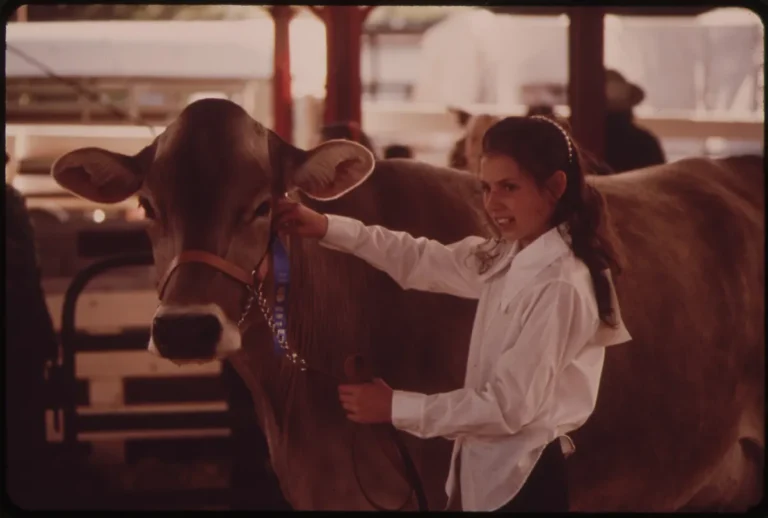
Animals anchor every day: the documented spine runs to horses, poultry, swine, beef and dairy cattle, and sanctioned goat and rabbit contests, and the 2026 schedule filled it out with Junior and Open shows for beef, dairy and goats, plus youth and open rabbit and cavy classes. The Little Britches Show gives the youngest handlers their moment, the Super Showmen contest tests the best young exhibitors against one another, and an animal costume contest supplies the week’s deliberate silliness.
The Midway and the Grandstand
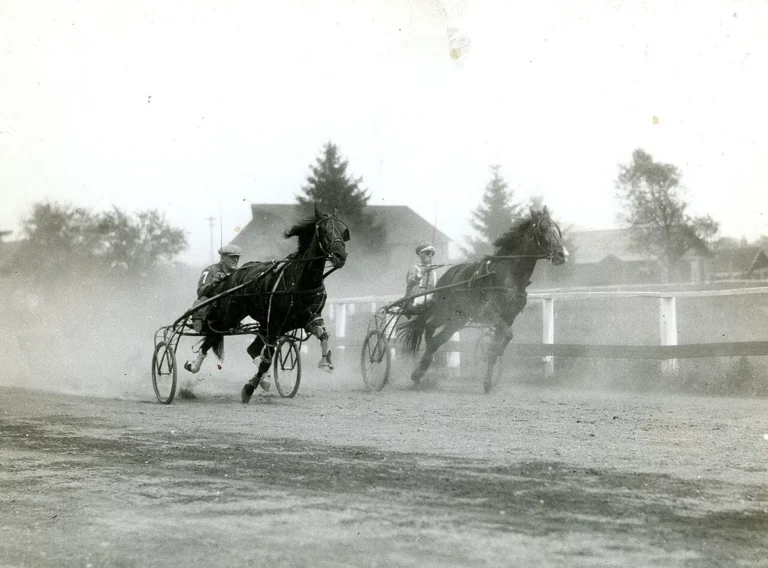
Ontario Amusements operates the rides. In 2026 the midway ran from 5 p.m. to 9 p.m. on Wednesday, noon to 9 p.m. Thursday through Saturday, and noon to 5 p.m. on Sunday, and the fair publishes no ride price list of its own. The Grandstand carries the loud programme: a Wednesday-evening parade and fireworks open the fair (in 2026, stepping off at 6 p.m. with fireworks at 9:30 p.m.), two demolition derbies fell on Thursday and Saturday afternoons that year, and its Friday stacked tractor pulls, truck pulls and jackpot horse barrel racing under the lights.
Daily Acts and Small Pleasures
Two acts run daily in the recent record, Robin’s Heavenly Birds and Hartley Hartwood’s woodcarving demonstrations, present in 2025 and again in 2026. A talent show takes a Thursday-morning slot in both years, live music fills the Entertainment Building and the Grandstand across all five days, and smaller contests recur: pie-eating, a kids’ scavenger hunt, a daily bike drawing. The Fair Café was run in 2026 by Huckleberry Café.
What 2026 Added
The 2026 edition layered its 250th theme over the standing programme. Lew-E’s Comedy Circus performed two to three times daily, a live mural painter worked through the week, and the Johnston Irish Dancers appeared on Wednesday afternoon. On Saturday, July 4, young readers read the Declaration of Independence aloud at noon, an old-fashioned dance sponsored by the Oswego County 250th Commission filled the early afternoon, and teams built themed sculptures from buckets of random items. Vintage machinery had Saturday morning, and the fair staged its first rodeo at noon on the Sunday.
Planning Your Visit
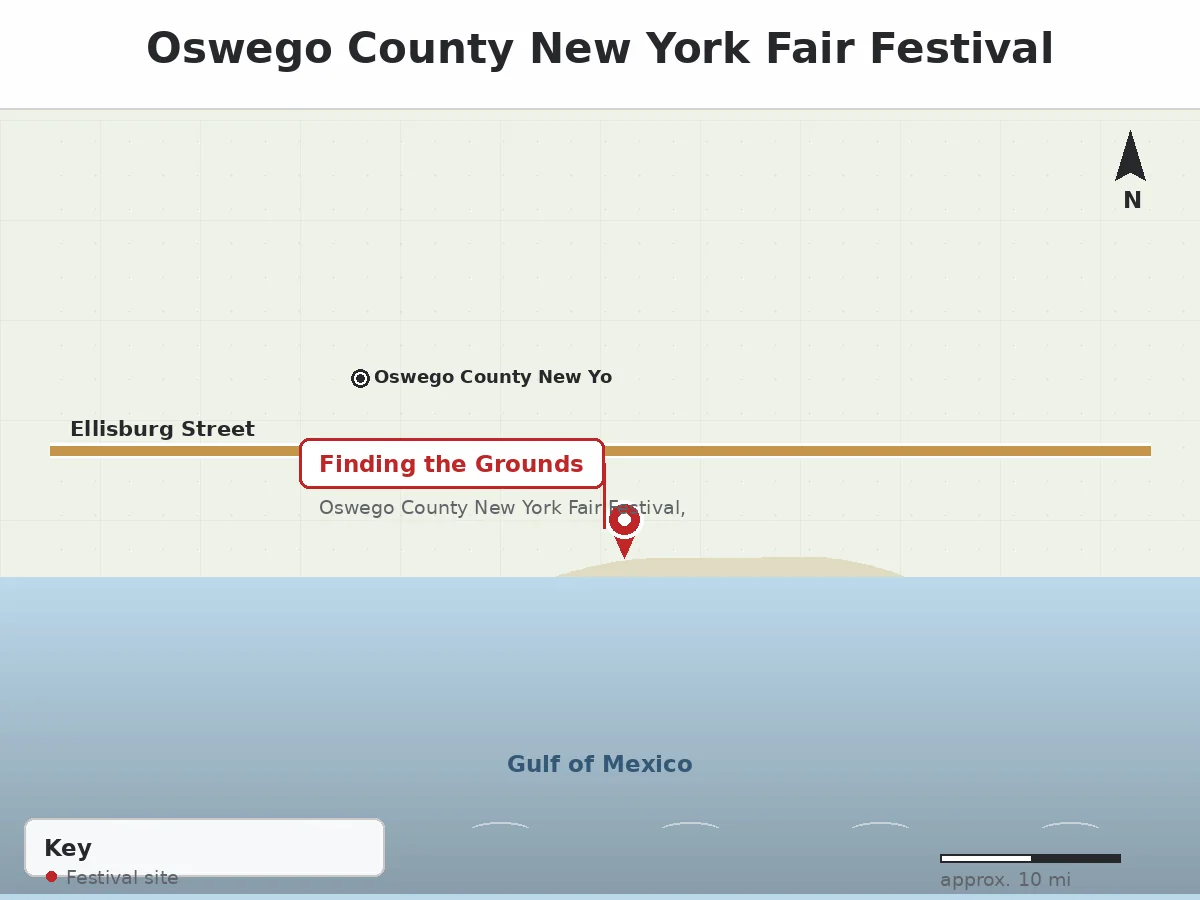
Finding the Grounds
Navigate to 291 Ellisburg Street, Sandy Creek. The society’s mailing addresses are not the fairgrounds: the state directory lists one on Jackim Road in the city of Oswego, and the fair’s packet takes vendor correspondence at a post office box in Lacona. Neither is where a single cow is shown.
Hours and Themed Days
The 2026 grounds hours ran from 10 a.m. to 9 p.m. Wednesday through Saturday, buildings closing at 7 p.m., and 10 a.m. to 5 p.m. on the Sunday. Each day carries a theme, and the order rotates: in 2026 it ran Senior and Elected Officials Day on Wednesday, Children’s Day on Thursday, Family Day on Friday, Veterans and First Responders Day on Saturday and Agricultural Day on Sunday, while in 2025 the veterans’ and children’s days swapped weekdays. No themed day belongs to a fixed weekday.
What a Visit Costs
The fair itself costs nothing to enter. Its own 2026 vendor packet states that it is continuing to offer free admission and no parking fee, and comeback-edition coverage agrees. There is no gate charge to price.
The honest costs sit at the edges, each fenced to its year. The 2026 rodeo was a ticketed grandstand event at twenty dollars for adults and ten dollars for children aged three to twelve: one Sunday show’s ticket, not an admission charge. That year’s Sunday car show was free for spectators, with ten dollars to register a vehicle, and 2024 grandstand pricing belongs to 2024 alone. Grant-funded help has come with recent editions, each year’s version on its own terms: in 2026 the first one hundred young people through the Youth Building each day, from 10 a.m., could collect free vouchers for an unlimited rides wristband and up to fifteen dollars of food, and free round-trip county transport ran under the same state youth funding. The 2025 voucher packet was different, and neither year’s offer is a standing promise.
A Sample Saturday
Take the documented 2026 Saturday as the model day. Arrive for the 10 a.m. opening and start with the livestock barns, then watch the vintage tractor drive assemble. At noon that Saturday, young readers delivered the Declaration of Independence, an only-in-2026 moment. The early afternoon holds the week’s second demolition derby, with the old-fashioned dance competing for the same hours. Graze at the Fair Café and finish with live music before the 9 p.m. close.
Staying Over
Plan lodging independently, because the fair publishes no camping offer at all: nothing in its own pages, its vendor packet, the state directory or recent coverage offers or prices camping of any kind for this fair. A stray internet database describes a campground at these grounds, but no fair-side source supports it. People plainly do camp around the Lake Ontario shore in a holiday week, as the fair’s own coverage noted in 2023, but every such campsite belongs to somebody else’s business or park, never to this fair.
Not to Be Confused With
The city of Oswego’s own summer festival, Harborfest, fills that city’s lakefront later in July and shares nothing with the county fair but a name; its speedway and fort events are likewise its own calendar. The fall festival staged on these grounds each autumn is a tenant event, as are the monster-truck shows the grounds host: same fences, different events. Syracuse’s state fair is no relation either, and there is no Oswego County in Kansas at all. Older local writing sometimes calls this the Sandy Creek Fair, a historic local name for this same fair, not a second event.
Before You Set Out
- Confirm the year’s dates and hours from the fair’s own announcements, since the fair has moved months within living memory.
- Bring cash for the midway and food stands even though the gate and car park are free.
- Reach the Youth Building near opening for youth vouchers; recent editions limited them to the first hundred young people daily.
- Check the current year’s themed-day order rather than assuming last year’s pattern.
- Pack sun protection and an evening layer against Lake Ontario weather.
- Arrange lodging or a campsite away from the fairgrounds, as the fair publishes no camping of its own.
- Leave the morning for the livestock barns, when judging is busiest and the grounds are coolest.
Beyond the Fairgrounds
Sandy Creek itself is a small village in the county’s northern farmland, and fair week is its largest annual moment. Around it lies the flat, fertile shore plain running down toward Lake Ontario, dotted with towns from the fair’s own history: Mexico, Parish, Williamstown and Lacona among them. Oswego and Pulaski, the two courthouse towns, are worth their own journeys on their own terms. The lakeshore carries the area’s holiday-week traffic, the crowd the fair’s early-July slot is set to catch.
Why This Fair Matters
A free county fair is an economic argument as much as an agricultural one, and this society makes it deliberately. Keeping the gate and car park free through a pandemic cancellation and a staged comeback takes a volunteer board willing to fund the fair from everything except the visitor’s pocket. Recent editions show where the effort goes instead: state youth-transport money turned into free county-wide transport and daily ride-and-food vouchers for the first hundred young people in the door, investment in access rather than headline acts. Press and period layers estimate the crowd at about thirty thousand across the run, a figure no organiser publishes as current, but a serious gathering for a village of Sandy Creek’s size either way.
Frequently Asked Questions
Where exactly is the Oswego County Fair held?
At the Oswego County Fairgrounds, 291 Ellisburg Street, in Sandy Creek, in the north of the county. It is not held in Oswego or Pulaski, the two historic seats, and the society’s mailing addresses are not the fair’s location.
Does it cost anything to enter the fair?
No, on the fair’s own word. Its 2026 vendor packet states that it continues to offer free admission and no parking fee, and coverage of the comeback editions agrees. Separate charges exist: a ticketed grandstand rodeo in 2026, a fee for registering a car in its show, midway rides at the operator’s unpublished prices and ordinary food spending.
Does the fairgrounds offer camping during fair week?
No published offer exists. The fair’s materials, the state directory and recent coverage between them contain no camping rate, site count or registration form for this fair, so treat camping at the grounds as unavailable and find a pitch or room elsewhere.
Who organises the Oswego County Fair?
The county’s agricultural society, whose name appears in two word orders in its own paperwork: Agricultural Society of Oswego County in the state directory, Oswego County Agricultural Society in the fair’s own packet. Cornell Cooperative Extension of Oswego County supports programmes such as the Master Gardener displays but does not run the fair; nor does any level of local government.
What to Expect From the Next Oswego County New York Fair Festival
How often is the Oswego County New York Fair Festival held?
Once a year. In its current shape the fair runs five days, Wednesday to Sunday, in early July, a form the editions billed 165th through 167th all kept. The annual rhythm is stable; the calendar position has proved movable.
When is the next Oswego County New York Fair Festival?
Following the edition of July 1 to 5, 2026, the next fair falls due in the same early-July season. The society publishes its dates through its own materials well ahead of time, as it did with an early-February vendor packet for 2026, and those announcements, not habit, are where the exact days should be taken from.
Will the dates change?
They have before, plainly. The comeback edition of 2022 ran in the second half of August, the shortened 2023 edition opened in late June, and only the editions since 2024 have settled into the early-July pattern. This fair’s own record warns against treating any date as permanent.
The fair waiting at the end of Ellisburg Street asks very little of its visitors: no ticket, no parking fee, only a willingness to spend a summer day among other people’s animals, gardens and cooking. In return it offers the oldest kind of county occasion, two fairs’ worth of history folded into one five-day run, kept free by volunteers in a village most fairgoers could not have found on a map unaided.
One Comment