Cortland County New York Junior Fair Festival
The word Junior in this fair’s name is not decoration; it is the rule that shapes everything else. At the Cortland County Junior Fair, every exhibitor is aged five to nineteen, and every class in the fair book is closed to adults. Grown-ups attend in large numbers — to watch, volunteer, judge and chaperone — but never to exhibit. The fair runs five days in early July at the Cortland County Fairgrounds in Cortland — the county seat, which in this case genuinely hosts it. In 2026 the public days were Tuesday, July 7 through Saturday, July 11. A midway and closing-night fireworks surround a centre that never moves: the county’s children and their own work.
About a Fair Where Only the Young May Exhibit
The fair’s own 2026 fair book carries the fuller title Cortland County Junior Youth Fair, while the state fair schedule and the state directory list it as the Cortland County Junior Fair. Those forms stand as published; no fair-side source ever drops the word Junior and styles this a general county fair. The fair book’s sponsorship line names two partners together, and both halves matter: the fair is sponsored by Cornell Cooperative Extension of Cortland County and the County of Cortland Agricultural Corporation, the body the book shortens to the Fairboard. The state directory’s operator form, County of Cortland Agricultural Association Inc., stands as published alongside them. The Extension side runs the 4-H machinery; the Agricultural Corporation carries the grounds and corporate life.
Eligibility is drawn tightly. The youngest exhibitors, called Cloverbuds, are five years old to under eight. The main body are 4-H members aged eight to under nineteen, measured as of January 1, 2026. An exhibitor must be a Cortland County resident or a member of a county-affiliated organisation, and the book adds a loyalty clause with teeth: a young person who shows here may not show at any other junior fair that year. Everything exhibited must have been grown, made or raised since the previous year’s fair.
Quick Facts
| Item | Detail |
| Fair town | Cortland, at the Cortland County Fairgrounds |
| County seat | Cortland — the seat itself hosts this fair |
| Published grounds addresses | 4301 Fairgrounds Drive (fair’s own site, state directory) and 4849 Fairground Avenue (county visitors bureau) — both stand, neither settled |
| Public days in 2026 | Tuesday, July 7 to Saturday, July 11 |
| Who may exhibit | Youth only: Cloverbuds five to under eight; 4-H members eight to under nineteen |
| Run jointly by | Cornell Cooperative Extension of Cortland County and the County of Cortland Agricultural Corporation (Fairboard) |
| Gate admission | No gate price is published by the fair in any fair-side source |
| Parking | Documented as free in the fair’s 2024 and 2025 newspaper advertisements |
| Camping | No public camping offer; registered exhibitor families only |
Formed in 1953 So the County’s Children Would Still Have a Fair
The Junior Fair’s history begins, unusually, with a disappearance. Cortland County once had a general county fair, open to exhibitors of every age, and that fair closed because of funding. Its ending left the county’s young people with nowhere at home to exhibit, and nowhere from which to qualify for the 4-H shows at the State Fair in Syracuse. The Junior Fair was the answer: formed in 1953, as the county visitors bureau’s history tells it, by the group that formed the County of Cortland Agricultural Corporation, still its co-sponsor today. A state fair-coverage account gives the reason: the children needed a place to show their animals, so they could move on to the State Fair.
Two fence lines guard that story. The year 1953 belongs to the Junior Fair alone: it is not a continuation of the older general fair, whose history and programme belong to a different event and appear nowhere in these pages. And no edition number is published for the Junior Fair in any source, so none is computed from 1953. The arrangement formed that year has simply held.
For a useful comparison, see the Columbia County New York Fair Festival for another county festival.
What to Expect
Showmanship First in Every Ring
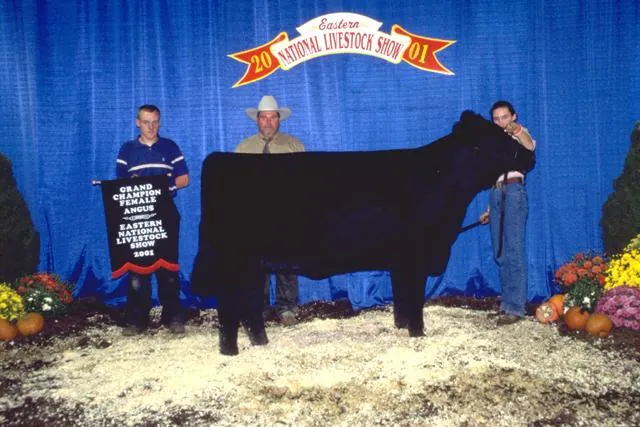
The animal programme is the fair’s spine, and showing an animal here means showing yourself as well. Young exhibitors bring dairy cattle, dairy goats, meat goats, beef cattle, sheep, swine, horses, poultry — including the market turkey and market broiler classes — and rabbits and cavies, and showmanship is compulsory: each young person is judged on how they present and handle their animal, not merely on the animal alone. Placings follow the Danish system, judged against a standard, and ribbons carry the book’s own language: blue, an award of excellence; red, a good award; white, a worthy award. The youngest exhibitors work under gentler terms: Cloverbuds receive ribbons only, with no premiums paid.
The Friday-Evening Market Sale
Woven through the show week is the market animal programme, the fair’s lesson in the economics of raising livestock. Market goats, sheep and swine must be in a young exhibitor’s care by the first of June, and market beef by the first of the previous December. Its climax is the market sale on Friday evening, after which market animals may leave the grounds. The book closes the sale with three obligations: the record book completed, the barn cleaned, and a thank-you card sent to the buyer. Premiums earned by exhibitors aged eight to nineteen are not handed out at the fair at all; they wait for the Fall 4-H Achievement Night.
Inside the 4-H Youth Building
Half the fair never enters a show ring. The 4-H Youth Building holds the non-animal exhibits, and the fair book’s point table reads like a map of a well-used childhood: clothing and a clothing revue, food and nutrition, photography, arts and crafts, science and computer programming, home environment, consumer economics, natural resources, horticulture with vegetable and flower classes, an egg class, record books, posters, creative writing, and educational displays. Alongside the exhibits run the book’s contests — a Dairy Challenge, a Poultry Contest, a Horticulture Contest and a Tractor Operator Contest among them.
The Midway and the Saturday Summit
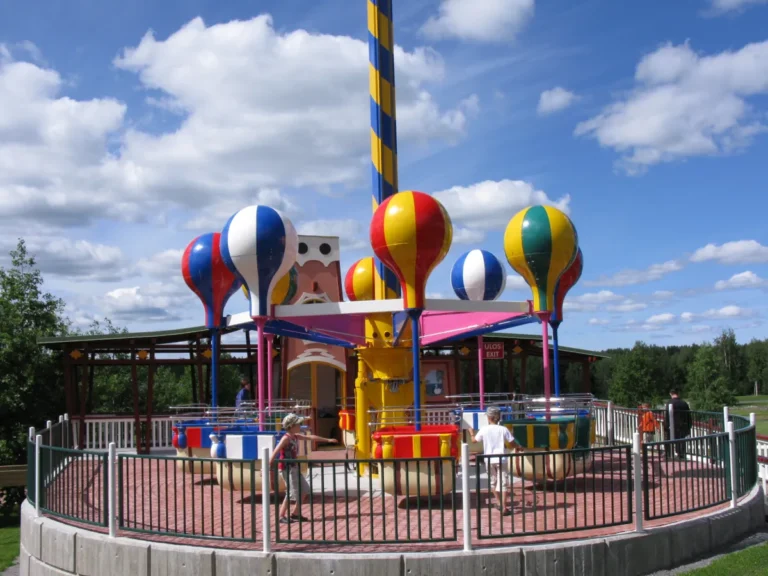
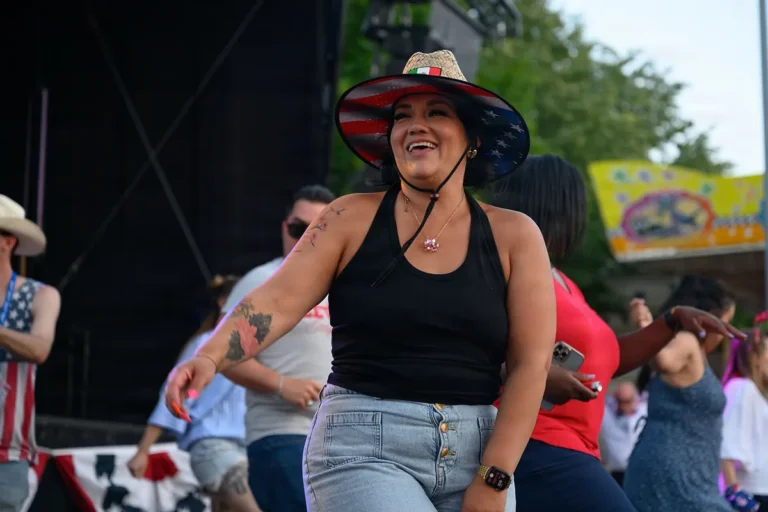
The 2026 fair’s published theme was the Star Spangled Fair. The midway on the fair’s own 2026 pages belongs to the Capitaland Carnival Company, and fireworks by American Fireworks close the fair at dusk on Saturday, July 11. The week’s competitive summit, though, is no midway attraction. At three o’clock on Saturday afternoon, the Grand Master Showman Competition brings together the Master Showmen from six animal areas — dairy cattle, dairy goats, meat goats, beef, sheep and swine — and asks each champion to handle animals beyond their own speciality. Scoring runs lowest tally wins, and no exhibitor may win more than twice within a 4-H age category.
Planning Your Visit
Five Public Days — and One That Is Not
Plan around the Tuesday-to-Saturday shape; the calendar holds one trap. A save-the-date layer from the Extension side bills the fair as July 6 to 11, 2026, but Monday the 6th is exhibitor move-in only, when a separate dairy show vacates the Dairy Barn. The public fair opens Tuesday, with animals in place by evening, and ends Saturday night; animals leave early Sunday, between six and eight. The barns close to the public at ten.
What Things Cost, Stated Plainly
The fair publishes no gate admission price — not on its own website, not in its 2026 fair book, not in the state directory and not in the state fair schedule — so no gate figure is printed here, and the fair should not be described as free either: unpublished is what the record supports. The one price the fair itself posts for 2026 is the midway wristband at thirty dollars, a ride price with the Capitaland Carnival Company, never an entrance price. Parking is documented as free in the fair’s 2024 and 2025 newspaper advertisements — a parking fact, nothing about a gate. Premiums are exhibitor money, never visitor prices.
Finding the Grounds
The record gives the Cortland grounds two addresses, unmerged here. The fair’s own site and the state directory publish 4301 Fairgrounds Drive, Cortland; the county visitors bureau and regional fair lists publish 4849 Fairground Avenue, Cortland. Both forms stand as printed. Two other addresses are not the venue: the fair’s post office box sits in Homer, a neighbouring village, as a mailing address only, and the Cooperative Extension office on McLean Road in Cortland is an office, not the fairground.
A Sample Saturday at the Junior Fair
Saturday is the fair’s fullest day and the natural choice for a single visit. Start in the morning barns, where exhibitors are feeding, fitting and cleaning. Then tour the still-complete 4-H Youth Building, take lunch at the food stands, and give the afternoon to the rings. At three o’clock, settle in for the Grand Master Showman Competition. The evening belongs to the midway on a wristband, and the fair ends as billed, with fireworks at dusk.
A Junior Fair Is Not a Small County Fair
It would be easy, and wrong, to read this event as an ordinary county fair in miniature. A general county fair opens its classes to everyone: the champion cow may belong to a farmer of sixty and the young exhibitors take their chances in open company. Cortland County’s fair inverts that design completely. There are no open classes and no adult exhibitors at all, so a nine-year-old’s first heifer is judged in a system built for her age, with showmanship required so skill counts alongside the animal. Its relationship with the State Fair in Syracuse is likewise one of steps, not sameness: this fair is the qualifying ground from which Cortland’s 4-H exhibitors earn the endorsement to show there, not the State Fair itself.
Your Junior Fair Checklist
- Come Tuesday to Saturday in early July; Monday is exhibitors-only move-in, whatever a save-the-date listing suggests.
- Carry small money for food and rides; the fair publishes no gate price, so check its own pages before travelling.
- Budget thirty dollars a rider if the midway wristband appeals, and remember it is a ride price only.
- Navigate by the fairgrounds’ name, since fair-side sources print two street addresses for the same grounds.
- Do not drive to Homer; its post office box is a mailing address, not the fairground.
- Save Saturday for the fullest day: complete exhibits, the three o’clock Grand Master Showman Competition and fireworks at dusk.
- Do not plan to camp at the fairgrounds; no public camping is offered.
- Leave the exhibiting to the young; every class is closed to adults.
Beyond the Fairgrounds
The fairgrounds work more weeks than fair week. Through the year the grounds take in rentals and dairy tenants: a Holstein dairy show occupies the Dairy Barn just before the fair and clears out on move-in Monday, and a May 4-H Dairy Rodeo training day is another grounds user. Those are tenants and Extension programme days, not fair programme, and nothing in their arrangements carries into fair week. Away from the grounds, the fair’s machinery lives in the county seat itself: the Cooperative Extension office in Cortland handles enrolments, entries and the Fall 4-H Achievement Night where the fair’s premiums are finally paid.
Why a Youth-Only Fair Matters Here
Most county fairs exist to show off what a county produces. This one exists to produce something else: capable young people. The county visitors bureau calls the fair really about the kids and names agricultural education as its foundation, and the fair book bears that billing out in rule after rule — showmanship compulsory, record books required, buyers thanked by hand, premiums held back to an achievement night, as recognition rather than pocket money. The fair also keeps a promise made in 1953. When the county’s general fair died for want of funding, Cortland County could simply have joined the list of counties with no fair at all. Instead it built the fair its children needed, and let the adults step back into supporting roles.
Frequently Asked Questions
Who is actually allowed to exhibit at this fair?
Only young people. Cloverbuds aged five to under eight exhibit for ribbons only; 4-H members aged eight to under nineteen do the main exhibiting, as county residents or members of county-affiliated organisations.
Has the fair published any price for getting in?
No. No fair-side source — the fair’s website, its 2026 book, the state directory or the state schedule — publishes a gate figure, so none is printed here and the fair is not called free. The only price the fair itself posts for 2026 is thirty dollars for a midway ride wristband; parking is documented as free in its 2024 and 2025 advertisements.
Can our family camp at the fairgrounds during fair week?
Not as members of the public. The fair publishes no campsite or reservation offer for visitors. Camping in the fair book is exhibitor-family machinery only: families in campers register with the Agricultural Corporation through Neal Helms, and 4-H members staying overnight sleep in the Dairy Barn under an approved chaperone.
Is this the fair Cortland County once ran for exhibitors of all ages?
No, and the difference is the fair’s whole history. The county’s former general fair, open to all ages, closed because of funding; the Junior Fair was formed separately in 1953 so the county’s children would still have somewhere to exhibit and qualify for the State Fair.
What to Expect From the Next Cortland County New York Junior Fair Festival
How often is the Cortland County New York Junior Fair Festival held?
It is held once a year, as the county’s annual junior fair. Each edition runs five public days in early July, Tuesday to Saturday, with move-in on Monday and animals released on Sunday morning.
When is the next Cortland County New York Junior Fair Festival?
The next edition falls in early July of the coming year; the fair publishes its exact dates nearer the time. Confirm them on the fair’s own pages rather than assume the same days repeat.
Will the dates change?
The season is steadier than the dates. The fair has stayed in early July across its documented editions, but spans have shifted — one documented year ran six days where the current shape runs five. Expect the next edition in early July, and verify its precise dates before travelling.
Come to this fair to watch the exhibitors, not the exhibits alone. A county that lost its general fair over seventy years ago chose to keep a fair for its children instead, and every July that choice fills the county seat’s barns again.