De Baca County New Mexico DeBaca County Fair Festival
Two spellings sit inside the title above, and only one of them belongs to the fair itself. The event at the heart of this article is the De Baca County Fair, written with a space by the board that runs it, held at the De Baca County Fairgrounds in Fort Sumner at the turn of July into August. Fort Sumner is the county seat of De Baca County, and for once in this part of New Mexico the seat and the fair town are the same place. It is a small county fair with a modest public footprint, documented chiefly by its own site and its own fair book, and this account keeps to that record without borrowing size, prices, or history from anywhere else.
About a Small Fair on Billy the Kid Drive
The De Baca County Fair is staged at the De Baca County Fairgrounds, 3933 Billy the Kid Drive, Fort Sumner. Behind it stands the De Baca County Fair Board, a non-profit organisation registered in Fort Sumner whose papers place its postal box in the same town. The board is the fair’s organiser in its own right, not a department of county government and not a committee borrowed from another event. Its fair book for the 2026 season carries the exhibitor programme, which is where this fair’s centre of gravity lies: animals brought in to be judged, indoor work entered for ribbons, and the sale machinery that closes the showing year for young exhibitors. Around fair week itself, the same grounds serve the county’s 4-H work across the season, so the fairgrounds function as the county’s shared exhibition ground rather than as a venue that wakes for one weekend and sleeps for the rest of the year.
Quick Facts
| Item | Detail |
| Fair name | De Baca County Fair |
| Fair town | Fort Sumner |
| County seat | Fort Sumner (the seat hosts the fair) |
| Venue | De Baca County Fairgrounds, 3933 Billy the Kid Drive, Fort Sumner |
| Organiser | De Baca County Fair Board |
| Season | A short fair at the turn of July into August |
| Admission | No admission price is published in the fair’s own record |
| Camping | No fair camping is published in the record |
| Fair book | A fair book for the 2026 season carries the exhibitor programme |
| Programme core | Livestock classes, indoor exhibits, and junior livestock sale machinery |
A History the Record Leaves Deliberately Plain
This fair’s documented history offers no founding year to repeat, and this section will not manufacture one. No edition number, anniversary billing, or origin date appears in the fair-side material behind this article, so the honest history here is a history of continuity rather than of beginnings. What can be said is grounded in paperwork of a different kind. The fair board behind the event holds non-profit status whose tax record reaches back to the middle of the last decade, and that date belongs to the board’s administration alone; it marks when a volunteer body’s paperwork was recognised, not when a fair was founded, and the two should never be merged. Beyond that, the fair’s past is visible mainly through its present habits: a published fair book prepared season by season, livestock and indoor classes maintained as the programme’s core, and grounds that also carry the county’s 4-H contests outside fair week. In a county counted among the least populous in New Mexico, its history is the repetition itself, a showing tradition kept alive by a small board in a small seat town, renewed each summer without a slogan attached to it.
What to Expect
Livestock Classes at the Centre
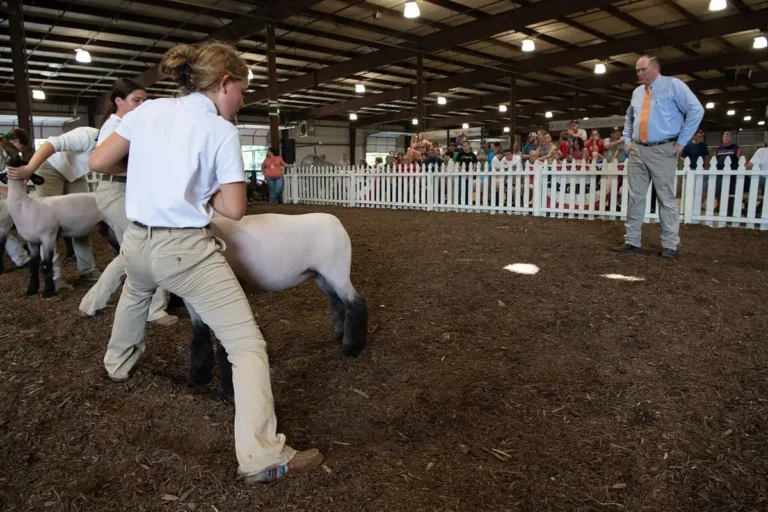
Animals are the first business of this fair. The fair book’s livestock classes give local exhibitors, many of them young, a judged setting for the stock they have raised through the year. Expect the barns and show areas to be the busiest ground during fair days, with preparation, showing, and placings unfolding as the serious work of the week. Visitors should arrive expecting a working show, watched closely by families who know the animals and the hands that raised them.
Indoor Exhibits on the Tables
Alongside the livestock, the fair book provides for indoor exhibits, the entered work that fills the tables at a traditional county fair. These classes are the fair’s second showcase, where skills practised at home through the year are set out for judging in one public place. The sensible expectation is a judged exhibition in the ordinary county fair sense: entries checked in, classes placed, and ribbons carrying weight precisely because the community is small enough for everyone to know what a placing costs in effort.
For a useful comparison, see the Curry County New Mexico Fair Festival for another county festival.
The Junior Livestock Sale Machinery
The fair book also carries the machinery of the junior livestock sale, the point at which the showing season turns into its economic conclusion for young exhibitors. A junior sale is where months of feeding, fitting, and record keeping meet local buyers, and in a ranching county that transaction is more than a ceremony. It teaches the market side of raising animals to the same exhibitors who learned the husbandry side, and it lets neighbours and businesses put money directly behind the county’s young stock raisers. At this fair the sale belongs in the programme as documented business, planned through the book’s rules, not as an improvised auction added for colour.
A Fair Without an Invented Midway
Equally important is what the fair’s record does not contain. No concert bill is published in the fair-side material, no midway line-up is announced there, and no headline entertainment is promised. Visitors who come expecting the livestock, the exhibits, the sale, neighbours, and fair food in the ordinary local sense are reading the fair correctly. Visitors who come expecting a carnival assembled from listing sites are reading somebody else’s template. The fair’s own footprint is agricultural and communal, and its quietness on entertainment is a fact about it, not a gap to be filled by guesswork.
Planning Your Visit
Getting to Fort Sumner
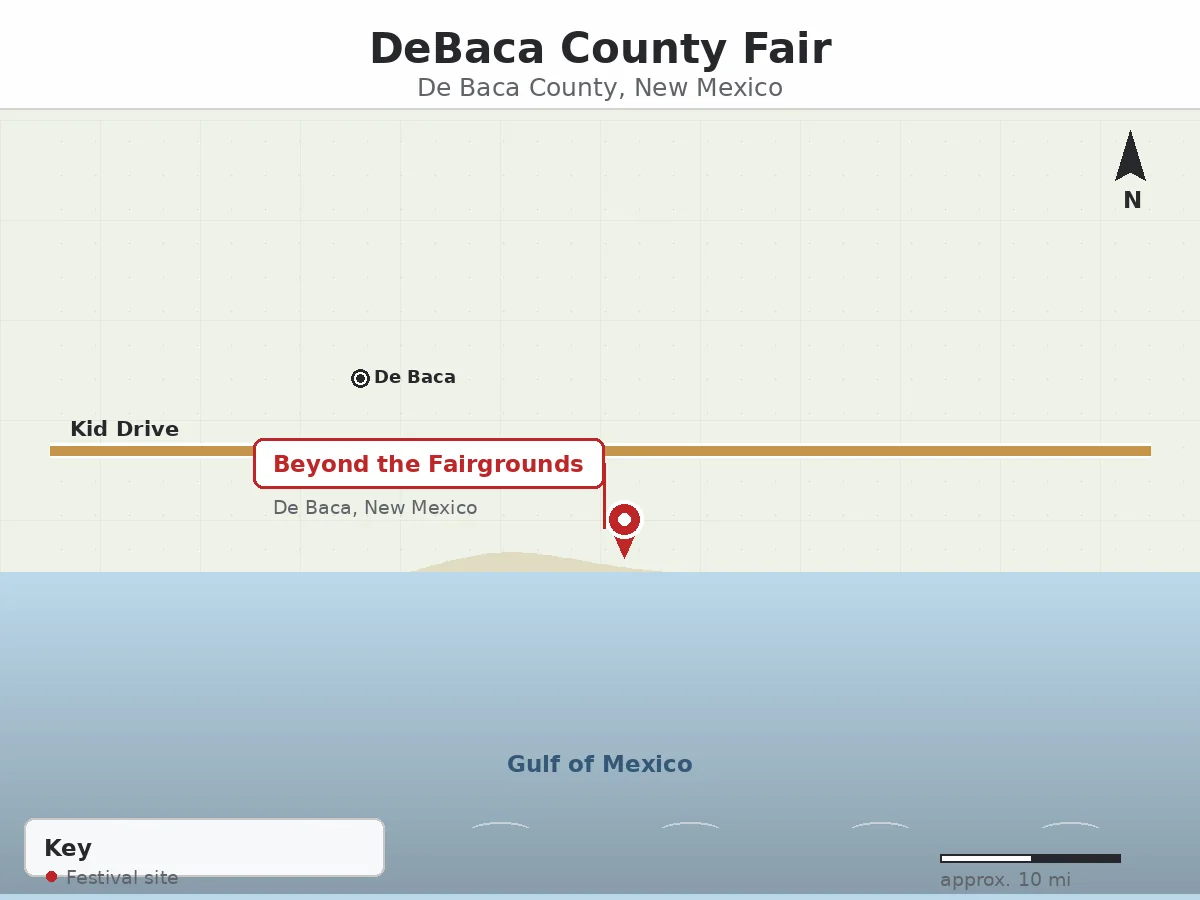
Fort Sumner sits in eastern New Mexico, and for most visitors the fair means a deliberate drive into a sparsely settled county rather than a casual detour. Set the fairgrounds address, 3933 Billy the Kid Drive, as the destination and allow the journey its proper time. Services in a county of this size are concentrated in the seat town itself, so fuel, food, and lodging decisions are best made with Fort Sumner as the base.
The Admission Question, Stated Plainly
No admission price for this fair was found in any fair-side layer behind this article. That means two things at once. First, the fair is not described here as free, because its own record does not say that. Second, no figure is quoted here, because none exists in the record to quote and borrowing a price from another county’s fair would be a fabrication. The practical advice follows from the evidence: carry cash, be ready for the question to be answered at the grounds, and treat any outside listing that states a confident gate price for this fair with suspicion.
Using the Fair Book as Your Planner
For exhibitors, the fair book is the planning document that matters. It carries the classes, the entry framework, and the sale machinery for the season, so anyone intending to show livestock or enter indoor work should work from the current book rather than from memory of a previous year. For spectators, the same book is still the best guide to what the fair actually contains, because it describes the programme the board has committed to paper.
A Sample Day at the Fair
Start the morning in the livestock areas, where animals are being prepared and the day’s showing takes shape, because that is where the fair’s real work is most visible. Move later to the indoor exhibits and give the tables unhurried attention, reading the entries as a survey of what the county makes, grows, and practises at home. Keep time for the junior livestock sale if your visit coincides with it, since the sale gathers exhibitors, families, and buyers into one room with a purpose everyone present understands. Between those anchors, leave the schedule loose: talk with exhibitors, eat in town if the grounds are quiet, and let a small fair be experienced at the pace it sets.
How This Fair Stands Beside the County’s Other Draw
Fort Sumner’s wider fame has nothing to do with agriculture. The town is known far beyond New Mexico for its Billy the Kid associations and for the Bosque Redondo story, and travellers arrive all year for that heritage. The county fair is a different kind of occasion sharing the same streets. Heritage tourism looks backward at a heavily retold chapter of the frontier. The fair looks at the county as it is now: its animals, its young exhibitors, its entered work, and its buyers. A visitor can do both in one trip, but the two should not be confused. The grave and the memorial are the town’s context, not items on the fair’s programme, and the fair is not an extension of the tourist trail.
A Checklist for the Trip
- Plan around the season, the turn of July into August, and confirm the current year’s arrangements with the fair board before travelling.
- Carry cash, since the fair’s own record publishes no admission price and no card payment promise.
- Work from the current fair book if you intend to exhibit, enter indoor classes, or take part in the junior livestock sale.
- Set the destination as 3933 Billy the Kid Drive in Fort Sumner, the fairgrounds address.
- Arrange lodging and meals in Fort Sumner, as no fair camping offer appears in the record.
- Keep Colorado’s Baca County entirely out of your planning; it is a different county in a different state with its own fair.
- Expect livestock, exhibits, and the sale as the programme, and do not travel counting on a midway or concert bill that the fair has not published.
Beyond the Fairgrounds
Fort Sumner repays the time around a fair visit. The town is the county seat, with the courthouse and the everyday services of a small eastern New Mexico community gathered within a short distance of the grounds. Its best known sites belong to the heritage that made the town famous: the grave associated with Billy the Kid and the Bosque Redondo Memorial, which commemorates the Navajo and Mescalero Apache people held at Fort Sumner in the nineteenth century. Both are town visits in their own right and are described here strictly as the setting around the fair, not as part of it. Beyond the town, the county spreads out as high plains ranch country along the Pecos River, where a trip to the fair is also a trip through the working country the fair represents.
Why This Fair Carries Weight
In a county with very few people, a county fair is one of the rare occasions when the whole community’s work is gathered in one place and judged in public. That is the significance of the De Baca County Fair. Its livestock classes measure the county’s ranching skill, its indoor exhibits measure its household and hand skills, and its junior sale turns youthful effort into a first lesson in earning. None of that requires a large crowd or a famous name. The event matters locally because neighbours organise it through their own board, exhibitors prepare for it all year, and buyers show up to stand behind the next generation. A fair like this is less a show staged for visitors than a county taking stock of itself, with visitors welcome to watch.
Frequently Asked Questions
Where is this fair held, and who organises it?
The De Baca County Fair is held at the De Baca County Fairgrounds, 3933 Billy the Kid Drive, in Fort Sumner, which is both the fair town and the county seat of De Baca County. It is organised by the De Baca County Fair Board, a non-profit body based in Fort Sumner, and its exhibitor programme is set out in the fair’s own fair book.
Has the fair published an entry price?
The fair’s own record does not publish an admission price, so this article gives none. It would be wrong to call the fair free without the board saying so, and equally wrong to invent a figure or copy one from another fair. Carry cash, expect the matter to be settled at the grounds, and be wary of any listing that names a precise price with confidence.
Is Billy the Kid part of the fair’s programme?
No. Fort Sumner’s Billy the Kid heritage, including the grave site and the town’s wider outlaw associations, belongs to the town’s history and its year round visitor draw. The fairgrounds happen to stand on a road carrying his name, and the heritage sites make a worthwhile visit alongside the fair, but none of them appears as fair programme in the fair’s own record.
What is the junior livestock sale, and can anyone watch it?
The junior livestock sale is the part of the fair, carried in the fair book’s machinery, where young exhibitors sell the animals they have raised and shown. It is the commercial conclusion of the showing season and a public piece of fair business that spectators ordinarily witness as part of the fair crowd, while the bidding itself belongs to the buyers who come to support the exhibitors.
What to Expect From the Next De Baca County New Mexico DeBaca County Fair Festival
How often is the De Baca County New Mexico DeBaca County Fair Festival held?
It is an annual county fair on its documented record, prepared season by season by its fair board with a fair book published for the year, and held in its established summer place in the county calendar.
When is the next De Baca County New Mexico DeBaca County Fair Festival?
Expect the next edition in the fair’s established season, the short stretch at the turn of July into August, unless the board publishes a change. The season is the dependable fact. Exact days for a coming year rest on the fair’s own announcements, which is where they should be confirmed before travel.
Will the dates change?
They can move within the season from one year to the next. Listing layers around this fair have not always agreed with each other on the precise span, while the fair’s own record governs its dates, so a future edition may sit a little earlier or later across that turn of the months than the last one did.
A Fair Kept at Its Own Scale
The De Baca County Fair asks little of the wider world and offers a clear bargain in return: a short summer fair in the county seat, on grounds that serve the county’s exhibitors all season, run by its own board and documented in its own book. It publishes no gate price, claims no founding year, and promises no midway, and this account has respected all three silences. What it does offer, livestock, exhibits, a junior sale, and a whole small county gathered in one place, is enough to justify the drive to Fort Sumner at the turn of July into August.