Mercer County New Jersey 4-H Fair Festival
The Mercer County 4-H Fair Festival is not held in the county seat, and it is not held where its mailing address might send you. Trenton, the seat of Mercer County, does not host this fair, and the Lambertville address on some park documents is a postal variant rather than a place on the ground. The fair takes place at Howell Living History Farm in Hopewell Township, a working farm preserved as farming looked around 1900, whose barns, fields and barnyard are not scenery behind the fair but the ground it stands on.

What happens there is a 4-H fair in the full sense: animal shows, judged project exhibits and an open door for the public to enter work of their own, folded into a farm weekend built around the host farm’s own wheat threshing demonstration. It runs for two days, not one — a long Saturday and a shorter Sunday in late July. Entry and parking cost nothing, and the only thing visitors are asked to bring is a canned good they may donate if they wish.
Run by the Extension Service, Hosted by a Farm
The Mercer County 4-H Fair is organised by Rutgers Cooperative Extension of Mercer County, the county’s 4-H programme authority. The fair lives on Extension’s own pages, its announcements go out in the name of Mercer County 4-H, and its exhibitor catalogues and show documents are Extension publications. No separate fair association appears anywhere in the fair’s record, and none runs it: this is a fair administered by the same educators who run the county’s 4-H clubs all year.
The host is a partner of a different kind. Howell Living History Farm is owned by the County of Mercer and operated by the Mercer County Park Commission as county parkland. Exhibits are shown in the farm’s large red Fish Barn, and the farm adds its own contribution — the wheat threshing — so that Howell Farm’s calendar bills the weekend jointly, as the Mercer County 4-H Fair and Wheat Threshing. The threshing is part of this one weekend, not a second fair running beside it.
Quick Facts
| Item | Detail |
| Published fair name | Mercer County 4-H Fair |
| Fair town | Hopewell Township |
| County seat | Trenton, which does not host the fair |
| Grounds | Howell Living History Farm, 70 Woodens Lane |
| Organiser | Rutgers Cooperative Extension of Mercer County |
| Season | Two days, Saturday and Sunday, in late July |
| Hours in the 2026 record | Saturday 10 a.m. to 8 p.m.; Sunday 10 a.m. to 4 p.m. |
| Admission | Free for everyone |
| Parking | Free; a canned-good donation for Rutgers Against Hunger is suggested, never required |
| Camping | None offered |
Counting Past a Hundred, Without a Birthday
The fair’s own billings count high. Extension’s review of the 2025 season billed that year’s fair as the 106th annual Mercer County 4-H Fair, and the county’s release for the 2021 edition billed it as the 102nd. Those billings are consistent with each other as billings, and there this article leaves them: published claims fenced to their years. No founding year can responsibly be calculated from them, and no edition number for 2026 is computed here: the record offers no continuous history to calculate from.
For a useful comparison, see the Hunterdon County New Jersey 4-H & Agricultural Fair Festival for another county festival.
The documented editions themselves are plain enough. The 2021 fair ran July 31 and August 1. The 2024 edition ran July 27 and 28; its programme layer’s Saturday opening ceremony in the Show Tent and Saturday-evening country dance are documented for 2024 only and promised for no later year. The 2025 edition ran July 26 and 27; Extension’s review counted over 5,700 visitors across that weekend, a figure belonging to 2025 alone. The 2026 edition was set for July 25 and 26. The sequence shows a fair of genuine longevity with a stable modern form: one late-July weekend, on the same farm, year after year.
What to Expect
The Invitational Animal Shows
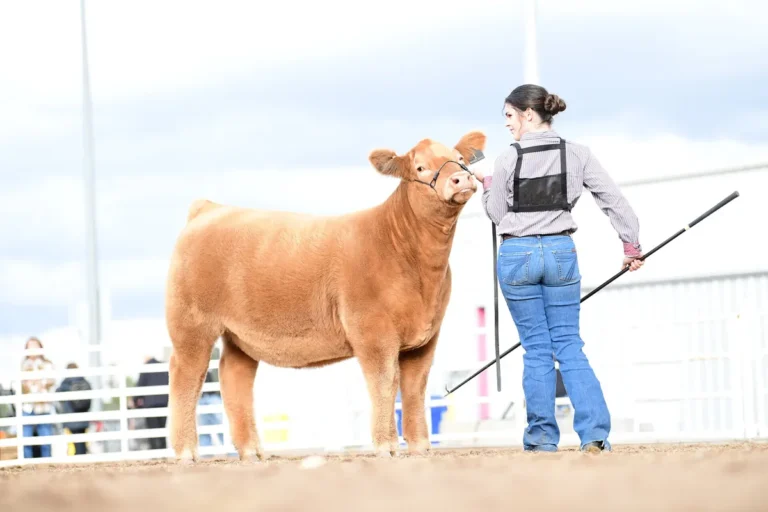
The animal side of the fair is built around invitational shows documented in the fair’s own 2026 paperwork: an Invitational Goat Show, an Invitational Rabbit Show and an Invitational Poultry Show. The rabbit show’s own document fixes its rhythm — check-in at 2:00 p.m. on the Saturday, judging from 2:30 p.m. — a 4-H-only show whose classes are exhibitor occasions first and spectator occasions second. The animals are presented, as 4-H work always is, by the young people who raised and prepared them.
Exhibits in the Fish Barn, and an Open Door
The exhibit programme fills the farm’s large red Fish Barn. Extension’s account of the 2025 fair describes project exhibits spanning agriculture and animal science, reaching into coding, technology, engineering and sustainability, with art, photography, gardening, baking and sewing in the barn. Its Open Division sets it apart from a closed youth show: the Exhibitors Catalog provides classes through which members of the general public, not only enrolled 4-H members, may enter work of their own. A neighbour’s photograph or jar of preserves can be judged in the same barn as the club exhibits, which makes this a county exhibition in the older sense rather than a members-only showcase.
The Farm Working Through the Fair
Because the fair sits inside a living-history farm, the host’s own work runs through the weekend. The wheat threshing demonstration is provided by Howell Farm and co-billed with the fair itself — the one piece of the farm’s programme that belongs to fair weekend by name. Wagon rides and hay rides run, pony rides are offered, and tours run through the farm and its historic barnyard. Homemade ice cream is part of the documented fair-page offering. The boundary matters: the farm keeps its own year-round calendar of Saturday programmes, and those are the farm’s occasions, not fair programme — nothing else from that calendar should be expected on fair weekend.
Music, Magic and Neighbour Displays
The entertainment layer is deliberately uncommercial. Local string bands and music appear in the fair page’s programme, as do magic shows and an archery range, with food available on the grounds. Community organisations exhibit alongside the 4-H work: the fair page lists displays by the Rutgers Master Gardeners of Mercer County, the Mercer County Wildlife Center Friends and the Mid-State Beekeepers Association, among others. It is a fair assembled from the county’s own educational and volunteer bodies, not booked in.
Planning Your Visit
Finding the Farm
Go to Howell Living History Farm, 70 Woodens Lane, Hopewell Township. The fair-side record places the farm in Hopewell Township, consistently, and that is where the fair is. Some Park Commission documents print the same address with Lambertville as the postal town, a mailing and navigation variant only; a device that offers Lambertville is describing the post, not the place. Trenton is a separate trip entirely — the fair has never been a Trenton event.
Two Days, Two Different Lengths
In the 2026 record the fair opened at 10 a.m. on Saturday and ran to 8 p.m., then returned on Sunday from 10 a.m. to 4 p.m., and every documented modern edition has landed on a Saturday and Sunday in late July. Treat it as a one-day fair and you miss half of it; arrive expecting a week-long run and the farm is back at its ordinary work by Monday. No camping of any kind attaches to the fair, so overnight visitors stay in the towns around Hopewell Township.
Free to Enter, With a Tin in Hand
The fair’s own page states its terms plainly: free admission and free parking, with a suggested donation of a canned good in support of Rutgers Against Hunger. The donation is a request — an invitation to bring a non-perishable item if you can; it is not a charge, not a ticket and not a condition of entry, and no ticket ladder exists behind it. Parking is free on the same terms, with no paid lot or premium tier anywhere in the record. What money changes hands goes voluntarily — on food, a pony ride, homemade ice cream.
Saturday, Hour by Hour
Arrive as the gates open at ten and walk the barnyard first, while the day is cool and the crowds thin. Spend the late morning in the Fish Barn among the project exhibits, coding and engineering beside baking and sewing, and look for Open Division work. Take lunch from the food stands and find the string band’s set. Give the early afternoon to the wheat threshing demonstration, the fair’s signature piece of farm work, and the wagon ride after it. Be near the rabbit show by two, as exhibitors settle their animals for the half-past judging. Round out the day with the partner displays — beekeepers, Master Gardeners, the wildlife centre — a scoop of homemade ice cream, and the evening stretch of a Saturday that runs to eight, then choose Sunday’s shorter day for the goat and poultry classes or a slower second pass through the barns.
Two Days on a Farm, Not a Week on a Fairground
Set it against the conventional county fair: a fenced fairground, a per-person gate, a commercial midway and a run of five days or more. Mercer County’s fair inverts nearly every term. It lasts two days and charges nobody to enter or to park. Its setting is not a fairground but a working museum farm whose own demonstration — the threshing — is woven into the programme, and its exhibits are opened to the public through the Open Division rather than reserved to members. Underneath, the core is the same as any big fair’s: young exhibitors presenting a year’s work for public judging. The scale is smaller and the shape older — closer to the agricultural exhibition such fairs began as than to the carnival they became.
Checklist
- Pack a non-perishable food item for the Rutgers Against Hunger collection if you are able; it is welcomed, and it is never demanded.
- Treat the fair as a two-day event — Saturday is the long day and Sunday the short one, in every documented edition.
- Enter the address as Hopewell Township, even if a navigation service suggests Lambertville for the same lane.
- Wear shoes suited to a working farm: fields, barnyard ground and gravel lanes, not paved midway.
- Exhibitors should note the 2026 show documents’ Saturday rhythm: rabbit check-in at 2:00 p.m., judging from 2:30 p.m.
- Remember that no camping exists at the fair; book ordinary lodging in the surrounding towns if you are staying over.
- Consider entering the Open Division — the catalogue opens exhibit classes to the general public, not only to 4-H members.
- Keep a little cash for food and ice cream; admission and parking take none of your budget.
Beyond the Fairgrounds
Howell Farm is worth the trip outside fair weekend too. The farm is county parkland operated by the Mercer County Park Commission, and its ordinary-day terms mirror its fair-day ones: admission to the grounds is free on regular days too, and the living-history operation can be walked and watched through the year. The farm runs its own calendar of seasonal programmes, its own occasions, separately worth the trip. Around it, Hopewell Township and the wider Hopewell Valley offer farm stands, small-town centres and country lanes — a rural Mercer County far from the state capital at Trenton.
Why a Fair on a Museum Farm Matters
The Mercer County 4-H Fair matters because it preserves two things that are easy to lose separately. The first is the county fair as an exhibition of work rather than a programme of entertainment: exhibits judged in a barn, animal shows run by the young people who raised the animals, and classes any resident can enter beside the clubs. The second is the farm itself, no backdrop but a contributor, lending its own skilled labour — the threshing — to the weekend. That its billings have counted past a hundred editions, arithmetic caution notwithstanding, says how long the county has kept doing this. An Extension-run fair asking a canned good instead of a gate price, on a farm the county itself owns, is as direct a line as modern New Jersey offers between a community and its agricultural year.
Frequently Asked Questions
Where does the fair take place?
At Howell Living History Farm, 70 Woodens Lane, in Hopewell Township. The county seat, Trenton, does not host it, and the Lambertville name on some park documents for the same address is a postal variant — both farm and fair stand in Hopewell Township.
Does the fair charge for entry or parking?
No. Extension’s fair page publishes free admission and free parking in its own words. The fair suggests visitors bring a canned good or other non-perishable item for Rutgers Against Hunger, but the donation is voluntary and never a condition of getting in.
Is the fair a single-day event?
No — it is a two-day fair in every documented modern edition, held on a Saturday and Sunday in late July. In the 2026 record, Saturday ran from 10 a.m. to 8 p.m. and Sunday from 10 a.m. to 4 p.m., with Saturday the full day and Sunday the shorter closer.
Can adults and non-members enter exhibits?
Yes. Alongside the 4-H project classes, the Exhibitors Catalog carries an Open Division through which members of the general public may enter their own work — the art, photography, gardening, baking and sewing shown in the Fish Barn is not limited to enrolled 4-H members.
What to Expect From the Next Mercer County New Jersey 4-H Fair Festival
How often is the Mercer County New Jersey 4-H Fair Festival held?
It returns once each year. The documented modern editions — 2021, 2024, 2025 and 2026 — each took a single late-July weekend under Extension’s organisation.
When is the next Mercer County New Jersey 4-H Fair Festival?
On the documented pattern, expect the next edition on a Saturday and Sunday in late July at Howell Living History Farm. Extension announces each year’s dates through its 4-H fair page; no later edition’s dates are published in the record this article rests on, so none are promised here.
Will the dates change?
They have moved a little within their season. Documented editions have fallen on the last weekend of July and, in 2021, on a weekend crossing into the first day of August, and Extension itself describes the fair as held in late July or early August. The weekend can shift by a week; its season has held.
Closing
The Mercer County 4-H Fair Festival asks very little of its visitors: no ticket, no parking fee, only a tin for the food collection if you can spare one. What it offers in return is rarer than its price suggests — a century-billed 4-H fair judged in a red barn, animal shows run by the exhibitors themselves, an open door for any resident’s work, and a working farm from another century threshing its wheat. Go to Hopewell Township — not the seat, not the postal town — and give it both days.