Butler County Nebraska Fair Festival
Every mid-July, the east side of David City changes its rhythm. The Butler County Fair takes over the county fairgrounds on East L Street without the machinery of a big commercial show. This is an agricultural society fair, run out of a fair book that prints entry limits species by species, and its week opens not with a ribbon cutting but with neighbours turning up to clean the grounds before a single exhibit arrives.
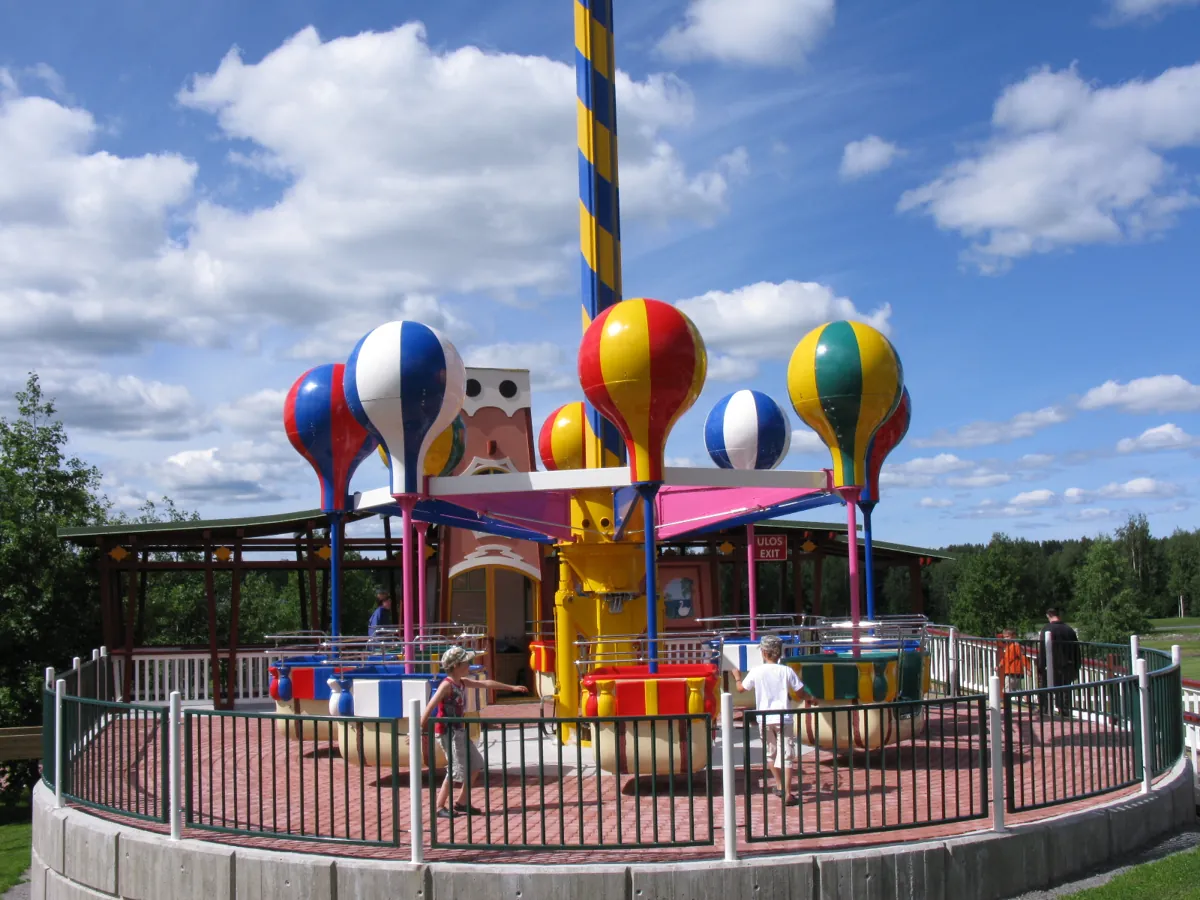
The fair has two faces, and a visitor who understands both will get far more from the trip. One is the working week of the exhibitors, the 4-H and FFA members whose cattle, hogs, sheep, goats, poultry and rabbits are checked in animal by animal while judges interview the young people behind the static exhibits. The other is the face its listings have described for years: a parade, a chili cook-off, frog jumping and turtle races, barnyard Olympics and a demolition derby, the old grammar of a small Nebraska county fair.
What this article will not do is decorate the record. No founding year appears in the fair’s own published sources, no edition number is printed on its book, and no gate price has been published in any fair-side document; where the record stays silent, the silence is reported as part of the facts.
About: A Society Fair in the County Seat
David City is the seat of Butler County, and the fair belongs to the town in the direct way that seat-town fairs do. The organiser is the Butler County Ag Society, the body named throughout the fair book the society publishes with Nebraska Extension in Butler County. Alongside it stands the Butler County Fair Board, the board the fair’s own site names and photographs for the current year. The two are recorded here exactly as the fair’s documents record them, as two published forms working the same fair, never blended into a single invented legal name.
The society’s hand shows in the small print. Its fair book sets out how many animals an exhibitor may enter in each species and what happens when an entry arrives late, and it notes that the society’s own vehicles around the grounds will be marked as such, so exhibitors can tell the official trucks. The society also feeds the clean-up crew: when volunteers gather on the Saturday before fair week to ready the barns, the midday meal comes from the society itself.
For a useful comparison, see the Burt County Nebraska Fair Festival for another county festival.
The grounds sit at 62 East L Street in David City. The buildings the fair’s own record names are the Butler County Event Center, where the exhibit hall is set up before entries open, and the livestock barns that fill as check-in proceeds. Anything grander is not in the fair’s published description of itself.
Quick Facts
| Fact | Detail |
| Fair name | Butler County Fair |
| County | Butler County, Nebraska |
| Fair town | David City, the county seat |
| Grounds | Butler County Fairgrounds, 62 East L Street, David City |
| Organiser | Butler County Ag Society, working through its Butler County Fair Board |
| Youth programme partner | Nebraska Extension in Butler County |
| Named buildings on the record | Butler County Event Center and the livestock barns |
| Season | Mid-July |
| Admission | No gate price published in the fair’s own record |
| Fair-week camping | No camping offer published in the fair’s own record |
What to Expect
The Working Week Comes First
Long before a spectator needs a seat, the exhibitors need the grounds ready, and the fair’s published week is built in that order. The exhibit hall is set up inside the Event Center first; then comes the clean-up day, when volunteers make the barns and buildings ready. Only after that do the entries begin, giving the week the feel of a community raising its own stage.
Check-In, Species by Species
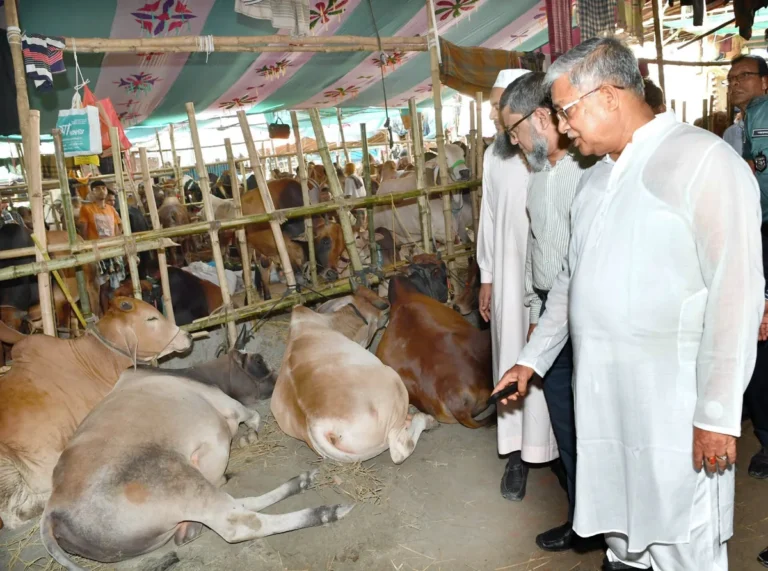
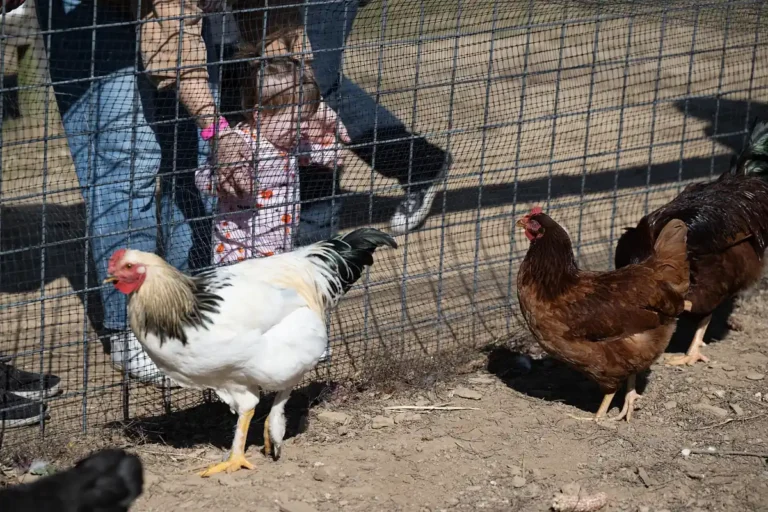
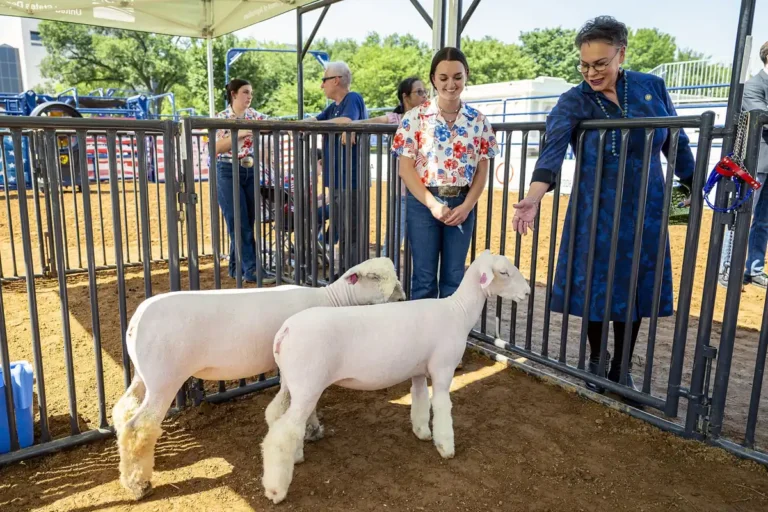
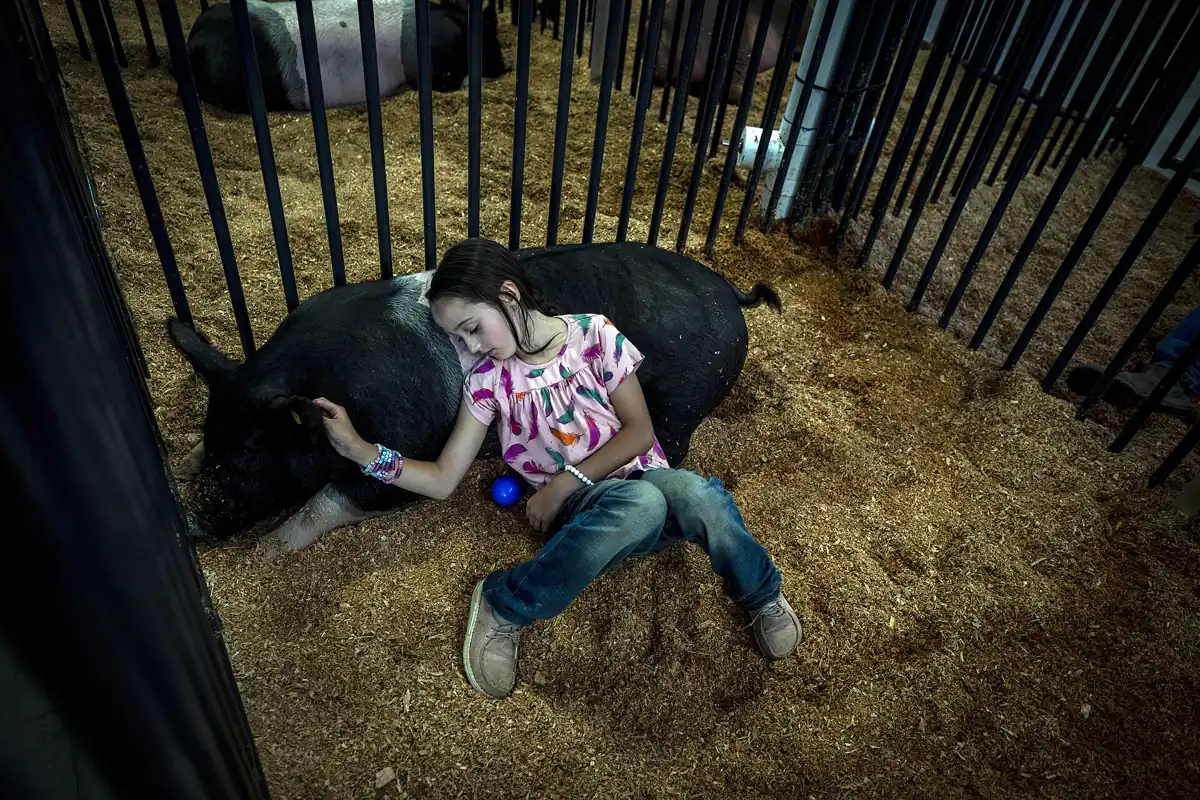
Livestock arrival is choreographed rather than casual. On the Wednesday evening of fair week, from five o’clock, sheep and goats, poultry and rabbits, and beef all move through check-in, and every animal must be in place by ten that night. Swine check in the following day. Within the beef string, the current book makes a refinement plain: market beef and breeding beef are checked in separately, a distinction worth its own line in the rules. The late-entry policy, too, is written down rather than left to gate-side negotiation.
Interview Judging and the Static Hall
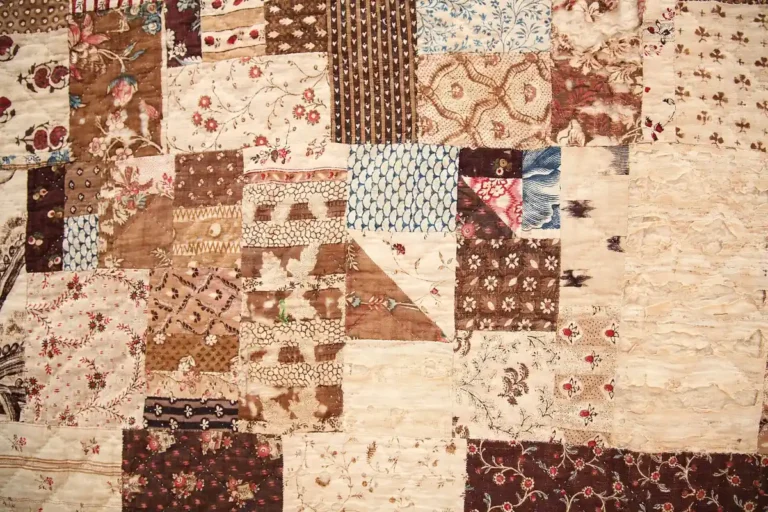
The static side of the fair runs on conversation as much as on ribbons. Exhibits are entered across the Tuesday and Wednesday of fair week, the Tuesday given to entry alone and the Wednesday adding interview judging, in which the exhibitor talks with the judge about how the project was made and what was learned from it. The Fashion Show belongs to this side of the fair too, part of the clothing and textiles work in Extension’s programme. For families, this is often the week’s real centre, the moment a year of feeding, sewing, baking or building is explained out loud.
The Public Face: Frogs, Turtles and a Demolition Derby
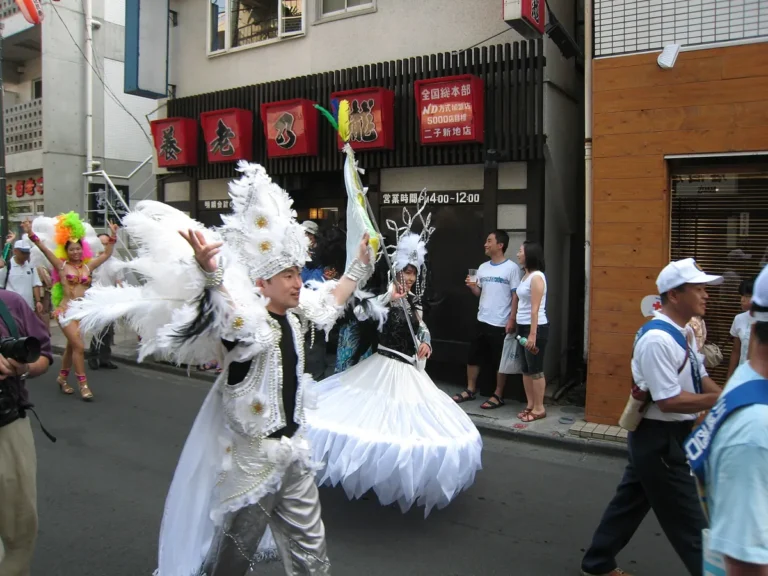
Alongside the judged week, the fair’s listing record describes a public programme in the older county-fair style: a parade, a chili cook-off, barnyard Olympics, a frog jumping contest, turtle races, food and music, and a demolition derby. That description is carried here as the fair’s standing public face, exactly as its listings present it, not as a dated schedule for any single year. The charm is the contrast: a fair that interviews a teenager about a quilt in the morning can spend the evening timing turtles and bending fenders.
History Without a Founding Year
Most county fairs reach for an anniversary, and this one’s published record does not. No founding year and no edition number appear in the fair-side sources behind this article, so its history is told through the society that runs it, the book it prints and the week it repeats.
There is documented colour nearby, fenced carefully. Butler County’s 4-H record reaches back to the county’s first 4-H members in 1917 and its first extension agent, who began in February 1918. That is the history of organised youth work in the county, carried here as exactly that; it is not the fair’s founding, and no sentence here turns it into one.
Themes, too, belong to their own years. The fair in 2022 ran under the theme “Country Roots and Cowboy Boots”, documented for that edition alone; it is not a standing motto, and later fairs are not described by it here. What endures across editions is more practical than slogans: a society that marks its vehicles, feeds its clean-up volunteers and prints its entry limits for all to read.
Planning Your Visit
Getting to 62 East L Street
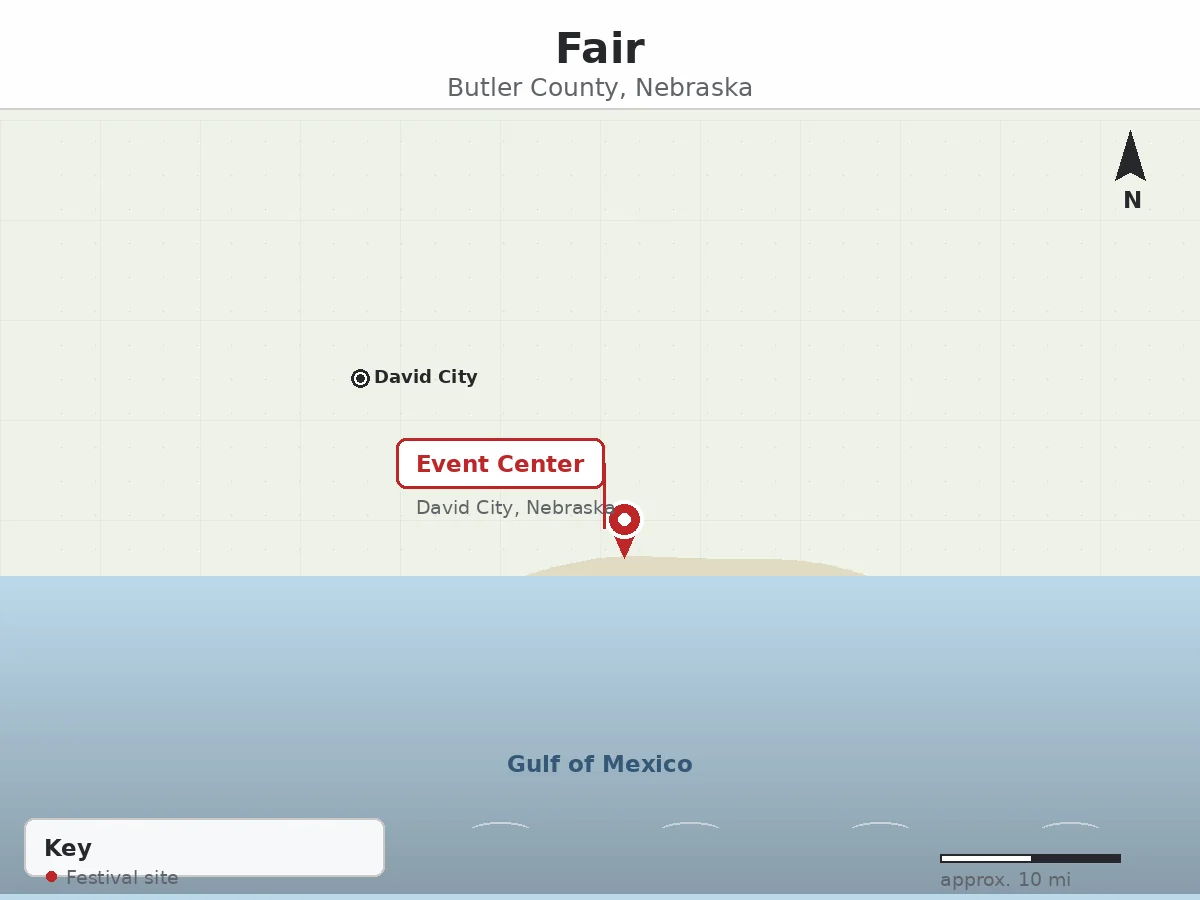
The fairgrounds address is 62 East L Street in David City, and the fair publishes a map of its own grounds, worth consulting before you arrive: a working fairgrounds on check-in evening is a place of trailers and one-way habits that reward a visitor who already knows where the Event Center stands in relation to the barns.
What the Record Does Not Price
Plan your money around an honest blank. No admission, pass, derby or fair-week camping price appears in any fair-side source behind this article, so none is quoted here, and the absence of a published price must never be read as a promise that entry costs nothing. The fair is not described as free anywhere in its own record, and this guide does not describe it that way either. Check the fair’s own announcements as the week approaches, carry cash for food and small pleasures, and treat any price on an outside listing with suspicion until the fair itself confirms it.
Timing a Mid-July Trip
The season is mid-July, and the week’s shape matters more than any single day. For the judged fair, come early in the week, when entries, interviews and check-ins give the grounds their working texture. For the public programme described in the fair’s listings, aim at the heart of the week, when the barns are full and the exhibits are displayed.
A Saturday Shape for the Butler County Fair
Begin in the Event Center, while the static exhibits can be read properly, and find the projects that earned their interviews earlier in the week. Move to the barns late in the morning, when the animals settled in on check-in night are washed, fitted and resting between classes, and watch a class or two from the rail.
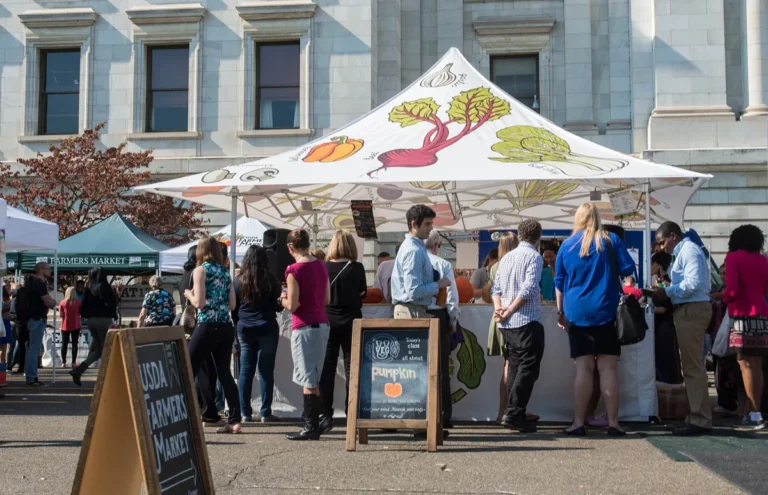
Take lunch from the food stands on the grounds, and keep an ear out for the day’s public contests, since the fair’s listed programme runs from chili cook-offs to barnyard Olympics. Spend mid-afternoon at the small-animal end of the fair, where the poultry and rabbits reward a slower look. Close with the evening’s entertainment as the fair presents it.
Two Fairs Sharing One Week
The comparison worth making here is not with another county but inside this one, because the Butler County Fair is really two events sharing one set of grounds. The exhibitor’s fair is documented to the animal: entry limits, check-in hours, interview slots and a late-entry policy, all printed in advance. The visitor’s fair is documented far more loosely, as a standing description of parades, races, cook-offs and a derby. Neither half is the whole story, and a reader who plans only for the second will walk past the first, where the county’s year of work is actually judged.
One more comparison protects your search results. Butler County is a common county name, and other states’ Butler County fairs publish plenty of material of their own. Anything about a Butler County fair outside Nebraska belongs to one of those fairs, not to David City’s, and their dates or prices should never be carried into a trip to East L Street.
Before You Go: A Checklist
- Confirm the fair’s current dates and any schedule changes through the fair’s own announcements before travelling.
- Bring cash for food and small purchases, since no fair-side source publishes card arrangements or prices.
- Never assume entry is free; the fair’s own record publishes no admission price in either direction.
- Arrive early in the week for entries and interview judging, or midweek for full barns and displays.
- Give livestock trailers and marked society vehicles a wide berth on check-in evening.
- Leave pets at home unless the fair’s current guidance says otherwise.
- Keep outside listings about other states’ Butler County fairs out of your planning entirely.
Beyond the Fairgrounds
David City rewards the visitor who treats the fair as the centre of a small-town stay rather than a roadside stop. It is a county seat in the working sense, where courthouse business, schools and main-street trade sit together, and fair week layers a countywide gathering over that civic life. Between sessions at the grounds, the town gives the trip its breathing room: a meal eaten slowly, and a drive into the farm country where most of the week’s exhibits began.
The county around the town is the fair’s real catchment. Exhibitors haul in from farmsteads and villages across Butler County, so the mid-July fairgrounds hold a cross-section of the county itself. A visitor who allows an hour for the countryside will understand the barns better for it.
Why This Fair Matters to Butler County
A fair organised by an agricultural society is a piece of county self-government as much as entertainment. The society prints the rules, the board answers for the week, the volunteers clean the grounds, and the young exhibitors submit a year of work to public judgement. That chain of responsibility is the fair’s real product, renewed every July.
The fair also holds two generations in one place. Interview judging gives a teenager a formal audience for careful work, while turtle races and barnyard Olympics keep the grounds open to anyone who simply wants an evening out, on grounds its own people prepare by hand.
Frequently Asked Questions
Where exactly in David City is the Butler County Fair held?
The fair is held at the Butler County Fairgrounds, 62 East L Street, in David City, the county seat. The buildings named in the fair’s own record are the Butler County Event Center, which houses the static exhibit hall, and the livestock barns.
Who is responsible for running the Butler County Fair?
The organiser named in the fair book is the Butler County Ag Society, and the fair’s own site presents the Butler County Fair Board as the board behind the event. The 4-H and FFA side runs with Nebraska Extension in Butler County, which publishes the entry machinery with the society.
Has the fair published any admission price a visitor can rely on?
No. No gate, pass or event price appears in the fair-side sources behind this article, and the fair’s own record does not describe the event as free. Treat any price on an outside listing as unconfirmed, and look to the fair’s own announcements in the run-up to the week for anything official.
Why does the fair’s week begin before the public programme does?
Because the grounds have to be built before they can be filled. Extension’s fair-week pattern opens with exhibit hall set-up and a volunteer clean-up day, lunch provided by the Ag Society, and only then do static entries, interview judging and livestock check-in follow. The preparation days are part of how this society fair works, not a delay before it starts.
What to Expect From the Next Butler County Nebraska Fair Festival
How often is the Butler County Nebraska Fair Festival held?
The Butler County Fair is an annual event, returning each year in mid-July to the fairgrounds in David City, with entry deadlines, set-up days and check-ins arranged around the same midsummer window.
When is the next Butler County Nebraska Fair Festival?
The fair’s own site has already announced its next edition, placing it on July 13 to 18, 2027. Those are the announced dates for that coming edition, carried here exactly as the fair publishes them, not the dates of the edition this article describes.
Will the dates change?
They can. The announced span for the next edition sits a little earlier in July than the pattern of the edition described here, which shows how far the week can move within its midsummer season. Treat every printed span as belonging to the edition it was published for, and confirm the current year’s dates through the fair’s own announcements before travelling.
Closing
The Butler County Fair does not ask to be admired for scale. It asks to be read correctly: an Ag Society fair in a county seat, run from a printed book, built by volunteers on a clean-up Saturday and judged animal by animal through a mid-July week. Come to David City for that, and for the frogs, turtles, chili and derby besides.