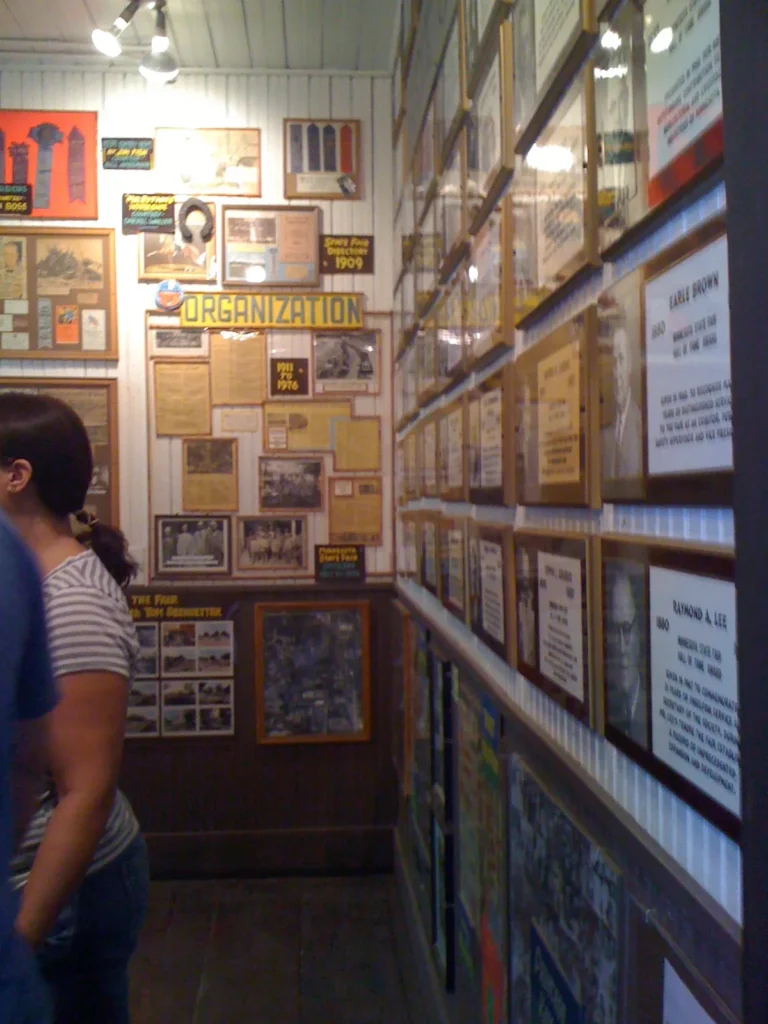
Stillwater County Montana Fair Festival
In the middle of July, Columbus becomes the working centre of Stillwater County’s farming year, because the fair that gathers here is not a travelling show but the county’s own young exhibitors presenting a full season of project work. The published name on the fair book and the schedule poster is the Stillwater County 4-H & FFA Fair, while the entry system records the same week as the Stillwater County Fair and statewide listings carry it as the Stillwater County 4-H Fair — three forms for one event, kept distinct here rather than merged. There is no separate commercial county fair running beside it in the record. The youth fair is the whole fair, and the week at the ACE Civic Center and the adjoining fairgrounds complex flows from that single fact.
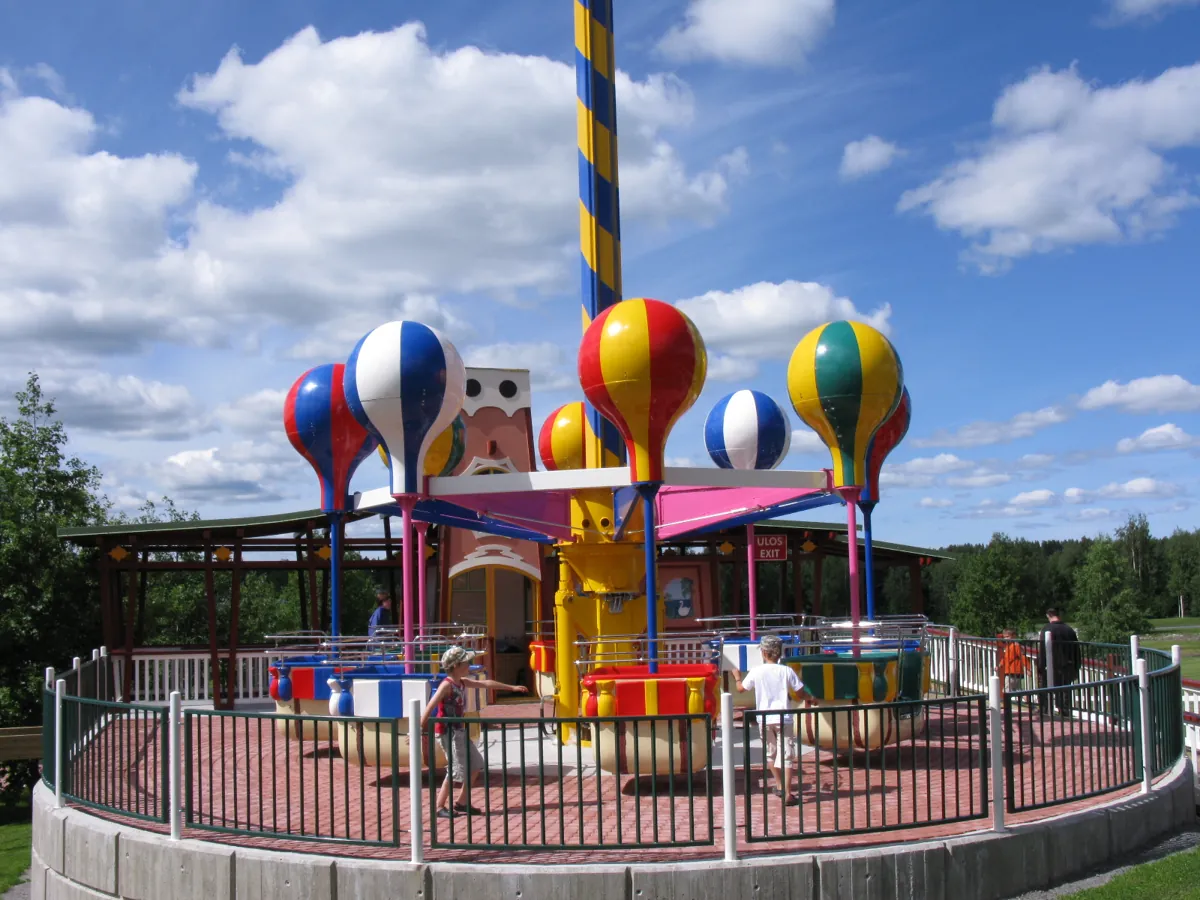
Because the fair is an exhibition before it is entertainment, its week is organised around judging rather than around a midway. Pens go up before the public programme gathers pace, and the entire schedule builds towards one fixed point on Saturday afternoon, when the year’s market animals are sold at live auction. Visitors expecting a carnival will not find one described in the fair’s own book. What they will find is a county showing its work.
A Fair Run From the Extension Office
Responsibility for the fair sits with Montana State University Extension in Stillwater County and its 4-H programme, working alongside FFA, and the fair book, the schedule and the entry machinery all publish from that office. No standalone fair board or private fair association appears anywhere in the fair’s own record. The fair functions as the public examination at the end of a long course of feeding, fitting, sewing, baking and record keeping, judged by the same educational system that supervised the work through the year.
Homemaker exhibits run through the week beside the youth core, so the exhibition halls carry the work of adult residents as well as club members. Its most distinctive machinery is the carcass programme, which works with the Midland Bull Test and Stillwater Pack and follows an animal beyond the show ring. An exhibitor’s steer is assessed alive and then viewed on the rail, so the judging includes the quality of the finished product and not only the animal’s appearance in the ring. Few county fairs anywhere publish so complete a chain from pasture to packing plant inside their own fair book.
Quick Facts
| Detail | What the record shows |
| Published fair names | Stillwater County 4-H & FFA Fair in the fair book and poster; Stillwater County Fair in the entry system; Stillwater County 4-H Fair in statewide listings |
| Fair town | Columbus |
| County seat | Columbus |
| Venue | ACE Civic Center and the adjoining fairgrounds complex |
| Season | Mid-July |
| Documented 2026 edition | Sunday July 12 to Saturday July 18, per the 2026 fair book, poster and entry record |
| Organiser | Montana State University Extension Stillwater County, with its 4-H programme and FFA |
| Admission | No gate, pass or parking price is published in the fair’s book or poster |
| Fair-week camping | No fair camping offer is published in the fair’s record |
| Signature events | The Saturday livestock sale, the large animal Round Robin, the carcass programme and the stick horse race |
A Past the Fair Book Leaves Undated
Anyone looking for a founding year in the fair’s own publications will look in vain, because neither the fair book nor the poster nor the Extension record fetched for this article prints one, and no edition number is published either. That absence is worth stating plainly rather than papering over. The Stillwater County record simply does not advertise a numbered anniversary, and this article will not manufacture a birthday for it.
For a useful comparison, see the Silver Bow County Montana Fair Festival for another county festival.
What the record does show is a fair whose shape has been settled by practice rather than by promotion. The week opens with pen set-up and check-in, the mark of a fair built by the families who exhibit in it. Homemaker exhibits beside the youth classes point to a fair serving the whole household, not only its younger members. The carcass programme, working with a bull test station and a local packing plant, reflects the cattle economy of the Stillwater valley directly. A fair’s history can be read in its machinery, and by that measure this one is the product of a ranching county that judges its animals all the way to the rail.
What the Fair Week Holds
Sunday Setup and the Opening Barbecue
The 2026 fair book opens the week on Sunday with the work that makes everything else possible, as livestock pens are set up, booths are assembled and members check in. Shooting sports shares the first day, and a barbecue kick-off closes it, so the fair begins as a working gathering before it becomes a programme for spectators. The early days belong to the families in the barns, and the public is welcomed into a week already underway rather than one staged for its arrival.
Interviews, Small Animals and the Carcass Viewing
Monday of the documented 2026 week was given to interview judging for all projects. Each member sits with a judge and answers for the work, and the conversation counts. Tuesday then fills with the small animal programme, running through dog obedience and showmanship, the cat show, the pocket pet show, the rabbit show and the poultry show. The same day carried the carcass programme’s viewing at Stillwater Pack, where exhibitors saw the results of animals delivered earlier in the programme’s timetable, the delivery day having run at the Midland Bull Test before fair week began.
The Horse Show and the Market Run
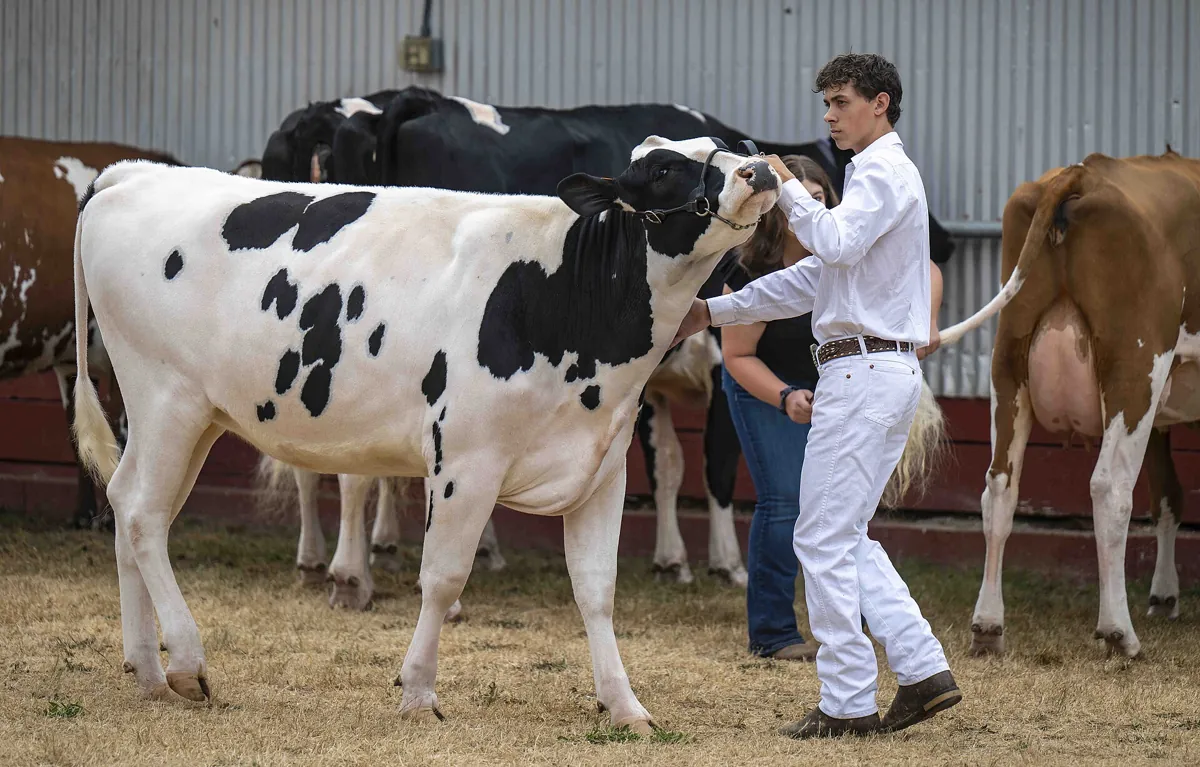
Wednesday belonged to the horse show, a full day in itself, before Thursday turned the week towards the market classes. The dairy goat show and the swine market show anchored Thursday, while the silent auction opened, a cornhole tournament ran and the stick horse race gave the youngest children their own arena moment. A teen leaders dance closed that evening. Friday continued with swine showmanship, the breeding gilt show and the beef show, and ended socially with the Griddle Cookout and an evening of music and dancing, the Plowed Under Band named in the 2026 book’s schedule for that edition.
Round Robin, Buyers and the Two O’Clock Sale
Saturday is the fair’s summit, and the 2026 schedule stacks it deliberately. The large animal Round Robin tests the best showmen across species, asking each qualifier to handle unfamiliar animals. A buyer’s lunch then thanks the businesses and families who support the sale, award recognitions follow, and at 2 p.m. the livestock sale opens as a live auction, the financial conclusion of project years across the county. The silent auction closes the same day, and with it the fair week. That Saturday card is carried here exactly as the 2026 fair book printed it, as one edition’s arrangement rather than a permanent fixture.
Planning a Trip to Columbus
Reaching the Civic Center Grounds
Columbus sits on the Yellowstone River in south-central Montana, and the fair’s poster places the week at the ACE Civic Center in town, with the fairgrounds complex adjoining it. No street address for the fairgrounds is published in the Extension sources behind this article, so visitors should navigate to the civic center itself. The town is compact and the venues central, so the week is walkable in a way that larger Montana fairs on sprawling grounds are not.
The Prices the Record Does Not Print
The fair’s book, poster and entry record publish no admission price at all. No gate figure, season pass or parking charge appears in any fair-side source behind this article, and that silence must not be converted into a claim that entry is free. This article leaves the question exactly where the fair’s own publications leave it. Visitors should expect to support the fair through its auctions and sales rather than through a ticket whose price can be quoted in advance.
Where to Stay and Where Not to Assume Camping
No fair-week camping offer appears in the fair’s record, and none is described here. Columbus does have camping at Itch-Kep-Pe Park, a city park facility on the Yellowstone River, but that is a municipal park that operates on its own terms through the year, and it must never be mistaken for fair camping arranged by the fair. Visitors should book the park or local lodging as ordinary travellers, on the operator’s own terms, and exhibitors’ families should confirm fair-week arrangements directly with the Extension office rather than assuming ground space exists.
One Saturday, Hour by Hour
A visitor with a single day should choose Saturday, arriving while the Round Robin is testing showmen and the week’s judging reaches its most demanding form. Late morning belongs to the exhibit displays and the silent auction’s full tables. The buyer’s lunch marks the turn of the day. At 2 p.m. the live auction begins, lot by lot, until the year’s work has passed under the hammer. Staying to the end brings the silent auction’s close and the satisfaction of watching a fair conclude its business.
How Columbus Stands Beside Montana’s Bigger Fairs
Montana’s largest county fairs sell a package of gate admission, carnival rides, grandstand concerts and rodeo nights. Columbus offers almost the opposite proposition. The Stillwater County fair publishes no gate ladder because its book is not built around selling entry, programmes no carnival in its own schedule and fills its arena with showmanship classes, a stick horse race and a sale rather than with touring acts. Judged as what it actually is, the annual public accounting of a county’s youth agriculture, it is unusually complete, extending even to a carcass programme that follows its animals into the packing plant. Louder weeks exist elsewhere in Montana’s July, but few show a community’s working life as directly.
Before You Go
- Choose Saturday if only one day is possible, because the Round Robin and the sale fall on the same card.
- Arrive before 2 p.m. on sale day, since the live auction is the week’s fixed point.
- Bring cash and a bidding appetite if you intend to support exhibitors through the sale or the silent auction.
- Do not assume a gate price in either direction, because the fair’s publications print none.
- Treat Itch-Kep-Pe Park as a city facility with its own booking, never as fair camping.
- Check the current year’s fair book before travelling, as each edition’s day-by-day schedule is its own.
- Leave time for the homemaker exhibits, which run all week and reward a slow look.
- Respect the early days as exhibitors’ working time, particularly Sunday set-up and Monday’s interviews.
Beyond the Fairgrounds
Columbus keeps a full calendar outside fair week, and its events belong to the town rather than to the fair. The Musician’s Rendezvous gathers on the second weekend of August, a separate occasion entirely, and neighbouring communities hold their own fixtures, including Absarokee Days, the Great Montana Sheep Drive at Reed Point on Labor Day weekend and the Montana BBQ Cook-Off, none of which forms any part of the fair’s programme. Itch-Kep-Pe Park gives the town its riverside green space and camping ground on the Yellowstone River. Inland, the Stillwater Mine near Nye, the only platinum-palladium mine in the United States, shapes the county’s economy and identity, but it is county colour rather than fair business.
What This Fair Carries for Its County
In a county where ranching and mining share the landscape, the fair is the one institution that puts the agricultural half of that life on public display every year. It converts private work, the early feedings and the late fittings, into a public standard that neighbours can inspect and buyers can reward. The sale then converts that standard into college funds, next year’s project money and a young person’s first experience of a market that pays for quality. The carcass programme adds a lesson no ribbon can teach, that the county’s cattle are ultimately judged as food. For families who exhibit, the week in Columbus is less a festival than a reckoning they choose to attend.
Frequently Asked Questions
Is this a youth fair or a general county fair?
It is both in one, because the Stillwater County 4-H & FFA Fair is the county’s fair in the record, with no separate commercial fair running beside it. Its core is youth exhibition through 4-H and FFA, and homemaker exhibits widen it to adult residents, and its programme is judging and sale, not midway entertainment.
Why does the fair carry three different names?
Each name belongs to a different publication of the same event. The fair book and poster use Stillwater County 4-H & FFA Fair, the entry system lists Stillwater County Fair, and statewide listings carry Stillwater County 4-H Fair. This article records the three forms as they stand instead of fusing them.
Can a gate price be quoted before the fair?
The fair’s own publications do not print an admission, pass or parking price, so no figure can be quoted honestly. That silence is not evidence of free entry, and visitors should plan around the fair’s auctions and concessions rather than around an unpublished ticket price.
What happens at the carcass viewing?
Exhibitors in the carcass programme see their animals assessed after slaughter, at Stillwater Pack, following a delivery day at the Midland Bull Test that ran before fair week in the documented 2026 timetable. The viewing completes a judging chain that begins with the live animal and ends with the quality of the meat it produced.
What to Expect From the Next Stillwater County Montana Fair Festival
How often is the Stillwater County Montana Fair Festival held?
The fair is held once a year, in mid-July, as the culmination of the county’s 4-H and FFA project year. It is timed to the point in the summer when market animals are finished and project work is ready to be judged and sold.
When is the next Stillwater County Montana Fair Festival?
The next edition is expected in mid-July of the coming year, following the established pattern of a week running from Sunday set-up to the Saturday sale. Its exact days will be set by that year’s fair book from the Extension office, and readers should confirm them there rather than carrying one edition’s dates forward.
Will the dates change?
The fair’s season is stable in mid-July, but the particular Sunday on which a given edition opens can shift with the calendar, and each year’s book sets the arrangement inside the week. The 2026 edition ran from July 12 to July 18, and that span is that edition’s record, not a fixture for future years.
A Week That Ends With a Sale
Leave Columbus on Saturday evening and the town has a settled feeling, of barns emptied, exhibits collected and cheques that will become next year’s project books. The Stillwater County fair does not try to be the loudest week in Montana. It tries to be the truest account its county gives of itself, judged in public, sold in public and finished on time at two o’clock.