Musselshell County Montana Fair Festival
Roundup is unusual among the fair towns in this series because the county seat and the fairground town are the same place, yet the fair held there still does not belong to one county alone. The Musselshell County Montana Fair Festival is the joint Musselshell-Golden Valley County Fair, staged at the Musselshell County Fairgrounds in Roundup under the Musselshell County Fair Board. Musselshell County is the host: its ground receives the exhibits, its board carries the notices, and its town absorbs the traffic. Golden Valley County, the smaller partner to the west, sends its young exhibitors and its families here by right, not by invitation. Holding those two truths together is the point of this article, which looks at the shared fair from the side that provides the land, the barns and the organisation.

The Host County’s Share of a Two-County Fair
Hosting sounds simple until the work is listed. A host county maintains a fairground through winters that crack pipes and summers that bake dirt, keeps a board willing to meet in the quiet months, and answers complaints when parking, dust or scheduling goes wrong. Musselshell County does all of that for a fair whose entry listing joins its name to a neighbour’s. The joint Musselshell-Golden Valley MSU Extension office, based at Roundup, serves 4-H members in both counties, so the host town is also where entry questions from the partner county land. Roundup therefore performs a double role during fair season: home town for its own exhibitors, and working capital for a two-county institution.
Quick Facts
| Item | Detail |
| Fair of record | The Musselshell-Golden Valley County Fair, the joint fair of Musselshell and Golden Valley counties |
| Host county | Musselshell County, which provides the grounds, the fair board and the fair town |
| Fair town | Roundup, which is also the Musselshell County seat |
| Venue | Musselshell County Fairgrounds, Roundup; place records list the address as 35 4-H Road |
| Season | Late July into the opening days of August |
| Documented 2026 record | FairEntry carries the joint fair across July 25 to August 1, 2026, as an entry window rather than a run of public days |
| Organiser | The Musselshell County Fair Board, working alongside a Fairgrounds Coordinator at the Roundup grounds |
| Exhibitor service | The joint Musselshell-Golden Valley MSU Extension office at Roundup serves members from both counties |
| Admission and parking | No gate, pass or parking price appears in the published record |
| Camping | No fair camping offer, rule or rate is published in the record |
A Grounds That Had to Be Rebuilt as an Organisation
No founding year for this fair is published in the material behind this article, and no edition number is claimed here. The history the record does support is recent and organisational. Programme accounts describe a Musselshell County Fair Board that was re-activated after a dormant or weakened period, and a Fairgrounds Coordinator post created as the grounds’ management was rebuilt. That pairing now oversees a remit wider than one week in summer: the county fair itself, 4-H activities across the year, rodeos held at the grounds and rentals to outside users. For readers, the useful conclusion is modest but real. The present fair rests on a revived structure, not on an unbroken paper trail this article can quote, and its continuity should be judged by the board, the coordinator and the joint Extension office that currently keep it moving.
What to Expect
Two Counties’ Exhibits Under One Roofline
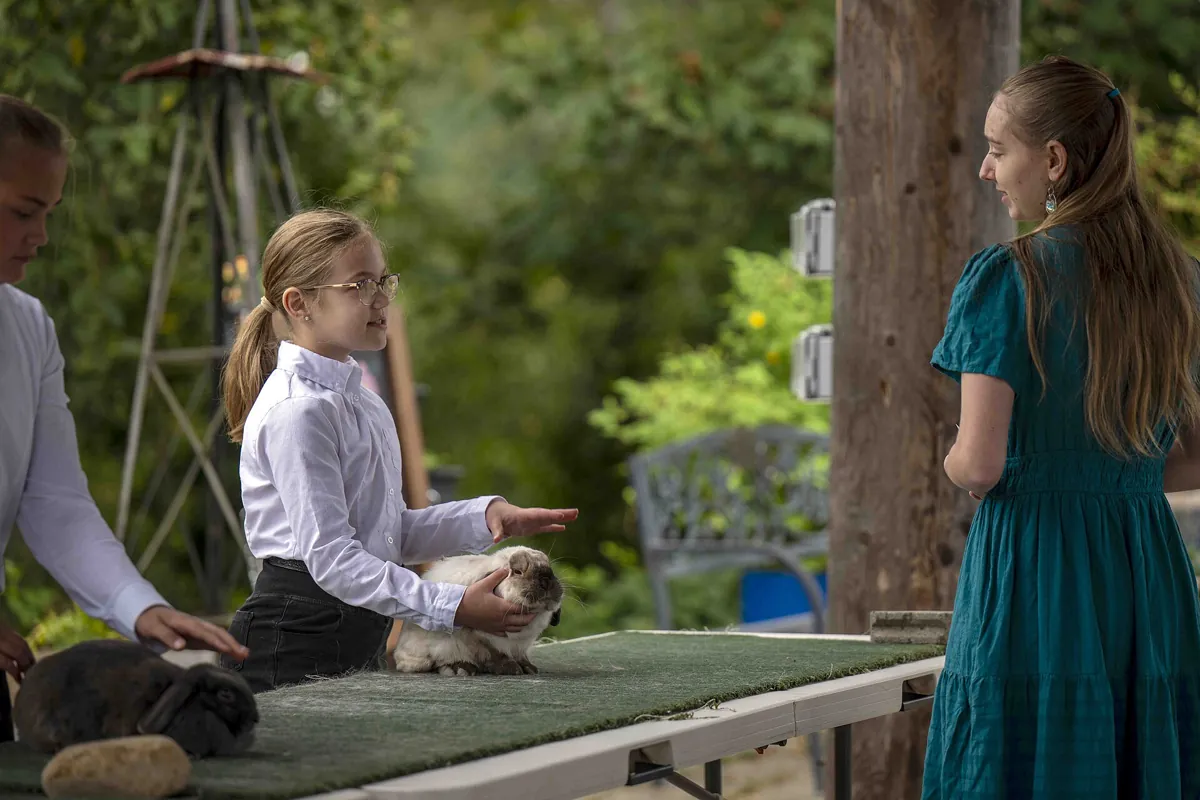
Exhibiting is the fair’s documented centre. Young people from Musselshell and Golden Valley counties prepare projects through the same Extension system, complete Animal Quality Assurance training where their livestock work requires it, and bring animals and indoor exhibits to Roundup for judging. Open entries widen the circle beyond enrolled youth, although the public material available for this fair does not publish a full class list or premium book that could be summarised responsibly. Expect barns and exhibit space organised around county-fair judging rather than around a midway spectacle.
The Working Week Behind the Public Days
Much of what makes a county fair function happens before a casual visitor arrives. Entries must be received, stalls and pens assigned, judges briefed, ribbons and records prepared, and health or quality requirements checked. At Roundup that backstage labour falls mainly on host-county shoulders, assisted by the joint Extension staff who know exhibitors from both sides of the county line. Visitors who arrive only for the busiest public hours see the finished surface of a week whose heaviest work is administrative and agricultural.
For a useful comparison, see the Missoula County Montana River City Roots Festival for another county festival.
A Fair Without a Published Spectacle Bill
Anyone searching for a concert lineup, a named carnival company or a headline rodeo card for this joint fair will not find one in the fair-side record used here. Rodeos belong to the Roundup grounds’ broader year under the coordinator’s remit, yet no rodeo is published here as part of the fair’s own programme, and none is presented as such. The honest expectation is a 4-H and open fair shaped by exhibits, livestock and community judging, with any additional attractions to be confirmed from the board’s current notices nearer the season.
Roundup in Fair Week
Because the fairground sits in the county seat, fair week folds directly into ordinary town life. Families combine exhibit trips with fuel, groceries and meals in Roundup, and partner-county visitors learn the same streets as local exhibitors. That closeness is a host town’s advantage: help, supplies and the Extension office are all near the grounds, rather than scattered across a large city.
Planning Your Visit
Confirming the Public Days
The single most important planning step is to separate the entry window from the public fair. FairEntry’s July 25 to August 1 span for 2026 describes the period through which the two counties’ entry and exhibit machinery runs. It should never be read as eight consecutive public days. The previous season’s state fair-date table placed Roundup across July 26 to August 2 in 2025, which confirms the turn-of-August season while also showing that exact spans shift. Ask the fair board’s channels or the joint Extension office which days are public before booking time away from work.
Finding the Grounds
Place records list the Musselshell County Fairgrounds at 35 4-H Road, Roundup, Montana 59072. Treat that as the grounds’ listed address rather than as a promise about gates, parking layout or camping, none of which the published record describes. Roundup is the Musselshell River valley’s principal town in the county, and the fairground functions there as a year-round county facility, not as a temporary field opened for one week.
Budgeting Without a Published Gate
No admission charge, season pass, parking fee or camping rate for the joint fair appears in the material behind this article. Silence about money must not be converted into a claim that entry costs nothing. Bring cash for the ordinary expenses of a fair day, expect that any separately ticketed activity would be announced locally, and check current notices if an exact gate figure matters to a large group.
For Exhibiting Families
Exhibitors should work backward from entry deadlines rather than forward from the fair’s public days. Confirm class requirements, Animal Quality Assurance status, check-in times and release arrangements through the joint Extension office at Roundup, which serves Musselshell and Golden Valley members alike. Host-county families carry the shortest journey, yet they share the same paperwork discipline as partner-county families, and the fair runs more smoothly when local exhibitors treat deadlines as firmly as visitors do.
A Suggested Day at the Roundup Grounds
With no published daily timetable to reproduce, a sensible fair day at Roundup is organised around exhibits instead of stage times. Arrive early enough to walk the barns before judging crowds gather, when animals are settled and young exhibitors can explain their projects without shouting. Move to the indoor exhibits late in the morning and read the cards carefully, because the joint fair’s story is written in whose work came from which side of the county line. Break for lunch in town, then return for the afternoon judging or sale-related activity the current season’s notices confirm. Late in the day, make one final circuit of the grounds, note release or pickup instructions if your party is exhibiting, and leave before the last rush if animals or fragile entries travel home with you.
Setting This Fair Beside Others
A useful comparison begins inside Montana’s shared-fair family. Some joint fairs sit in a town outside the county whose article is being written, forcing that county’s readers to travel. Musselshell’s readers face the opposite situation: the shared fair is on their own ground, and the travel burden belongs to the partner. A second comparison is with single-county fairs that publish thick premium books and detailed gate ladders. Roundup’s joint fair publishes neither in the record available here, so it asks more local confirmation and rewards readers who value accuracy over decoration. Finally, Roundup’s celebrated Independence Day extravaganza, with its concerts and fireworks earlier in July, is a separate city occasion. Its scale should not be borrowed to inflate the county fair that follows weeks later.
Before You Go: A Host-County Checklist
- Check the board’s latest notices to learn which days inside the entry window are public fair days
- Use the joint Extension office at Roundup for entry deadlines, class questions and Animal Quality Assurance requirements
- Navigate to the fairgrounds by the listed 35 4-H Road address, then follow local signing for parking on the day
- Carry cash and avoid assuming a gate price, because no admission or parking figure is published in advance
- Keep the July 4 extravaganza and the county fair in separate places on your calendar
- If you are exhibiting, confirm check-in, judging and release times in writing before animals leave home
- Recheck details in the final week, since this fair’s public paper trail is brief and can change quietly
Beyond the Fairgrounds
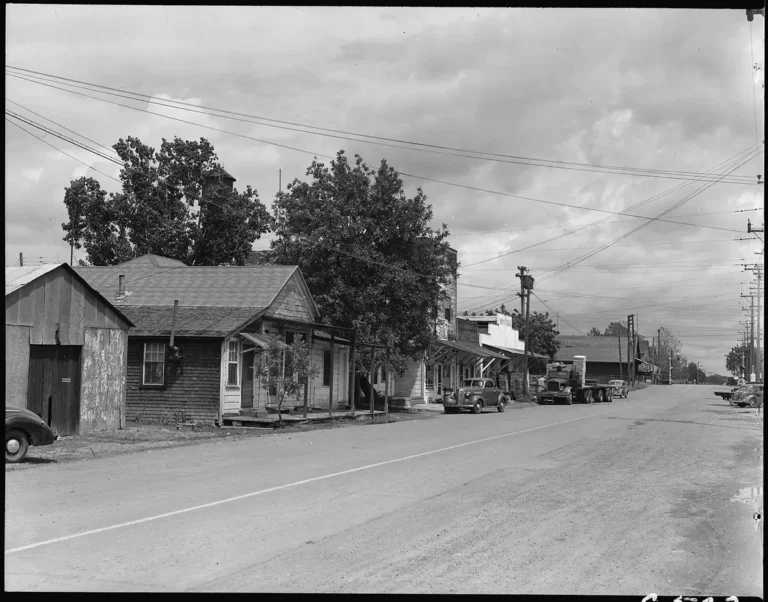
Roundup’s life outside fair week explains why the grounds matter to the host county all year. The coordinator’s remit reaches rodeos, 4-H activity and rentals, so the fairground operates as a piece of civic infrastructure rather than as a monument unlocked each summer. The Musselshell River runs through the town’s story and landscape, and the valley’s ranching country supplies both the fair’s exhibitors and much of its audience. Other valley settlements, including Melstone and the village of Musselshell, hold their own place in the county’s geography, but their events are not this fair and should not be folded into its programme. A visitor with spare time is best served by treating Roundup as a working ranch town first and a fair address second.
Notes for First-Time Visitors From Outside the Valley
Travellers arriving from Billings or from the central Montana towns to the west will notice how quickly Roundup’s fair week depends on local knowledge rather than on printed programmes. Ask where a class is judged, which entrance a trailer should use, or when a barn closes, and the answer usually comes from a volunteer, an Extension worker or a neighbouring exhibitor instead of from a posted schedule. That informality suits a fair of this size, provided visitors respect it: park where directed, keep lanes clear for animals and equipment, photograph young exhibitors politely, and leave gates exactly as you found them. A host community notices courtesy, and this fair’s welcome rests on habits built across many seasons together.
Why Hosting Matters to Musselshell County
A shared fair can look, from a distance, like a compromise. From the host county’s side it reads differently: as responsibility accepted. Musselshell County supplies the ground on which two counties’ young people are judged, keeps a board active when apathy would be easier, and funds the coordinator role that holds fair week, youth activity and outside rentals in one calendar. Golden Valley’s name on the fair is not a dilution of Musselshell’s claim but evidence of the host’s capacity. The fair’s significance lies in that steady provision — a small county maintaining, in its own seat, the one institution where its neighbour’s children exhibit beside its own.
Frequently Asked Questions
Is the Roundup fair Musselshell County’s alone?
No. The fair is the Musselshell-Golden Valley County Fair, a joint fair of the two counties. Musselshell County hosts it at Roundup and provides the board and grounds, while Golden Valley exhibitors take part by right.
Where in Roundup does the joint fair sit?
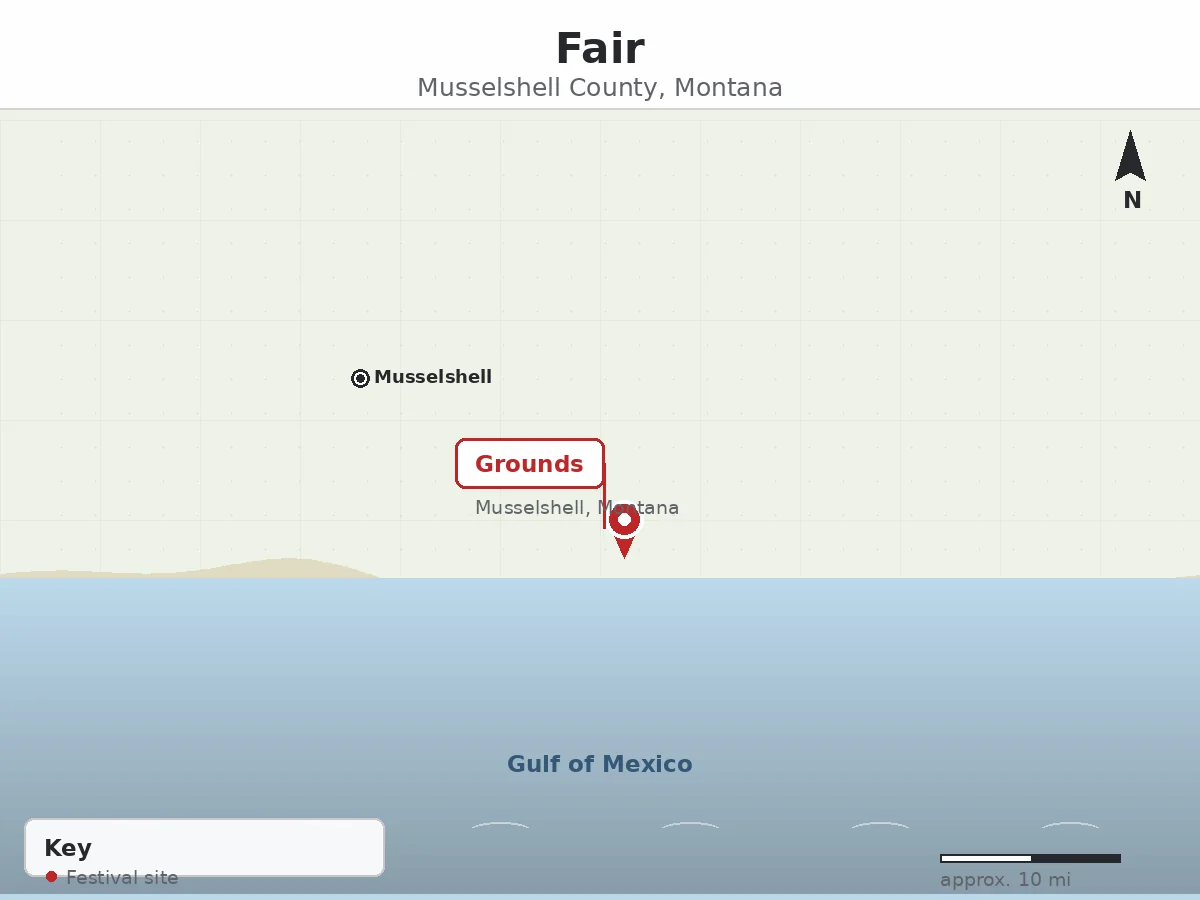
It is held at the Musselshell County Fairgrounds in Roundup, the Musselshell County seat. Place records list the grounds at 35 4-H Road, Roundup, Montana 59072.
How much will visitors pay at the gate?
No gate, pass or parking price is published in the record behind this article, so no figure can be quoted honestly. Unpublished pricing is not the same as free admission, and visitors should confirm locally and carry cash.
Who should exhibitors contact before the fair?
Exhibitors from either county should use the joint Musselshell-Golden Valley MSU Extension office at Roundup for entry, class and Animal Quality Assurance questions. The Musselshell County Fair Board’s public notices carry the host side’s current announcements.
What to Expect From the Next Musselshell County Montana Fair Festival
How often is the Musselshell County Montana Fair Festival held?
The joint fair is an annual event, held once each summer at the Roundup grounds for exhibitors and visitors from both Musselshell and Golden Valley counties.
When is the next Musselshell County Montana Fair Festival?
The next edition belongs to the same turn-of-August season, in late July and the opening days of August. Because the published entry window is firmer than the public-day schedule, confirm the exact public dates through the board or the joint Extension office.
Will the dates change?
The season is stable, yet the precise span has moved by a few days between documented years, so last year’s dates are a guide rather than a guarantee. Treat the current season’s listing and local notices as the authority for planning.
Musselshell County’s fair ends, for the host, with work the partner county never sees: gates closed, barns emptied, rental bookings restored and a board already counting what the next season needs. That unglamorous finish is the clearest measure of what hosting means. Roundup does not merely attend a joint fair. It keeps the ground, carries the organisation and opens both to a neighbour every summer, and the fair’s two names remain accurate because the host county keeps doing its half of the bargain.