Meagher County Montana Fair Festival
The fair Meagher County actually holds is a youth fair, and the sooner a visitor understands that, the better the visit goes. The Meagher County 4-H Fair in White Sulphur Springs is not a midway fair with a carnival bolted onto a livestock show; it is the county’s 4-H programme gathered in one place at the end of July, showing horses on one set day and selling a barnful of market animals on another. Everything about it is small, local and deliberate: a few dozen young exhibitors carry the whole event, the audience is mostly families, neighbours and buyers, and the town’s rodeo grounds double as the fairgrounds, because in a county of fewer than fifteen hundred people one set of grounds serves every summer purpose.
What the record supports is a genuine, living fair with a clear shape: a horse show, an indoor fair of static exhibits judged by interview, a livestock show, a small animal show and a live auction that turns a year of feeding and fitting into a cheque a young person can hold. For the families involved, that Thursday auction is as serious an occasion as any championship anywhere. For a visitor, the fair offers something rarer than scale — a ranching county’s young people presenting their year’s work in public, in a town better known for its hot springs than for its fair.
About the Meagher County 4-H Fair
The published name of the event is the Meagher County 4-H Fair, and the name deserves respect rather than translation. It runs through the county’s Extension programme and its 4-H organisation, so the exhibitors are enrolled members showing projects they have raised, built, sewn, baked or studied through the year under volunteer guidance. The fair is their examination hall and marketplace at once. Static projects face interview judging, in which a member sits with a judge and explains what was made and what was learned — a discipline that rewards understanding as much as finish.
The scale figures published for the 2026 season tell the county’s story in miniature: forty-three active members and fourteen volunteers, with thirteen beef projects prepared for that year’s fair. Beef is the spine of the programme, as it is of Meagher County ranching, but the outdoor fair’s market projects have also included pigs, lambs, chickens and rabbits alongside the steers. Two clubs named in the county’s reporting, the Mavericks and the Castle Mountaineers, hint at the geography — members are spread across a large, thinly peopled county, and fair days are when that scattered programme becomes visible in one place.
The fair sits at the Rodeo Grounds in White Sulphur Springs, the county seat, where the 4-H programme has been fundraising to replace the beef barn with a new multipurpose barn — infrastructure the community maintains for its children, one fundraiser at a time.
For a useful comparison, see the McCone County Montana Fair Festival for another county festival.
Quick Facts
| Item | Detail |
| Published name | Meagher County 4-H Fair |
| Fair town | White Sulphur Springs, the county seat |
| Grounds | The town’s Rodeo Grounds |
| Season | Late July, on set days rather than a full fair week |
| Documented 2026 days | Horse show on Tuesday, July 28; indoor fair, livestock show, small animal show and auction on Thursday, July 30 |
| Run by | The county Extension and 4-H programme |
| Published 2026 scale | 43 active members and 14 volunteers, with 13 beef projects |
| Admission | No gate, pass or parking price is published |
| Camping | No fair camping offer is published |
| September rodeo | The town’s Labor Day weekend rodeo is a separate event, not part of this fair |
A Fair Shaped by a Small County
No founding year or edition number for this fair appears in the fair-side record, and this article will not manufacture one. Big fairs publish anniversaries because their histories are marketing assets; a youth programme’s fair grows instead out of the 4-H year itself, restarting every autumn with enrolment and ending every summer at the show ring. Its continuity lives in its volunteers and families — in generations of ranch households who learned to fit a steer in the pens their children use now.
What can be said historically is structural rather than numerical. Meagher County is ranch country, organised around cattle, hay meadows and the long work of the Smith River valley, and its 4-H programme mirrors that economy: beef projects lead, horses matter, and the market auction exists because local buyers believe a young person’s finished animal is worth paying for. The campaign for a new multipurpose barn belongs to the same pattern — a programme outgrowing an ageing beef barn and asking its community to fix the problem.
The fair also sits inside a town with a longer public calendar. White Sulphur Springs hosts a well-known rodeo over the Labor Day weekend each September — a separate event with its own organisation and tickets, held weeks after the fair, which lends the grounds their name and much of their iron. The 4-H fair borrows those grounds in July for quieter purposes, and confusing the two events is the easiest mistake an outsider can make here.
What to Expect
The Horse Show Day
The fair opens with its horse show, on the first of its set days — Tuesday, July 28 in the documented 2026 edition. Horse projects suit this county, where many members ride as part of ordinary ranch life, and the show gives that everyday competence a judged setting: classes run at a working pace, families line the rails, and the exhibitors mostly know one another by first name. Because the horse show stands two days apart from the main fair day, visitors wanting the full fair must plan for both appearances.
The Indoor Fair and Interview Judging
Thursday’s programme begins indoors with the static exhibits — the projects that do not breathe. Interview judging is the distinctive ritual here: each member presents the work and answers a judge’s questions, so the ribbon reflects the conversation as well as the object. For a visitor, this is the clearest window into what 4-H actually teaches. The exhibits are modest in number by big-county standards, but every one has a named young author behind it, and the standard of explanation is often more impressive than the standard of polish.
Livestock and Small Animals
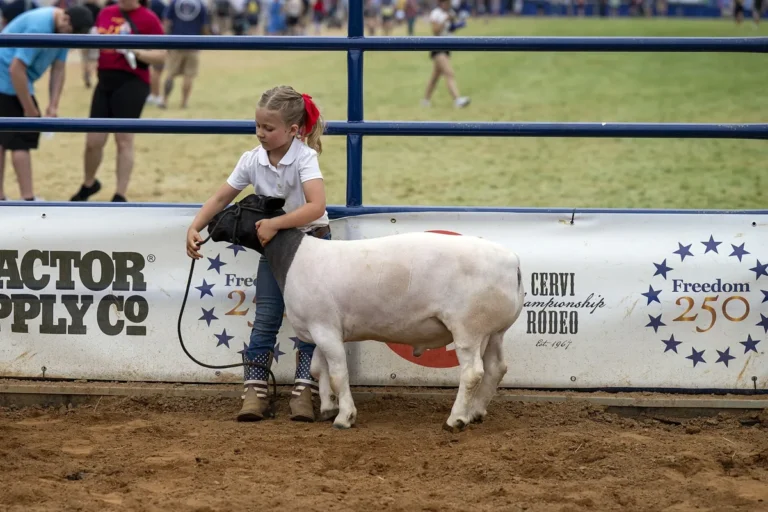
The outdoor show on the same Thursday covers the market and breeding projects: steers at the centre, pigs and lambs in their classes, and a small animal show that brings chickens and rabbits into the day. Thirteen beef projects in a documented recent year gives the flavour — a show a visitor can take in class by class, rather than a blur of hundreds of head. Judging reasons are given aloud, placings are argued about politely by grandparents, and the evening’s sale animals acquire their order.
The Live Auction
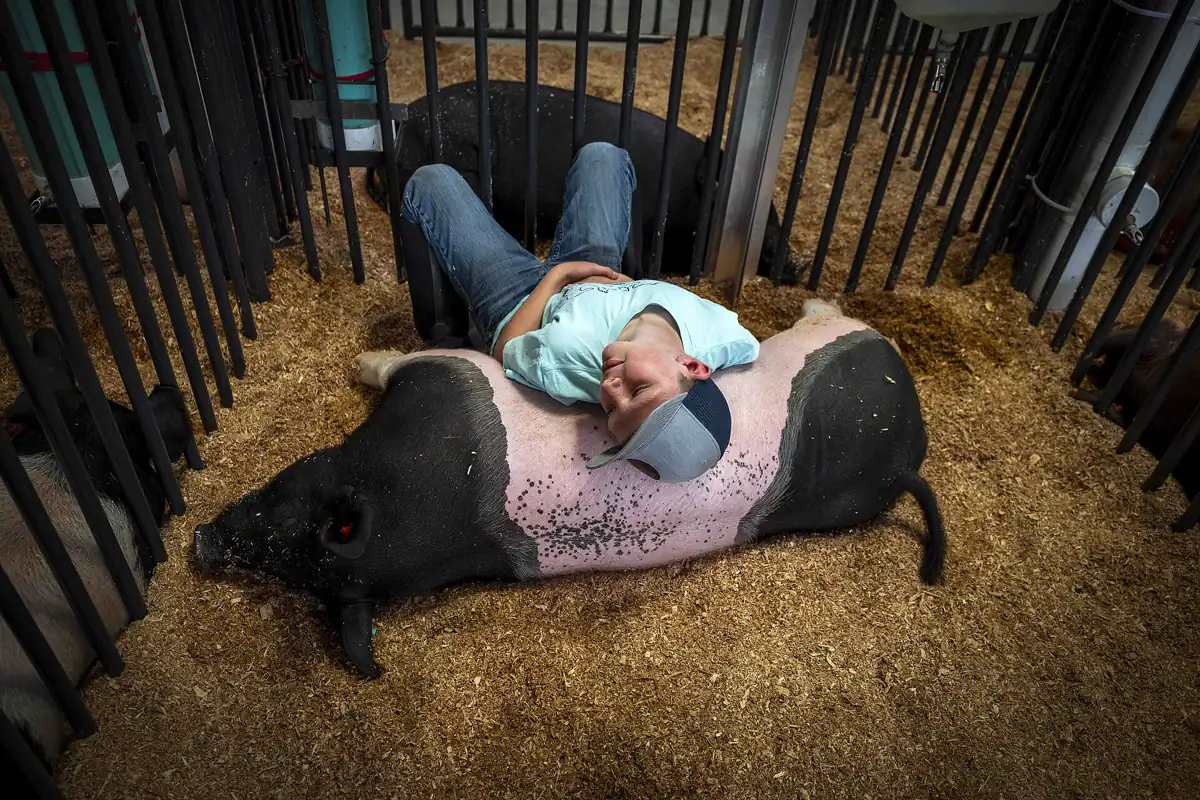
The fair closes with its live auction of market projects, the emotional and economic peak of the week. In one documented programme year the sale totalled over one hundred and three thousand dollars and was billed the largest in the county’s 4-H history — a figure belonging to that year alone, quoted only to show what a good night can mean here. Buyers are local businesses, ranches and families; bidding is a public act of support as much as a purchase. Watching a young exhibitor lead a steer into the ring while the auctioneer works the crowd is the best reason to time a trip around this fair.
Planning Your Visit
Timing a Two-Day Fair
The essential planning fact is that this fair happens on set days, not across a continuous week. In the documented 2026 edition the entry record spans July 28 to 30, with the horse show on the Tuesday and everything else gathered onto the Thursday. A traveller who arrives on the Wednesday will find a quiet fairground. Check the current year’s set days before travelling, because a small programme can shift its days more easily than a big fair can, and build the trip around the Thursday if only one day is possible.
Grounds, Admission and the Unknowns
The fair is held at the Rodeo Grounds in White Sulphur Springs. No street address is published by the fair itself, and no admission, pass or parking price appears anywhere in its record — those are stated here as unpublished rather than guessed, and the fair should not be described as free on the strength of silence. No camping offer is published either; as a hot springs town, White Sulphur Springs has its own accommodation, and visitors should arrange lodging in town rather than assuming a fair campground exists.
Fitting the Fair Into a Town Trip
White Sulphur Springs rewards a layered visit: the hot springs pair easily with a fair day, the Castle Mountains rise close at hand for a morning drive, and the Smith River country to the west is storied ranch landscape. The fair asks only a day or two; the town and valley fill the rest. Just keep the seasons straight — the September rodeo is a different occasion, worth its own trip.
A Fair Thursday, Hour by Hour
Arrive in the morning and start indoors, while the interview judging is under way — the quietest, most revealing hour of the fair. Late morning belongs to the livestock show: take a seat where the judge’s reasons carry, and follow the beef classes through. Break for lunch in town, and be back for the small animal show in the afternoon, when the youngest exhibitors get their turn. Stay through the evening for the live auction, the fair’s true finale; bring a layer for the cool off the Castles after dark, and expect to leave understanding why this county fundraises for a barn.
How This Fair Compares
Against Montana’s large county fairs — multi-day events with carnivals, grandstand concerts and published gate ladders — this fair is a different species. It has no midway to review and no headline act to rate. What it offers instead is completeness: a visitor can see every exhibit, watch every class and stay for the entire auction in a single day. Against other small youth fairs, its marks are the horse show standing on its own day and the weight of its beef programme — thirteen beef projects from forty-three members is a ratio most counties cannot match. Against the town’s September rodeo, the fair is the quieter, younger occasion: professional sport on one side, a community examining its children on the other.
Fair-Day Checklist
- Confirm the current year’s set days before travelling, since the fair runs on named days
- Plan for two appearances if possible: the horse show day and the main Thursday
- Bring cash for the auction if you intend to bid
- Pack a warm layer for the evening sale, when mountain air cools the grounds
- Carry water and sun protection; shade is limited
- Leave time for the hot springs, the town’s namesake pleasure
- Treat any September rodeo information as a separate event entirely
- Ask before photographing young exhibitors, as at any youth event
Beyond the Fairgrounds
White Sulphur Springs is a destination in its own right. The hot springs pools are the town’s oldest attraction and the natural end to a dusty fair day. The Castle Mountains, rising east of town, offer trailheads and scenic driving in country that still looks like the ranch frontier it remains. The Smith River, west of town, is one of Montana’s celebrated float and fishing rivers, though its permits are a separate matter to arrange well ahead. A well-known music festival on a private ranch shares the valley’s summer season, but it too is a separate event, no part of the fair.
Why This Small Fair Matters
A fair with forty-three exhibitors will never anchor a tourism campaign, and that is precisely why it deserves an accurate article. It is where a ranching county’s values get rehearsed in public: finish what you start, explain your work to a judge, accept the placing, sell the animal, shake the buyer’s hand. The auction returns real money to young people who earned it across a year of early mornings, and the barn fundraising shows the community investing in the next round of the same lesson. In a state whose biggest fairs draw tens of thousands, this little fair keeps the original meaning of a county fair in its purest surviving form.
Frequently Asked Questions
Is this a regular county fair with a carnival?
No, and it is better to know that before you come. The verifiable fair here is the 4-H fair: a horse show, an indoor fair of judged exhibits, livestock and small animal shows, and a market auction. No carnival, midway or concert programme appears in its record, and none should be expected.
What are this fair’s set days?
In late July, on set days rather than across a whole week. In the documented 2026 edition the horse show fell on Tuesday, July 28 and the indoor fair, livestock show, small animal show and auction all fell on Thursday, July 30. Confirm the current year’s days before travelling.
What does admission cost?
No admission, pass or parking price is published for this fair, so none is quoted here — and the absence of a published price should not be read as proof the fair is free. Prices attached to the town’s September rodeo belong to that separate event entirely.
Who runs the fair?
The county’s Extension and 4-H programme runs it, with enrolled members exhibiting and volunteers carrying the work — forty-three members and fourteen volunteers in the published 2026 figures. The record names no standalone fair board behind it.
What to Expect From the Next Meagher County Montana Fair Festival
How often is the Meagher County Montana Fair Festival held?
The 4-H fair is an annual event, closing out the 4-H year each summer as members bring projects to judging and sale. Its rhythm follows the programme year rather than a fair-week calendar, which is why it gathers onto set days.
When is the next Meagher County Montana Fair Festival?
Expect a late-July placing, with a horse show day and a main fair day in the same week, following recent documented editions. The exact days are set each year, so confirm them through the county’s published notices before planning travel.
Will the dates change?
Small programmes adjust their days more readily than large fairs do, and this fair’s record shows different shapes in different years — a mid-July placing in one season’s table, set days at the month’s end in the next edition. Treat any specific day as that year’s arrangement.
Closing
This fair asks little of a visitor — a day or two in late July, a seat at the auction, a willingness to take small things seriously — and returns more than fairs ten times its size often manage. In White Sulphur Springs, forty-some young exhibitors present a year’s work to their neighbours and sell it under the hammer while the light lasts. Come for the hot springs if you like, and stay for the fair; just come on the right days, and leave the September rodeo for September.