Lewis and Clark County Montana Fair Festival
Most county fairs introduce themselves by their county’s name, but Helena’s fair answers to a rodeo’s. The Last Chance Stampede & Fair is the county fair of Lewis and Clark County, Montana, staged each year at the Lewis and Clark County Fairgrounds in Helena, the county seat. The documented 2026 edition, billed as its 66th Annual, ran five days in the last week of July on a pattern unlike any gate-charging fair: the grounds cost nothing to enter, while the arena nights and the carnival carried the week’s prices. Beneath the ticketed headline events ran a full county fair — 4-H and open class exhibits, free entertainment, vendors and food stands — on fairgrounds that once hosted the Montana State Fair itself.
A County Fair That Answers to a Rodeo’s Name
The event’s full published name is the Last Chance Stampede and Fair, and both halves earn their place. The Stampede half is a three-night professional rodeo that closes the week; the Fair half is everything else — the exhibit halls, the livestock and indoor entries, the carnival, the parade and the free grounds acts. The fair is presented at the Lewis and Clark County Fairgrounds, a county facility run with a Fair Board and fairgrounds staff, and the county’s Extension 4-H programme runs the 4-H fair inside the larger event. There is no separate private fair association behind it.
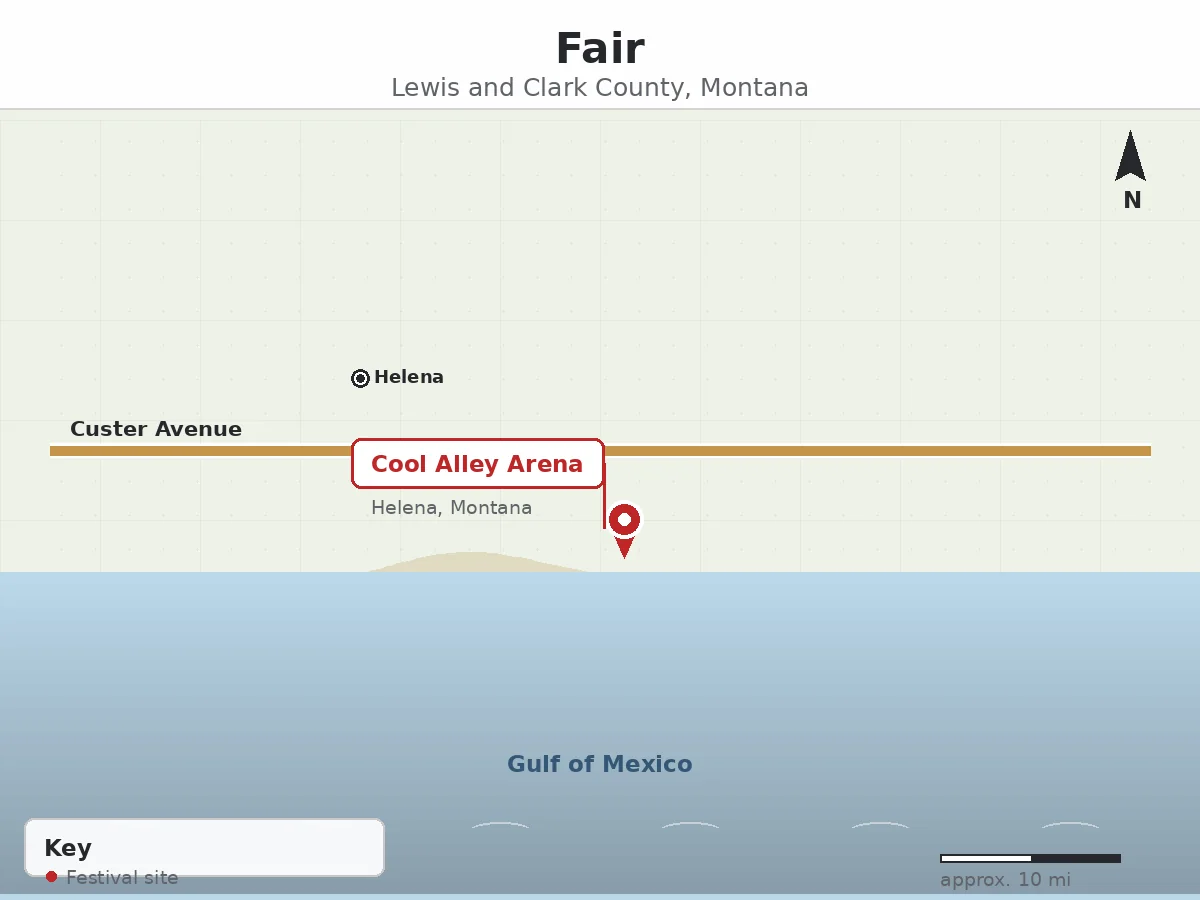
The grounds sit at 98 West Custer Avenue, entered at Custer Avenue and Henderson Street. Their fabric gives the week its shape: the Cool Alley Arena and its grandstands hold the rodeo and, in 2026, the concerts as well; the Exhibit Hall offers some 36,000 square feet of indoor room; and the Multi-Purpose Building, picnic shelters, a pond and horse stalls spread across a registered historic site.
Quick Facts
| Detail | What the record shows |
| Event name | Last Chance Stampede and Fair |
| Fairgrounds | Lewis and Clark County Fairgrounds, 98 West Custer Avenue, Helena |
| Documented 2026 edition | Tuesday July 21 to Saturday July 25, billed as the 66th Annual |
| Published fair hours | Tuesday 4 p.m. to 10 p.m.; Wednesday to Friday 11 a.m. to 10 p.m. |
| Gate admission | Free — admittance and parking carried no charge under the fair’s published 2026 terms |
| Rodeo | Three PRCA performances, Thursday to Saturday at 7:30 p.m., ticketed by tier |
| Concerts | Two nights, Tuesday and Wednesday, in the Cool Alley Arena, ticketed by tier |
| Carnival | Dreamland Carnival, all-day pass sold in advance and at the kiosk |
| Organiser | The county fairgrounds, run with a Fair Board and fairgrounds staff; the 4-H fair inside it runs through the county Extension 4-H programme |
| Camping | A campground exists on the grounds; no fair-week rate is published |
Grounds Older Than the State Fair Itself
The fairgrounds carry a deeper past than the fair that now fills them. Venue records trace the grounds to 1869, and for six decades they served as the Montana State Fairgrounds, hosting the state fair until 1929. The Depression years left the site quiet, and from 1958 local citizens revived the grounds into the county facility Helena uses today. That history belongs to the venue rather than to the present fair: the grounds’ 1869 roots say nothing about when the Last Chance Stampede and Fair itself began.
The fair’s own billing is the only edition claim it makes. The 2026 event was billed as the 66th Annual, and that is how the number should be read — as the fair’s own description of that edition, not as a licence to count backwards to a founding year the record never prints. What the record does show is a fair still changing shape: for 2026 it added a day, opening on Tuesday instead of Wednesday, and moved its concert nights indoors into the arena, giving the week a five-day build it had not had before.
For a useful comparison, see the Lake County Montana Fair Festival for another county festival.
What to Expect
Three Nights of PRCA Rodeo
Three PRCA rodeo performances run Thursday, Friday and Saturday nights at 7:30 p.m. in the Cool Alley Arena, and they are the week’s premium ticket. The 2026 record names the voices and faces around the action — an announcer, a hometown trick rider and a rodeo clown billed for that edition — along with mutton bustin’ for the youngest would-be riders. Those names belong to the edition that published them; what carries from year to year is the structure: three professional performances, one each night, closing the fair.
Two Concert Nights in the Arena
In 2026 the fair front-loaded its week with music. The two concert nights fell on Tuesday and Wednesday — the evenings before the rodeo began — and both moved into the Cool Alley Arena, with gates at 6:30 p.m. and shows at 7:30 p.m. The artists named for that edition were Daughtry on the Tuesday and Travis Tritt on the Wednesday, and both names are fenced to 2026: one summer’s booking, not a standing promise. The effect on the week is structural: concerts on the first two nights, professional rodeo on the last three, and the free fair running underneath all five days.
The Carnival and the Food Rows
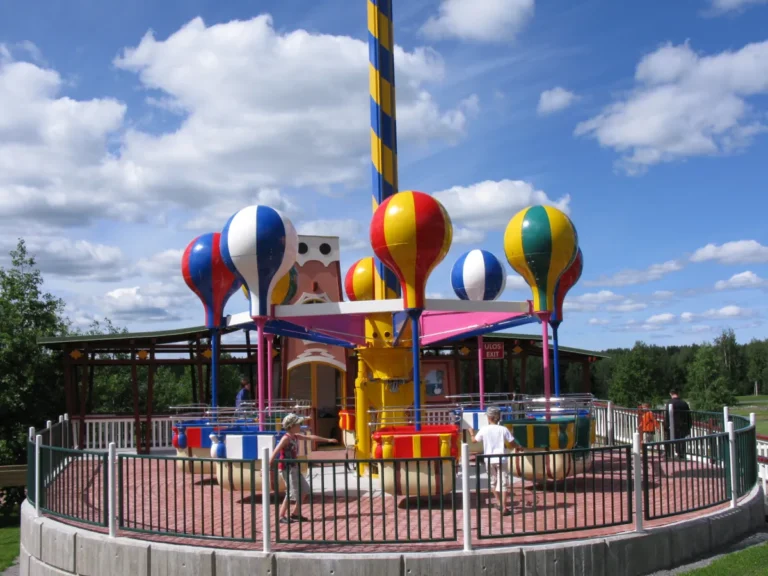
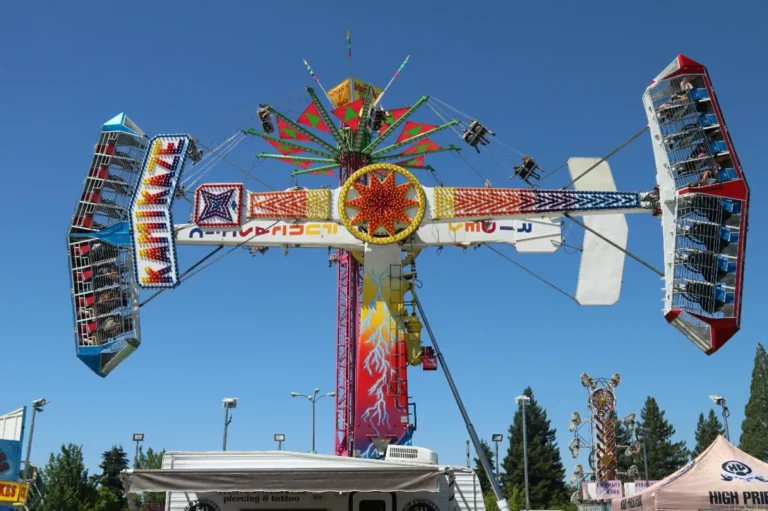
The Dreamland Carnival supplies the midway, sold on an all-day pass rather than ride-by-ride tickets. Around it, the fair’s listings describe vendors, commercial exhibits and a row of food concessionaires running to more than twenty-one stands and sellers. None of this needs a gate ticket: the carnival pass is its own purchase, and the vendor rows are part of the free grounds.
Exhibits, 4-H and the Free Stage Acts
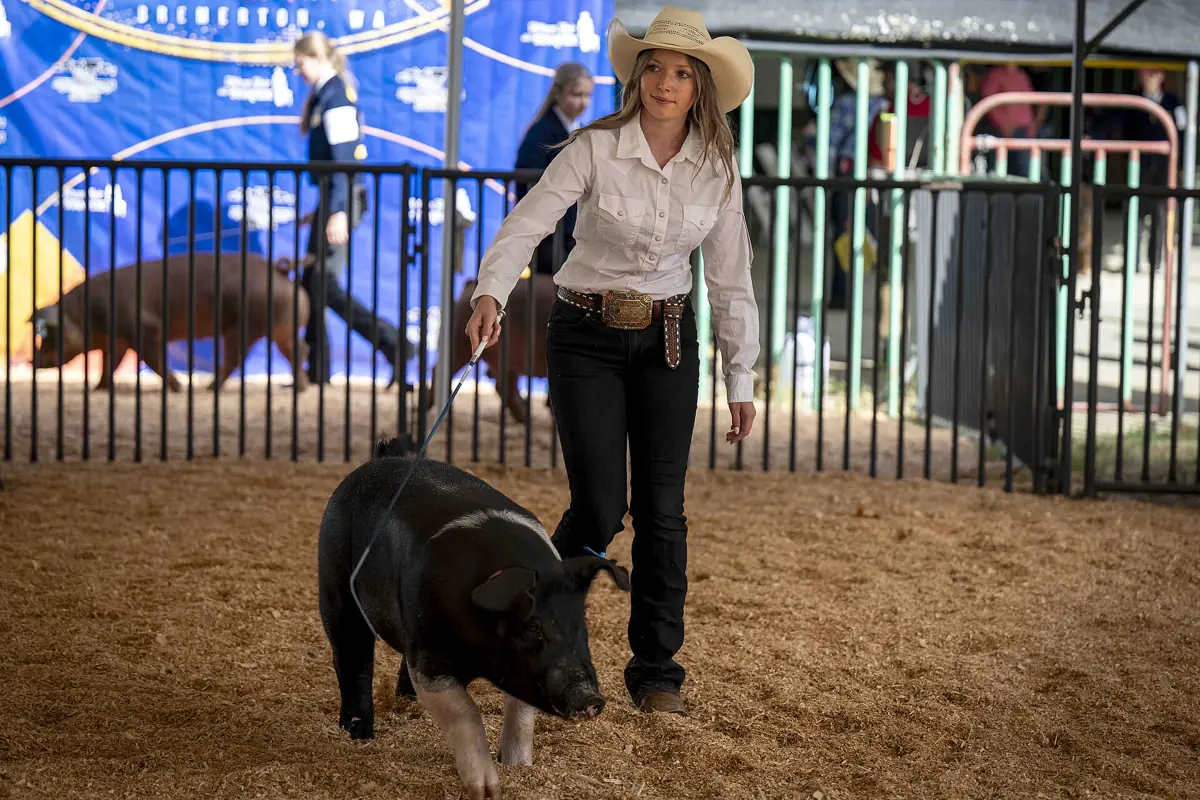
The Fair half of the name is the week’s foundation. The annual 4-H Fair, run through the county’s Extension 4-H programme, and the Open Class Indoor Fair anchor the exhibit side, filling the halls with the entries a county fair exists to judge. Between the halls, the fair programmes free grounds entertainment; the 2026 bill included a chainsaw juggler, a balloon artist, a hypnotist and an exotic petting zoo, all free to wander into. The week also keeps one foot downtown: a parade through Helena’s streets on the Saturday is a standing fixture in the fair’s listings.
Planning Your Visit
Finding the Fairgrounds
The fairgrounds stand at 98 West Custer Avenue in Helena, entered mainly where Custer Avenue meets Henderson Street, and parking carried no charge under the fair’s published 2026 terms. One detail in the published record disagrees with itself: the fair’s poster set Tuesday’s opening at 4 p.m., while a published preview of the same edition described the first evening’s gates an hour later. The poster’s hours — Tuesday 4 p.m. to 10 p.m., Wednesday to Friday 11 a.m. to 10 p.m. — are the fair’s published schedule, but that Tuesday hour is worth confirming before you plan around the first evening.
What Is Free and What Is Ticketed
This fair’s price structure is its most useful fact, and it works the opposite way to most. Under the fair’s own published terms for 2026, parking and admittance were free — the grounds, the exhibit halls, the vendor rows and the free stage acts cost nothing at all. Everything with a price was a specific event, priced by tier. The rodeo’s 2026 ladder ran: Thursday, general admission in all seats, at $23 for an adult and $7 for a child of twelve or under in advance, rising to $25 for the adult after the advance sale while the child price stayed at $7; Friday and Saturday, reserved seats at $26 in advance and $28 afterwards, the same for every seat. Adult rodeo tickets rose by $2 on July 20, and the advance sale closed at midnight on Sunday July 19. The concerts were tiered by position: $50 for a reserved grandstand seat, $60 for arena standing room and $80 for the pit, each rising by $5 on and after July 20. The carnival’s all-day pass cost $30 in advance and $35 at the kiosk. Read those figures as the shape of the fair’s pricing, and check the current year’s ladder before relying on any number.
Camping and the Practical Details
A campground sits on the fairgrounds, and the fairgrounds foundation added a sprinkler system to it in 2024 — but no fair-week camping rate, rule or booking term appears in the published 2026 record, so treat camping as a facility that exists rather than a priced offer, and ask the fairgrounds office about the current arrangement. Beyond that, the practical advice is ordinary: the biggest crowds gather for the arena nights, and the free daytime fair is the relaxed way to see the exhibits.
A Saturday at the Stampede
Saturday is the fair’s fullest day. Start downtown, where the parade takes the fair through Helena’s streets before the grounds claim the rest of the day. Move on to the fairgrounds by late morning and give the exhibit halls their time — the 4-H and open class entries are at their most complete on the final day. Take lunch from the food rows, ride out the afternoon with an all-day carnival pass if the midway is your aim, and let the picnic shelters slow the pace before the evening. As the light goes, take your seat in the Cool Alley Arena: the third and last PRCA performance closes the fair on Saturday night.
How the Price Structure Compares
Most large county fairs charge at the gate and then charge again inside, so a visitor pays twice before seeing anything. The Last Chance Stampede and Fair splits the model the other way: its published 2026 terms put the price entirely on the three ticketed elements — the rodeo, the concerts and the carnival — and nothing on the fair itself. For a family content with exhibits, animals, free acts and food rows, the fair was a free day out in 2026; for a rodeo fan, the cost was a single event ticket rather than a gate-plus-grandstand stack. Whether that structure survives is the fair’s own decision each year, and older prices quoted anywhere else belong to other years.
Before You Go: A Checklist
- Confirm the current year’s dates and fair hours, and double-check the Tuesday opening hour before planning around the first evening.
- Decide which arena nights you want — concerts early in the week, rodeo late — since the two never share an evening.
- Buy rodeo and concert tickets before the advance sale closes; adult rodeo prices rose on July 20 in 2026 and concert tiers rose by $5 from the same date.
- Remember the child rodeo price applied to the Thursday general admission night; the Friday and Saturday reserved ladder was one price for every seat.
- Budget the carnival separately; its all-day pass is cheaper in advance than at the kiosk.
- Give the exhibit halls and free grounds acts their own time — they are the fair itself, and they cost nothing.
- Ask the fairgrounds office about campground arrangements, since no fair-week rate is published.
- Catch the Saturday parade downtown before heading out to the grounds for the closing rodeo.
Beyond the Fairgrounds
The grounds earn their keep outside fair week as well. As a registered historic site that began as the state fairgrounds in 1869, the property is a piece of Montana history, and its buildings host events across the year, while the picnic shelters, pond and campground give the site a park’s character between events. Helena’s other summer fixtures belong to their own occasions: the city’s concert series, its road races and the separate rodeo in neighbouring East Helena are distinct events, none of them part of Stampede week. The one moment the fair steps beyond its fence is the Saturday parade, when the celebration runs through downtown before returning to Custer Avenue.
Why the Stampede Matters to the Capital County
A state capital has no shortage of organised occasions, but the Last Chance Stampede and Fair is the one that belongs to the county itself. It gathers the county’s 4-H families, open class exhibitors, vendors and rodeo crowd onto grounds the whole state once used, on terms that keep the fair open to everyone: the published model asks nothing at the gate and lets each visitor decide which ticketed nights are worth paying for. For exhibitors it is the county’s annual reckoning, where a year’s work in barns and kitchens is judged in public.
Frequently Asked Questions
Is the Last Chance Stampede and Fair really Lewis and Clark County’s fair?
Yes — despite leading with a rodeo’s name, it is the county fair of Lewis and Clark County, presented at the county fairgrounds in Helena with the county’s 4-H fair and open class indoor fair inside it.
What did admission cost for the 2026 edition?
Nothing at the gate: under the fair’s published 2026 terms, admittance and parking were both free. The money went on events — rodeo seats from $23 to $28 depending on night and sale period, concert tiers at $50, $60 and $80, and a carnival pass at $30 in advance or $35 at the kiosk. Those figures belong to 2026.
Which nights hold the concerts and which hold the rodeo?
In the documented 2026 build, concerts took the first two evenings, Tuesday and Wednesday, in the Cool Alley Arena, and the PRCA rodeo took the last three, Thursday through Saturday at 7:30 p.m., so the two headline strands never shared a night.
Can visitors camp at the fairgrounds during fair week?
A campground exists on the grounds, but the published 2026 record includes no fair-week rate, rule or booking term for it. The fairgrounds office is the place to ask about the current arrangement.
What to Expect From the Next Lewis and Clark County Montana Fair Festival
How often is the Lewis and Clark County Montana Fair Festival held?
It is held once a year, in the last week of July, at the Lewis and Clark County Fairgrounds in Helena. The documented 2026 edition ran five days after the fair added a day; whether future editions hold at five days is set by each year’s own schedule.
When is the next Lewis and Clark County Montana Fair Festival?
The next edition falls in the last week of July following the documented 2026 fair of July 21 to 25. Its exact span, hours and ticket ladders are the fair’s to publish, and its poster is the document that settles them.
Will the dates change?
The fair’s season is settled — late July, anchored to the last week of the month — but the precise span has moved before, most recently when a fifth day was added for 2026. Treat the week as dependable and the exact days as each edition’s announcement.
Helena’s fair asks a visitor to hold two ideas at once: a free county fair in the old sense, and a ticketed rodeo-and-concert week in the modern one. Both are true, on the same grounds, in the same five days — and that combination, staged where Montana’s state fair once stood, is what makes the Last Chance Stampede and Fair worth the trip to Custer Avenue.

One Comment