Ste. Genevieve County Missouri Fair Festival
Every July, a month before the crowds arrive for the French-colonial festival that made this town famous, Ste. Genevieve County stages a plainer and louder kind of celebration. Out on South White Sands Road, the county fairgrounds fill with pulling trucks, demolition cars, show livestock and exhibit benches for the Ste. Genevieve County Fair, held each year on the second full weekend of July in the town of Ste. Genevieve, the county seat.
This is a working county fair in the full sense — motorsport on the track, animals in the barns, a queen contest, a community parade and a week of 4-H and FFA exhibiting behind it — set in the oldest permanent European settlement in Missouri. The pairing surprises visitors who know the town only for its heritage streets, but the two events never overlap: the fair belongs to July, the famous festival belongs to August, and each is organised entirely separately.
Fair week begins earlier than the weekend suggests: exhibits arrive on the Tuesday, a chicken fry dinner anchors the Thursday, and by Saturday morning the grounds are at full tilt.
A County Fair Behind the Famous Streets
The event’s real published name is simply the Ste. Genevieve County Fair, and no translation or bridge is needed to connect the queue title to the living event. It is the county’s own annual agricultural fair, staged at the Ste. Genevieve County Fairgrounds on South White Sands Road, on the edge of the town that serves as the county seat.
Its public footprint is modest compared with the town’s heritage tourism machine. No fair book or day-by-day printed schedule circulates widely for it, and the fair’s published listings do not name a fair board or association as its organiser. What the record does show is a consistent annual pattern — the second full weekend of July — and a youth programme run in partnership with the county’s 4-H organisation through MU Extension Ste. Genevieve County, which runs the exhibit side of fair week without being the fair’s organiser.
For a useful comparison, see the St. Louis city Missouri Fair Saint Louis Festival for another county festival.
That modesty should not be mistaken for smallness of content. The documented bill runs from truck pulling and demolition derby to livestock shows, a queen contest, go-kart racing, a parade and fairground contests — the full working repertoire of a Missouri county fair.
Ste. Genevieve County Fair Quick Facts
| Detail | What the record shows |
| Event name | Ste. Genevieve County Fair |
| County | Ste. Genevieve County, Missouri |
| Fair town | Ste. Genevieve |
| County seat | Ste. Genevieve |
| Grounds | Ste. Genevieve County Fairgrounds, South White Sands Road |
| When it is held | The second full weekend of July each year |
| Fair week shape | Exhibit drop-off on Tuesday, a chicken fry dinner on Thursday, the fair itself across the weekend |
| Signature events | Truck pull, demolition derby and go-kart races |
| Youth programme | Livestock shows and exhibits from 4-H and FFA members |
| Admission | Not published in the fair’s public record |
A Fair With No Published Birthday
Most county fairs advertise a founding year or an edition number, but this fair’s public record offers neither. No first-fair date, anniversary count or organising charter appears in its published listings, and honesty means leaving that space blank rather than filling it with the town’s much older story.
That distinction matters here more than in most counties. Ste. Genevieve the town carries a French-colonial past reaching back to the eighteenth century, with vertical-log houses and a historic district that draw visitors all year. None of that antiquity belongs to the fair. The fair is a modern agricultural institution whose documented history is written in its standing habits — a fixed place in the July calendar, fairgrounds kept on South White Sands Road, a queen contest, a parade and a livestock programme renewed by each year’s exhibitors.
What can be traced is continuity of shape. The county’s 4-H fair-week notices for 2026 describe the same machinery a working fair has always needed: exhibits checked in early in the week, a fundraising dinner midweek, judging and showing building toward the weekend. A fair that runs its week that way is a fair with deep local roots, even if its paperwork keeps no birthday.
What Fills the Fairgrounds
Steel, Smoke and Horsepower
The loud end of the programme is pure county fair. A truck pull puts modified machines against a weighted sled, the demolition derby turns battered cars into a last-one-running contest, and go-kart races add a faster, lighter note on the track. These are the events that carry across the grounds and pull spectators to the fence line, and they mark the fair’s character clearly: this is a motorsport-and-agriculture weekend, not a heritage pageant.
Barns, Benches and Blue Ribbons
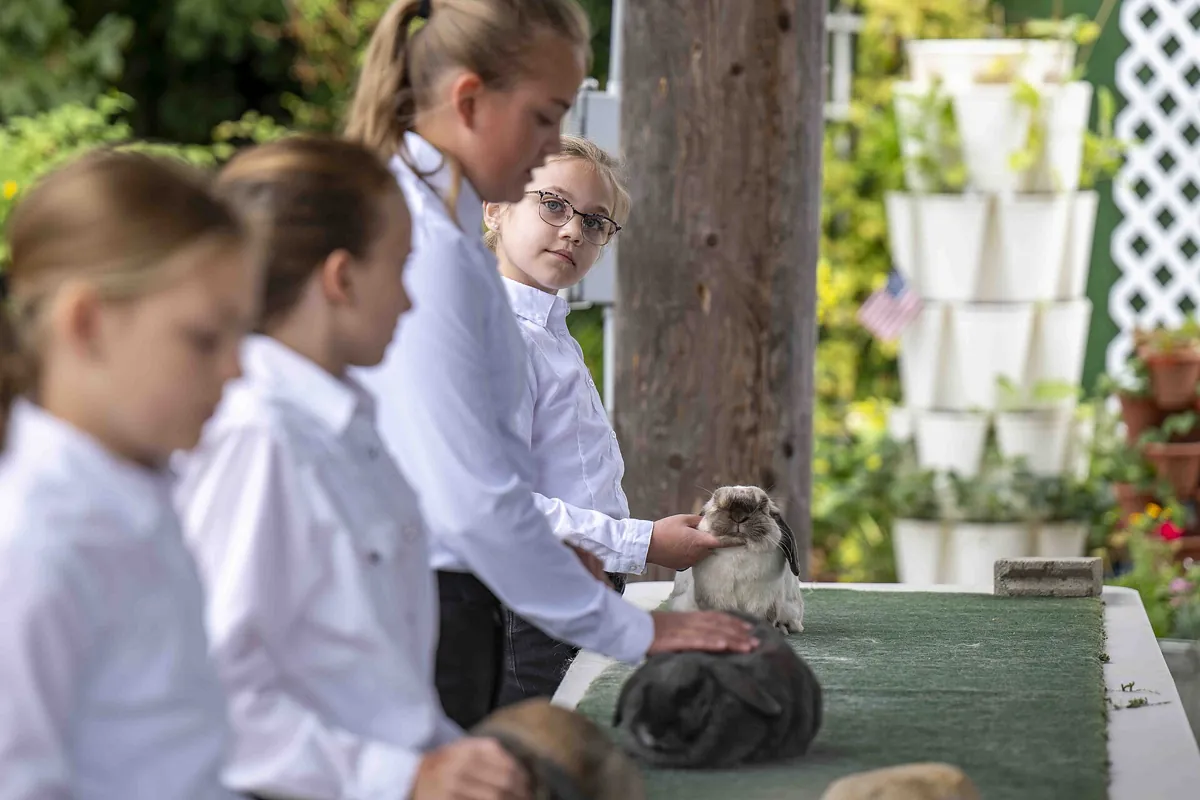
The quieter core of the fair is its showing programme. Livestock shows give the county’s young exhibitors their annual public test, and 4-H and FFA exhibits fill the benches with the year’s project work — the produce, crafts, animals and skills that fair week exists to judge. For exhibiting families, the weekend is the finish line of a season of feeding, fitting and record-keeping, and the ribbons handed out here are the county’s own verdict on that work.
Crowns, Parades and Fairground Contests
Around the track and the barns runs the fair’s social programme. A queen contest crowns the fair’s royalty, a community parade brings the celebration out into public view, and the fairground contests include hatchet throwing and keg tossing — half-serious, wholly local competitions that give a county fair its flavour. Live music and fair food round out the grounds, and on the Thursday of fair week the 4-H Chicken Fry Dinner at the KC Hall serves as a fundraising fixture of the week, a meal with a purpose rather than a priced attraction.
Planning a Trip to the Fair
Landing on the Right Weekend
Timing is the one planning point this county makes genuinely tricky. The fair occupies the second full weekend of July, while the town’s celebrated Jour de Fête occupies the second full weekend of August — the same formula, one month apart, for two completely different events. Anyone booking a trip around the phrase “second full weekend” should check the month twice: July means trucks, livestock and exhibits at the fairgrounds; August means a French-colonial crafts festival in the historic downtown, run under its own name by its own organisation.
Finding South White Sands Road
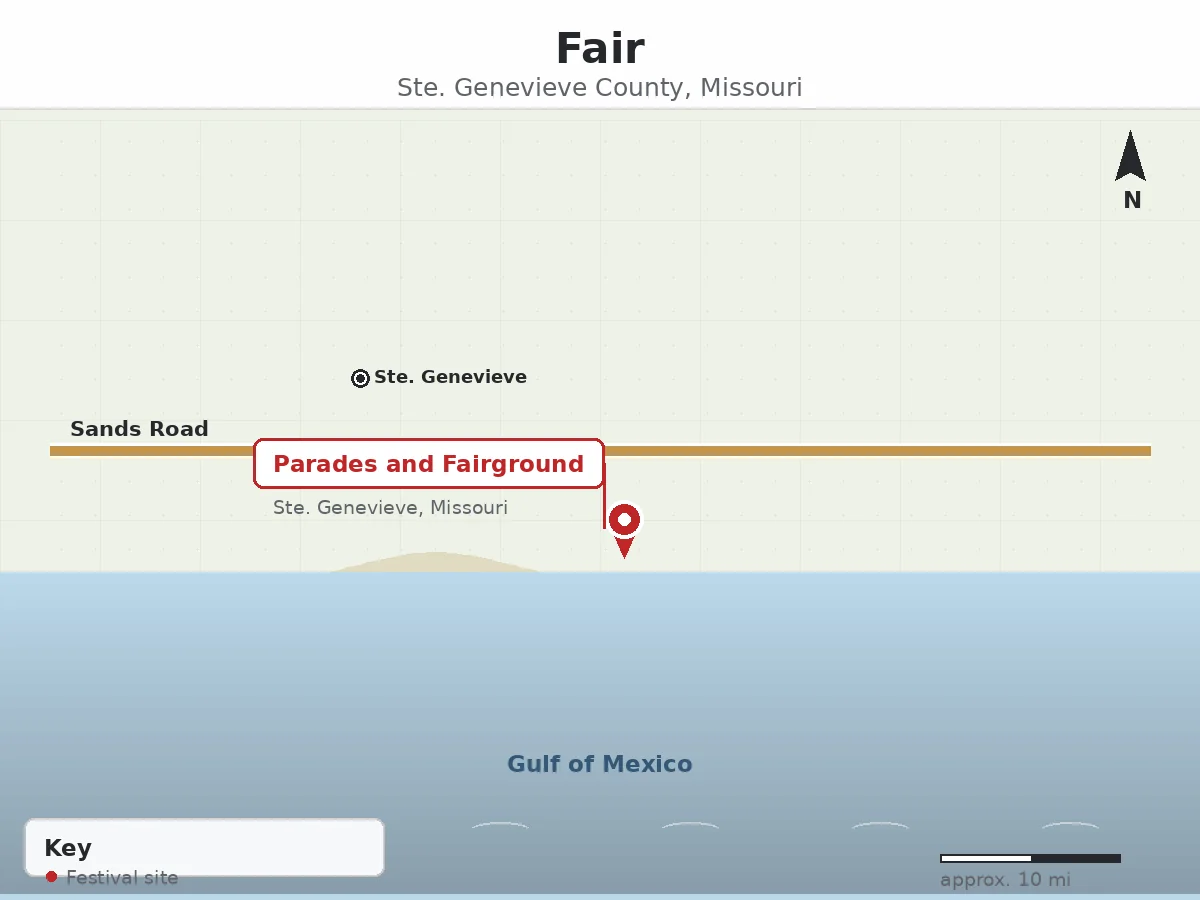
The fairgrounds stand on South White Sands Road in Ste. Genevieve, and the published record gives the road but no street number, so visitors should navigate by the road name and the fairgrounds themselves rather than a pinpoint address. The fair’s published public contact is a telephone number, which suits an event of this scale: a call ahead is the reliable way to confirm the running order, gate arrangements and any weather changes.
Prices the Fair Has Not Published
No admission, pass or parking price for the county fair appears anywhere in its public record, and no camping offer or rate is published either. The correct response to that silence is practical, not speculative: do not assume the fair is free, do not budget around a price borrowed from another event, and carry cash enough to cover whatever the gate asks. In particular, the free entry associated with the town’s August festival says nothing about this fair, and importing it into July would be a planning error.
One Fair Week, Day by Day
A visitor who wants the whole shape of the fair, rather than just its loudest hours, can pace the week like this:
- **Tuesday:** Exhibit drop-off day. The fairgrounds are a working scene of trailers, entries and check-in tables as 4-H and FFA members deliver the projects and animals that the weekend will judge. It is the exhibitors’ day — the best window into how much labour a fair concentrates.
- **Thursday:** The Chicken Fry Dinner at the KC Hall, the fair week’s fundraising fixture, where the community quite literally feeds the programme that feeds its young exhibitors.
- **Saturday:** The fair in full — livestock shows and exhibit judging through the day, the parade and contests, fair food and live music on the grounds, and the pulling trucks and demolition cars supplying the noise after dark.
- **Sunday:** The weekend’s second full day, when judging concludes, champions are settled and families make their last rounds of the barns and benches before the fairgrounds empty for another year.
Exact running orders are set locally each year, so treat this as the week’s rhythm rather than a printed timetable.
Two Second Weekends, Two Different Events
The comparison this fair cannot escape is with Jour de Fête, and the honest way to draw it is as a contrast, not a rivalry. The county fair is a July event at the fairgrounds on South White Sands Road: agricultural, mechanical and local, built around livestock, exhibits, motorsport and contests. Jour de Fête is an August event in the historic downtown: a French-colonial arts and crafts festival celebrating the town’s heritage under separate organisation. They share a town, a calendar formula and nothing else — not dates, not venues, not programme, not management.
For a visitor, the practical difference is the kind of Ste. Genevieve each one shows. The fair shows the working county: farm families, young exhibitors, pulling trucks and a chicken fry. The August festival shows the historic town: crafts, costume and colonial streets. Choosing between them is choosing which Ste. Genevieve you want to meet — and the county offers both, a month apart.
Packing and Preparation Checklist
- Confirm the month before anything else — the fair is the second full weekend of **July**, not August.
- Navigate to South White Sands Road and the county fairgrounds; no street number is published.
- Carry cash for admission and food, since no gate price is published in advance.
- Telephone ahead to confirm the weekend’s running order and any weather changes.
- Bring sun protection and water for long spells beside the track and the show rings.
- Wear closed shoes suited to barns, gravel and fairground dust.
- If you are exhibiting, plan around the Tuesday drop-off and the Thursday chicken fry.
- Book town lodging early if you want to stay over, as Ste. Genevieve draws visitors year-round.
Beyond the Fairgrounds in Ste. Genevieve
The fair alone justifies the trip, but the town around it is one of Missouri’s singular places. Ste. Genevieve is the state’s oldest permanent European settlement, and its historic district preserves French-colonial architecture — including rare vertical-log houses — that exists almost nowhere else in the United States. A slow walk through the old streets, a look at the church and the riverfront, and time in the town’s museums and shops turn a fair weekend into a fuller visit.
The town’s calendar also holds other festivals in other months — a French Heritage Festival in June, an Oktoberfest in September and a Rural Heritage Day in October — each a separate town event with its own identity. They are worth knowing so they are never mistaken for the county fair — and worth returning for in their own right.
What the Fair Means to the County
Ste. Genevieve County lives a double life in the public imagination: a heritage destination for travellers, and a farming county for the people who live there. The county fair is the second of those identities on full display. For one July weekend, the county’s attention shifts from its colonial streets to its barns and benches, and the skills being celebrated are feeding, raising, building and showing rather than preserving.
That is why the fair’s plainness is its strength. It gives the county’s young exhibitors a public standard to work toward, gives farm families a gathering that belongs to them, and reminds every visitor who comes for the history that a living agricultural community still works the land around it. The fair is the county talking about itself, in its own present tense.
Frequently Asked Questions
When does the Ste. Genevieve County Fair take place?
The fair is held every year on the second full weekend of July at the Ste. Genevieve County Fairgrounds on South White Sands Road in Ste. Genevieve. Fair week begins earlier than the weekend, with exhibits delivered on the Tuesday and a chicken fry dinner on the Thursday, so the celebration builds across the whole week before the main days arrive.
Is the county fair part of Jour de Fête?
No. They are separate events that share only a calendar formula. The county fair is the July event at the fairgrounds, centred on livestock, exhibits, motorsport and contests. Jour de Fête is the town’s French-colonial crafts festival, held a month later on the second full weekend of August in the historic downtown, under its own name and organisation.
Does the fair publish its admission price?
The fair’s public record does not publish an admission, pass or parking price, so there is no verified figure to quote. Visitors should not assume entry is free — the free admission connected with the town’s August festival belongs to that event alone — and should carry cash for whatever the gate charges on the day.
What happens at the fair itself?
The documented programme mixes motorsport and agriculture: a truck pull, demolition derby and go-kart races on the track side; livestock shows and 4-H and FFA exhibits on the showing side; and a queen contest, a community parade, hatchet-throwing and keg-tossing contests, live music and fair food across the grounds.
What to Expect From the Next Ste. Genevieve County Missouri Fair Festival
How often is the Ste. Genevieve County Missouri Fair Festival held?
The fair comes round once each year, returning every summer on its standing formula, the second full weekend of July, and the week around it follows the same rhythm of Tuesday exhibit drop-off, Thursday chicken fry and a full weekend at the fairgrounds.
When is the next Ste. Genevieve County Missouri Fair Festival?
The next fair follows the same rule that has governed the recent editions: the second full weekend of July, at the fairgrounds on South White Sands Road. Because the fair’s detailed schedules are published locally rather than far in advance, confirming the running order close to the date — by telephone or through local listings — is the sensible final step.
Will the dates change?
The second-full-weekend-of-July formula is the fair’s documented standing pattern, and there is no published indication of a move. Weather or local circumstances can always adjust a single year’s arrangements, so checking locally before travelling remains wise, but the July anchor is the safest planning assumption the record supports.
A July Date Worth Keeping Straight
The Ste. Genevieve County Fair asks one thing of its visitors that most fairs do not: that they get the month right. Do that, and the reward is a genuine working county fair — trucks on the sled, cars in the derby, ribbons in the barns and a whole county gathered on South White Sands Road — in the most historic town in Missouri. July belongs to the fair. August can keep its festival.