Kandiyohi County Minnesota Fair Festival
Most county fairs keep their prices in a desk drawer until you stand at the gate, wallet out. The Kandiyohi County Fair does the opposite: it publishes the lot. Five dollars to walk in, five dollars to park, season tickets, and a grandstand wristband priced openly for adults, youth and small children. This fair reads like a receipt — and that plain dealing is the first thing worth knowing about it.
The fair belongs to Willmar, the county seat of Kandiyohi County in west-central Minnesota’s lakes country, and it takes the first full week of August. The grounds stand at 907 7th Street NW, and its week is the county’s largest annual gathering: part livestock show, part grandstand spectacle, part homecoming for farm families within driving distance.
The grandstand is where the volume lives. Rather than sell each headline night separately, the fair offers a multi-day wristband bundling two nights of Great Frontier Bull Riding with an Antique Tractor, Truck and Semi Pull and a demolition derby. One band covers the week’s loudest evenings.
Underneath the volume runs an older, quieter fair. Kids Day brings minnow racing, a straw dive, a Lego contest and a pedal pull; in the Log Cabin, Doug Ohman’s pioneer photography lends the week a memory. Bakers face off in the Baker’s Best contest, exhibitors gather for the One Day Holstein Show, 4-H members are tested in the Show of Showmen, a lumberjack show and pig races fill the corners, and a thousand dollars in drawings rewards whoever is present at the call.
The fair arrives just as Minnesota’s season turns from July into August. A week earlier and a few counties east, the Kanabec County Minnesota Fair Festival closes out July in Mora with a blacksmith’s forge and a programme intimate enough to learn by heart. Kandiyohi answers at a different scale: published prices on everything, a grandstand organised for volume.
Facts First: The Kandiyohi County Fair Scorecard
| Event | Kandiyohi County Fair |
| County | Kandiyohi County |
| State | Minnesota |
| Fair Town | Willmar, the county seat |
| Organiser | Kandiyohi County Fair Association |
| Season | August, the first full week |
| Grounds | 907 7th Street NW, Willmar |
| Gate | $5 for adults and youth; ages 5 and under free, per the most recently published guide |
| Parking | $5 per vehicle; a free Park and Ride also serves the grounds |
| Known For | A grandstand wristband spanning bull riding, a semi pull and a demolition derby, with every price published |
Bull Riding, Pig Races and Pioneer Photographs: The Kandiyohi Programme
The programme divides into three fairs sharing one ground: the grandstand’s ticketed nights, the barns and benches, and the free corners.
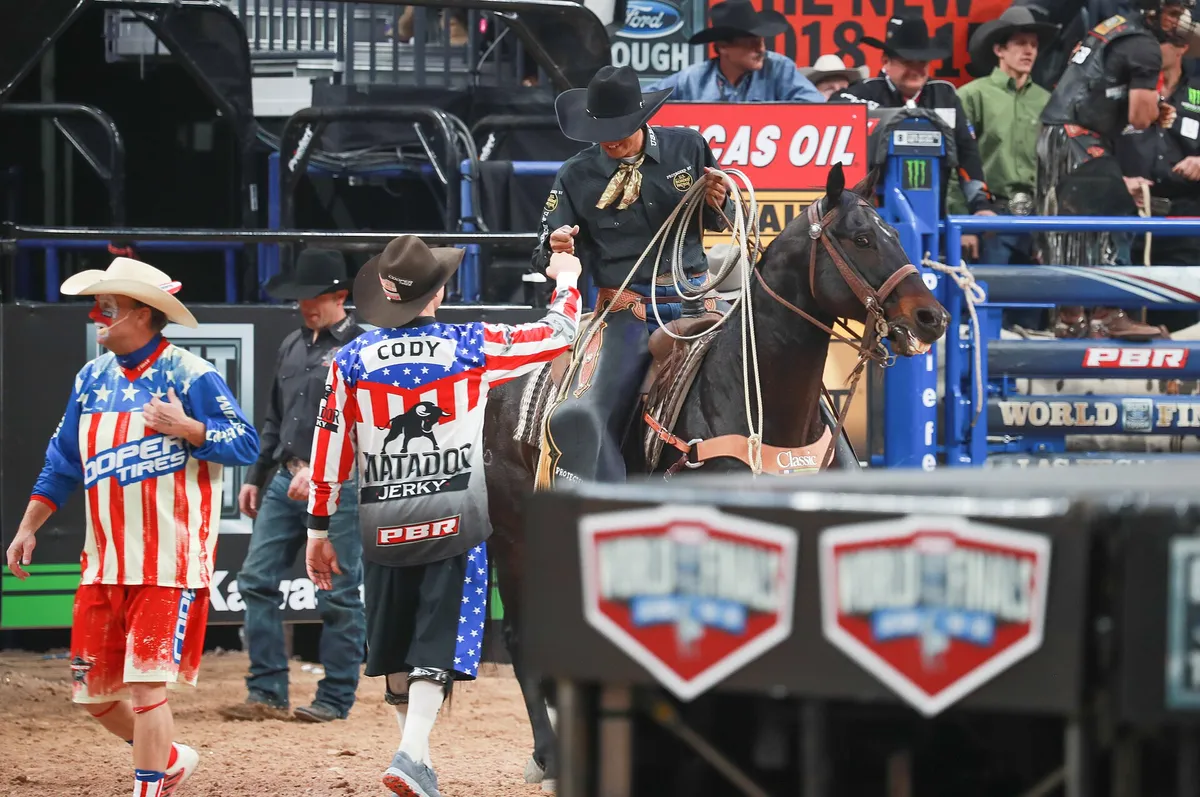
Two Nights of Great Frontier Bull Riding
Bull riding anchors the grandstand, and the fair doubles it: two nights of Great Frontier Bull Riding rather than a single appearance. Doubling the roughstock states what the grandstand is for. Visitors who can manage only one evening are not shut out, since single-night bull riding costs less than the full wristband.
Tractors, Trucks and Semis on the Pulling Track
The pull covers the biography of farm power in one evening: antique tractors first, the restored machines that once worked this county’s fields, then working trucks and highway semis turned to competition. A century of horsepower against the same sled, under the same lights — all inside the wristband.
The Demo Derby’s Deliberate Wrecks
The demolition derby supplies the week’s sanctioned destruction, cars trading paint until one is still moving. Where the pull measures power precisely, the derby measures endurance in bent metal. It is the wristband’s third leg, and for many families the night the whole week points at.
Kids Day: Racing Minnows and Diving for Straw
Kids Day is engineered for small competitors: children race minnows, dive into straw for whatever it hides, build for a Lego contest and strain at a pedal pull built for their legs. None of it needs expensive kit; all of it produces photographs that stay on refrigerators for a decade.
Quiet Corners: The Log Cabin and the Contest Benches
In the Log Cabin, Doug Ohman’s pioneer photography shows the settlement era at ground level — faces, farms and main streets the county grew from. Around it, the Baker’s Best contest settles the county’s baking arguments, the One Day Holstein Show concentrates dairy judging into one serious day, and the 4-H Show of Showmen tests young exhibitors across species.
Lumberjacks, Pig Races and a Thousand Dollars in Cash
The week’s connective tissue is gleefully unglamorous: a lumberjack show saluting the timber work that helped settle this country, pig races drawing crowds far beyond the athletes’ size, and cash drawings worth a thousand dollars run on one firm condition — you must be present to win.
The Fair Willmar Runs for Itself
The Kandiyohi County Fair is staged by the Kandiyohi County Fair Association, and it is a county-seat production: Willmar has held the county seat since 1871, and the fairgrounds on 7th Street NW sit close to the centre supplying most exhibitors, volunteers and crowd. The model is classic — a local body holds the ground, local families fill the barns, and the county turns out to inspect itself.
The setting flavours the week. Kandiyohi is lakes country, and Willmar’s summer economy is built on water as much as farming, so fair week competes with boat launches and resort decks — and wins, offering what the lakes cannot: everybody in one place at once.
Documented by 1901, Founded in a Year Nobody Recorded
Here is an honest gap: the fair’s own published material names no founding year, and this page will not supply one. The record offers sightings instead. By 1901, a Willmar hotel was advertising its welcome to farmers ‘coming to the fair’ — an advertisement that only makes sense if the fair already filled rooms. In 1933 the fair surfaces again, through a noted speaker’s appearance. Fairs do not earn hotel advertisements and booked speakers in their first season.
So treat any tidy founding year attached to this fair elsewhere with suspicion. Round numbers pinned to old fairs sometimes trace back to modern paperwork, not the fairground itself, and a date repeated confidently is not a date documented. What can be said without flinching: the fair was established by the opening years of the twentieth century and remains Willmar’s August fixture.
Arranging a Willmar Trip: Costs, Free Rides and Beds
Five Dollars In, Five Dollars to Park: The Published Prices
The gate is five dollars for adults and youth alike, children aged five and under free; parking costs another five dollars. Regulars flatten both bills: a Season Gate Ticket runs twenty dollars and a Season Car Ticket fifteen, rewarding anyone attending several days. These figures come from the fair’s most recently published guide and are set season by season, so confirm before travelling.
The Wristband Is Cash Only
The grandstand wristband — both bull riding nights, the pull and the demolition derby — costs thirty dollars for adults and fifteen for youth aged six to seventeen, children five and under free, and it is sold for cash only. Arrive with cash and the biggest purchase takes ten seconds; arrive without it and you are hunting a cash machine while the bulls load. Single bull riding nights cost less.
Free Ways In: Park and Ride and the Weekday Buses
The fair then undercuts its own parking charge. A free Park and Ride runs from Ridgewater College Lot C, and on fair weekdays the fair board itself pays for Central Community Transit rides, so visitors can skip the five-dollar parking fee entirely. Few fairs think this hard about the total cost of attending.
Where to Sleep, and What August Feels Like
Camping at the fairgrounds is not something the fair’s published material confirms, so plan no trip around pitching up beside the barns. Willmar carries the hotels and motels; the surrounding lake resorts take the overflow. August is peak season here, so book the bed before the wristband arithmetic begins.
August’s first full week here is the top of summer: long, hot afternoons on open ground, the odd thunderstorm rolling across the lakes, and evenings cool enough to make the grandstand the best seat in town. Sunscreen earns its place by day, a light layer after dark.
A Single Day, Well Spent at the Fair
One full day is the natural unit of a Kandiyohi visit, and the fair rewards a deliberate order:
Morning: Benches, Barns and the Log Cabin
Start with the exhibits while the light is good and crowds thin: the baked goods and bench shows, the livestock barns, and the Log Cabin, where Doug Ohman’s photographs deserve unhurried minutes. If yours is the Holstein day, the judging gives the morning a serious centre.
Afternoon: Kids Day Energy and the Pig Races
Give the afternoon to the participatory fair. Minnow racing and the straw dive are funnier than they have any right to be, the Lego contest and pedal pull keep small children competing, and the pig races pull a crowd. Save room for fair food eaten slowly.
Evening: The Wristband Earns Its Price
End in the grandstand, on whichever big night your wristband covers — bull riding, the pull or the derby — and stay for the cash drawings, remembering the thousand dollars only goes to somebody standing there. A day from pioneer photographs to bulls under lights has used the whole fair, not just its loudest room.
Herman’s Free Gate or Willmar’s Five-Dollar One: Kandiyohi Beside Grant
The natural comparison sits a few weeks earlier. The Grant County Fair in Herman runs in July’s third week behind a long-standing free-admission tradition, headlined by its Summer Nationals truck and tractor pull and a PRCA rodeo. Kandiyohi, opening August, takes the opposite approach to money: a modest gate printed in advance, the grandstand bundled into one wristband. Grant’s fair sits in a town that is not its county seat; Kandiyohi’s sits in its own.
The pairing flatters a tour: July’s free, small-town fair and August’s itemised, county-seat fair sit two weeks and a short drive apart, the same society model at two scales. Take Herman first for the rodeo and the open gate; Willmar second for the wristband and the bulls.
In the Bag: A Kandiyohi Checklist
- Cash for the grandstand wristband, which is sold for cash only
- Two five-dollar bills ready — one for the gate, one for the car
- Season-ticket sums done in advance if you will attend several days
- The free Park and Ride from Ridgewater College Lot C tried before paying to park
- A hat, sunscreen and water for unshaded August afternoons
- A light layer for grandstand evenings
- Time set aside for the Log Cabin photographs, which reward a slow look
- Yourself on the grounds when the cash drawings are called — absence forfeits the thousand dollars
- A Willmar bed booked early, since lakes country fills its rooms in August
Willmar Beyond Fair Week: Lakes and the Planet’s Halfway Line
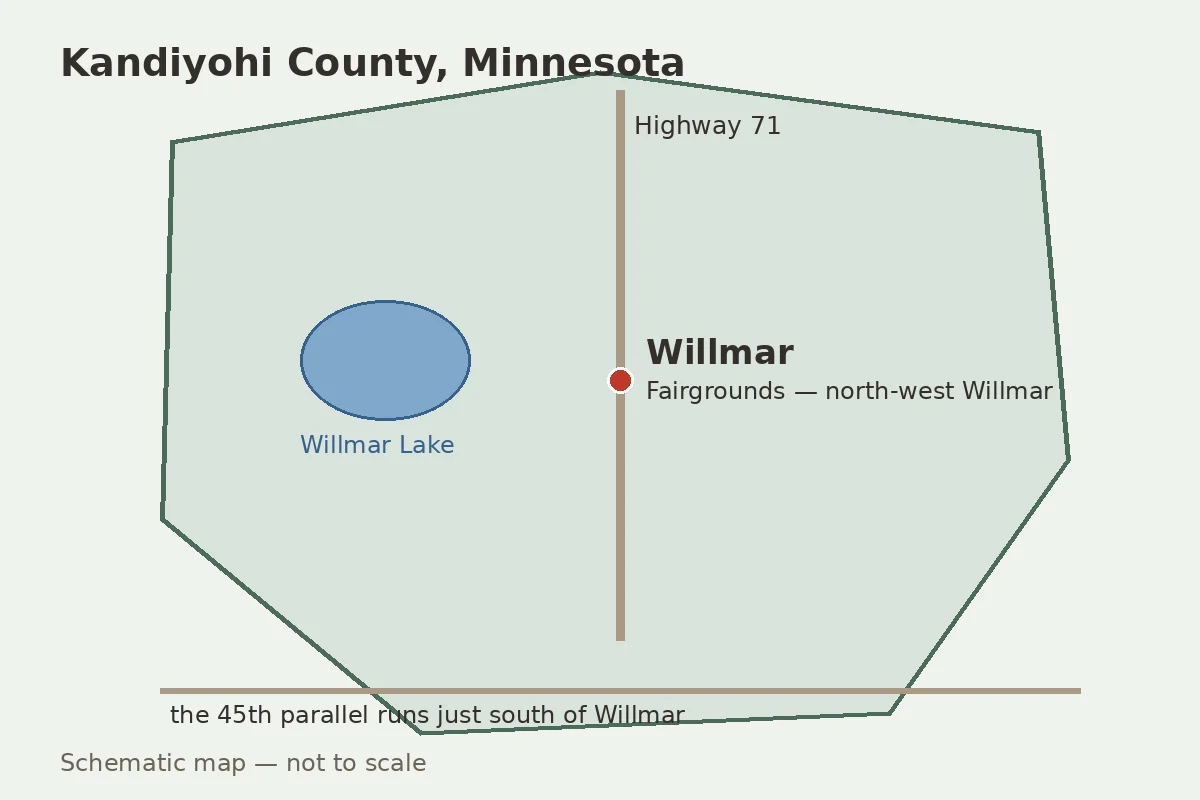
Willmar does not empty when the fair does. The town sits amid Kandiyohi County’s lakes, and the water carries the rest of the summer — swimming, fishing and boating within a short drive in every direction. The county’s neatest claim is invisible: the 45th parallel passes just south of Willmar, the line of latitude running halfway between the Equator and the North Pole. Stand at the fairgrounds in August and you are exactly as far from the top of the world as from its middle.
What a Published Price Tag Says About a County
A price list is a small thing, but it reveals a fair’s theory of its audience. Kandiyohi publishes everything — gate, parking, season tickets, wristband, the ages children enter free — because it expects visitors to plan with full information. The free Park and Ride and board-paid weekday transit belong to the same philosophy: remove the frictions and the whole county can afford its own fair. Its contests, its pioneer photographs and its presence-only drawings are not selling spectatorship; they stage participation and reward those who show up.
The Grounds in Your Head Before You Arrive
Read the grounds as three zones and the week makes sense on arrival. The grandstand and its track own the evenings; the barns, exhibit buildings and benches own the days; the Log Cabin keeps the quiet corner of county memory. Everything stands within an easy walk on the 7th Street NW grounds, and the map below sketches the setting.
Frequently Asked Questions
What is the full cost of a day at the Kandiyohi County Fair?
On the fair’s most recently published figures, the gate is five dollars for adults and youth, with children aged five and under free, and parking is five dollars a vehicle — or nothing at all on the free Park and Ride. The grandstand wristband adds thirty dollars for adults and fifteen for youth aged six to seventeen, sold for cash only. Food and midway spending sit on top; prices are reset season by season, so confirm the current numbers before travelling.
What does the grandstand wristband include, and how do you pay for it?
The multi-day wristband covers two nights of Great Frontier Bull Riding, the Antique Tractor, Truck and Semi Pull and the demolition derby. It costs thirty dollars for adults and fifteen for youth aged six to seventeen, children five and under free, and it is sold for cash only. If you can attend only one evening, single-night bull riding is priced lower than the full band.
Is there really a free way to reach the fairgrounds?
Yes, two of them. A free Park and Ride serves the fair from Ridgewater College Lot C, and on fair weekdays the fair board pays for Central Community Transit rides, so visitors can reach the grounds without the five-dollar parking charge. Both arrangements appear in the fair’s own published information.
Can anyone say when the Kandiyohi County Fair began?
Not precisely, and this guide will not pretend otherwise. The fair’s own published material gives no founding year, but the fair demonstrably existed by 1901, when a Willmar hotel was advertising to farmers coming to the fair, and it appears again in 1933 through a noted speaker’s appearance. Any exact founding year should be treated with caution.
What to Expect From the Next Kandiyohi County Minnesota Fair Festival
How often is the Kandiyohi County Fair held?
Once a year. The Kandiyohi County Fair Association stages the fair each summer in Willmar, in the first full week of August, as the county’s largest annual gathering.
When is the next Kandiyohi County Fair?
The next edition is expected in the first full week of August, following the fair’s established pattern. The association publishes the confirmed programme as the season approaches.
Will the dates change?
The first full week of August is the fair’s settled position, so a substantial move is unlikely. Small adjustments can occur between editions, so treat the traditional week as the planning anchor and confirm final dates before booking.
Come to Willmar for the arithmetic and stay for the noise: a fair that tells you the week’s cost, then spends it in front of you — bulls, semis, minnows and a thousand dollars, halfway between the Equator and the Pole.
Last updated: October 2026