Fillmore County Minnesota Fair Festival
Most county fairs can name the year they began. Fillmore County’s can take you back further than most, to 1858, the year Minnesota itself became a state, when farmers in the county’s new townships organised an agricultural society that still runs the fair today. Each summer, in the third week of July, that society opens the gates on Fillmore Street in Preston, a town known to many visitors as Minnesota’s Trout Capital, and bluff country gets the biggest week of its year.
What those gates let you into is unusual by modern fair standards. Instead of charging for every show, the society leans on a sponsorship programme, built up over roughly the past five years, that lets it provide almost all of the week’s attractions and entertainment for free. Concerts, dueling pianos, pony rides and bounce houses carry no extra charge, which changes both the maths and the mood of a family day out.
Founded With the State: The 1858 Society
The Fillmore County Agricultural Society dates from 1858, placing it among the earliest county agricultural societies organised anywhere in Minnesota. The fair that grew from it now describes itself as more than 160 years old, although its own materials count those years in slightly different ways, and the exact year of the first fair is not firmly documented. The honest summary is a fair rooted in an agricultural society founded in 1858, in a frontier county still filling with settlers.
Longevity has not turned the society into a curator of its own past. Recent seasons have brought remodelled bathrooms in the big barn, a fresh roof on the Poultry Barn, a painted mural on the Commercial and 4-H building, and a portable entertainment stage. The county, incidentally, takes its name from President Millard Fillmore, a reminder that the fair’s roots sit in the decade when this corner of the state was being named and settled.
How Fair Week Unfolds in Preston
The public run lasts five days, Tuesday to Saturday in the third week of July, with 4-H events starting on the weekend beforehand. That slot makes Preston a natural first stop on a southern Minnesota fair swing, and it pairs neatly with the Faribault County Minnesota Fair Festival a week later, where another nineteenth-century society runs four late-July nights under the oaks in Blue Earth. Take the two in sequence and you get a short history of the region’s fairs inside a fortnight.
The Short Version: Fillmore County Fair Facts
| Event | Fillmore County Fair |
| County | Fillmore County |
| State | Minnesota |
| Fair Town | Preston (county seat) |
| Organiser | Fillmore County Agricultural Society |
| Season | Third week of July, Tuesday to Saturday |
| Grounds | 413 Fillmore Street East, Preston |
| Gate | Modest day and week passes; most entertainment included |
| Camping | On the grounds, with electric and rustic sites |
| Known For | An 1858 society, free sponsored entertainment and a four-night grandstand ladder |
Four Grandstand Nights, Each With Its Own Crowd
The grandstand programme is arranged as a ladder, one headline act of horsemanship or machinery per night from Wednesday onward, so regulars plan the week around a chosen evening rather than trying to catch everything.
Wednesday: Ranch Rodeo Opens the Week
The ladder starts with a ranch rodeo, the working-cowboy counterpart to the professional circuit, built around the skills of actual ranch work: bronc riding, sorting and roping as daily tasks rather than show events. It sets the week’s tone: the first big night belongs to the county’s working horsemen and horsewomen.
Thursday: Tractors Take the Track
Thursday belongs to horsepower of the mechanical kind. The tractor pull draws the farming crowd in earnest, machines working down a dirt track against a weighted sled in front of the grandstand. In a county whose economy still turns on agriculture, this is the night the fair most plainly celebrates its own machinery, and the people who keep it running.
Friday: T&C Rodeo Under the Lights
Friday brings the T&C Rodeo, a fuller professional-style programme of bulls, broncs and timed events that plays as the week’s most conventional big night out. Families who can give the grandstand only one evening often pick this one, and the stands fill fast, so arrive with time to spare rather than at the published start.
Saturday: A Demolition Derby to Close
The week ends the way Minnesota fair weeks like to end, with a demolition derby on Saturday night. Drivers nurse battered cars through heats of deliberate contact until one machine is still moving, and the noise and dust make a deliberate contrast with the quiet river town Preston is during the other fifty-one weeks of the year.

The Shows Nobody Charges For
Away from the grandstand, the sponsorship model does its quiet work. Concerts and dueling pianos run in the beer barn without a ticket price, children get bounce houses, a bungee trampoline and pony rides, and bingo fills the gaps between bigger events. The society credits its sponsors with letting it provide almost all of the attractions and entertainment for free, and the effect is a fair where the default answer to a child’s request is yes.
Baking Contests, LEGO Bricks and Trash to Treasure
The competitive calendar reaches well beyond livestock. On the West End of the grounds, contests in recent seasons have included a hot-dog eating contest and a LEGO building contest, while the baking benches cover salsa, apple pie, blueberry muffins and chocolate-chip cookies. A trash-to-treasure upcycling contest and a wood-pallet project class give makers their own route to a ribbon, and the entry lists read like a survey of how a bluff-country county actually spends its time.
A Schoolhouse, a Beer Tent and a Gun Blast
Two fixtures give the grounds their character. The O’Hara Schoolhouse, a historic one-room schoolhouse kept on the grounds, opens during the fair, a short step from the midway into the county’s one-room-school past. In the beer tent, the annual Gun Blast raffle reached its fourth year at the most recent edition, and now draws a loyal following of its own.
Planning a Preston Fair Trip
Preston is a small river town, and the fair is the largest thing that happens in it all year, so a little planning helps.
Getting to 413 Fillmore Street East
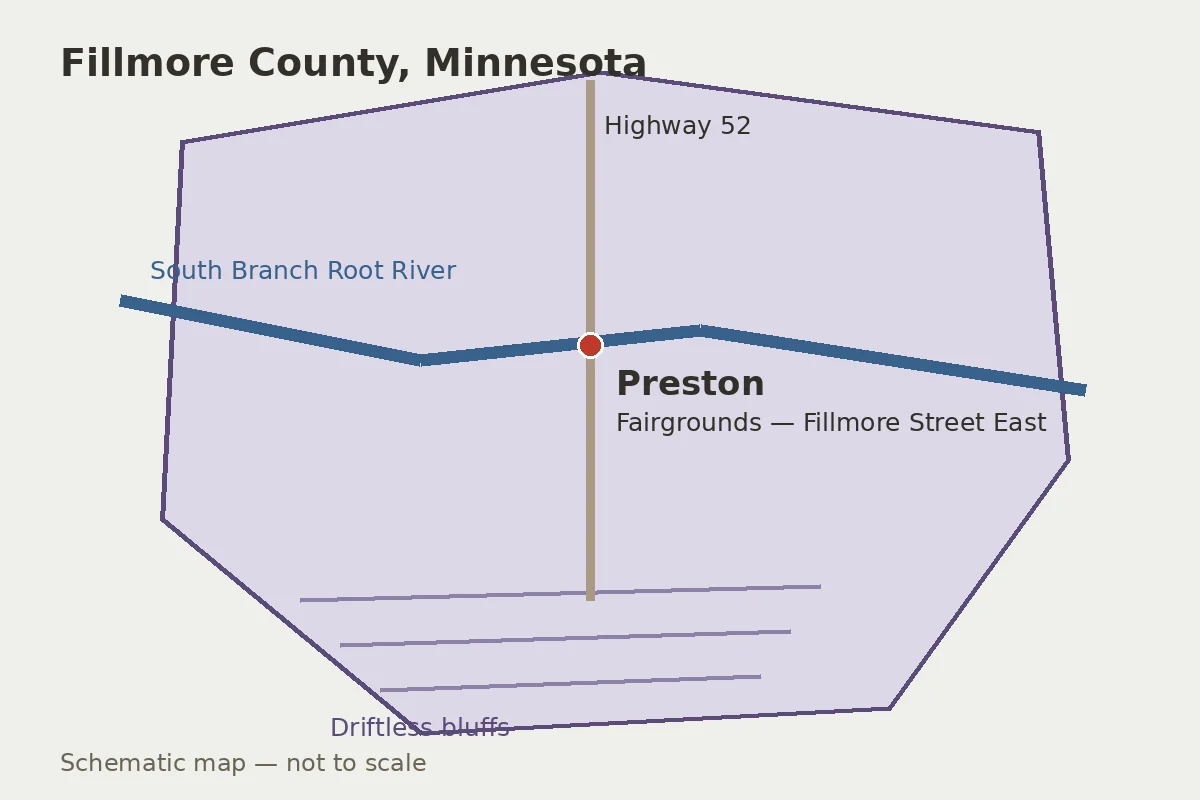
The fairgrounds sit in Preston itself, at 413 Fillmore Street East, so the fair behaves like a town event rather than a remote site, with the South Branch of the Root River close by. Preston is the Fillmore County seat, and drivers reach it on the highways that thread the Driftless valleys. Allow extra time on the road, because bluff-country routes curve with the rivers rather than crossing them.
What the Gate Costs, Honestly Stated
This is one of Minnesota’s inexpensive fairs, but precision matters more than a tidy figure. The fair’s own paperwork for the most recent season references passes at $5 a day or $15 for the week, quoted in its vendor documents; treat those numbers as firm evidence of the fair’s price level rather than a guaranteed gate figure, and confirm the current season’s arrangements before you travel. Once inside, most entertainment is covered, which keeps the day’s real spending to food, rides and the grandstand.
Sleeping on the Grounds: Electric and Rustic Camping
Unusually useful among the region’s fairs, the fairgrounds themselves take campers, with a choice of electrical hook-up sites or simpler rustic spots. The grounds stay busy all year: buildings are rented out, and the site stores vehicles, boats and RVs through the winter. Ask about fair-week camping early, because hook-up sites are limited.
July Weather Between the Bluffs
Mid-to-late July in the Driftless means warm days, humid evenings and the chance of a thunderstorm rolling down the valley. Shade matters by midday. Pack sunscreen and a hat, carry water, and bring an extra layer for the grandstand after dark, when river air cools the grounds.
Derby Day: A Saturday at the Fair, Hour by Hour
Saturday is the fair’s fullest day and its finale. If you have only one day to give Preston, here is how to pace it.
Morning: Barns, Benches and the Schoolhouse
Start in the livestock barns and exhibit buildings while the air is cool and the crowds are thin, then call at the O’Hara Schoolhouse before midday. Judging results are posted as the day goes on, so the baking benches and West End entries reward a slow look rather than a passing glance.
Afternoon: Free Shows and a River Break
Spend the early afternoon on the free programme: a beer-barn concert, pony rides and bounce houses if children are along. Then step out of the grounds for an hour beside the Root River. Preston’s trout water runs right by town, and even non-anglers find the cold, spring-fed river a proper reset before the evening.
Evening: Derby Night
Return in good time for the demolition derby, the week’s closing grandstand event. Eat first from the fair food stands, settle into your seat before the heats begin, and expect a slow, sociable exit afterwards, as the whole county leaves at once.
Fillmore Beside Its Bluff-Country Neighbours
Every county in the Driftless corner runs its own fair, and the nearest of them, Houston County’s to the east and Winona County’s to the north-east, each has its own loyal following. What separates Preston’s edition is the combination rather than any single act: a society founded in 1858, a five-day run, and a sponsorship model that keeps the bulk of the entertainment off your bill.
Choose Fillmore if you want one fair to anchor a week and your spending to stay predictable. Choose a tour of the smaller neighbouring fairs if variety matters more than depth. Many local families do both across the summer, treating the county fairs as a season rather than a single weekend, and Preston’s July slot is where that season gets going in this corner of the state.
The Preston Packing List
A short list covers most of what a Fillmore County Fair day demands:
- The current season’s schedule and gate arrangements, confirmed before you set out
- Cash for food stands, small vendors and the grandstand
- Sunscreen, a hat and a refillable water bottle for the July sun
- Comfortable shoes that can handle dust, grass and gravel
- A light jacket for the grandstand after dark, when river air cools the grounds
- A camping enquiry made early, if you plan to sleep on the grounds
- Time set aside for the schoolhouse and exhibit buildings, not just the grandstand
- Fishing tackle, if the Root River is part of your trip
Beyond the Fairgrounds: Trout, Trails and Cave Country
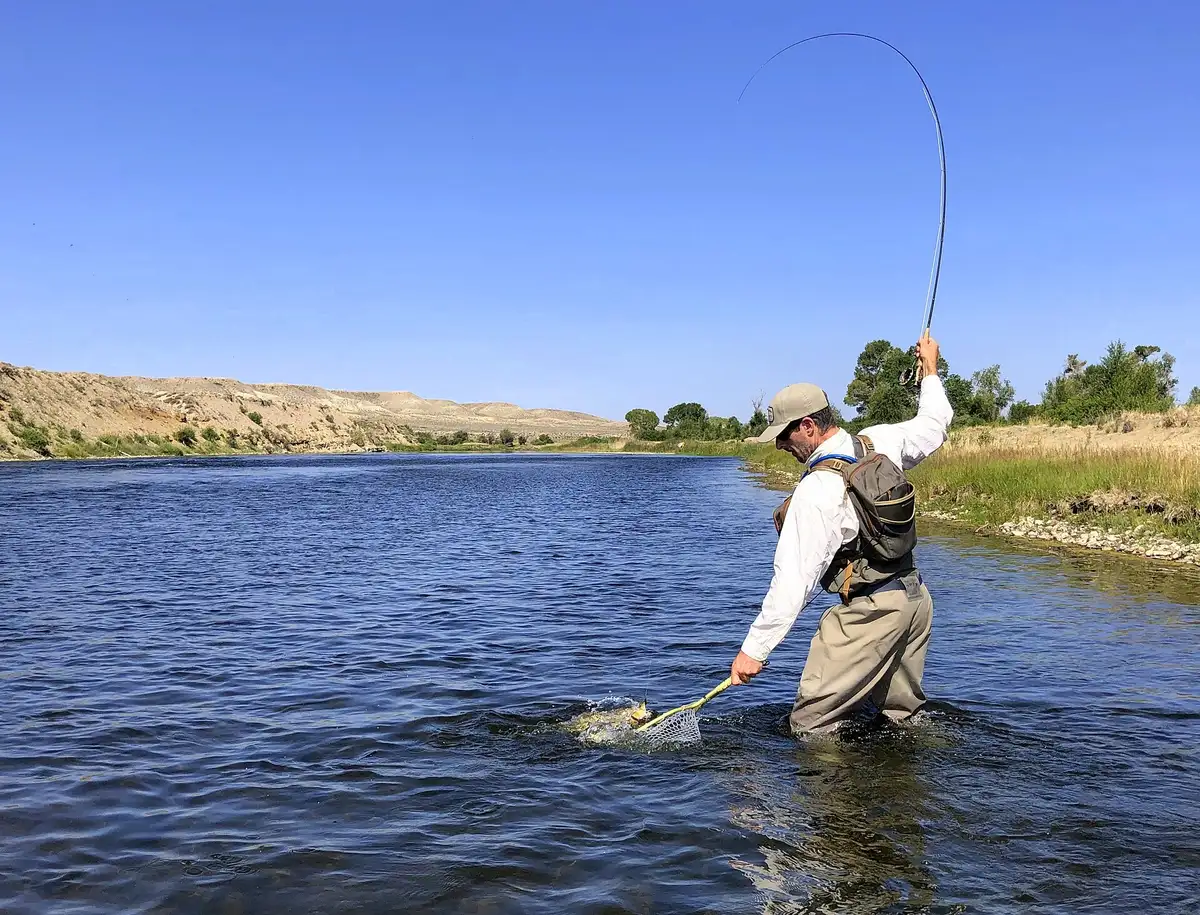
Preston brands itself Minnesota’s Trout Capital, and the title is earned on the South Branch of the Root River, a spring-fed trout stream running through town. Anglers time fair trips around the morning fishing; everyone else can walk or cycle the Root River trail system, which links the valley’s small towns through the same bluff scenery that frames the fairgrounds.
A short drive away, Forestville/Mystery Cave State Park pairs a preserved nineteenth-century village with a cave system among the state’s longest, a natural second day for a Preston fair weekend. The wider Driftless, a region the glaciers skipped, leaving steep wooded bluffs and cold clear streams, is the backdrop to everything the fair does.
Why an 1858 Society Still Runs the County’s Biggest Week
County fairs survive on volunteer societies, and Fillmore’s has been at the work since the year of statehood. The sponsorship programme is the modern expression of an old bargain: local businesses underwrite the entertainment, and in return the whole county gets a week in which almost everything is free. In a county of small towns, the fair remains the one appointment that Preston and every township around it keep together: part livestock show, part reunion, part proof that an institution founded by settlers can still organise the present.
Reading the Grounds Before You Go
The sketch below shows the fairgrounds’ place in Preston: the grounds on Fillmore Street East, in town, with the South Branch of the Root River close by and the bluffs rising beyond. The grandstand, barns and exhibit buildings cluster on the grounds, camping sits on site, and the town’s streets take the overflow. Treat the map as an orientation aid rather than a survey; the fair’s own programme carries the season’s detailed ground plan.
Frequently Asked Questions
In which week of July does the Fillmore County Fair fall?
The fair runs for five days, Tuesday to Saturday, in the third week of July. Events tied to 4-H begin on the preceding weekend, so the grounds are busy before the main public run starts. The confirmed programme for each edition is published as the season approaches.
How much does it cost to attend the Fillmore County Fair?
Less than almost any comparable fair week in Minnesota. The fair’s own paperwork for the most recent season references passes at $5 a day or $15 for the week, and once you are in, sponsorships allow the society to provide almost all attractions and entertainment for free. Confirm the current season’s gate arrangements before travelling, as figures can change.
What entertainment is free at the Fillmore County Fair?
Nearly all of it, by the society’s own account. Sponsorships let it provide almost all of the attractions and entertainment for free, which in recent seasons has meant concerts and dueling pianos in the beer barn, bounce houses, a bungee trampoline, pony rides and bingo, alongside the contests and exhibits. Food and drink are the main extras to budget for.
Can you camp at the Fillmore County Fair?
Yes. The fairgrounds offer camping with a choice of electrical hook-up sites or rustic spots, and the grounds operate year-round with building rental and winter storage. Fair week is the busiest time of the camping year there, so contact the society well ahead if you want a hook-up site during the fair.
What to Expect From the Next Fillmore County Minnesota Fair Festival
How often is the Fillmore County Fair held?
Once a year. The Fillmore County Agricultural Society, founded in 1858, has organised the fair as an annual fixture of the county’s summer for well over a century and a half, and that rhythm shows no sign of breaking.
When is the next Fillmore County Fair?
The next edition is expected in the third week of July, running Tuesday to Saturday as in recent seasons, with 4-H activity from the preceding weekend. Watch for the confirmed programme as the season approaches; the fair’s theme, America 250 in the most recent year, is announced along with it.
Will the dates change?
The third week of July has been the fair’s settled home in recent seasons, so a major move is unlikely. Minor adjustments to the day pattern are always possible, so plan around the traditional week and confirm the final programme before booking travel or camping.
Plenty of fairs are older in claim than in spirit. Preston’s is the reverse: a fair run by a society from 1858 that spends its energy on fresh barn roofs, new murals and free pianos rather than nostalgia. Come for the derby if you like. The real exhibit is a county that has kept the same appointment in the same week for more than 160 years.
Last updated: October 2026