Carlton County Minnesota Fair Festival
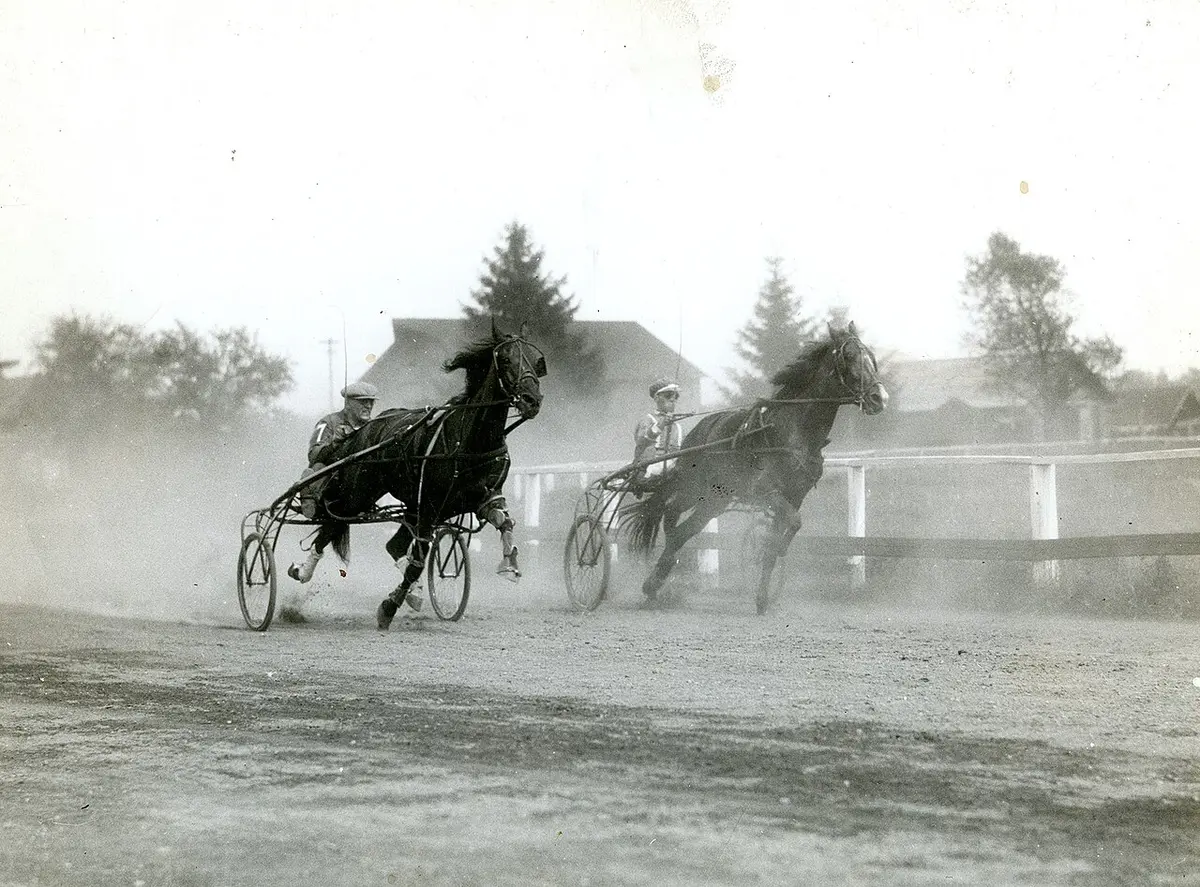
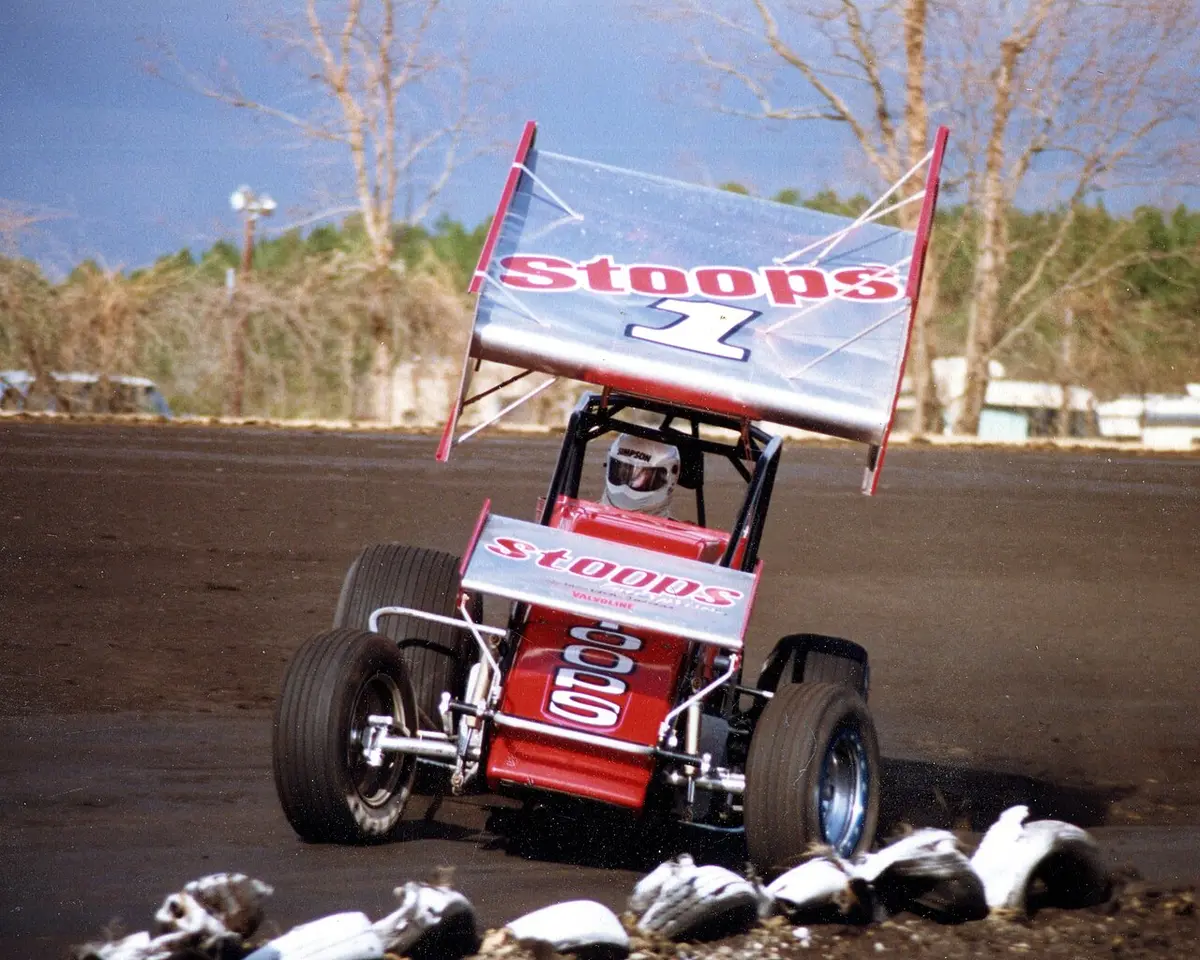
Some county fairs ease you in gently, with lemonade and a slow walk past the exhibit halls. The Carlton County Fair announces itself differently: with hooves on a dirt track, engines leaning into the turns of an oval, and a covered grandstand full of people who return to Barnum every August. Racing is not a side attraction here. It is the heartbeat of the fair.
For four days in mid-August, the Carlton County Fairgrounds on Front Street in Barnum become the busiest acres in the county. Horse racing shares the programme with figure-8 and oval auto races, a demolition derby and a tractor pull, while the barns carry on the older business of livestock judging, 4-H exhibits and neighbours comparing a year’s work.
Barnum is a small town, and the fair wears that as a badge of honour. You can cross the grounds in minutes and still fill a long day between the track, the barns and the food stands. What follows explains how the fair works, where its racing tradition came from, and how to plan a visit that makes the most of both sides of its personality.
Carlton County Fair Essentials
First, the basic facts. This is a four-day, mid-August event in Barnum, run for generations under the Carlton County Agricultural and Industrial Association, with free parking and a campground on the grounds themselves.
| Festival | Carlton County Fair |
| Town | Barnum, Minnesota |
| County | Carlton County |
| County seat | Carlton |
| Region | Northeastern Minnesota, south of Duluth |
| Typical timing | Four days in mid-August |
| Admission | Charged at the gate; grandstand events may cost extra |
| Parking | Free on the grounds |
| Setting | Fairgrounds with a covered grandstand, a track of about a quarter of a mile, barns and a campground |
| Organizer | Carlton County Agricultural and Industrial Association |
Grandstand First: Racing and Everything Around It
Most visitors plan their day backwards from the grandstand schedule: quiet mornings in the barns, a building buzz around the track, and evenings when the whole grounds lean towards the covered stand. Readers comparing Minnesota’s mid-August fairs often set this one beside the Brown County Minnesota Free Fair Festival in New Ulm, which builds its days around a free gate instead.
Fair food and local vendors
Eating here follows the classic county-fair pattern, which is part of the pleasure. Food stands and local vendors typically serve the fried, grilled and sweet staples fairgoers expect, alongside community-booth cooking that rarely appears anywhere else. Graze rather than commit: something savoury before the racing, something cold while the barns are busy, and a sweet finish later.
Music, shows and evening entertainment
Between races, the fair keeps its open spaces busy in most years with live music and family shows, so something is usually drawing a crowd even when the track is quiet. Entertainment leans regional and familiar rather than spectacular, and evenings build towards the grandstand as the light starts to go.
Rides, games and things for children
Younger visitors get the traditional mix of midway rides and games, but the fair’s real gift to children is its animal side. The barns put livestock within reach of a careful hand, 4-H members are often happy to talk about their animals, and the racing is easy to follow: loud, fast and finished in minutes. Families find mornings calmest for the barns and afternoons best for rides.
Calf Clubs, Covered Stands and a Long Racing Tradition
The fair’s roots lie with the Carlton County Agricultural and Industrial Association, which built the event into a northern Minnesota fixture in the early twentieth century. In farming country being opened up by rail and road, the fair served as the county’s annual showroom, where livestock, crops and home skills were judged in public and scattered townships met on common ground.
Its proudest early chapter came in 1928, when the fair hosted what was billed as the largest calf club exhibit in the United States, with 216 young exhibitors each bringing an entry. By the late 1920s, annual attendance was reported at around 10,000 people, drawn from Carlton, Saint Louis, Cass and Aitkin counties: remarkable numbers for a town the size of Barnum.
Racing grew up alongside the showing. Horse racing suited a horse-powered farming county, and when cars replaced horses, the track adapted rather than closed: oval and figure-8 auto racing joined the horses, with demolition derbies and tractor pulls added later. Letting the grandstand evolve while the barns kept their routines is why the fair feels both traditional and current.
The Fair Behind the Grandstand
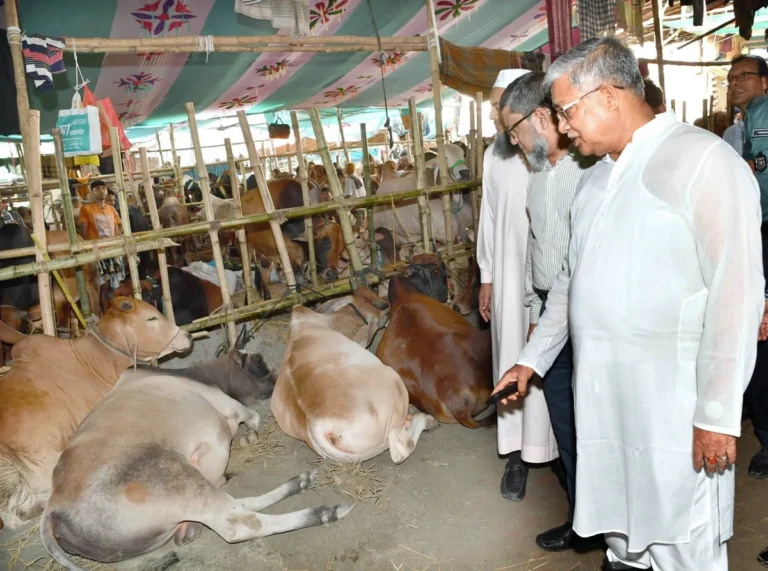
Strip away the racing and this remains a complete small county fair. Open-class and 4-H exhibits fill the halls with produce, baking, sewing and craftwork; the livestock barns hold cattle, sheep, swine, poultry and rabbits; and the whole event runs on volunteer labour from the communities that exhibit at it. The scale is intimate enough to see most of it in a single day.
That intimacy shapes the atmosphere. Exhibitors know the judges, the judges know the families, and a first-time visitor is quickly absorbed into conversations about bloodlines, weather and who won what last year. Where a big state fair overwhelms, Barnum’s fair explains itself as you walk it.
Planning Your Trip to Barnum
A little planning goes a long way at a fair where the headline events happen at fixed times. Sort travel, sleep and gate strategy in advance, and the days themselves can stay pleasingly loose.
Driving to the Front Street fairgrounds
The fairgrounds stand at 3770 Front Street in Barnum, an easy drive south from the Duluth area or north from the Twin Cities along the interstate corridor, with the final stretch running through the pine and lake country that defines this part of Minnesota. Barnum is small, so once you reach town the fair is simple to find: follow the traffic and the sound of the track.
Beds in Barnum and nearby towns
Barnum has only limited lodging of its own, and fair weekend fills it quickly. Many visitors stay in nearby Moose Lake or Cloquet, or make the longer run to Duluth for a full range of hotels. Book early: August is peak lake season across the region, and rooms disappear for reasons beyond the fair.
Sleeping on site: the fairgrounds campground
Uniquely convenient for a fair of this size, the fairgrounds include a campground, so campers and RV travellers can sleep within walking distance of the barns and grandstand. Staying on site changes the experience: dawn chores in the barns, coffee as the gates open, and no drive home after the evening races. Spaces go quickly in fair week, so check arrangements well before August.
Parking and race-day crowds
Parking on the grounds is free, which removes one headache, but the grounds still pulse with the programme: arrivals surge before headline races and the lanes empty slowly after the derby. The crowd rarely feels overwhelming, yet grandstand seats for the biggest events fill early. Arriving ahead of the afternoon programme, rather than five minutes before it, is the easiest improvement any visitor can make.
Gate money and grandstand costs
Budget for a gate charge, with the understanding that headline grandstand events have traditionally carried an additional charge in some years, and keep cash handy for stands that may not take cards. Prices change yearly, so check the current season’s details before travelling. Even with racing tickets added, a day here is one of the region’s cheaper big days out.
Mid-August weather in the northern woods
Mid-August in Carlton County usually means warm days, cooler evenings and the standing possibility of a summer storm rolling off the lakes. Dress for heat at midday, carry a layer for the grandstand after dark, and choose shoes that handle dust on dry days and mud on wet ones. Sunscreen earns its place in the bag, and so does rain gear you hope stays in it.
A Fair Weekend Built Around the Races
Day one works best as a gentle landing. Arrive in the morning, walk the exhibit halls while they are quiet, learn the layout of the barns, and let the afternoon racing be the day’s main event rather than something squeezed between other plans.
Day two is the day to go deeper. Return to the barns for the classes you missed, talk with exhibitors as they prepare animals, and spend the middle of the day on the midway and food stands. Save your best grandstand seats for the evening, when the derby or the figure-8 racing draws the fair’s biggest crowd.
On the final day, slow down. Watch the last of the horse racing, catch the results and ribbon presentations in the halls, and walk the grounds once more before exhibitors begin loading out. If you are camped on site, an unhurried breakfast while the fair wakes around you is one of the weekend’s quiet pleasures.
How Barnum Stacks Up Against Its Northern Neighbours
Minnesota’s mid-August calendar is crowded, and each fair has a different centre of gravity. Down in New Ulm, the Brown County Free Fair removes the gate charge entirely and pairs demolition derbies with a state flower show. Earlier in the summer, the Aitkin County Fair matches its grandstand racing with a rodeo and a historically free gate. Bemidji’s Beltrami County Fair, in the same August stretch, leans on rodeo nights, heritage demonstrations and on-grounds camping.
Barnum’s answer to all of them is the track. No nearby fair puts horse and auto racing so completely at the centre of its identity, or in a setting this compact. Fairgoers touring the region treat this fair as the connoisseur’s stop: smaller than the metro fairs, quieter than the rodeo grounds, built around a grandstand tradition that has survived every change in how Minnesotans get around.
Pack This for a Day at the Carlton County Fair
A short list, gathered from the way this particular fair actually runs:
- Cash for food stands, games and any grandstand tickets, since card readers are never guaranteed
- A light jacket or hooded top for the grandstand once the evening cools
- Comfortable closed shoes that can handle dust, grass and the odd muddy lane
- Sunscreen and a hat for unshaded time around the track and midway
- A rain layer in the car, ready for a fast-moving August storm
- Ear protection for small children during the loudest racing and the derby
- A phone or camera for the barns, where exhibitors are usually happy to talk
- Patience at the exits after headline events, when the whole grounds leave at once
Beyond the Gate: Barnum’s Lakes and Small-Town Stops
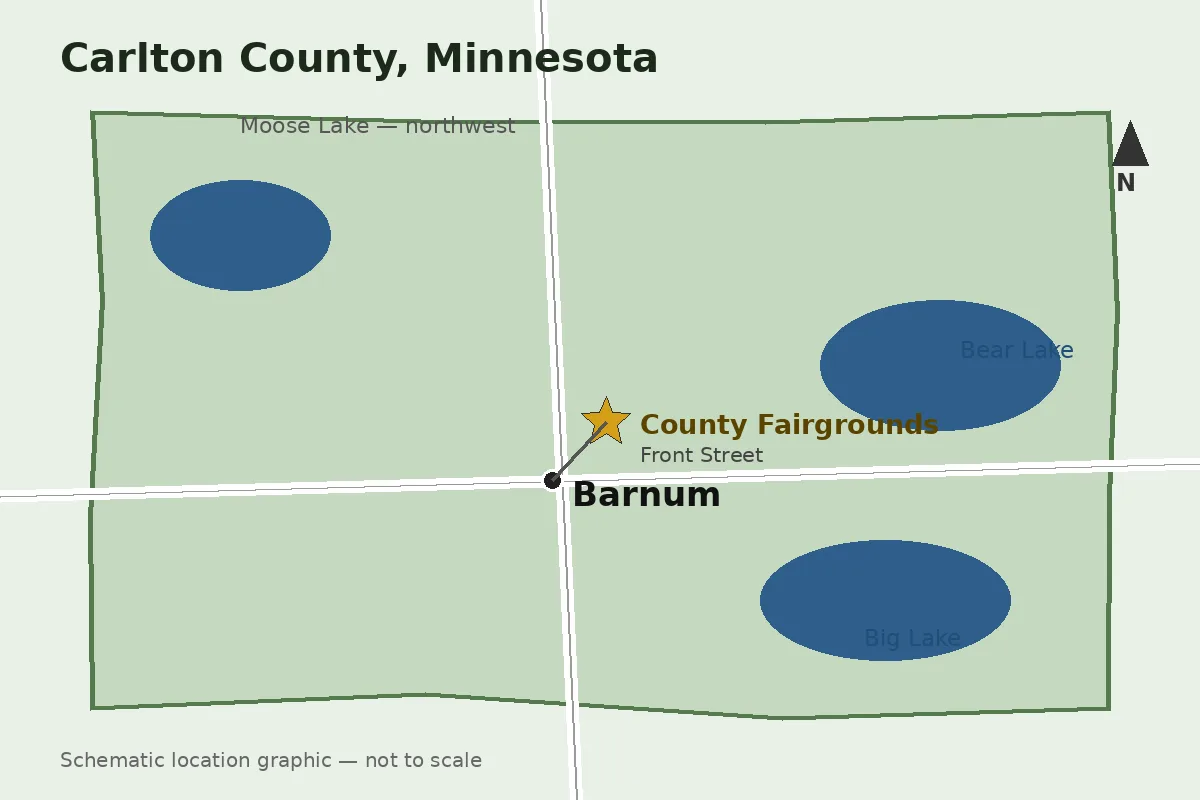
The fair sits in classic northern lake country. Bear Lake lies just east of Barnum, with Big Lake and Hanging Horn Lake a short drive south, and local families have long treated fair week and lake time as parts of the same holiday. A morning swim or an hour of fishing pairs naturally with an afternoon at the grounds.
Barnum itself repays a short wander: a compact main street, local cafés and the unhurried feel of a small town hosting an event many times its size. Moose Lake, a few minutes away, adds a state park, more lake access and extra places to eat and stay, making the fair an easy anchor for a longer northern weekend rather than a single day trip.
What a Racing Fair Means to a Rural County
For Carlton County, the fair is an annual argument that rural community life is alive and organised. The calf club exhibitors of 1928 have their equivalents in today’s 4-H members, whose year of feeding, fitting and record-keeping is judged in a few public minutes in Barnum. The ribbons matter less than the audience, which tells young exhibitors their work is seen.
The racing carries meaning too. It fills motel rooms and café tills, gives the county a weekend on the regional map, and preserves skills and machinery, from harness horses to vintage racing cars, that would otherwise live only in museums. A fair holding its agricultural core and its grandstand thrills in the same four days does quiet cultural work for the whole county.
Where the Fairgrounds Sit in Barnum
The Carlton County Fairgrounds stand on Front Street in Barnum, in the southern part of Carlton County, a short drive from Moose Lake and within easy reach of the interstate running between the Twin Cities and Duluth.
Frequently Asked Questions
When does the Carlton County Fair usually take place?
The fair is traditionally held over four days in mid-August, at the height of northern Minnesota’s county fair season. Exact arrangements are confirmed each year, so check the current season’s schedule before making travel plans around particular races or shows.
Is parking really free at the Carlton County Fair?
Yes, parking on the fairgrounds is free, which makes driving the simplest way to attend. Expect the lanes to be busiest immediately before and after the headline grandstand events, when most of the crowd arrives and leaves together.
What makes the grandstand programme different from other fairs?
Racing is the headline rather than a single evening’s novelty. Horse racing, figure-8 and oval auto racing, a demolition derby and a tractor pull all share a covered grandstand and a track of about a quarter of a mile, giving the fair a race-meeting atmosphere few Minnesota county fairs match.
Can visitors camp at the Carlton County Fair?
The fairgrounds include a campground, so camping and RV stays on site are part of the fair’s tradition, putting visitors within walking distance of the barns and the evening racing. Fair week is the busiest time of its year, so check availability and arrangements early.
What to Expect From the Next Carlton County Fair
The fair is an annual fixture, and the next edition can be expected to follow the established pattern: four days in Barnum built around the grandstand, with the barns, halls and midway in supporting roles. Individual races and classes are confirmed closer to the season, so plan around the fair’s traditions, and book accommodation or a campsite early.
How often is the Carlton County Fair held?
It is held once a year, traditionally across four days in mid-August, and has been a recurring fixture of the county’s calendar for well over a century.
When is the next Carlton County Fair?
The next edition is expected in mid-August, following the fair’s long-standing place in the season. The confirmed programme is published by the organisers as the fair approaches, and that is the moment to fix travel plans.
Will the dates change?
They could, in principle, as any annual event can shift within its season, but the fair’s mid-August home has been stable for many years. Treat the traditional timing as a planning guide rather than a promise.
Last updated: October 2026
Go for the racing, and you will stay for everything else: the calf classes and quilts, the food stands and the campground conversations after dark. This fair has survived by knowing exactly what it is.
One Comment