
Anoka County Minnesota Fair Festival
Most county fairs serve a rural county. The Anoka County Fair serves a county that runs from farmland to the edge of a metropolitan area, and it has the scale to prove it: six days in late July, a grandstand programme built around national-level tractor pulling, and grounds busy from the first livestock show to the last demolition derby car. This is a county fair at metropolitan scale.
The fairgrounds occupy a generous site on Saint Francis Boulevard in Anoka, and during fair week they hold the full range of the modern county fair at once: barns full of judged animals, exhibit buildings, a midway, food stands in every direction, and a grandstand hosting a different headline almost every night. Monster trucks, bull riding, two nights of tractor pulling, a headline concert, and a demolition derby give the week a rhythm smaller fairs cannot match.
This guide covers the fair in the order a visitor needs it: the essential facts, what to see and eat, the story behind the grounds, and the practical planning a six-day, metro-scale fair demands. Anoka rewards visitors who pick their nights deliberately, because no single evening holds everything this fair puts on.
Anoka County Fair: The Essential Facts
| Fair | Anoka County Fair |
| Town | Anoka, Minnesota |
| County seat | Anoka |
| Fairgrounds | 3200 Saint Francis Boulevard, Anoka |
| Typical timing | Six days in late July |
| Organiser | Anoka County Agricultural Society |
| Admission | Gate admission charged; grandstand bleacher seating included with gate admission in recent years |
| Parking | Free in recent years |
| Signature events | Monster trucks, bull riding, NTPA tractor pulls, headline concert, demolition derby |
| Setting | Large fairgrounds at the northwestern edge of the Twin Cities metro |
A County Fair Beside the Twin Cities
The Anoka County Fair is run by the Anoka County Agricultural Society, and its job is the classic one: give the county’s farmers, 4-H members, gardeners, bakers, and crafters an annual stage, then surround that stage with enough entertainment to fill six days. Livestock exhibitions and agricultural education sit at the centre of the grounds, and everything from the midway to the grandstand is arranged around them.
Scale changes the experience in ways worth understanding before you go, and a useful contrast is the Aitkin County Minnesota Fair Festival to the north, where a smaller county fair runs on a free gate and a single busy grandstand. Anoka plays a bigger game: more nights, more headline acts, and crowds drawn from across the northwestern metro. Neither model is better, but they feel different.

Six Days of Metro-Scale Fairgoing
Anoka’s programme is built like a festival week rather than a long weekend. Each day carries its own livestock shows, contests, and stage entertainment, and the grandstand changes character nightly, so the first evening and the last are genuinely different events on the same grounds.
Food Stands and Fairground Vendors
Feeding a metro crowd takes an army of stands, and Anoka’s food row runs from traditional fairground fare to the commercial vendors a large fair attracts. Arrive hungry and graze in stages; the grounds are big enough that new options appear on every circuit. Between meals, the exhibit buildings tell the county’s own food story through judged baking, canning, and garden produce.
Concerts, Stages and Live Entertainment
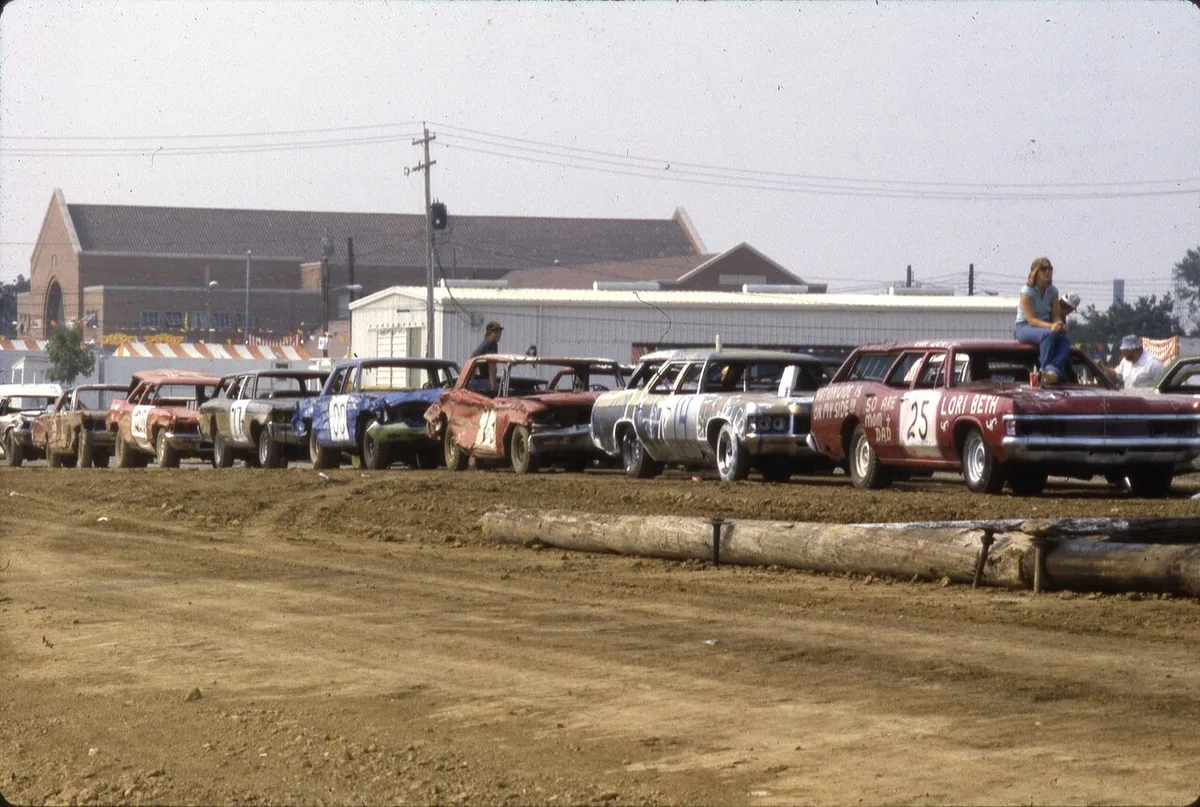
The grandstand is where Anoka spends its loudest energy. In recent seasons the week has opened with a monster truck show tied to Kids Day, moved through a night of professional bull riding, devoted two evenings to National Tractor Pullers Association competition, and saved a headline concert for the weekend before the demolition derby closed the fair. Bleacher seating at the grandstand has been included with gate admission in recent years.
Kids’ Day and Family Activities
Families are woven through the whole week rather than confined to a corner of it. Kids Day early in the fair pairs family-focused programming with the monster truck show, and through the week children can watch animals shown by exhibitors their own age, join contests and hands-on agricultural activities, and work through the midway at their own pace. When one area overwhelms, a quieter barn or exhibit hall is always a short walk away.
An Award-Winning Fairground With Deep Roots
The Anoka fairgrounds grew with a county that changed character around them, from a farming county seat town to a community at the metro’s edge. The agricultural society behind the fair kept its original mission through that transformation, insisting that livestock, crops, and home arts stay at the centre. That is why the modern fair still reads as a county fair rather than a travelling festival parked on fairground grass.
The grounds also work outside fair week, and that year-round life is part of their recent story. A fall festival on the grounds drew thousands of visitors in a recent season and turned part of its gate into a donation of several thousand dollars to the county emergency food shelf. The fair’s national industry recognition in recent years, including first-place honours for its events and grounds, reflects the same combination: professional polish applied to an old community institution.
Planning a Trip to the Anoka Fair
Six days and a big programme reward a plan. Decide which grandstand night matters most to you, build the rest of the visit around it, and leave loose time for the barns and exhibit halls, which are easy to underestimate.
Driving to Saint Francis Boulevard
The fairgrounds stand at 3200 Saint Francis Boulevard in Anoka, within comfortable driving distance of the Twin Cities’ northwestern suburbs and the communities up the river. Most visitors drive, and traffic thickens before the evening grandstand shows. Arriving in the afternoon, rather than at the grandstand rush, turns parking and entry into a calm errand and gives you the exhibit halls before the night crowd arrives.
Hotels and Places to Stay
Anoka’s metro position works in visitors’ favour: hotels and motels are spread across Anoka and the neighbouring suburbs. Fair week is a busy summer stretch, so booking ahead is wise, particularly if you want to stay close to the grounds. Many local visitors simply drive in for the day or evening, which keeps lodging optional for anyone based in the northern metro.
Camping and RV Stays Near Anoka
Camping is not the headline way to attend this fair, and most overnight visitors choose a hotel. RV and tent travellers will find campground options in the wider area around the northern metro and in the river country to the north, though fair-week availability tightens quickly. Reserve early and confirm hookups and site size before setting out.
Parking, Gates and Crowds
Parking at the fair has been free in recent years, which removes one cost and concentrates crowd flow at the gates instead. Expect the fullest grounds on weekend evenings and before popular grandstand shows, especially the concert and the demolition derby. Weekday afternoons are the fair at its most breathable, and they suit visitors who care most about livestock judging and exhibits.
Gate Admission and Grandstand Costs
Budget for a gate admission charge, then treat the grandstand as part of that ticket: in recent years, bleacher seating for the nightly grandstand shows has been included with gate admission rather than sold separately. Remaining spending is the familiar trio of food, midway rides and games, and any premium seating offered for headline nights. Prices and inclusions can change between seasons, so confirm the current arrangement before you go.
Minnesota July Weather and Dressing for It
Late July in Minnesota usually means warm, humid days and evenings that stay pleasant past dark, with a real chance of a thunderstorm somewhere in a six-day run. Wear light clothing and shoes made for long distances on grass and pavement, carry sunscreen for the afternoon, and keep a light layer for the grandstand after sunset. Exhibit buildings and barns make excellent shelter while a shower passes.
Anoka Beside Its Neighbouring Fairs
South of Anoka, the Carver County Fair in Waconia is the natural comparison: one of the highest-attended county fairs in the state, with a history reaching back to the nineteenth century and a big grandstand of its own. Waconia’s fair wraps around a small downtown in a lake town, while Anoka’s spreads across larger grounds beside a river town. Both prove a fair near the metro can keep its agricultural heart.
The contrast with Minnesota’s smaller northern fairs is equally instructive. A fair such as Aitkin’s, with its free gate and four-day run, offers intimacy and a single strong grandstand tradition, while Anoka offers choice, scale, and a different headline every night. Choosing between them is really choosing a tempo: one community’s showcase at walking pace, or the largest version of the same idea the state produces outside its state fair.
A Long Weekend at the Anoka Fair
Start on an early fair day, when the barns are full of animals being settled and judged and the exhibit halls are fresh with ribbons still being pinned. Walk the whole grounds once to learn their geography, and take in the first grandstand show of your trip, whether that is monster trucks at full roar or bull riding under the lights.
Give the middle of your visit to depth rather than breadth: a morning with the livestock shows, a slow pass through the home arts and garden exhibits, and an afternoon midway session. Then choose your headline night deliberately. Tractor pulling rewards patience, the concert rewards arriving early for a good bleacher spot, and the demolition derby rewards anyone who loves a fair that ends with glorious noise.
Packing and Planning Checklist for Anoka
Keep the following in mind and in the car:
- Your chosen grandstand night picked in advance
- Payment ready for gate admission, food, and midway rides
- Sunscreen, a hat, and a refillable water bottle
- Comfortable shoes for big grounds and mixed surfaces
- Ear protection for children during monster trucks and pulling
- A light layer for the grandstand after sunset
- A rain plan that uses the exhibit buildings
- Extra time for the barns, which take longer than expected
- A meeting point agreed with your group
Beyond the Fair: Exploring Anoka
Anoka gives a fair trip a proper town to wander. It is the county seat, a river town with a historic main street of shops and eateries that makes an easy pre-fair lunch or a wind-down after the gates.
The rivers are the other half of a day here. Green banks, bridges, and trails along the water give fairgoers a quiet hour between the afternoon exhibits and the evening grandstand. Treat the fair as the centre of the day rather than the whole of it, and Anoka rewards the slower schedule.
The Fair’s Place in Anoka County Life
A fair of this size is an economic event as much as a social one. Six days of large crowds move money through food vendors, local businesses, hotels, and fuel stations across the northwest metro, while exhibitors earn premiums recognising a season of work. The fairgrounds also host events year-round, spreading that benefit beyond one July week.
Its community role matters even more in a county where many residents have no farm connection of their own. For six days, the fair puts agriculture at the centre of suburban life: children who buy milk in cartons watch dairy animals being judged, and neighbours meet the farmers who work the land at the county’s edges. That translation between farm and suburb is the quiet work underneath the grandstand noise.
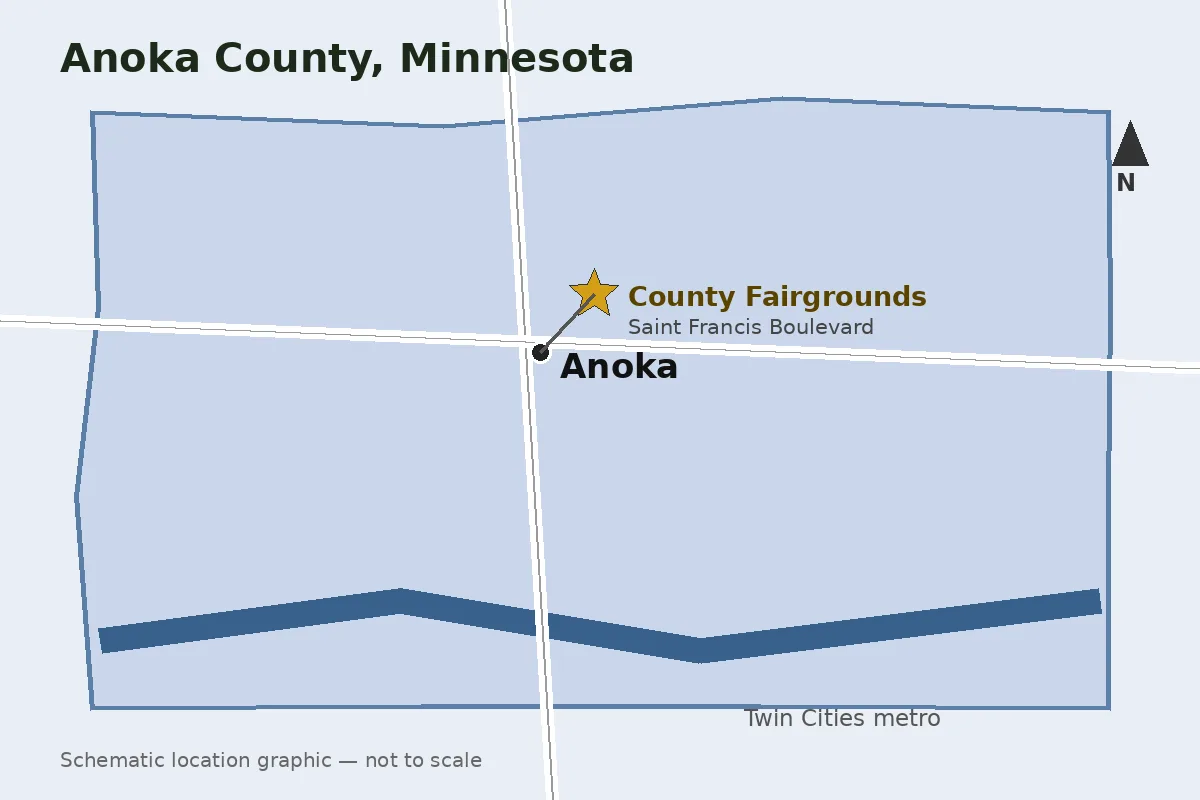
Anoka County Fairgrounds Map
The fairgrounds lie on Saint Francis Boulevard in Anoka, with the barns, exhibit buildings, midway, and grandstand laid out across one large grounds that rewards a full exploratory circuit on arrival.
Frequently Asked Questions
When is the Anoka County Fair held?
The fair runs for six days in late July in most years, long enough that each day carries a different grandstand headline. Because the nightly programme varies so much, check the current schedule and pick your day by the show you most want to see, rather than assuming any evening will do.
What is the Anoka County Fair best known for?
It is best known for its grandstand week: monster trucks, professional bull riding, two nights of national-level tractor pulling, a headline concert, and a closing demolition derby. Around that programme it runs one of the larger county fairs in the Twin Cities area, with full livestock shows, exhibits, and midway running all six days.
Is parking free at the Anoka County Fair?
Parking has been free in recent years, which is unusual for a fair of this size and worth enjoying while it lasts. Arrive ahead of the evening grandstand shows for the smoothest entry, since free parking draws its heaviest use in the hour before the headline events begin.
Is the Anoka County Fair suitable for families?
Very much so. A dedicated Kids Day, livestock barns full of young exhibitors, hands-on agricultural activities, and a full midway give children plenty to do, while the grounds’ size lets families alternate busy areas with quieter exhibit halls. Evening grandstand shows suit families who plan around bedtimes and noise.
What to Expect From the Next Anoka County Fair
The Anoka County Fair is an annual event, and the next edition is expected to keep the formula that defines it: six days in late July on the Saint Francis Boulevard grounds, with livestock and exhibit judging at the centre and a different grandstand headline most nights. The specific acts, show order, prices, and themed days can change between seasons, so confirm the details against the fair’s current announcements.
How often is the Anoka County Fair held?
The fair is held once a year, each summer, and runs for six days. Its length is part of its character, allowing separate nights for pulling, bull riding, concerts, and the demolition derby rather than compressing them into a single weekend.
When is the next Anoka County Fair?
The next edition is expected in late July, in line with the fair’s established place on the Minnesota summer calendar. As the season approaches, look for the announced grandstand lineup and daily schedule, and choose your visiting days around the events you care about most.
Will the dates change?
The fair’s late-July slot is a firm tradition, but the exact six days and the order of grandstand events can shift between years. A check of the current schedule before you book anything around a specific night, such as the concert or a tractor pull, is always worthwhile.
Last updated: October 2026
End a night at the Anoka County Fair in the grandstand bleachers, with the pulling track lit, the midway humming behind you, and six days of a county’s work and play spread out below, and the fair’s argument makes itself. A county fair can grow to metro scale without losing its soul, so long as the animals, exhibits, and neighbours stay at the centre. Pick your night, come hungry, and let Anoka show you how big the tradition can get.



One Comment