Jefferson Parish Louisiana Gretna Heritage Festival
Every autumn, the streets of historic Gretna fill with the smell of boiling seafood, the bark of a horn section, and the particular hum of a West Bank town that has turned hosting into a habit. The Gretna Heritage Festival is not a fenced-off concert behind a wristband gate. It is a neighborhood that opens its doors and lets the rest of Jefferson Parish walk through. Ask the people who return year after year and you hear the same note: it feels less like an event and more like a family reunion that happens to have a stage.
Gretna Heritage Festival: The Essentials
| Town / area | Gretna and the surrounding Jefferson Parish area |
| County | Jefferson Parish, Louisiana |
| County seat | Gretna |
| Population | 440,781 (2020 census) |
| Region | West Bank of the Mississippi, greater New Orleans area |
| Typical timing | Autumn, in most years during October |
| Admission | Generally free to attend |
| Setting | Historic downtown Gretna, near the river |
| Features | Louisiana food, live music, family activities, crafts |
| Organizer | Local community organizers |
Inside the Gretna Heritage Festival: A West Bank Town Opens Its Doors
The Gretna Heritage Festival unfolds across the streets of historic downtown Gretna, the seat of Jefferson Parish and one of the anchors of the West Bank of the Mississippi. For a few days each year, blocks that normally belong to commuters and courthouse traffic give way to food booths, stages, craft tents, and a slow parade of neighbors greeting neighbors. Jefferson Parish is a large place — 440,781 residents spread across 665 square miles at the 2020 census — but the festival compresses it into a walkable pocket where the same faces turn up season after season.
That familiarity is the whole point. Residents of Old Gretna describe the weekend as the one time of year when the front of town belongs to everybody: the retirees who claim a folding chair near a stage, the families who push strollers down the middle of a street normally full of cars, the teenagers who circle the same three blocks until dark. People who have moved away plan visits around it. Locals will tell you the festival is less about the lineup than about who you run into between sets.
How Gretna’s River History Shaped Its Heritage Festival
Jefferson Parish was founded on February 11, 1825, and Gretna grew into its seat — a river town whose fortunes have always been tied to the water. The parish that surrounds it now covers 665 square miles and counted 440,781 residents in the 2020 census, a mix of dense West Bank neighborhoods, riverfront industry, and wetlands that edge toward the coast. The festival is a newer chapter in that long story, but its instincts are old ones: gather, eat, listen to music, and remember where you came from.
You can read the area’s history in the way the festival is laid out. It hugs the historic core rather than a fairground, so the backdrop is brick storefronts and an old street grid rather than a parking lot. Longtime attendees say the festival works because it never tried to be somewhere else. It stayed in Gretna, in the blocks that made the town, and let visitors see the place the way residents do — on foot, in the evening, with a plate in one hand.
The Sound, the Smoke, and the Crowd: A Gretna Weekend in Full
If you have never been, the shape of the day is easy to predict. You arrive, you eat, you drift toward whichever stage is loudest, and you end up talking to someone you did not plan to meet. Here is how the pieces usually fit together.
Food: Boiled Seafood, Po-Boys, and West Bank Favorites
Food is the gravitational center of the Gretna Heritage Festival. Vendors work from tents and trailers, and the smell of seasoned boiling water carries down the block before you see the line. Expect the Louisiana canon — seafood, po-boys, sausage, sweets — served in portions built for walking. Residents have their routines: some eat early to beat the crowd, others wait until the bands start and the lines thin. A common habit is to buy from a different vendor each round rather than commit to one, so a group can sample widely and split everything.
Music: Stages That Lean on Louisiana Traditions
Live music runs throughout the festival, with multiple stages and a lineup that leans on the sounds of the region. The schedule rewards wandering: catch a set, follow the crowd, catch another. Locals treat the music as a moving backdrop rather than a fixed appointment. The reliable habit is to stake out a spot near a stage early in the evening, then let the night come to you instead of chasing the schedule across the grounds.
Family Activities: Room for Strollers and Grandparents Alike
The festival is built for mixed-age groups. Craft and vendor tents give browsers somewhere to drift, and closed-off streets make it easier to keep track of children than at a typical fairground. Families often split up and reunite at a landmark — a particular booth, a corner, a bench — because phone service gets sluggish when the crowd peaks. Grandparents who want to sit can usually find a chair or a curb with a view of a stage.
Getting to Gretna and Making the Weekend Work
Gretna sits on the West Bank, directly across the Mississippi from New Orleans, which makes it easy to reach and easy to underestimate. A little planning goes a long way.
Getting to Gretna From Either Side of the River
From New Orleans, the drive across the river is short, and the West Bank Expressway puts you within reach of downtown Gretna. From elsewhere in Jefferson Parish, surface roads and the expressway do most of the work. Because the festival occupies a walkable core, the smart move is to park once and stay on foot rather than try to move the car between stages.
Where to Stay Near the West Bank
Gretna and the surrounding West Bank communities have lodging options, and the wider New Orleans metro is close enough to serve as a base. Staying on the West Bank keeps your evenings short and your parking simple; staying across the river trades that convenience for a bigger choice of hotels and restaurants.
Parking Around Historic Downtown Gretna
Parking in a historic downtown is always the pinch point. Arrive earlier than you think you need to, look for surface lots and street parking on the edges of the festival footprint, and expect to walk a few blocks. The local habit is to treat that walk as part of the evening rather than a problem to solve.
What Admission and Food Typically Cost
Admission is generally free, which is a big part of why families come back. Food, drinks, and vendor goods are the main expenses, so budget per person for eating and drinking rather than for a ticket. Bring a little cash even though many vendors take cards; small transactions move faster that way.
October Weather on the West Bank
Autumn on the West Bank is warm and humid by most standards, with the chance of an afternoon shower. Dress in light layers, wear shoes you can stand in for hours, and keep an eye on the sky. Evenings are usually pleasant, which is when the crowds are thickest and the stages are busiest.
A Sample Weekend Built Around the Gretna Heritage Festival
Think of the weekend in three arcs rather than a schedule. Friday evening is for arrival and orientation: park once, walk the footprint, eat something fried, and pick the stage where you want to end the night. Saturday is the long day — come early for the food lines, stay through the afternoon for family-friendly hours, and let the evening sets pull you back toward the music. Sunday is slower and more local: crowds thin, conversations get longer, and it is the easiest day to actually look at the buildings and the river.
A practical version: start Saturday with a walk through the craft tents while the food lines are short, eat before noon, then find shade and a stage for the afternoon. Break for a rest if you have somewhere to go, then return for the evening. Sunday, arrive mid-morning, eat a late breakfast from a vendor, and leave by early afternoon before the weekend traffic thickens.
Gretna Compared With Neighboring Festival Towns
A weekend in Gretna feels different from a big New Orleans festival weekend. Across the river, events are larger, more spread out, and more likely to require a transportation plan. Gretna’s version is smaller in footprint and heavier on neighborhood feel — you can see most of it on foot in an afternoon and still feel like you have not rushed.
Compare it with Metairie, the parish’s other population center, where the rhythm is more commercial and strung along boulevards, or with smaller West Bank communities like Westwego and Marrero, where gatherings tend to be hyper-local and built around a single tradition. Gretna sits in between: big enough to draw a real crowd, small enough that you keep running into people you know.
Gretna Heritage Weekend: What to Bring and How to Move Through It
Before you go, check the current schedule and any road closures, and agree on a meeting spot with your group. Bring comfortable shoes, a light rain layer, sunscreen, a refillable water bottle, cash for small vendors, and a folding chair if you plan to sit through a set.
On the ground, park once and walk. Eat early or late to skip the longest lines. Keep an eye on the weather and on whoever in your group wanders slowest. Before you leave, buy from one more vendor than you planned and check the schedule for the next day.
Beyond the Festival Gates: Old Gretna and the West Bank
The festival is a good excuse to see the rest of Gretna. The historic downtown rewards a slow walk: the grid of streets near the river, the older commercial buildings, the sense of a town that predates the subdivisions around it. Because Gretna is the Jefferson Parish seat, civic buildings and courthouse traffic are part of the texture.
Beyond downtown, the West Bank opens up. The levee and the river views are a short detour, and a drive along the west bank takes you through a string of communities, each with its own character. If you have a second day, the New Orleans side of the river is minutes away, which means you can pair a Gretna festival weekend with a morning in the city and still be back in time for the evening sets.
How One Autumn Weekend Holds Jefferson Parish Together
For a parish of 440,781 people spread across 665 square miles, a shared gathering is harder to pull off than it sounds. Jefferson Parish runs from dense urban blocks to open wetland, and its residents do not always share a routine. The Gretna Heritage Festival gives them one.
Residents describe it as a civic ritual as much as a party. It is where local vendors get a weekend of exposure, where school groups and neighbors see each other, and where the parish seat reminds everyone that Gretna is a place, not just an exit on the expressway. The festival’s real product is not the lineup or the menu. It is the habit of showing up — the thing that makes a community a community rather than a set of addresses.
Where Gretna Sits on the West Bank
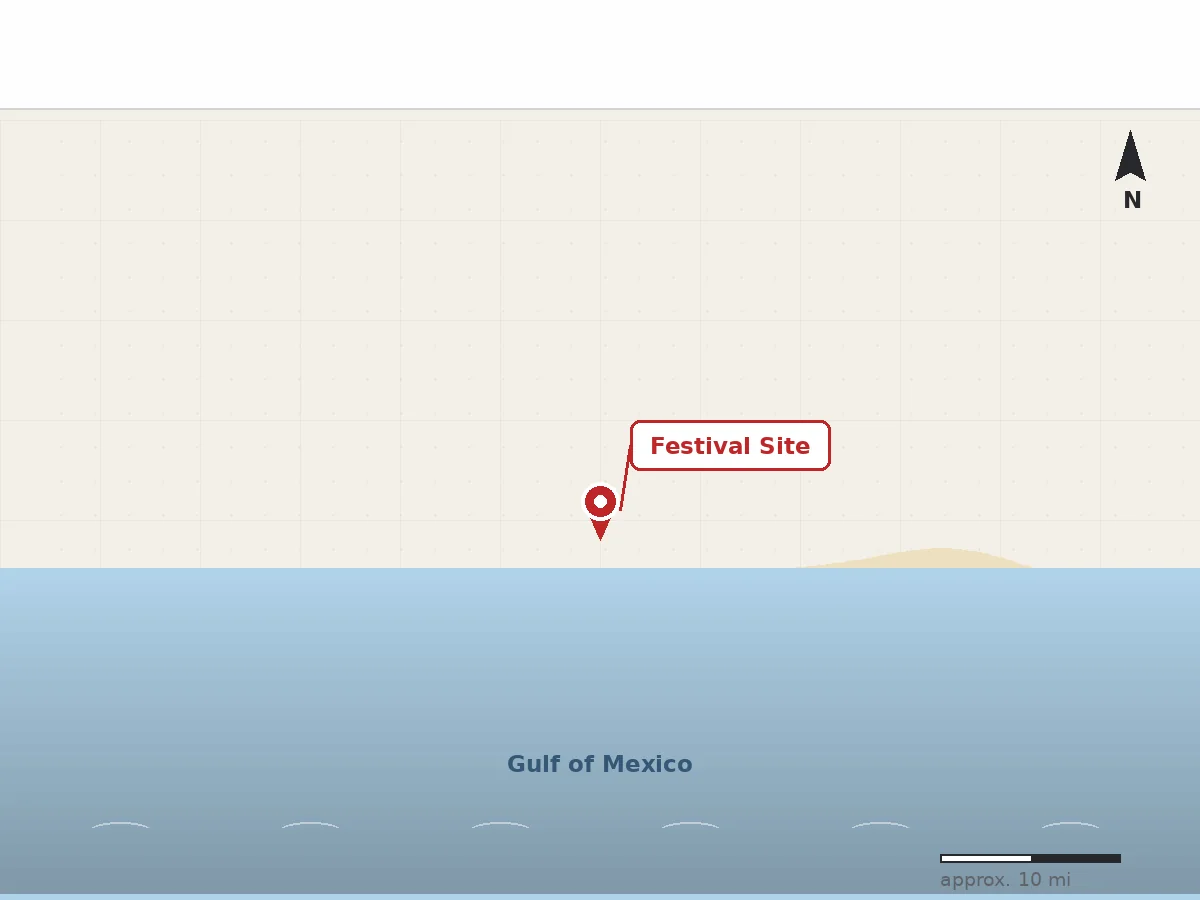
The Gretna Heritage Festival takes place in historic downtown Gretna, the Jefferson Parish seat on the West Bank of the Mississippi River, directly across from New Orleans.
Straight Answers for First-Time Gretna Visitors
Is the Gretna Heritage Festival free to attend?
Admission is generally free, which is one reason the festival draws such a broad local crowd. Your spending is mostly on food, drinks, and whatever the vendors are selling, so plan a budget per person rather than for a ticket.
When is the festival usually held?
It is an autumn event, held in most years during October. Because the exact weekend shifts from year to year, check the current schedule before you make travel plans.
Is the festival good for young children?
Yes. The footprint is walkable, the streets are closed to traffic during the event, and there are family-friendly hours earlier in the day. Bring a stroller if you have small kids, and set a meeting point in case your group separates.
How do I get to Gretna from New Orleans?
Cross the Mississippi from the New Orleans side and follow the West Bank Expressway toward downtown Gretna. The drive is short, but festival traffic and road closures can slow it down, so give yourself extra time and plan to park once.
The Road Ahead for the Gretna Heritage Festival
The festival’s future looks like its past: rooted in the same blocks, drawing on the same civic energy, and dependent on the volunteers, vendors, and neighbors who make it run. Growth brings pressure — parking, crowd management, the cost of putting on a multi-day event — but Gretna has an advantage most festival towns do not: a walkable historic core and a parish of 440,781 people who treat the weekend as a tradition rather than a novelty.
As long as that habit holds, the Gretna Heritage Festival will keep doing what it does best — turning a few blocks of the Jefferson Parish seat into the biggest front porch on the West Bank.
Last updated: October 2026
If you go, go the way locals do: park early, walk slowly, eat more than you planned, and let the evening find you. The Gretna Heritage Festival is not trying to impress you. It is inviting you in, and on the West Bank, that invitation has always been the point.