Dawson County Georgia Springtime Potato Festival
Dawsonville has a way of turning a simple crop into a full weekend. The Dawson County Georgia Springtime Potato Festival is built on that idea: take a humble, dependable staple of the Southern table, hand it to local cooks and vendors, and let a Northeast Georgia county seat do what it does best — feed people, play music, and welcome neighbors from across the region.
This guide is written for the traveler who plans ahead. Not the sort who rolls into town and hopes for the best, but the one who wants to know where to park, when to arrive, what to budget, what to wear when a Georgia spring decides to change its mind mid-afternoon, and how to build a weekend around a festival instead of just an afternoon at one. Dawsonville is the county seat of Dawson County, a county of roughly 214 square miles in the northeast part of the state, home to about 26,798 people as of the 2020 census. That means the festival lands in a genuinely small-town setting — one where traffic patterns, parking lots, and restaurant tables are finite resources worth thinking about in advance.
Below you will find the practical scaffolding: a snapshot of the essentials, background on how the event fits into the community, a realistic itinerary, comparisons with other spring happenings nearby, and a checklist you can actually use. Treat it as a logistics document with a soft spot for fried food.
Dawsonville Springtime Potato Festival Snapshot: The Ten Facts That Shape Your Trip
| Festival | Dawson County Georgia Springtime Potato Festival |
| Town | Dawsonville |
| County | Dawson County, Georgia |
| County seat | Dawsonville |
| County population | 26,798 (2020 census) |
| Region | Northeast Georgia |
| Typical timing | Spring, with the exact date set locally each year |
| Admission | Typically free to enter; food and vendor purchases are separate |
| Setting | Outdoor community festival grounds in and around Dawsonville |
| Signature features | Potato dishes, live music, family activities, local vendors |
| Organizer | Local volunteers, civic groups, and Dawsonville-area businesses |
What the Springtime Potato Festival Actually Is
Strip away the marketing language and this is a community spring festival with a very specific theme. The potato is the organizing principle — the reason vendors build menus around it, the reason the food lines form, and the reason the event has an identity that separates it from the generic “spring fling” calendar that every small town seems to publish. Around that theme sits a familiar and welcome structure: food vendors, live entertainment, activities aimed at children, craft and goods sellers, and the kind of easy wandering that happens when a town closes in on itself for a day and invites everyone else in.
Because the festival is tied to spring, it also functions as a seasonal marker in Dawson County. It arrives when the weather has warmed enough to make an outdoor afternoon pleasant but before the full heat of a Georgia summer sets in. That timing matters more than it might sound. It shapes what vendors cook, how long people linger, and how the whole day feels — unhurried, sunlit, and a little bit celebratory after a long winter.
The scale is community-sized rather than stadium-sized. That is a feature, not a limitation. It means shorter walks, easier conversations, and a day that does not require a strategy meeting to survive. It also means you should plan your arrival with some care, because a town built around a population base in the tens of thousands does not absorb a surge of visitors the way a major metro does.
From Planting Season to Public Party: How the Potato Tradition Took Hold in Dawsonville
The festival’s logic is agricultural before it is anything else. Northeast Georgia has long been farming country, and the potato — versatile, storable, forgiving in the kitchen — has always been a practical choice for households that wanted food on the table without fuss. A spring festival built around that crop is a way of honoring the ordinary. It says that the things people actually eat deserve a celebration as much as the showy harvests do.
Over time, that simple premise grew into a recurring local tradition shaped by the people who showed up for it. Volunteers organized. Cooks experimented. Local groups set up tables. Musicians volunteered a set. What began as a small gathering with a narrow theme widened into a full day of food, entertainment, and family activity anchored in Dawsonville, the seat of a county that has always defined itself by its small-town character rather than its size.
The result is an event that carries two histories at once. There is the broad history of the potato as a staple in the region’s kitchens and fields, and there is the much more local history of a town deciding, year after year, that it was worth setting aside a spring day to cook together in public. That second history is the one visitors walk through.
What to Expect on the Ground in Dawsonville
Expect a walkable, outdoor, daylight-hours kind of day. Expect crowds that build through the late morning and peak in the early afternoon. Expect to stand in at least one line that moves slower than you would like because someone ahead of you is deciding between two versions of the same dish. And expect the pleasant problem of having more to eat than you have appetite for.
Potatoes First: The Food Side of the Springtime Potato Festival
The food is the center of gravity. Vendors lean into the theme with fried, baked, mashed, loaded, and hand-held interpretations, and the range is usually wider than first-time visitors expect. Beyond the potato-specific offerings, you will generally find the broader Southern festival repertoire — grilled items, sweets, cold drinks, and comfort food built for eating while standing.
A practical note on eating strategy: portions at small festivals tend to be generous, and the temptation to try everything in the first hour is real. Pace yourself. Buy one item, walk the grounds, listen to a set, then come back for the next thing. That rhythm keeps you comfortable and spreads your spending across more vendors, which is exactly what a community festival needs from its visitors.
Live Music and Entertainment Across the Festival Day
Live entertainment typically runs through the day, with local and regional performers filling the air while people eat and wander. The mood is generally relaxed rather than concert-grade — think porch music energy scaled up to a field. Sets give the day its structure: you eat, you listen, you move, you eat again.
If music matters to you, claim a spot near the performance area early and treat it as your base camp. That is a far better plan than orbiting the grounds and losing your group every twenty minutes. Bring a folding chair if seating is limited and the rules allow it, and check the day’s schedule when you arrive so you know which set you are planning your food run around.
Family Activities That Keep Kids Busy in Dawsonville
Family programming is a core part of the draw, and it is usually the reason the festival works as a multi-generational outing. Expect the standard, welcome mix: activities aimed at younger children, space to move around, and a general atmosphere where bringing grandparents and toddlers to the same event is not a logistical contradiction.
Two planning habits make a family visit much smoother. First, set a meeting point the moment you arrive, because cell service in a crowded outdoor setting is never as reliable as you hope. Second, budget for one paid activity per child up front so the day does not become a negotiation. Both are small moves that pay off over a long afternoon.
Planning the Trip: Roads, Rooms, Parking, and Costs in Dawson County
Dawsonville sits in Northeast Georgia, which means most out-of-town visitors arrive by car. That single fact drives nearly every other logistics decision: where you stay, when you leave, and how much of your day is spent circling for a space. Plan the drive and the parking before you plan the food.
Getting to Dawsonville from Atlanta and the Northeast Georgia Mountains
The town is reached primarily by highway, which makes it a straightforward day trip for travelers coming up from the metro area and a natural stop for anyone already exploring the Northeast Georgia mountains. The trade-off is that highway access concentrates arrivals into the same corridors and the same handful of turns near the festival area.
Build in a buffer. If you are coming from out of town, add thirty to forty-five minutes to whatever your mapping app suggests, particularly if you are arriving after mid-morning. Arriving early is not just about parking — it is about walking the grounds before the heat and the crowds settle in, which is when the festival is at its most pleasant.
Where to Stay Around Dawsonville and the Lake Lanier Side
Lodging in a county of this size is limited relative to demand on a festival weekend. Options generally cluster around the usual categories — small independent properties, chain hotels in the broader corridor, and short-term rentals scattered through the surrounding area, with the Lake Lanier side drawing visitors who want to combine the festival with time on the water.
Book early. This is the single most valuable piece of advice in this article. A spring weekend in Northeast Georgia is attractive on its own merits, and festival traffic only tightens the supply. If you are traveling with a group, secure lodging before you finalize anything else, and consider staying slightly farther out and driving in — the trade of a longer commute for a guaranteed room is usually worth it.
Parking, Shuttles, and the Best Arrival Window
Parking arrangements are set by organizers and can change from year to year, so confirm the current plan before you leave home. What does not change is the pattern: designated lots and street parking near the grounds fill quickly, and the closer you arrive to midday, the more of your day you will spend looking for a space.
Aim to arrive in the first part of the morning. You will get a better spot, a shorter walk, and a calmer start. If a shuttle or overflow lot is in use, take it without hesitation — the few minutes on a bus or in a queue beat twenty minutes of creeping through residential streets. Note where you parked in your phone the moment you get out of the car. It sounds trivial until it is dusk and every street looks identical.
Admission, Vendor Spending, and Cash Versus Card
Admission to the festival is typically free, which means your budget is really a food-and-vendor budget. Set a rough number before you go. Festival spending has a way of accumulating in small increments — a drink here, a dessert there, a craft item you did not plan on — and a soft cap keeps the day enjoyable instead of expensive.
Carry a modest amount of cash even in a card-friendly era. Small vendors, raffles, donation jars, and tip buckets sometimes run on cash, and an ATM in a small town on a busy Saturday is not something you want to depend on. A twenty or two in small bills covers the gaps.
Spring Weather in Northeast Georgia and What to Pack
Georgia springs are pleasant and unpredictable in roughly equal measure. A morning that starts cool can turn warm by early afternoon, and a passing shower is always a possibility. Dress in layers, choose footwear you can stand and walk in for hours, and bring sun protection regardless of the forecast.
Pack a light rain jacket rather than an umbrella if you plan to be in crowds, since umbrellas in tight spaces are a hazard to everyone’s eyes. Bring a refillable water bottle, a hat, and a small bag you can carry comfortably all day. If you have young children, a change of clothes in the car is never wasted space.
A Sample Saturday and Sunday Around the Springtime Potato Festival
Saturday, early morning. Leave early, arrive before the rush, and park while the lots are still open. Walk the full grounds once without buying anything. This first lap is reconnaissance: you learn the layout, spot the vendors you want, and locate the restrooms and the music area.
Saturday, late morning. Make your first food stop while lines are short. Take it to the entertainment area, eat, and settle in for a set. This is the sweet spot of the day — the crowds are present but not yet dense, and the weather is usually at its best.
Saturday, afternoon. Work through the vendor rows, let the kids hit the family activities, and try one more potato dish you did not expect to order. Around mid-afternoon, when the heat and the crowds peak, take a break — sit in the shade, refill water, and reset.
Saturday evening. Head into Dawsonville or the surrounding area for dinner, or make the drive home if you are day-tripping. If you are staying overnight, this is the moment to see the town without festival traffic in the way.
Sunday morning. If you stayed, use the morning for the local area — a slow breakfast, a drive through the Northeast Georgia countryside, or time near the lake. The county is small enough to cover comfortably and scenic enough to justify the detour.
Sunday midday. If the festival runs into Sunday, return early and hit whatever you missed on Saturday. If it does not, treat the day as the relaxed half of the weekend: a second look at the town, a stop at a local shop, and an unhurried drive home before the evening traffic builds.
How the Dawsonville Potato Festival Compares with Nearby Georgia Spring Events
Dawsonville’s spring weekend is not the only option in the region, and knowing the alternatives helps you decide how to spend your time. Three useful comparisons stand out.
Dahlonega and the North Georgia wine-and-walk scene. Dahlonega, a little farther north, trades on a historic square, tasting rooms, and a steady calendar of small events. It is a more polished, browse-and-sip experience. Dawsonville’s potato festival is earthier and more food-forward — less about strolling a square and more about eating your way through a field.
Blue Ridge and the mountain-town weekend. Blue Ridge draws visitors for scenery, the train, and a compact downtown of shops and restaurants. It is a destination weekend built around atmosphere. Dawsonville offers a similar small-town warmth but organizes the day around a single themed event rather than general ambience.
Gainesville and the Lake Lanier corridor. Gainesville brings more urban amenities, more lodging, and easier access to the lake. If you want a festival as one part of a bigger, busier weekend, basing yourself toward Gainesville and driving to Dawsonville is a reasonable compromise — more rooms, more restaurants, and a short trip to the grounds.
The Dawson County Potato Festival Load-Out Checklist
Before you leave the driveway, confirm these items:
— Current festival date, hours, and location confirmed on the official local listing.
— Parking plan checked, including any shuttle or overflow lot information.
— Lodging booked if you are staying overnight.
— Layers packed: light jacket, hat, sunglasses, sunscreen.
— Comfortable walking shoes, not new ones.
— Refillable water bottle and a small day bag.
— Cash in small bills, plus a card as backup.
— A rough food and vendor budget agreed on in advance.
— Meeting point and check-in times set for your group.
— Phones charged, plus a portable battery if you have one.
— Change of clothes in the car for young kids.
— Pets left at home unless you have confirmed the current policy.
Beyond the Festival: Dawson County and Northeast Georgia Beyond the Booths
Dawsonville is the seat of a county that rewards a little extra wandering. The surrounding landscape is classic Northeast Georgia — rolling terrain, wooded stretches, and the kind of rural scenery that makes a drive feel like part of the destination. Lake Lanier sits within reach and gives the area a waterfront dimension that many small Georgia towns do not have.
For travelers extending the trip, the broader region is generous. Mountain towns, wineries, hiking, and scenic byways are all within a reasonable drive, which means the festival can serve as the anchor of a two- or three-day itinerary rather than a standalone stop. Even a single extra afternoon spent driving county roads and eating at a local restaurant changes the character of the trip.
Practical advice for extending your stay: pick one direction and commit. Trying to cover the mountains, the lake, and two historic towns in a single weekend produces a lot of windshield time and very little memory. Choose one, do it well, and leave the rest for next spring.
Why the Springtime Potato Festival Matters in Dawsonville
Small-town festivals do quiet work. They give local vendors a paying audience, give civic groups a reason to organize, give families a shared event that costs little to attend, and give a place a date on the calendar that belongs to it alone. In a county of roughly 214 square miles and about 26,798 residents, that matters.
The Springtime Potato Festival also does something subtler: it turns an ordinary crop into a point of local identity. That is not a small thing. Towns that celebrate something specific tend to hold on to their character better than towns that celebrate nothing in particular. The potato gives Dawsonville a story that is honest, unpretentious, and rooted in the region’s agricultural past.
For visitors, that translates into an experience that feels genuine rather than manufactured. You are not attending a brand activation. You are attending a spring day that a community built for itself and decided to share.
Where the Springtime Potato Festival Sits in Dawsonville
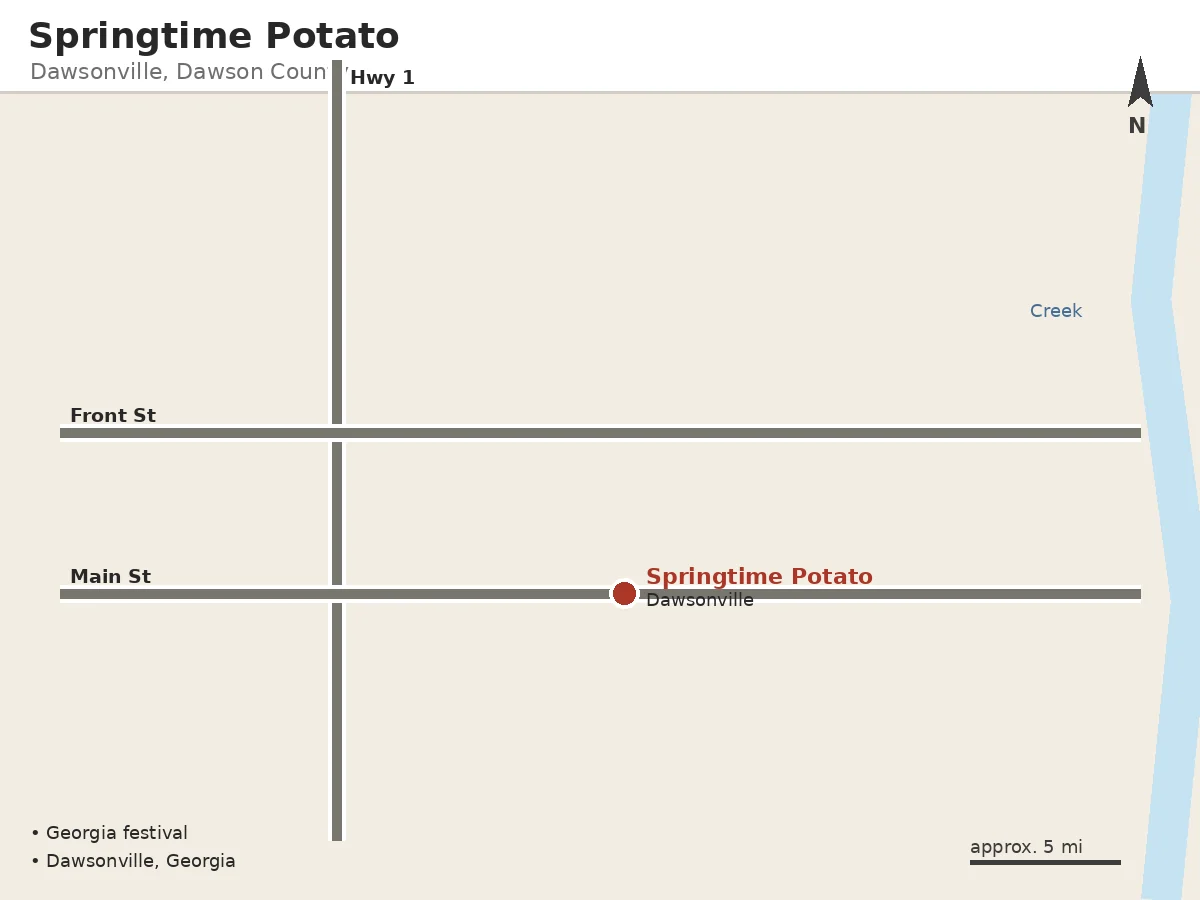
The festival takes place in Dawsonville, the county seat of Dawson County in Northeast Georgia, with visitors arriving by car from the surrounding region and the Atlanta metro.
Springtime Potato Festival Answers for First-Time Visitors from Out of Town
Is there an admission fee to get into the Dawsonville festival?
Admission is typically free, so the main cost of the day is whatever you spend on food, drinks, and vendor goods. Budget accordingly and treat your spending as a direct contribution to local cooks, makers, and community groups.
When exactly does the Springtime Potato Festival happen?
It is held each spring, with the specific date set locally each year. Because the calendar is confirmed annually rather than fixed, check the current local listing before you plan travel or book lodging. Spring weekends in Northeast Georgia fill up quickly.
How early should I arrive to avoid the worst crowds?
Arriving in the first part of the morning is the single best move you can make. Parking is easier, lines are shorter, and the grounds are cooler and calmer. Crowds typically build toward midday and stay heavy through the early afternoon.
Where do out-of-town visitors usually stay near Dawsonville?
Options generally include small independent properties, chain hotels in the broader corridor, and short-term rentals in the surrounding area, with the Lake Lanier side popular for visitors combining the festival with time on the water. Book early — supply is limited relative to festival-weekend demand.
Can I bring a pet to the festival grounds?
Policies vary by year and are set by the organizers, so confirm the current rules before you travel. If pets are not permitted, leaving them at home is the safer plan — a warm spring afternoon in a crowd is not a comfortable setting for most animals anyway.
Is the festival a good fit for young children and older relatives?
Yes. The event is designed as a family-friendly community gathering with activities aimed at children and a relaxed, walkable layout. Set a meeting point on arrival, keep water handy, and plan a mid-afternoon break in the shade to keep everyone comfortable.
What should I do if spring rain moves through Northeast Georgia?
Georgia spring showers are usually brief. Bring a light rain jacket rather than an umbrella, and be prepared to wait out a passing cell under cover or in your vehicle. If conditions turn severe, follow organizer instructions — they are the authority on any changes to the day’s schedule.
How do local vendors and groups get involved?
Vendor and community participation is typically coordinated by local volunteers, civic groups, and area businesses in the months leading up to the event. If you are a local maker, grower, or organization interested in a table, reach out through the festival’s official local contact channels well ahead of spring.
Looking Ahead: The Springtime Potato Festival in Dawsonville’s Next Chapters
The future of a community festival depends on unglamorous things: volunteer hours, vendor interest, and whether visitors keep showing up. Dawsonville has the advantage of a clear identity — a themed spring event rooted in the region’s agricultural character — and a location that draws travelers already moving through Northeast Georgia.
The most likely path forward is steady rather than explosive. Growth in the surrounding region brings more potential visitors, more lodging options, and more pressure on parking and roads. How the festival manages that pressure — through better arrival planning, clearer communication, and continued local involvement — will shape what the next several springs feel like.
For now, the smart play for visitors is the same as it has always been: check the current date, book early, arrive early, carry cash, and come hungry. Do that and the festival does the rest.
Last updated: October 2026
A spring weekend in Dawsonville is not complicated, and it does not need to be. The potato festival works because it is small, specific, and honest about what it is — a town in Northeast Georgia setting out food, plugging in amplifiers, and opening the gates. Plan the logistics once, then put the plan away and enjoy the afternoon. That is what the day is for.






One Comment