Mobile County Alabama African American Heritage Festival
Few American cities can trace Black history as deep as Mobile’s. This is the place where the last known ship carrying enslaved Africans, the Clotilda, arrived in 1860, and where its survivors founded the community of Africatown just north of the city. Each February, during Black History Month, the African American Heritage Festival turns that history into a living, public celebration of culture, creativity, and community.
The centerpiece is the OWAMBE Festival, a two-day gathering hosted by All Things Africatown that blends music, food, storytelling, and reflection. The name comes from a Yoruba word for a joyful, lively gathering, and the spirit fits: this is a festival that honors a painful history without letting the pain define it.
Mobile African American Heritage Festival: Quick Facts
| Location | Africatown and Mobile County venues, Mobile, Alabama |
| Typical timing | February, during Black History Month |
| Admission | Free |
| Central event | The OWAMBE Festival, hosted by All Things Africatown |
| Theme | Africatown’s heritage, the Clotilda story, and Black culture |
| Setting | Africatown, founded by survivors of the Clotilda |
A Festival With Roots in a Real Place
This is not a generic heritage fair staged in a convention hall. It takes place in Africatown, the community the Clotilda survivors established after emancipation, and its identity is inseparable from that ground. Visitors walk streets that were laid out by people who had been carried across the Atlantic against their will and who then built a self-sufficient settlement on a bend of the Mobile River.
That specificity gives the festival its weight. When presenters speak about resilience, they are standing where it happened. When musicians play, they are playing for the descendants of the people the community is named for. The result is an event that feels rooted rather than curated.
For a look at how another Alabama county builds a festival around its own community and history, see the Mobile County Alabama Mobile International Festival for a useful comparison.
How the Festival Began
The festival is a recent addition to Mobile’s calendar, growing out of years of work by community organizations to bring Africatown’s story to a wider audience. All Things Africatown launched the OWAMBE celebration to coincide with Black History Month, and it has expanded quickly as interest in the Clotilda story has grown.
The discovery and study of the Clotilda wreck in the Mobile River brought national attention to Africatown. The festival is one way the community has channeled that attention into something of its own, rather than letting outsiders tell the story for them. It is, in that sense, an act of self-definition as much as a celebration.
What Happens Over the Weekend
The programming leans on conversation as much as performance. Authors, historians, and cultural bearers take part in forums that explore the Clotilda’s legacy and the founding of Africatown, and attendees hear directly from descendants of the survivors. These sessions are the intellectual heart of the festival.
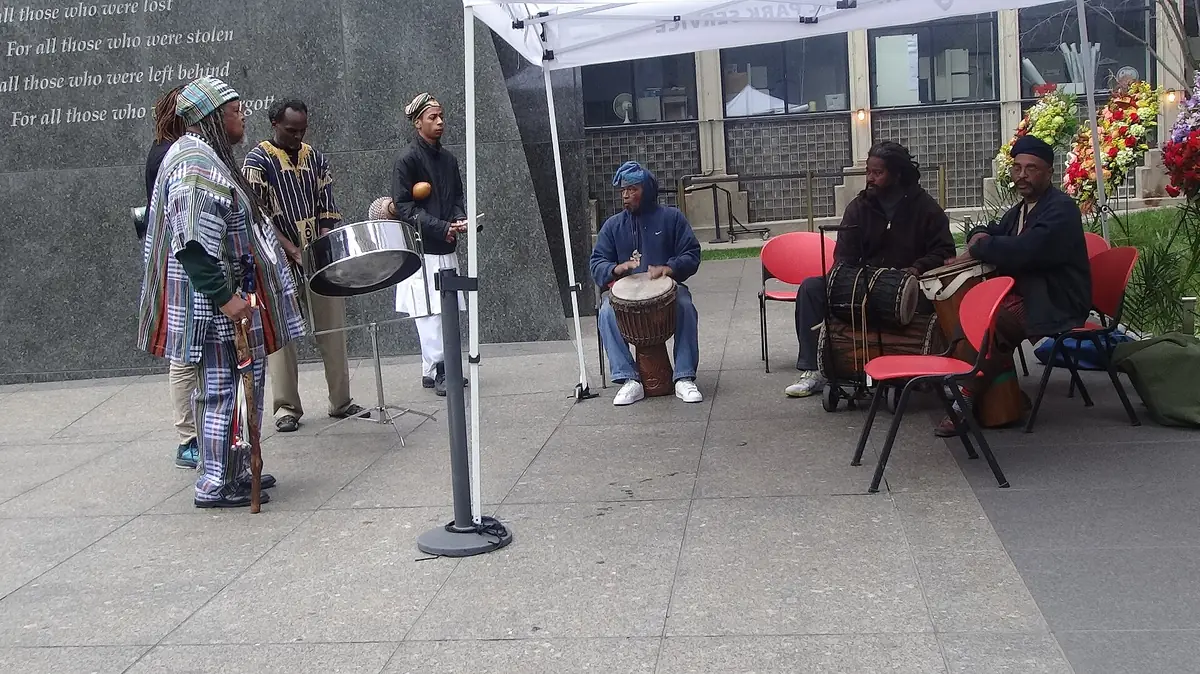
Live music and dance fill the schedule, from drumming ensembles to Mardi Gras-style performance groups to solo artists. The performances celebrate Black culture across generations, and the mix of traditional and contemporary acts keeps the energy high between the more reflective sessions.
Vendors serve soul food and other favorites, and the food is part of the point: sharing a meal is one of the oldest ways communities hold themselves together. The atmosphere is warm and welcoming, and visitors from outside Africatown are greeted as guests rather than spectators.
Visiting Africatown
Africatown sits just north of downtown Mobile, reached easily by car from Interstate 165 and the Mobile River bridge. The community is compact, and the festival sites are close enough to each other that a single parking spot can serve a full day if you are willing to walk.
The Africatown Heritage House, which displays the Clotilda exhibition, is the anchor of any visit. The Mobile County Training School and the community’s historic churches add context. Many visitors pair the festival with a tour that traces the community’s history, and those tours fill up quickly during Black History Month.
The festival is free, which is deliberate: the organizers want the history to be accessible to everyone, especially the descendants and neighbors whose story it is. Events run across a weekend, with daytime programming that suits families.
Building a Meaningful Visit
Give the festival more than an hour. The forums reward attention, and the performances are better when you let them unfold rather than rushing between stages. A good plan is to start with a forum in the morning, take in music and food around midday, and leave time for a walk through the community itself.
If you are coming from outside the region, treat the trip as a chance to learn rather than simply to attend. Read a little about the Clotilda before you arrive, and the day will mean considerably more.
How It Fits Mobile’s Calendar
Mobile is famous for Mardi Gras, which rolls through the same weeks that Black History Month is observed. The African American Heritage Festival offers a quieter counterpoint: instead of parades and crowds, it offers reflection and conversation. Both belong to the city, and together they show how many different traditions call Mobile home.
A Short Checklist
Bring a light jacket, since February mornings on the Gulf Coast can be cool. Wear comfortable shoes, carry a little cash for vendors, and plan to spend time talking with the people you meet. This is a festival where conversation is part of the experience.
Beyond the Festival
The story the festival tells continues all year. Africatown is a working community, not a museum, and its residents are still shaping what the place will become. Visitors who want to go deeper can return for the Clotilda tours, the community’s other gatherings, and the ongoing efforts to preserve and interpret the neighborhood.
Why It Matters
There is a difference between remembering history and living with it. The African American Heritage Festival lives with it. By gathering in Africatown each February, the community keeps its own story in its own hands, and invites everyone else to listen, eat, dance, and understand a little better.
The Clotilda and the Making of Africatown
The story at the heart of the festival begins in 1860, when the Clotilda smuggled more than a hundred Africans into Alabama decades after the transatlantic slave trade had been outlawed. When the Civil War ended, the survivors could not return home, so they pooled what they had and bought land, founding a community they called African Town on a bluff above the Mobile River.
That community, now known as Africatown, grew into a self-sufficient settlement with its own church, school, and businesses. The wreck of the Clotilda was located in the river in 2019, renewing national interest in the story. The festival is one of the ways the community keeps that history present and public.
Practical Notes for First-Time Visitors
Because the festival is spread across several sites in Africatown, plan on walking or driving short distances between venues. Events are generally free, but some tours and museum admissions are separate, so it helps to check the schedule in advance and decide which sessions matter most to you.
February weather on the Gulf Coast is unpredictable, ranging from warm afternoons to chilly mornings, so layers are wise. Bring a little cash for vendors, arrive early for the most popular forums, and leave room in your day for conversation; at this festival, the talking is as important as the programming.
The Africatown Heritage House
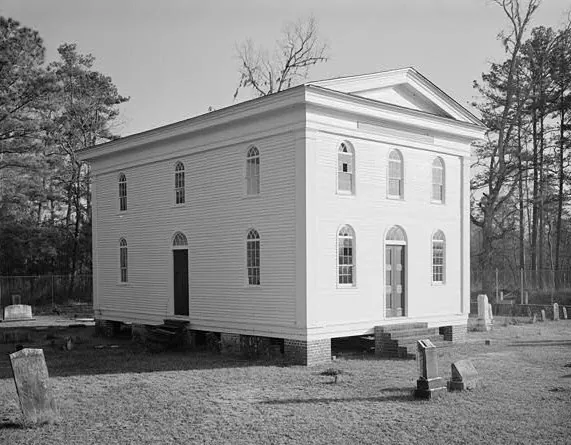
The Heritage House is the physical anchor of Africatown’s story. It houses an exhibition built around the Clotilda and the community its survivors founded, and it serves as a gathering place for the neighborhood and a destination for visitors from across the country.
During the festival, the Heritage House becomes one of several venues, hosting forums, performances, and informal conversation. For visitors, it is the best place to start, since the exhibition gives context for everything else they will see and hear over the weekend.
Black History Month in Mobile
The festival is one part of a broader observance. Throughout February, the city hosts lectures, performances, museum programs, and community events that explore Black history and culture. Taken together, they make the month one of the richest cultural periods on Mobile’s calendar.
For visitors planning a trip, the wider calendar is worth checking. Many events are free, and several take place at the city’s museums and historic sites. Combining a festival visit with one or two of them turns a single day into a fuller education.
Talking About Difficult History
The Clotilda story is not easy, and the festival does not pretend otherwise. Sessions address the reality of the slave trade and its aftermath with honesty, while also celebrating the resilience and creativity of the community that grew from it. That balance is deliberate.
For families, the programming offers a way to introduce children to difficult history in a setting that also includes joy, music, and food. Parents may want to preview the schedule and choose sessions suited to their children’s ages, but the festival is built to be welcoming across generations.
The Community Today
Africatown is a living neighborhood, not a historical exhibit. Residents work, worship, and organize here, and the festival is one expression of that ongoing community life. Visitors are guests in a place that is still very much in use.
That fact shapes how the festival should be approached. Come as a listener and a learner rather than a sightseer, support the local vendors and organizations, and treat the neighborhood with the respect you would want in your own. The welcome is warm, and it is returned in kind.
How to Support the Community
Visitors who want to do more than attend can support the organizations behind the festival. Donations, volunteer time, and purchases from local vendors all help sustain the work of preserving and interpreting Africatown’s history throughout the year.
The simplest contribution is attention. Listening carefully, asking thoughtful questions, and sharing what you learn with others all extend the festival’s reach beyond a single weekend. The community’s goal is not a one-time audience but a lasting understanding.
Festival Area Map
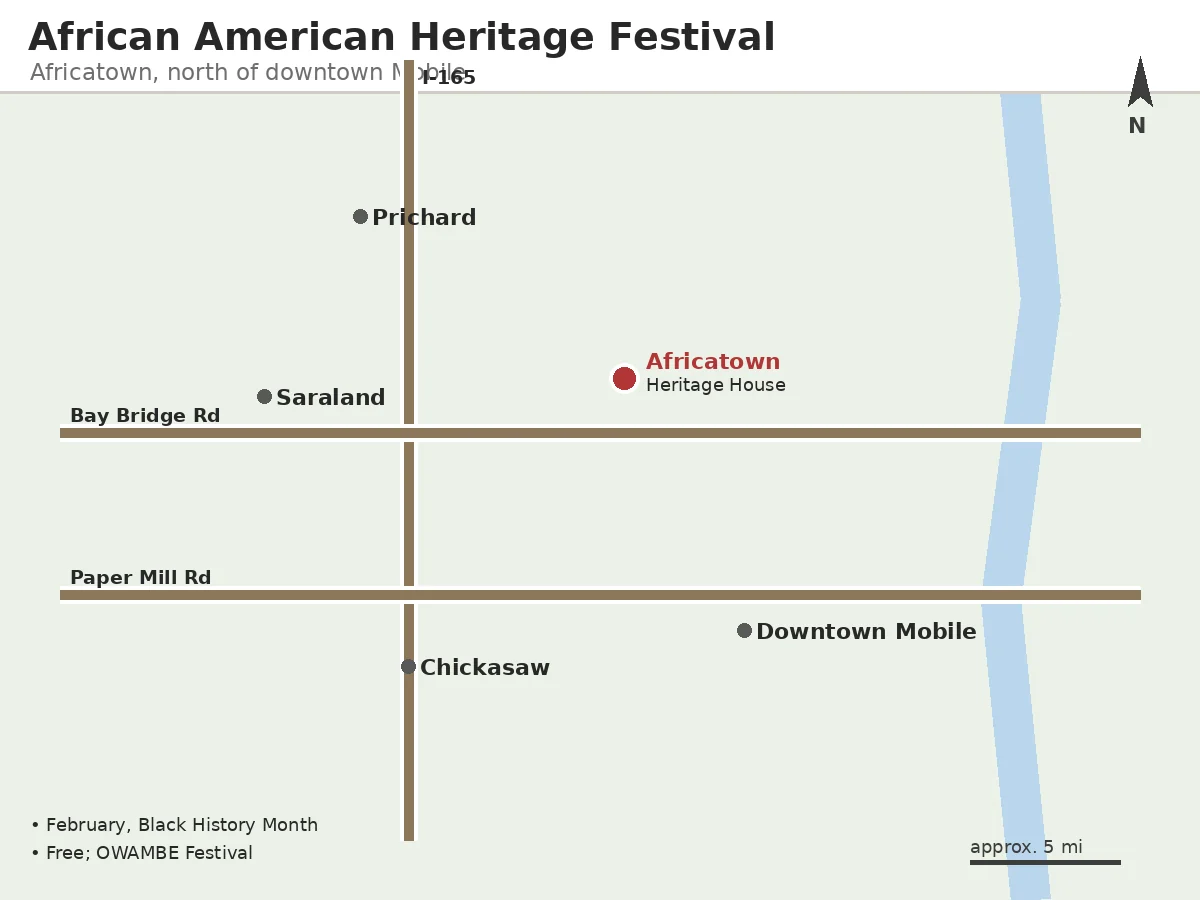
The map below marks Africatown and the festival venues north of downtown Mobile, with the main routes and the Mobile River noted so you can orient yourself before you arrive. The community sits just off Interstate 165.
Frequently Asked Questions
When is the Mobile African American Heritage Festival held?
It is held in February during Black History Month, centered on the OWAMBE Festival. Exact dates change each year.
Where does it take place?
Programming is based in Africatown, north of downtown Mobile, Alabama, at venues including the Africatown Heritage House and the Mobile County Training School.
Is there an admission fee?
No. The festival is free and open to the public.
What is the OWAMBE Festival?
OWAMBE is the two-day celebration hosted by All Things Africatown that forms the centerpiece of the heritage festival, featuring forums, performances, food, and storytelling.
Is the festival appropriate for children?
Yes. The programming is family-friendly, and the daytime schedule suits younger visitors, though some history sessions deal with difficult subjects.
Can I learn about the Clotilda during the festival?
Yes. The Clotilda story is central to the festival, and the Africatown Heritage House displays the related exhibition year-round.
What to Expect From the Next African American Heritage Festival
How often is the festival held?
It is an annual event tied to Black History Month each February.
When is the next edition?
It is expected in February. Confirm the schedule through All Things Africatown and the festival’s official channels.
Will the dates or venues change?
Dates and venues can vary from year to year, so check ahead. The setting in Africatown is the constant.
Last updated: October 2026
The Mobile African American Heritage Festival asks visitors to do something simple and important: come to Africatown, listen, and take part. The food is good, the music is joyful, and the history is heavy, but the community carries all of it together. Go with an open mind and enough time to stay a while.