Lamar County Alabama Groundwater Festival
Not every festival is built around food and music. In Lamar County, the Groundwater Festival is an educational event that brings elementary and middle school students together to learn about water, where it comes from, and why protecting it matters. Held in the spring as part of a statewide program, it turns water science into a hands-on day of demonstrations, models, and activities.
The festival is supported through grants from the Alabama Department of Environmental Management, which funds groundwater festivals in communities across the state in partnership with local soil and water conservation districts and the Alabama Cooperative Extension System. For students in Vernon and the surrounding county, it is a chance to learn about aquifers, watersheds, and water quality in a way that a classroom lesson rarely achieves.
Groundwater Festival: Quick Facts
| Location | Vernon and Lamar County schools, Alabama |
| Typical timing | Spring, during the school year |
| Audience | Elementary and middle school students, especially around fourth grade |
| Focus | Groundwater, watersheds, water quality, and conservation |
| Support | State environmental grants and local conservation partners |
| Format | Hands-on activities and presentations led by water and natural resource experts |
Why a Festival About Water
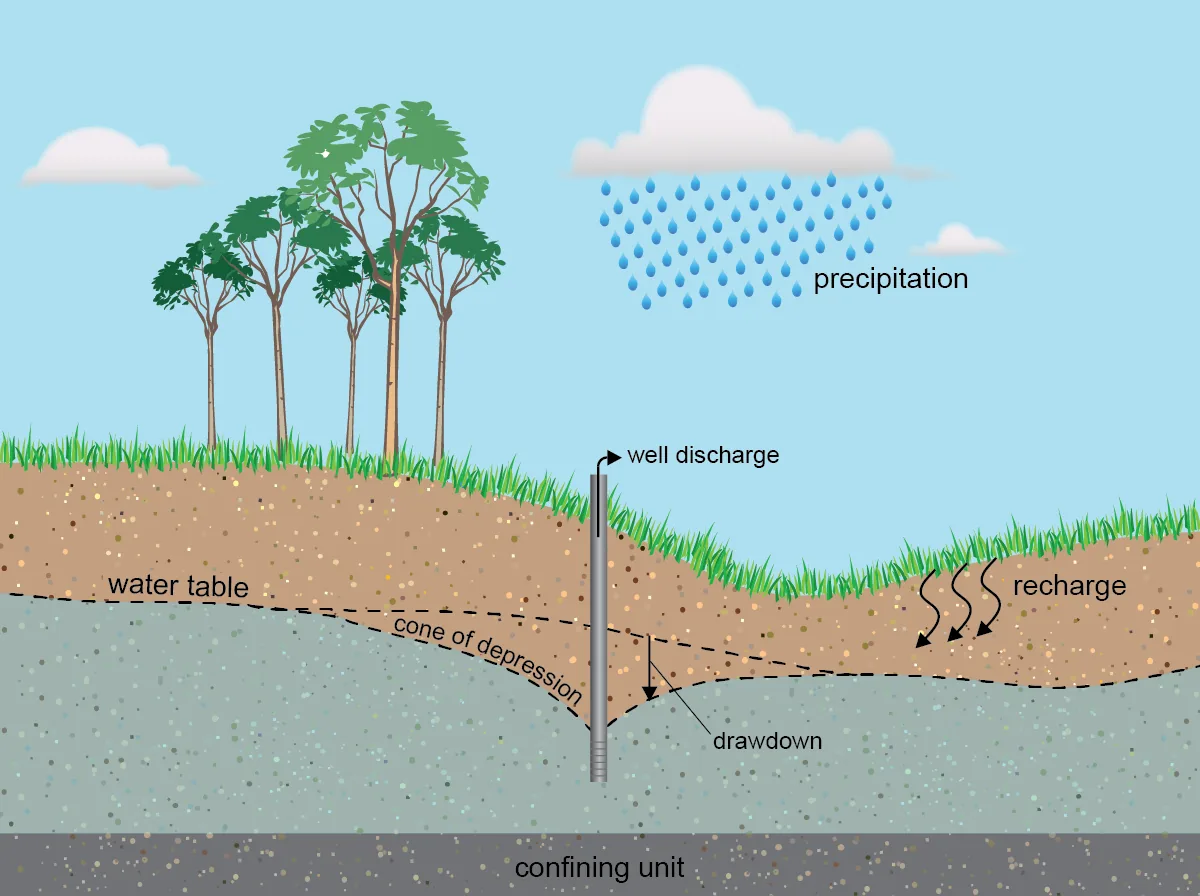
Groundwater is easy to take for granted and hard to picture, which is exactly why the festival exists. The program is designed to make an invisible resource tangible. Students build aquifers, wetlands, and filtration systems, model the water cycle, and watch demonstrations that show how water moves through the ground and how pollution can travel with it. The goal is not just information but a sense of responsibility.
Education-focused events sit alongside the food and music festivals on Alabama’s calendar, and the Lamar County Alabama Vernon City Celebration Festival shows how a west Alabama town marks the season with its own community gathering.
The format matters as much as the content. Rather than sitting through lectures, students rotate through stations led by water and natural resource experts, volunteers, and trained presenters. That hands-on approach keeps younger students engaged and gives the lessons a staying power that worksheets cannot match. The program specifically targets upper elementary students, an age when children are old enough to grasp the concepts but still forming their values around stewardship.
A Statewide Program with Local Roots
The Groundwater Festival is part of a broader Alabama effort that has been running since the late 1990s, with the state environmental agency providing small grants to communities that host an event each academic year. Local soil and water conservation districts, resource conservation councils, and the extension system help organize the festivals, which are offered at no cost to schools. The program reaches communities from Mobile to Huntsville and from Fayette to Eufaula.
For Lamar County, the festival connects students to the landscape they live in. The county’s rural character and its reliance on wells, springs, and local waterways make the lessons especially relevant. Students who take part come away with a clearer understanding of where their water comes from and what it takes to keep it clean.
How the Day Works
A typical groundwater festival runs for a school day, with classes moving through a series of stations. Activities focus on drinking water, groundwater, watersheds, surface water, water quality, and conservation, and each station pairs a concept with something students can do with their hands. Volunteers from local organizations, agencies, and community groups staff the stations, which keeps the student-to-presenter ratio low and the experience personal.
Because the event is designed for schools, it is not a public festival in the usual sense, and visitors cannot simply show up. Its value lies in what it gives students and teachers: a field-trip-quality learning experience delivered close to home, at no cost to the school system, and tied directly to the environment they know.
Why It Matters
Environmental education often struggles to compete for time and funding, which makes programs like the Groundwater Festival valuable beyond their immediate lessons. By reaching students early, the festival helps build a generation that understands the connection between everyday habits and the health of local water supplies. In a rural county where groundwater is a practical necessity, that understanding has real stakes.
Why Water Education Matters
Water is the resource people notice only when it is missing, and the festival sets out to change that. Its activities turn something invisible into something students can see and touch: they assemble model aquifers, build miniature wetlands, and run water through filtration setups to watch how contaminants move.
The aim reaches beyond facts toward stewardship. The event is pitched at upper elementary grades, an age when children can handle real science but have not yet settled into fixed habits. Reaching students then, the organizers reason, can shape choices about water that last well into adulthood.
How the Stations Work
A festival day unfolds as a rotation. Classes move through a series of stations, each devoted to a piece of the water story, from drinking water and watersheds to surface water, quality, and conservation. Every station pairs a concept with something the students do themselves rather than simply hear about.
Small groups are a deliberate feature. Keeping the student-to-presenter ratio low means children can ask questions and get answers, and presenters can adjust on the fly. That personal, hands-on format is what gives the day a staying power that a worksheet never achieves.
How the Program Reaches Schools
Alabama has supported groundwater festivals since the late 1990s, with the state environmental agency awarding modest grants to communities that agree to host an event during the school year. Local conservation districts, resource councils, and the extension system handle the organizing, and the festivals cost schools nothing.
In Lamar County the lessons land close to home. With the county relying on wells, springs, and local streams, the material is not abstract science but a description of the students’ own surroundings. They finish the day knowing more about where their water begins and what keeps it safe.
Supporting the Program
Because grants and local partners carry the cost, the festival depends on community involvement. Volunteers, presenters, and sponsors each play a part, and the program offers businesses and organizations a way to invest in environmental education in their own backyard. Interested educators can inquire through their local conservation district.
The payoff arrives slowly. Environmental education is often the first thing squeezed when time and money are tight, so programs like this fill a genuine gap. By reaching children while they are still forming habits, the festival helps raise a generation that treats clean water as a shared responsibility rather than an afterthought.
Who It Serves
This is a school program rather than a public festival, organized through classrooms instead of open to the general public. That structure is exactly what lets it deliver a field-trip-quality experience at no cost, tied to the environment the students already know.
Teachers and administrators who want their classes involved can contact the local soil and water conservation district or the state agency that coordinates the grants. Decades of operation mean the format is proven and the materials are ready for schools to pick up and use.
Teaching Science Close to Home
There is a practical advantage to teaching water science in the place where students live. When the aquifer under discussion is the one supplying their own wells and the watershed is the one they can see from the schoolyard, the lessons stop being abstract. The Groundwater Festival leans into that local relevance.
That approach also builds a sense of ownership. Students who understand where their water comes from are more likely to care about keeping it clean, and they carry that understanding home to their families. In a rural county that depends on groundwater, that chain of influence is exactly what the program hopes to create.
The Partners Behind the Program
A groundwater festival is a collaboration. State grants provide funding, local soil and water conservation districts handle organization, and the cooperative extension system supplies expertise. Volunteers from agencies and community groups staff the stations, and schools provide the students. No single partner could run the event alone.
That collaboration is part of what makes the program sustainable. Because the cost is shared and the format is established, communities can host a festival year after year without reinventing it. The model has been refined since the late 1990s, and it now reaches dozens of communities across Alabama.
Building a Water-Literate Generation
The long-term value of the Groundwater Festival is measured in habits, not test scores. Students who build a model aquifer or run a filtration demonstration carry that experience with them, and many remember it years later. Environmental education works best when it is hands-on, and this program is built around that principle.
For a state where water quality and supply are constant concerns, that early education is an investment. By reaching students in upper elementary grades, the festival targets an age when curiosity is high and habits are still forming. It is a small program with a long horizon, and that is precisely its strength.
Festival Area Map
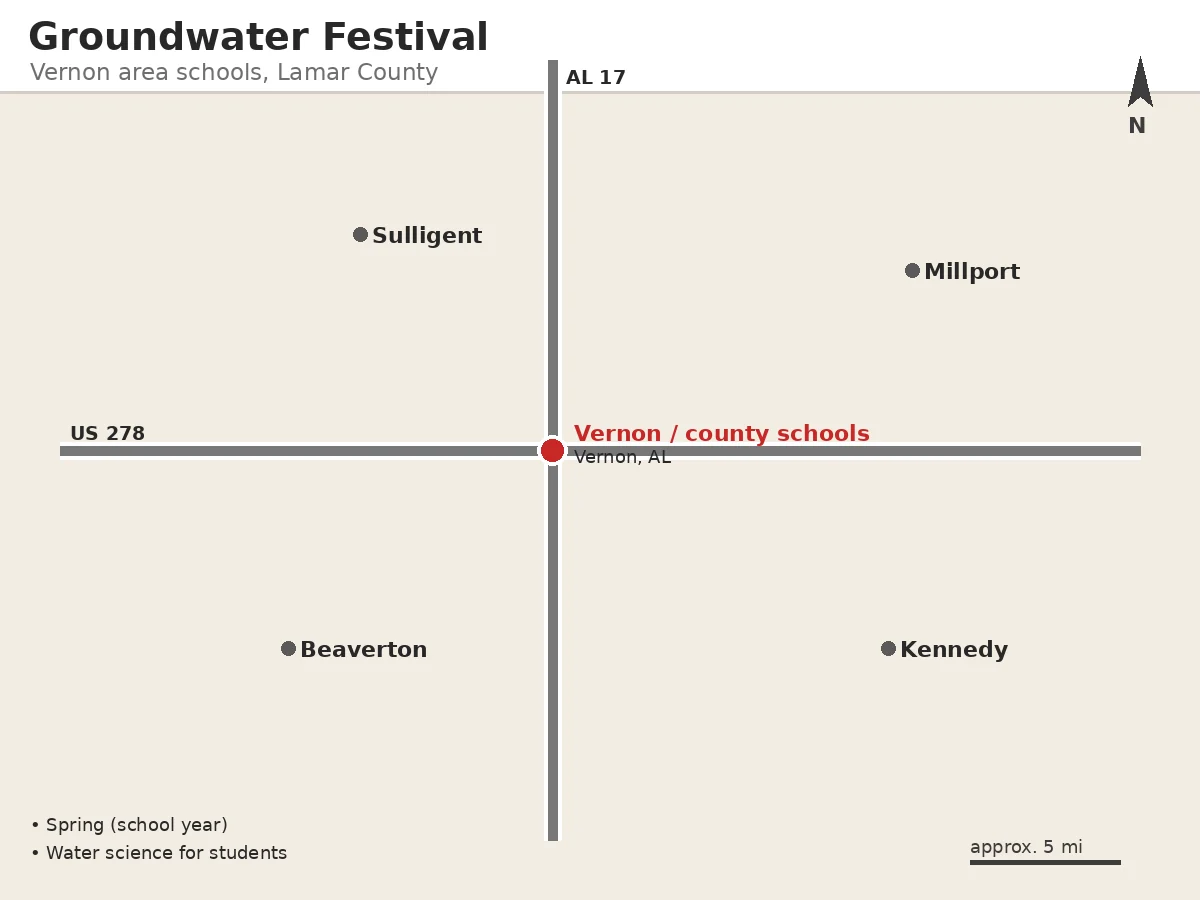
The map below marks Vernon and the surrounding roads through Lamar County, where the groundwater festival serves local schools. The county seat is reached via US 278 and AL 17, and the event is hosted at school and community sites in the area.
Frequently Asked Questions
What is the Lamar County Groundwater Festival?
It is an educational event for elementary and middle school students that teaches groundwater, watersheds, water quality, and conservation through hands-on activities.
Who attends the festival?
The program is designed for students, especially those around fourth grade, and is delivered through local schools rather than as a public festival.
Who organizes it?
Groundwater festivals in Alabama are supported by state environmental grants and organized with local soil and water conservation districts, resource councils, and the cooperative extension system.
Is there a cost to schools?
The festivals are offered at no cost to schools, with grant funding covering educational materials and supplies.
Where does it take place?
In Lamar County, the event is hosted at school and community sites in and around Vernon, the county seat.
Can the public attend the groundwater festival?
It is an educational event for students rather than a public festival, so attendance is organized through schools. Members of the public who want to support it can volunteer or donate through local partners.
What age group does it target?
The program focuses on upper elementary students, particularly around fourth grade, an age at which children can grasp water concepts and still form lasting habits around conservation.
Planning Ahead for Next Year
How can a school take part?
Schools and educators can inquire through the local soil and water conservation district or the state environmental agency, which coordinates grant funding for the program.
How can someone volunteer or present?
The festivals rely on volunteers and experts from local agencies and organizations. Inquiries are best directed to the local conservation district before the spring event.
What topics does it cover?
Station activities cover drinking water, groundwater, watersheds, surface water, water quality, and conservation, with an emphasis on hands-on learning.
How can a teacher get involved?
Teachers can contact their local soil and water conservation district or the state environmental agency’s water festival program, which coordinates grants and materials for participating schools.
Last updated: October 2026
The Lamar County Groundwater Festival is proof that a festival does not need rides and funnel cakes to matter. Give students a model aquifer to build, a filtration system to run, and an expert to answer their questions, and you have planted something that lasts. For a rural county that depends on its water, that is an investment worth making every spring.