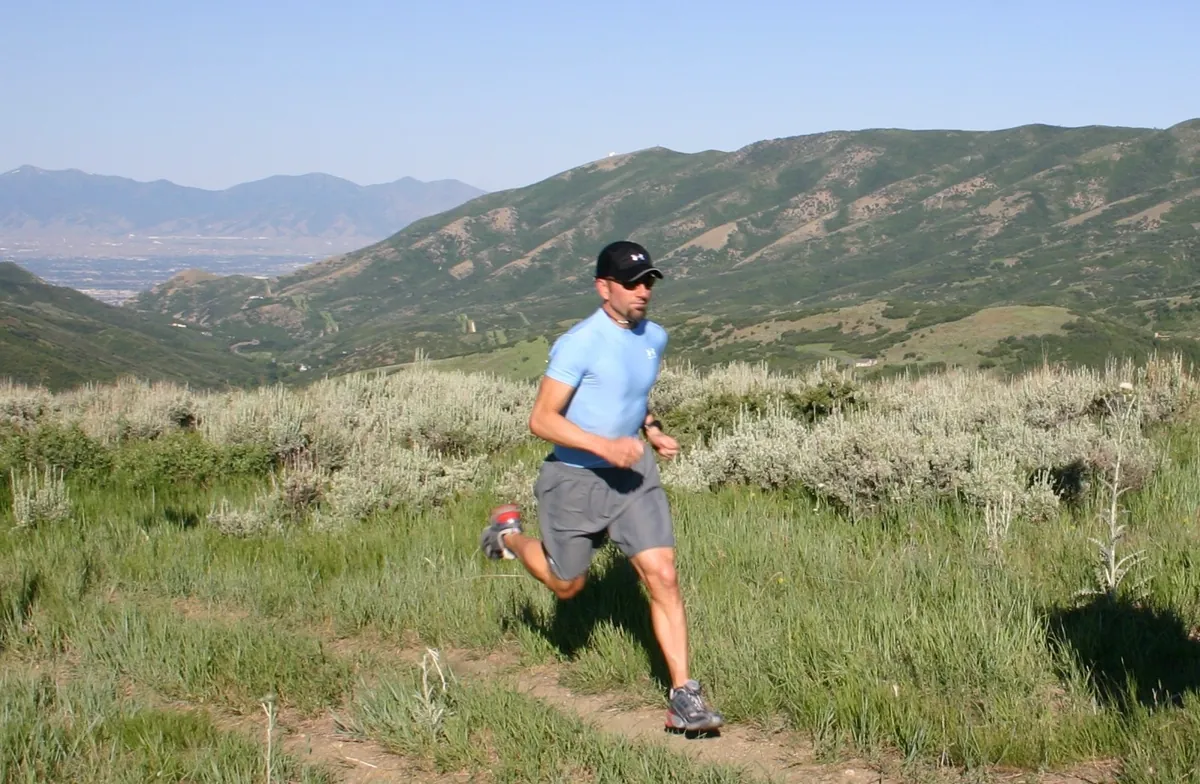
Mono County California Mammoth Trailfest Festival
Trail running has its big-city events, and then it has Mammoth Trailfest. Held over three days in the Eastern Sierra, Trailfest combines serious mountain races with the atmosphere of a small music and storytelling festival, all in a resort town that sits at nearly 8,000 feet.
The event bills itself as built by the community, for the community. Races range from a children’s run to a 50K, and around them sit shakeout runs, talks, live entertainment, vendor villages and a post-race party. It is a running festival in the fullest sense.
This guide covers what Mammoth Trailfest is, the races on offer, and how to plan a trip to the Sierra for it.
What Trailfest Is
Mammoth Trailfest is a multi-day trail running festival organized around Mammoth Mountain. The races take center stage each day, but the event deliberately offers more: community shakeout runs, storytelling sessions, free live entertainment, fan zones and a closing party. The aim, in the organizers’ words, is to increase access to trail running through opportunity, education and trail stewardship.
That mission shows in the details. The event has offered a prize purse for para athletes in trail running, one of the first of its kind, and it reserves spots for para and elite runners alongside its open categories. The tone is inclusive rather than exclusive.
For a nearby comparison, see the Mono County California June Lake Autumn Beer Festival.
The Races
Trailfest’s program spans a wide range of distances and formats, which is part of its appeal. The centerpiece is the Triple Crown, a combination of three signature races, but there are events for nearly every level of runner and even for children.
| Location | Mammoth Lakes, Mono County, California |
| Typical timing | Three days in late September |
| Signature races | Dragon’s Back Ascent, a 50K, a 26K and a 10K |
| Triple Crown | A combined challenge of three marquee races |
| Other events | Vertical K, Beer Mile, kids’ 1K, community shakeout runs |
| Setting | Mammoth Mountain and the trails around town, near 8,000 feet |
| Extras | Live entertainment, storytelling, vendor village, post-race party |
The Dragon’s Back Ascent is the festival’s signature climb, with bus transport to the start and from the finish. The 50K and 26K cover alpine terrain on and around Mammoth Mountain, and the courses are designed to show runners the full range of what the Sierra offers, from high country to smooth valley trails.
Running at Altitude
Altitude is the defining feature of Trailfest and the thing most visitors underestimate. Mammoth Lakes sits at nearly 8,000 feet, and the races climb considerably higher. Runners arriving from sea level should build in time to acclimatize, hydrate more than usual, and adjust their expectations for pace.
Organizers publish detailed runner information, including course maps, aid station locations and generous cut-off times. The aid stations are well stocked, and the event provides chip timing with on-course splits for the longer races. Finishers receive medals and post-race food and drink.
A Festival Around the Races
What sets Trailfest apart from a standard race weekend is everything that happens between the starting gun and the finish line. Community shakeout runs let visitors run easy with other participants, storytelling sessions bring the culture of the sport to the fore, and free live entertainment plays through the weekend.
The vendor village and fan zones give the event a festival feel, and the Sunday night post-race party closes things out. The result is a weekend that works for runners and non-runners alike, which is unusual for a trail event.
Planning Your Visit
Mammoth Lakes is a popular mountain resort, and late September is a busy time between summer and ski season. Lodging should be booked well in advance, and registration for the races often fills or forms a waitlist, so early entry matters.
- Register early; popular races fill and a waitlist may form.
- Arrive a day or two ahead to acclimatize to the altitude.
- Book lodging well in advance for the late-September weekend.
- Pack for cold mornings and warm afternoons, plus possible early snow.
- Check the race-specific cut-off times and course details before you travel.
Beyond the Festival
Mammoth in late September is a beautiful place to be. The mountain’s bike park and scenic gondola are often still running, the lakes basin offers paddling and fishing, and the aspens start turning gold on the June Lake Loop and in the surrounding canyons.
Devils Postpile National Monument and Rainbow Falls are a short drive south, and Yosemite’s eastern entrance at Tioga Pass is within reach. Many runners extend the trip into a fall hiking week, using Trailfest as the centerpiece.
The Trails of Mammoth
The racing is only part of what draws runners to Mammoth. The trail network around town is extensive, and much of it is smooth, well-graded singletrack that climbs from the valley floor into the alpine country. The town’s trailheads connect directly to neighborhoods, which is why the festival can stage community shakeout runs straight from the village.
The signature terrain is on Mammoth Mountain itself, where the Dragon’s Back Ascent climbs high above the tree line. Lower down, the trails toward Twin Lakes, the lakes basin and the San Joaquin Ridge offer a range of gradients and views. Runners who arrive early can sample the courses before race day.
The Mammoth area is also a hub for hiking, mountain biking and climbing, so non-running travelers have plenty to do. The mountain’s bike park operates into the fall, the lakes basin is ideal for paddling, and the scenic gondola gives an easy taste of the high country without a long climb.
The Community Side of Trailfest
Mammoth Trailfest leans hard into the idea that a race weekend should build community rather than just fill a starting corral. Storytelling sessions give runners and organizers a chance to share why they run, free live entertainment plays through the weekend, and the vendor village and fan zones give everyone a place to gather between events.
The event also emphasizes trail stewardship and access, tying its programming to the idea that the sport depends on healthy public lands. That philosophy shapes the atmosphere: competitive at the front, welcoming everywhere else, with categories and reserved spots that keep the event open to a broad range of runners.
For visitors, the practical effect is a weekend that feels more like a festival than a race. Runners race, families watch, and everyone ends up at the same post-race party on Sunday night.
Race Weekend and the Triple Crown
The weekend follows a rhythm familiar to trail runners but rare in festival form. Thursday and Friday bring bib pickup and the first events, including the Dragon’s Back Ascent. Saturday carries the bulk of the racing, with the 50K and 26K on the mountain and a kids’ run in the morning. Sunday closes with the remaining races and the post-race party.
The Triple Crown rewards runners who take on three of the marquee races across the weekend, and it has become the festival’s most demanding challenge. The Beer Mile, a lighter tradition borrowed from running culture at large, adds a comic counterpoint to the serious mountain racing.
Because the event is built around Mammoth Mountain, the courses climb into genuinely high country. The Dragon’s Back Ascent is the standout, with bus transport to the start and from the finish so runners can focus on the climb rather than the logistics.
Where to Stay and How to Prepare
Mammoth Lakes has the lodging to match a resort weekend, from hotels and condos in the village to campgrounds and cabins around the lakes basin. Late September is a shoulder season, so availability is better than in midwinter or midsummer, but Trailfest coincides with a busy stretch of fall events and the start of leaf-peeping season.
Runners should reserve early, especially near the start and finish areas, and should plan around the altitude. Arriving a day or two before race day helps the body adjust, and it also gives time to preview the courses and check the aid station and cut-off details published in the runner information.
Non-runners traveling with participants have plenty to fill the weekend. The scenic gondola, the bike park and the lakes basin are all within a short drive, and the fall color on the June Lake Loop and in the surrounding canyons is at its best around the same time. The event’s entertainment and vendor village are free and open, so spectators are never short of something to do.
Altitude, Weather and Race-Day Realities
Two things decide how a Trailfest weekend goes: altitude and weather. At nearly 8,000 feet in town and higher on the courses, the air holds less oxygen, and even fit runners feel it on the first climb. Symptoms of altitude sickness, from headache to nausea, are common in visitors who push too hard on arrival, so the standard advice applies: ease in, drink more water than usual, and treat the first day as an adjustment day.
Late September weather in the Eastern Sierra can swing widely. Mornings may start near freezing, afternoons can be warm and sunny, and an early-season storm is always possible at that elevation. Runners should pack layers, a light shell and gloves for the start line, and spectators should dress for cold mornings and bright afternoons alike.
The event builds in generous cut-off times to account for the terrain and the altitude, and the aid stations are stocked accordingly. Runners who study the published course details, respect the cut-offs and plan their pacing for thin air will have a far better day than those who treat it like a sea-level race.
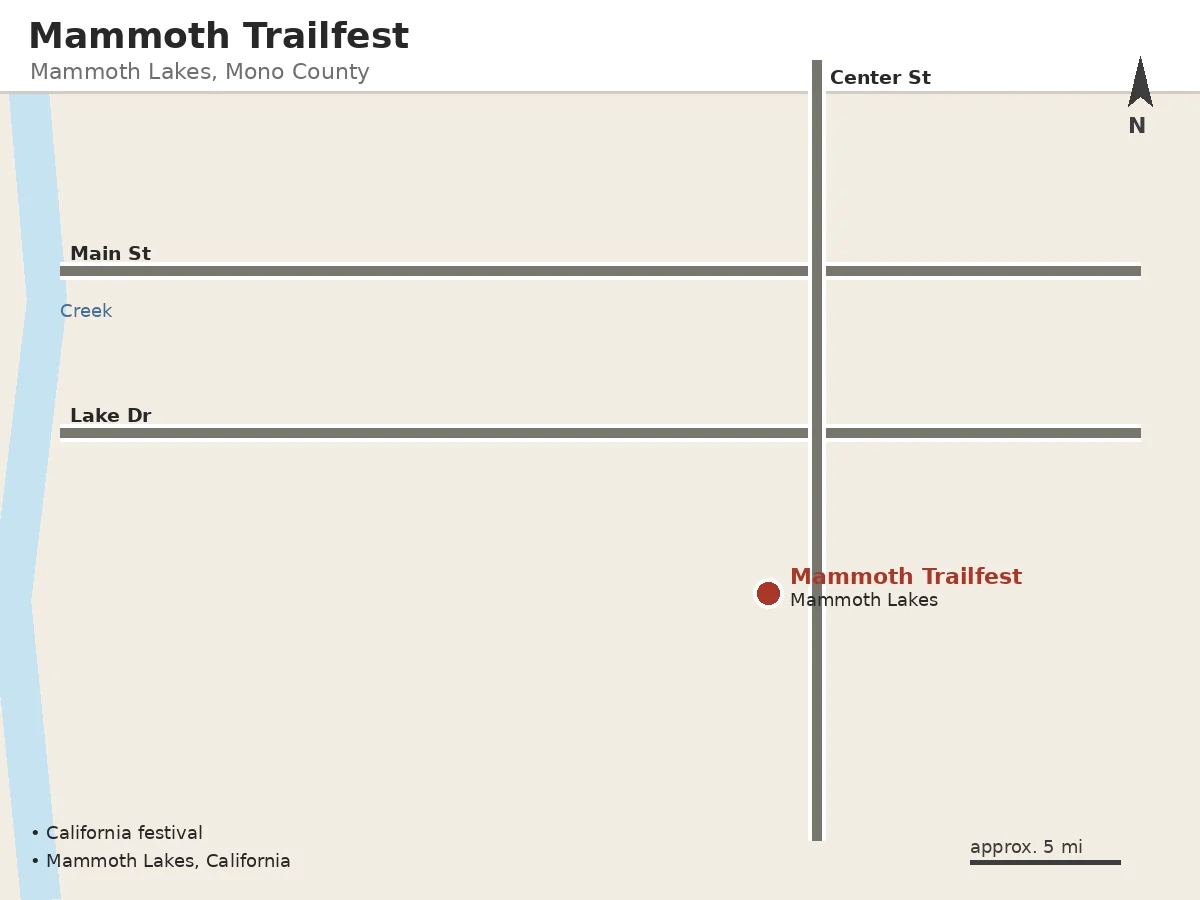
Festival Area Map
The map below marks the Mammoth Lakes event village and race start area, with the Highway 395 approach for planning your trip to Trailfest.
Frequently Asked Questions
When is Mammoth Trailfest?
It is held over three days in late September.
Where is it held?
In Mammoth Lakes, California, with races on and around Mammoth Mountain.
What distances are offered?
The program includes a 50K, a 26K, a 10K, a Vertical K, a Beer Mile and a kids’ 1K, plus a combined Triple Crown challenge.
Is there an event for children?
Yes, there is a kids’ 1K race with its own bib pickup and start.
How do I handle the altitude?
Arrive early to acclimatize, hydrate well, and expect to run slower than at sea level.
Is there entertainment for non-runners?
Yes. The festival includes live entertainment, storytelling, a vendor village and fan zones in addition to the races.
What to Expect From the Next Trailfest
How often is the festival held?
It is an annual event, held each September.
When is the next Trailfest?
The next edition is expected over three days in late September. Confirm dates and registration details with the organizers.
Will the format change?
The core races and the festival programming have been stable, though courses, distances and lineups can vary from year to year.
Last updated: October 2026
Mammoth Trailfest has built something rare: a trail race weekend that feels like a festival and a festival that respects the sport. The racing is genuinely hard, the altitude is genuinely humbling, and the town that hosts it is one of the most beautiful places in California to spend a fall weekend on your feet.

One Comment