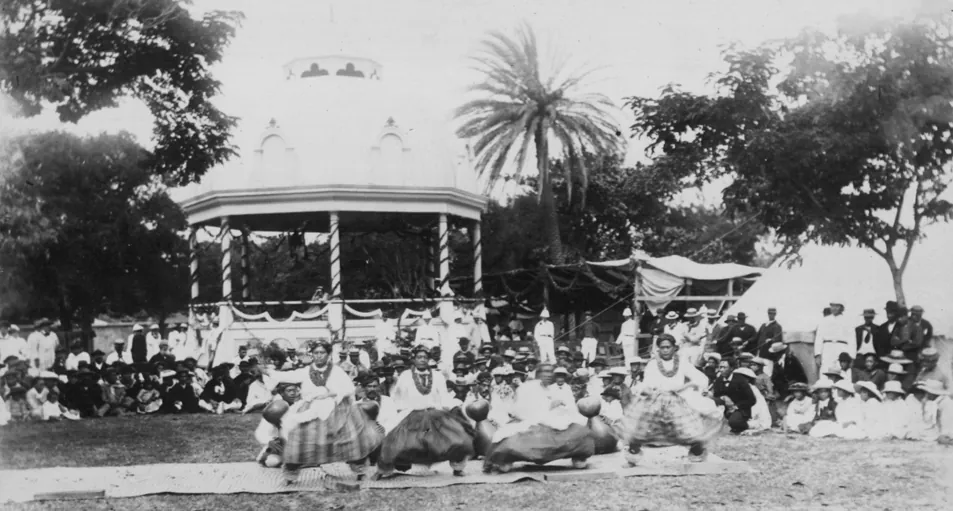
Merced County California Tahiti Fete Dance Competition Festival
It is one of the more surprising facts about the Central Valley: the longest-running Tahitian dance competition outside of French Polynesia is held in Merced, California, not in Honolulu or Los Angeles. The Kiki Raina Tahiti Fete has brought Polynesian dance, drumming and food to the county every March for more than four decades.
What began in 1979 as a solo event at a hall in Atwater has grown into a three-day festival that fills hotel rooms across the city and draws dancers and families from across the West Coast. It is, by the organizers’ account, a quarter of a million dollars or more in annual economic activity for Merced.
This guide covers what the Tahiti Fete is, how the competition works, when and where it happens, and what a first-time visitor should know.
A Competition With Deep Roots
The festival’s history runs through one person: Auntie Becky, its founder, who started the event as a small gathering and built it into a competition with a national reputation. The first edition in 1979 was a solo affair at the APC Hall in Atwater, and community enthusiasm turned it into an annual tradition.
Today the Kiki Raina Tahiti Fete bills itself as the oldest Tahitian dance competition outside of Tahiti, and one of the only established fetes of its kind in the continental United States. Dancers who compete here often go on to perform professionally, and the event is a recognized stop on the competitive circuit. Groups that win in Merced carry the result with them for the rest of the season, and teachers use the weekend to gauge their students against the strongest competition on the West Coast.
For a nearby comparison, see the Merced County California Nut Festival.
How the Competition Works
The weekend is organized around performance categories that reflect the breadth of Tahitian dance. The opening evening features the Ahuroa, an elegant, synchronized dance performed by women of all ages to a sung Tahitian narrative composed in waltz time, followed by the Maeva Merced pageant.
Saturday belongs to the soloists. Dancers as young as four compete in eliminations and finals, and a group drumming competition takes the stage as well. Sunday moves to the group categories: the vahine (female) and tane (male) best-dancer awards in the morning, then Tamari’i children’s groups, amateur groups and professionals performing the ‘Ote’a drum dances and the Aparima.
| Location | Golden Valley High School, 2121 E. Childs Ave., Merced, CA |
| Typical timing | A weekend in March, Friday evening through Sunday afternoon |
| Founded | 1979, at the APC Hall in Atwater |
| Distinction | Longest-running Tahitian dance competition outside of French Polynesia |
| Friday | Ahuroa group dance and the Maeva Merced pageant |
| Saturday | Solo eliminations and finals; group drumming competition |
| Sunday | Best-dancer awards; children’s, amateur and professional group dances |
The Dances and the Drums
Tahitian dance is a family of forms rather than a single style, and the festival is one of the few places outside the Pacific where a visitor can see the range in one weekend. The ‘Ote’a is the fast, percussive group dance most people picture, driven by a drum line. The Aparima is softer and more narrative, danced to song. The Ahuroa, performed in waltz time, is stately and synchronized.
Live music is central. Top drum groups in the genre perform throughout the weekend, and the drumming competitions are as closely watched as the dancing. The result is an event that feels like a genuine cultural festival rather than a recital.
Food, Crafts and the Fete Atmosphere
Island-style food is available throughout the weekend, and Polynesian craft booths sell goods from Hawaii and from the Polynesian diaspora communities of California. The combination of competition, food and market gives the fete the atmosphere of a gathering rather than a ticketed show.
The event is indoor and ticketed, and the competitions can sell out, so advance purchase is worth the effort. Tickets are typically sold per day as well as in a full weekend pass, with reduced prices for children and free admission for the youngest.
Because the fete runs for three days and the categories are spread across them, a visitor who wants to see a particular style of dance should plan around the schedule rather than simply show up on the busiest night. The group dances, in particular, cluster on Sunday, while the solo finals dominate Saturday. Reading the program in advance turns a general visit into a much richer one.
Planning Your Visit
The fete takes place at Golden Valley High School in Merced, and the competition is held indoors in the gym. That makes it a comfortable event regardless of the weather, but it also means seating is limited and the most popular sessions fill early.
- Buy tickets in advance; weekend sessions and the pageant can sell out.
- Arrive early for the best sight lines, especially for the group drumming.
- Bring cash for island food and craft vendors.
- Check the day-by-day schedule, since different categories perform on different days.
- Book a hotel early, as the festival fills several properties in the city.
Why It Matters to Merced
The Tahiti Fete is unusual in a valley city whose public identity revolves around agriculture and its proximity to Yosemite. It reflects the region’s Pacific and Southeast Asian communities, and it has become one of the county’s most distinctive cultural exports.
The economic effect is real. Organizers estimate that the festival fills four or five hotels and brings in a significant amount of visitor spending each March, at a time of year when the city might otherwise be quiet. For local Polynesian families, it is also a homecoming, a chance to see friends and rivals from across the state.
Beyond the Festival
Merced makes a natural base for a longer trip. The city is the Gateway to Yosemite, roughly two hours from the park, and its downtown cultural district, Lake Yosemite and the Applegate Park zoo give visitors reasons to stay an extra day.
March is also a pleasant time in the valley, before the summer heat sets in, which makes the festival weekend a good moment to combine a dance competition with a park trip or a drive through the orchards.
Closer in, Merced’s downtown has restaurants, a historic theater and a walkable cultural district, and the Saturday farmers market is a good morning stop. For families, the Applegate Park zoo and the Kiwanis Kiddieland rides are a short drive from the school, and Lake Yosemite offers picnicking and paddling when the weather cooperates.
How Dancers Prepare
Behind the weekend’s performances is a year of work. Halau and dance groups train through the year, often several times a week, and the fete is where they test new routines against competitors they may not see again until the next season. For solo dancers, the preparation is even more personal: costumes are assembled by hand, and the smallest details of a performance, from the placement of a flower to the timing of a hip movement, are rehearsed until they are automatic.
The competitive stakes are real but the atmosphere is warm. Groups travel from across California and beyond, and the gym fills with families, teachers and supporters. The audience is knowledgeable, and a strong performance is rewarded with a very loud room.
For a visitor with no background in Tahitian dance, the best approach is simply to watch for an hour or more. The differences between categories become clear quickly, and the drumming alone is worth the ticket.
Costumes, Crafts and Culture
Tahitian dance is inseparable from its costumes, and the festival is a rare chance to see them up close. Groups perform in elaborate outfits made from natural materials, and the colors and textures are part of the choreography. The craft booths sell related goods, from shell jewelry to fabrics, made by artisans from Hawaii and the Polynesian communities of California.
That market side of the fete matters. It connects the competition to the wider Polynesian diaspora and gives visitors something to take home beyond a memory. Island-style food rounds out the experience, with plates served through the weekend.
A Weekend That Fills the City
The fete’s footprint extends well beyond the gym. Organizers estimate that the festival brings about 1,500 people into Merced, fills four or five hotels, and generates a quarter of a million dollars or more in spending for the city each year. For a weekend in March, that is a meaningful boost to local restaurants and shops.
That economic role has made the fete a point of civic pride. City officials and local media regularly celebrate its anniversary, and the competition has become part of how Merced presents itself to the wider region. It is a cultural event with a measurable local payoff.
For visiting families, the weekend is also a reunion. Dancers who grew up competing here return with their own students, and the stands fill with people who have known one another for decades. That continuity is part of what makes the fete feel less like a competition and more like a community.
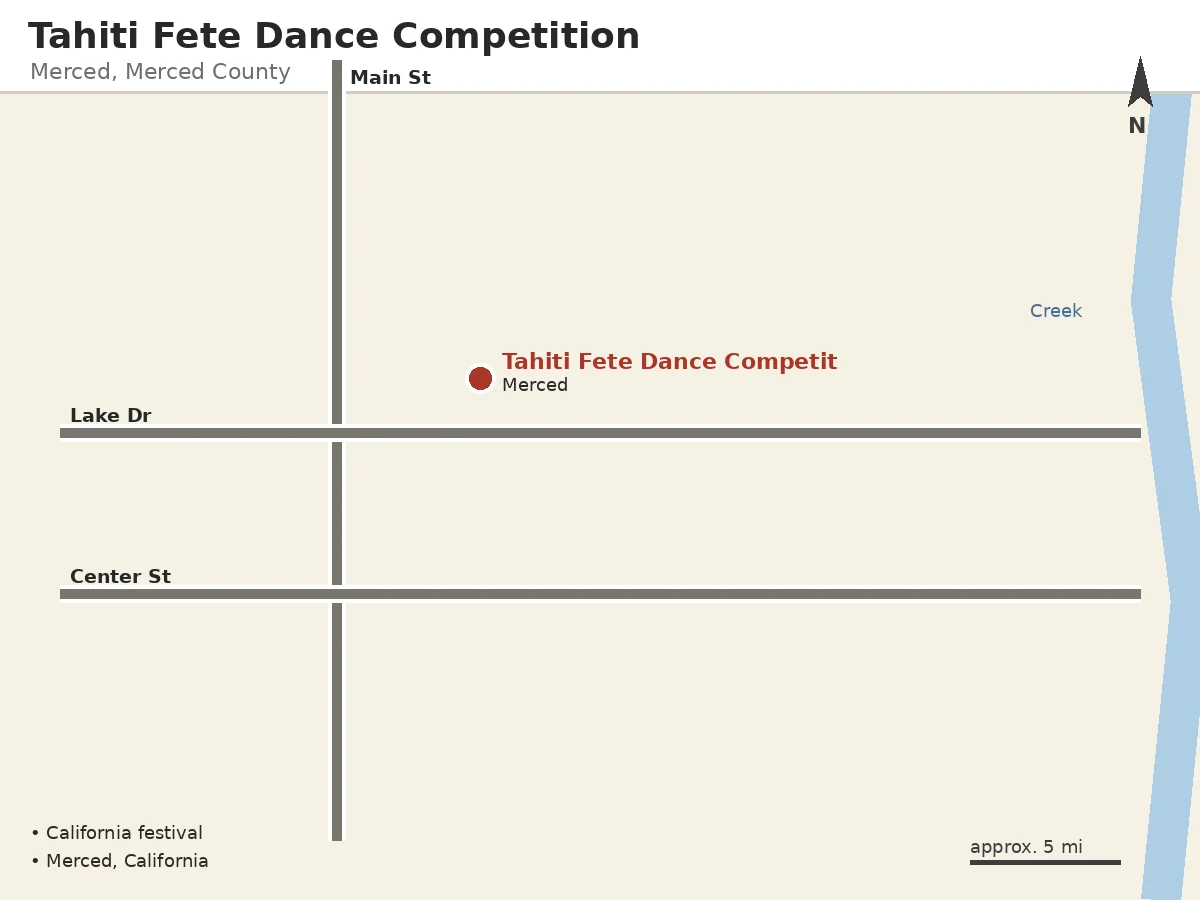
Festival Area Map
The map below marks Golden Valley High School in Merced, with the downtown and Highway 99 approach for planning your visit to the fete.
Frequently Asked Questions
When is the Kiki Raina Tahiti Fete?
It is held on a weekend in March, running from Friday evening through Sunday afternoon.
Where is it held?
At Golden Valley High School, 2121 E. Childs Ave. in Merced.
Is it the largest Tahitian dance competition outside Tahiti?
It is described as the longest-running such competition outside of French Polynesia, and one of the only established fetes of its kind in the continental United States.
Do I need tickets?
Yes, the indoor competitions are ticketed, and popular sessions can sell out. Buying in advance is recommended.
Is there food?
Yes, island-style food and Polynesian craft booths are available throughout the weekend.
Is it family-friendly?
Yes, children compete in their own categories and there is a reduced ticket price for young visitors.
What to Expect From the Next Tahiti Fete
How often is the festival held?
It is an annual event, held each March.
When is the next fete?
The next edition is expected on a weekend in March. Confirm the exact dates and ticket details with the organizers at kikiraina.com.
Will the format change?
The dance categories and the three-day structure have been stable for years, though the performance schedule and ticket pricing can vary.
Last updated: October 2026
The Kiki Raina Tahiti Fete is a reminder that a county’s culture is never just one story. In a city best known for almonds and its position on the road to Yosemite, one of the country’s most important Polynesian dance competitions has quietly run for more than forty years. For a visitor, it is an unexpected and genuinely memorable weekend.




One Comment