Lafayette Parish Louisiana Acadiens et Creoles Festival
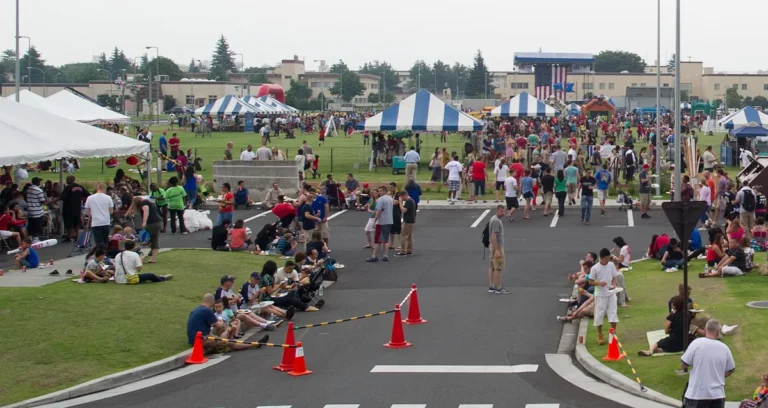
For three days each autumn, Girard Park in Lafayette turns into the loudest classroom in Louisiana. The gathering printed in the record as Festivals Acadiens et Créoles — the name the sheet title renders without its accents and without its opening plural — fills the park with accordions, fiddles, and voices singing in a French that has crossed an ocean and settled into the bayous. More than sixty-five Cajun and zydeco bands play across six stages, food stalls ladle out dishes that carry the same French and Creole roots, and craft makers show work shaped by hands that learned from grandparents. The festival is free to enter, so a family can walk in, find a patch of grass, and spend the whole day inside a culture still being made, not merely remembered. The oaks of Girard Park shade the stages, and the park’s lawns hold the crowds that the festival’s free gates invite. Its fifty-second year arrived in October 2026, and the event now stands among the longest-running celebrations of Cajun and Creole music anywhere.
About
Festivals Acadiens et Créoles — shortened in many listings to Festivals Acadiens — is a music and culture festival held in Girard Park, Lafayette, the parish seat of Lafayette Parish. The published name is plural and accented, and that plural matters: the festival is not one concert but a bundle of gatherings happening at once. Six stages carry the music, a food festival feeds the crowds, and a craft fair spreads across the park grounds. The event honours the French-speaking peoples of South Louisiana — the Acadians who arrived after exile from Canada and the Creoles whose roots reach back to the colonial Gulf Coast — and it does so by putting their living traditions on stage rather than behind glass. Visitors hear Cajun waltzes and two-steps beside zydeco numbers driven by the rubboard, and the distance between the two styles, once a matter of parish and language, collapses into a single afternoon of dancing. The festival has no published organiser name in the layers read, and none is claimed here. The record shows a gathering grown from one tribute concert into a weekend that draws listeners from across the region, while keeping its home in a public park and its gates open without charge.
Quick Facts
| Item | Detail |
| Published name | Festivals Acadiens et Créoles |
| Short form | Festivals Acadiens |
| Host town | Lafayette, the parish seat |
| Venue | Girard Park, Lafayette |
| Most recent billed year | Fifty-second year, October 2026 |
| Main festival days in 2026 | Nine to eleven October |
| Documentary premiere in 2026 | Eight October |
| Stages | Six |
| Bands in 2026 | More than sixty-five |
| Admission | Free |
History
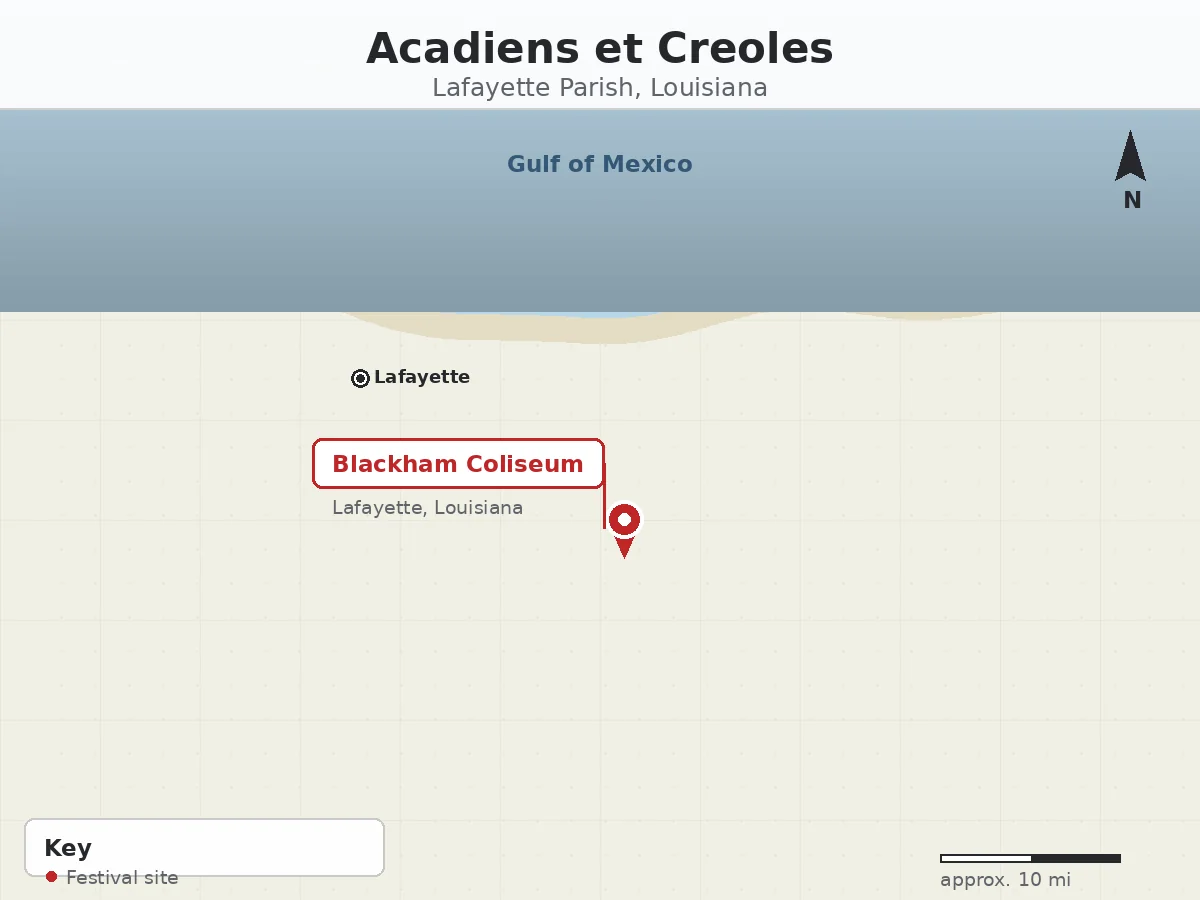
The festival began in 1974 as a tribute concert to Cajun music. A state cultural agency organised that first concert, an act of recognition at a moment when the music of French Louisiana was still fighting for a hearing outside its own parishes. The tribute worked. Within two years the gathering had moved from Blackham Coliseum to Girard Park, and the park has held it ever since. The move mattered: under the oaks, the festival stopped being a concert hall event and became a public one, open to the air, the grass, and anyone who wandered in. The park’s open lawns suited a gathering that had outgrown a hall, and the festival has never left them.
Over the decades that followed, the festival grew stage by stage. The Bayou Food Festival joined the music, giving cooks a place beside the bands. The Louisiana Craft Fair brought makers into the park, so between sets people browse handmade work instead of merely waiting for the next song. The Smithsonian Institution selected the festival as one of thirty-four folklife events in its Festival of Festivals initiative, attaching a grant to the honour — recognition that the music, food, and craft on display were not a revival of something lost but a tradition still being carried.
The editions on record show a festival that bends without breaking. In March 2022, the gathering returned as Le Grand Retour, the grand return, from the eighteenth to the twentieth of March, after a season away from its usual autumn dates. By October of that same year it was back in its familiar slot, the fourteenth to the sixteenth. The fifty-second year arrived in October 2026, with a documentary premiere on the eighth and the main festival running from the ninth to the eleventh, the day split recorded exactly as the layers print it. Through every shift of date and billing, the shape held: free admission, six stages, and a park full of music in French.
For a useful comparison, see the Jefferson Davis Parish Louisiana Cajun Squeezebox Shootout Festival for another county festival.
What to Expect
A day at Festivals Acadiens et Créoles starts with sound arriving before sight does. From the park paths, the stages overlap: a fiddle tune from one direction, an accordion from another, and the metallic wash of a rubboard cutting across both. The six stages are spread through Girard Park, so walking between them becomes part of the experience, and regulars learn which stage favours the older Cajun repertoire and which leans toward the harder-driving zydeco sets. The revived Scène ’76 stage, a nod to the year the festival settled into the park, leans toward the sounds that defined the gathering’s early decades.
Between the stages, the Bayou Food Festival fills the air with a different kind of invitation. Cooks serve dishes built on the same French and Creole foundations as the music. The Louisiana Craft Fair runs alongside, with makers showing work that ranges from woven and carved pieces to instruments and textiles. The craft fair rewards a slow pace: the makers are usually present, and they talk about their work the way musicians talk about their songs.
Dancing happens wherever there is room. Couples two-step on the grass in front of the stages, children copy the steps a few yards away, and newcomers who have never heard a Cajun waltz find themselves pulled into the pattern by a neighbour. The festival is free, so there is no gate to pass and no ticket to guard; people drift in and out through the day, and the park holds families with coolers, visitors with cameras, and musicians carrying instruments between stages. By evening the stages glow, the music turns a shade louder, and the park feels like a parish hall with the roof taken off.
Planning Your Visit
Begin with the park, not the clock. Girard Park is a public park in Lafayette, and the festival spreads across its lawns and paths, so comfortable shoes and a plan for shade matter more than a rigid timetable. Arrive early enough to walk the full grounds once before settling in: the stages sit at different corners of the park, the food stalls cluster in their own stretch, and the craft fair occupies ground of its own. A first lap shows where everything sits and lets you choose a home base — a patch of grass near a favourite stage, close enough to the food to make wandering back easy.
Because admission is free, the festival suits a long, loose day. Bring water, sun protection, and something to sit on, and expect the crowds to thicken toward the evening sets. A hat helps under the midday sun, and a light layer helps after dark, when the park cools and the last sets play on. Parking fills around the park as the day goes on, so an early arrival or a short walk from a side street saves time. The 2026 documentary premiere fell on the eighth of October, a day before the main festival opened, so checking the programme for a pre-festival evening can add a quieter first chapter to the visit.
Food deserves its own plan. The Bayou Food Festival is not a sideshow but a second stage, and the dishes on offer change as cooks sell out of one preparation and start another. Eating early means a wider choice; eating late means catching the cooks at their most relaxed. Visit the craft fair twice — once in the morning, when the makers are fresh and the stalls are full, and once in the late afternoon, when the light changes the park and the conversations grow longer.
A Sample Itinerary
Morning: arrive as the park opens, walk the grounds end to end before choosing a spot, and let the morning belong to the first set from a stage that favours older Cajun tunes.
Midday: move to the Bayou Food Festival for a long lunch, trying dishes from more than one stall rather than settling at the first. After eating, spend an hour in the Louisiana Craft Fair, talking with the makers and watching work in progress.
Afternoon: return for the middle sets, visit the Scène ’76 stage for the festival’s early sound, and take time to dance — the grass in front of the stages is open to anyone, and the steps are learned by watching.
Evening: settle near the strongest closing set, eat once more from the food stalls, and stay for the final songs as the park lights come on.
How It Compares
Lafayette holds another famous festival, Festival International de Louisiane, and the two are easy to confuse from a distance. Festival International de Louisiane arrives in April and brings performers from across the French-speaking world to downtown Lafayette. Festivals Acadiens et Créoles belongs to October — or, in the year of its grand return, to March — and keeps its focus on the Cajun and zydeco traditions of South Louisiana itself, in Girard Park rather than downtown. One looks outward to the wider French-speaking world; the other looks inward to the music of its own parishes. Both are free, both fill Lafayette with music, and neither substitutes for the other.
Checklist
- Arrive early and walk the whole park before choosing a spot
- Wear comfortable shoes for grass and park paths
- Bring water, sun protection, and something to sit on
- Plan two visits to the Louisiana Craft Fair, morning and late afternoon
- Eat at more than one Bayou Food Festival stall
- Visit the Scène ’76 stage for the festival’s early sound
- Leave room in the day for dancing on the grass
- Check whether a documentary premiere or pre-festival evening precedes the main days
- Expect crowds to thicken toward the evening sets
- Carry no ticket — admission is free
Beyond the Festival
The music does not stop at the park gates. Lafayette is the parish seat and the cultural centre of Acadiana, and the city holds the restaurants, dance halls, and record shops where the traditions on the festival stages live the rest of the year. Arrive a day early and eat in the restaurants serving the same dishes as the Bayou Food Festival; stay a day late and find a dance hall where the two-step continues without a stage at all. The park is the centre of the gathering, but the culture it celebrates fills the whole city, and a visit that stops at the gates has only seen the middle of the story.
Why It Matters
Festivals Acadiens et Créoles matters because it has kept a tradition public. For fifty-two years, the gathering has put Cajun and zydeco music on free stages in a public park, in a city where the French of the songs is still spoken and sung. The Smithsonian Institution’s selection of the festival as one of thirty-four folklife events in its Festival of Festivals initiative recognised that achievement from outside, but the achievement itself belongs to the park: a place where a child can hear a fiddle for the first time without a ticket, where a maker can sell work beside a stage, and where a band can play a waltz written before its members were born to dancers who know every turn. The festival does not preserve Cajun and Creole culture as a museum piece; it lets that culture gather people, feed them, and set them dancing in the open, where anyone can join.
Frequently Asked Questions
What makes the published name different from the sheet title?
The published name is Festivals Acadiens et Créoles, plural and accented, while the sheet title drops the accents and the opening plural. The body of this article uses the published form, and the sheet title appears only on the first line and in the outlook below.
Is there any charge to enter Girard Park during the festival?
No. Admission is free according to multiple layers, and the festival has kept that position across its editions. Food, craft, and any other purchases inside the park are separate from entry.
Which festival in Lafayette happens in April, and is it the same gathering?
Festival International de Louisiane happens in April in downtown Lafayette, and it is a different festival. Festivals Acadiens et Créoles is the October gathering in Girard Park devoted to Cajun and zydeco traditions, and the two should not be confused.
What is the Scène ’76 stage?
It is a revived stage within the festival whose programming leans toward the sounds that defined the gathering’s early decades, taking its name from the year the festival moved from Blackham Coliseum to Girard Park.
What to Expect From the Next Lafayette Parish Louisiana Acadiens et Creoles Festival
How often is Lafayette Parish Louisiana Acadiens et Creoles Festival held?
The gathering returns each year, with its main days falling in October in its recent editions, apart from the March return of 2022. The pattern is annual, and the fifty-second year was billed in October 2026.
When is the next Lafayette Parish Louisiana Acadiens et Creoles Festival?
The layers read name no dated edition beyond the October 2026 gathering, whose main festival ran from the ninth to the eleventh of October with a documentary premiere on the eighth. The next edition’s dates are not printed in the layers read, so this article states no date for it.
Will the dates change?
The record shows the festival can shift: the 2022 gathering returned in March as Le Grand Retour before settling back into October later that same year, and the 2026 edition added a documentary premiere on the eighth of October ahead of the main days. Dates have moved before, and the programme for the next edition is the place to confirm them.
Fifty-two years have carried the festival from a tribute concert in 1974 to a park full of stages, food, and craft in the heart of Lafayette. Its strength has never been spectacle alone: it is a public park, open to all without charge, where the music of French Louisiana is played by the people who inherited it and danced to by the people who live beside it. Go for the bands, stay for the food and the craft, and leave with a clearer sense of what Acadiana sounds like when it gathers to celebrate itself.