Avoyelles Parish Louisiana Cochon de Lait Festival
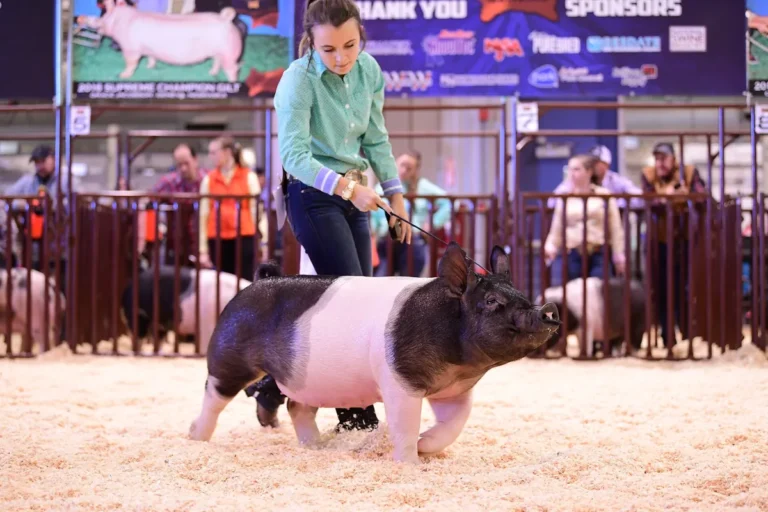
Mansura keeps a whole hog turning over an open fire for days, and that slow roast fills a small Avoyelles Parish town with visitors every spring. The Cochon de Lait Festival celebrates a dish that gave the town its reputation: a young milk-fed pig, cooked whole over hardwood coals until the meat falls from the bone and the skin crackles. The festival centres on the Cochon de Lait Center and the festival grounds in Mansura, where the smoke and the music belong to one long weekend. It is held on the second full weekend in May, coinciding with Mother’s Day weekend, so families plan it like a reunion. The state legislature designated Mansura the “Cochon de Lait Capital of the World.” Visitors come for the pork and stay for the street dances, the parade and the midway.
About
Cochon de lait is French for milk-fed pig, and the dish is the anchor of everything the festival serves. Whole hogs are slow-roasted over open flames, sometimes as many as thirty-eight pigs roasting at once in strong years, according to organisers quoted in a regional magazine layer. Pits are built and fires tended long before the gates open, with hogs turned by hand through the night. What reaches the plate is tender, smoky pork, often served with cracklins, the crisp fried pork skin that has its own cook-off. The festival is organised by the Cochon de Lait Festival Committee, and its home is the Cochon de Lait Center and the festival grounds in Mansura. Mansura is a town in Avoyelles Parish, and it is not the parish seat; a parish tourism layer names Marksville as the seat. That matters to first-time visitors, because the grounds, the parade route and the evening dances all sit in Mansura itself. The event runs for several days: four in 2018, three in 2026, Friday through Sunday. A parade, a midway, nightly street dances, arts and crafts booths, a five-kilometre run, a pageant and Cajun and zydeco music round out the programme. The name is printed exactly as the sheet carries it, “Cochon de Lait Festival,” in magazine layers, a state food magazine layer, the parish newspaper and the organiser’s own website name as printed in those layers.
Quick Facts
| Detail | Information |
| Festival | Cochon de Lait Festival |
| Host town | Mansura, Avoyelles Parish |
| Parish seat | Marksville |
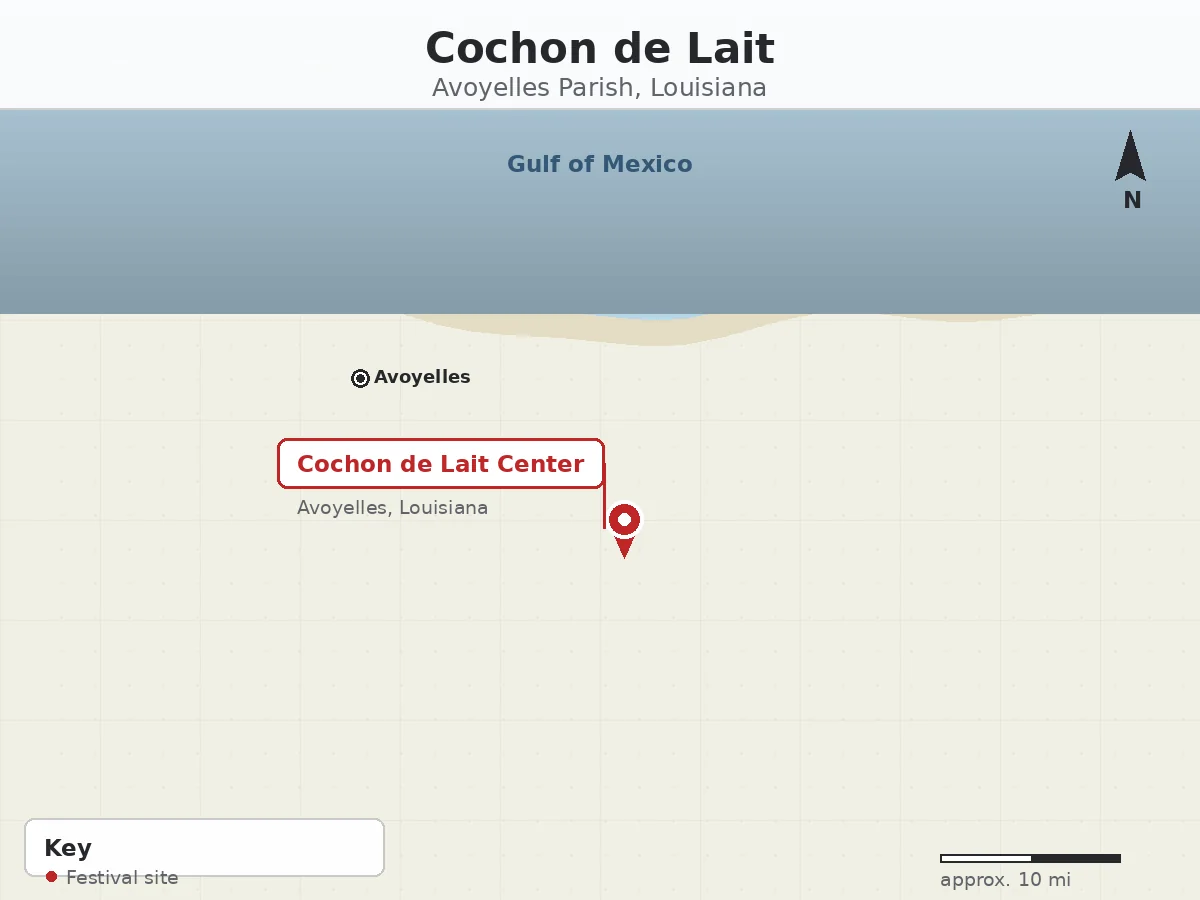
| Venue | Cochon de Lait Center and festival grounds, Mansura |
| Organiser | Cochon de Lait Festival Committee |
| Usual timing | Second full weekend in May, Mother’s Day weekend |
| Recent editions | May 10–13, 2018; May 9–12, 2019; May 8–10, 2026 |
| Signature dish | Whole hog slow-roasted over open flames |
| Music | Cajun and zydeco |
| State honour | Mansura designated “Cochon de Lait Capital of the World” |
History
The festival’s roots reach back to Mansura’s centennial celebration in 1960, when a parish newspaper history layer records that some ten thousand people ate cochon de lait at the town’s anniversary feast. The memory of that meal stayed with the community. The first official festival followed in 1961. The gathering grew through the following decade, and the same history layer records that it peaked in 1972 with an estimated one hundred thousand visitors. The years after it were not a straight climb. The event later paused, and it was revived in 1987, a restart that gave the festival its modern shape. The printed annual billings do not sit neatly against that history: the 2018 edition was billed the forty-fourth annual festival, and the 2019 edition was billed the forty-fifth annual. Those billings are recorded as printed and are not reconciled with the 1961 first festival or the 1987 revival, since no layer read explains how the numbering was kept across the pause. By 2018 the festival was again a four-day event, running May 10–13 with a greasy pig contest, cracklin cookoff, hog calling and boudin eating contests. The 2019 edition followed May 9–12, billed the forty-fifth annual, running Thursday to Mother’s Day Sunday. The 2026 edition was dated to Mother’s Day weekend, May 8–10. It has survived a pause, a revival and the arithmetic of its own billings, and returns each spring to the same grounds and the same fire.
What to Expect
Arrive hungry and expect smoke first. Whole animals turning slowly above hardwood coals are the festival’s centrepiece. Organisers quoted in a regional magazine layer put as many as thirty-eight pigs roasting at once in strong years. Around the pits, the programme fills the days with contests that test appetite, voice and nerve. The cracklin cookoff and the cooking contests reward the cooks who have spent years perfecting a single dish. The greasy pig contest sends young competitors chasing a slicked pig across a pen. Hog calling is a contest of who can summon a hog with the most convincing call. The boudin eating contest tests speed and stomach, and draws the loudest encouragement of the afternoon. A parade winds through town, the midway spins beside the food booths, and nightly street dances keep the grounds moving after the sun goes down. Cajun and zydeco music carries across the grounds all weekend. Arts and crafts booths line the walkways, a five-kilometre run opens the morning, and a pageant adds sparkle to the schedule. Plates come from the pits, the cook-offs come from the community, and the music comes from the parish’s own traditions.
Planning Your Visit
The festival falls on the second full weekend in May, coinciding with Mother’s Day weekend, so plan around that anchor rather than a fixed date. The 2026 edition ran May 8–10, Friday through Sunday, and the 2019 edition ran Thursday to Sunday, so the shape of the weekend can vary by a day from year to year. Check the festival’s own published information close to the date, since the programme is set edition by edition. No general gate admission price is stated in any layer read, so no admission position is taken here; a cooking magazine layer’s 2018 narrative mentions advance tickets for Sunday dinner plates, a meal component rather than gate admission. The festival grounds sit at the heart of small Mansura, so expect the streets around the Cochon de Lait Center to fill early, especially on Saturday. Arrive before midday for the fullest choice at the food booths, and plan to stay for the evening street dance. May weather in central Louisiana runs warm and humid, so light clothing, sun protection and water matter. Marksville, the parish seat, lies nearby for lodging and services.
For a useful comparison, see the Avoyelles Parish Louisiana Tunica-Biloxi Pow Wow Festival for another county festival.
A Sample Weekend
Shape a first visit around the fire. Friday is for arrival and orientation: walk the grounds, find the pits and sample the first plates while the crowds are still building. Friday evening belongs to the first street dance. Saturday is the fullest day. Start at the pits in the morning, then take in the parade as it moves through town. The afternoon belongs to the contests: the greasy pig contest, hog calling, the cracklin cookoff and the boudin eating contest. Between contests, browse the arts and crafts booths and the midway, and save room for the evening street dance. Sunday is the gentler close. The 2019 edition ran through Mother’s Day Sunday, and the 2018 narrative’s mention of advance tickets for Sunday dinner plates points to a Sunday meal many families treat as the weekend’s centrepiece. Arrive in good time for dinner, take a last turn past the pits, and leave before the closing crowds.
How the Editions Compare
The three dated editions show a festival settled into a three- or four-day spring weekend while keeping its core unchanged. The 2018 edition ran four days, May 10–13, billed the forty-fourth annual festival, with a greasy pig contest, cracklin cookoff, hog calling and boudin eating contests. The 2019 edition ran May 9–12, billed the forty-fifth annual, running Thursday to Mother’s Day Sunday with the same contests and the same anchor. The 2026 edition, dated May 8–10, ran Friday through Sunday, with multiple hogs over open flames and organisers speaking of as many as thirty-eight pigs roasting at once in strong years. The differences are matters of length rather than character: four days in 2018, three in 2026, with the Mother’s Day anchor constant. The 1961 first festival, the 1987 revival and the forty-fourth and forty-fifth billings of 2018 and 2019 are all carried as printed without forcing them into a single count. What has not changed is the centre of the event: whole hogs over open fire, contests built around pork and appetite, a parade, a midway, street dances and Cajun and zydeco music in Mansura.
Checklist
- Confirm the current year’s dates and hours close to the second full weekend in May
- Arrive before midday on Saturday for the fullest choice at the food booths and the best view of the pits
- Bring sun protection and water for warm, humid May weather on the open grounds
- Plan for the Sunday dinner plates, which a 2018 narrative records as advance-ticketed meal plates
- Wear comfortable shoes for walking the festival grounds and the parade route
- Stay for at least one nightly street dance to hear the Cajun and zydeco music at its liveliest
- Set aside time for the contests, especially hog calling and the boudin eating contest
- Remember that Mansura hosts the festival and Marksville is the parish seat when arranging lodging
- Keep cash and patience handy for the busiest food booths
- Leave time on Sunday for a last turn past the pits before the closing crowds
Beyond the Festival Grounds
Mansura is a small town, and the festival is the best introduction to it, but the parish rewards a longer stay. Marksville, the parish seat, lies nearby and is the natural base for lodging, meals and services. Avoyelles Parish sits in central Louisiana, where French language, Catholic parish life and Cajun and Creole foodways run deep, and the festival is one expression of that heritage. Cochon de lait is a Louisiana tradition that predates the festival by generations, and the town’s legislative designation is a reminder that the foodways here are a matter of civic identity. Boucherie and cochon de lait events elsewhere in Louisiana are different events with their own towns and histories, and they should not be confused with the Mansura gathering. The Mansura festival’s claim is specific: this town, this centre, these pits, and a community roasting whole hogs for its neighbours since 1960.
Why It Matters
The Cochon de Lait Festival matters because it keeps a food tradition alive in the place that named itself for it. A dish that could have faded into restaurant menus remains a public act: hogs roasted whole over open fire, tended by hand, eaten together on festival grounds. Its history carries the pattern of many Louisiana parish celebrations: a big early success, a pause, and a revival that stuck. The 1960 centennial fed some ten thousand people; the 1972 peak drew an estimated one hundred thousand visitors; the 1987 revival rebuilt the event into the gathering that continues today. The legislature’s designation gives that story an official seal, but the real seal is the crowd that returns each May. It also matters as a Mother’s Day tradition, a weekend when families gather around a table the whole town has set. Its contests, from hog calling to the boudin eating contest, are the folk culture of a parish expressed in public, with humour and appetite.
Frequently Asked Questions
What exactly is cochon de lait, and why does it define this festival?
Cochon de lait is a young milk-fed pig, roasted whole over an open fire until the meat is tender and the skin is crisp. It defines the festival because the dish is the event’s origin: Mansura’s 1960 centennial feast served cochon de lait to some ten thousand people, and the festival grew from that meal.
Why does the festival fall on Mother’s Day weekend?
The festival is held on the second full weekend in May, which coincides with Mother’s Day weekend. The 2019 edition ran Thursday to Mother’s Day Sunday, and the 2026 edition was dated May 8–10, the same weekend. Families treat the gathering as a reunion, with the Sunday dinner plates as a shared meal.
What should I expect from the Sunday dinner plates?
A cooking magazine layer’s 2018 narrative mentions advance tickets for Sunday dinner plates, which is a meal component rather than gate admission. The 2019 edition’s run through Mother’s Day Sunday points the same way, so plan ahead for Sunday dinner, since the plates are tied to the day’s meal service rather than to entry.
How far back does the Mansura celebration go?
Its roots are in Mansura’s centennial celebration in 1960, when some ten thousand people ate cochon de lait. The first official festival followed in 1961, it peaked in 1972 with an estimated one hundred thousand visitors, it later paused, and it was revived in 1987. The printed billings, forty-fourth in 2018 and forty-fifth in 2019, are carried as printed and are not reconciled with that history.
What to Expect From the Next Avoyelles Parish Louisiana Cochon de Lait Festival
How often is Avoyelles Parish Louisiana Cochon de Lait Festival held?
The festival is an annual spring gathering, held on the second full weekend in May, coinciding with Mother’s Day weekend. The dated editions in the record, 2018, 2019 and 2026, all fall on that weekend.
When is the next Avoyelles Parish Louisiana Cochon de Lait Festival?
The most recent dated edition in the record ran May 8–10, 2026, on Mother’s Day weekend. The established pattern places the following edition on the second full weekend in May, at the Cochon de Lait Center and festival grounds in Mansura, with the current year’s dates confirmed close to the time through the festival’s own published information.
Will the dates change?
The second full weekend in May, coinciding with Mother’s Day weekend, has framed the 2018, 2019 and 2026 editions alike. The exact span within that weekend has varied, from four days in 2018 to three days in 2026, so the shape can shift by a day while the anchor stays put.
The Cochon de Lait Festival is Mansura at its most generous: a town that learned to feed ten thousand people at a centennial feast and never stopped. The hogs turn over the fire, the contests draw their crowds, the parade passes, and the street dances carry the weekend into the night on the grounds where the parish gathers each spring. Come for the roast, stay for the music, and leave with the taste of a tradition a small Louisiana town has kept alive for more than six decades.