Livingston County Kentucky Grand Rivers Labor Day Weekend Arts and Crafts Festival
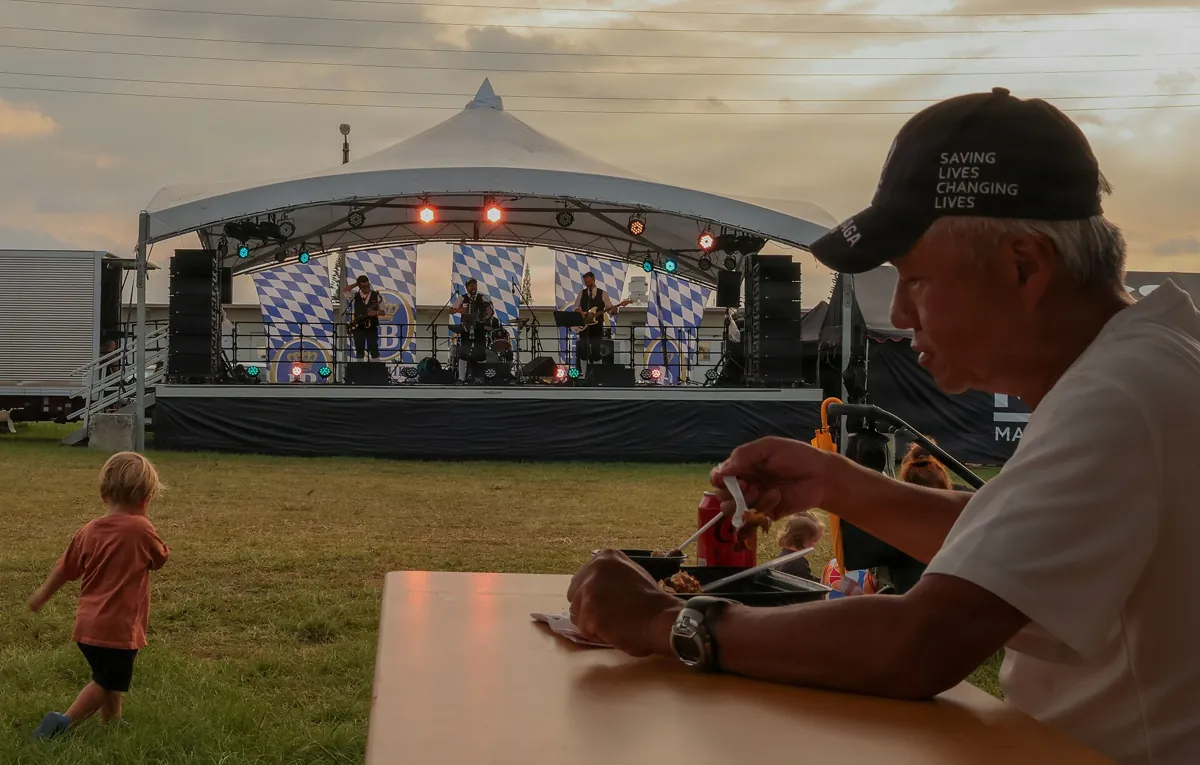
Each year, the long weekend that closes the summer season in Grand Rivers belongs to handmade work. For three days the grounds of Little Lake Park fill with craft stalls, food booths and a live-music stage, and a newspaper layer reporting on the two thousand twenty-six edition described the crowd in a single word: thousands. The gathering is organised by the Grand Rivers Chamber of Commerce, and it travels under several printed names. A festival-listing layer and the town’s own tourism pages carry it as the Grand Rivers Labor Day Weekend Arts & Crafts Festival, while a festival guide layer spells the ampersand out as Grand Rivers Labor Day Weekend Arts and Crafts Festival. Chamber and tourism layers shorten the name further, to Grand Rivers Arts & Crafts Festival or simply Arts & Crafts Festival. Those forms stand side by side here, unmerged, because each belongs to a different layer of the record.
About
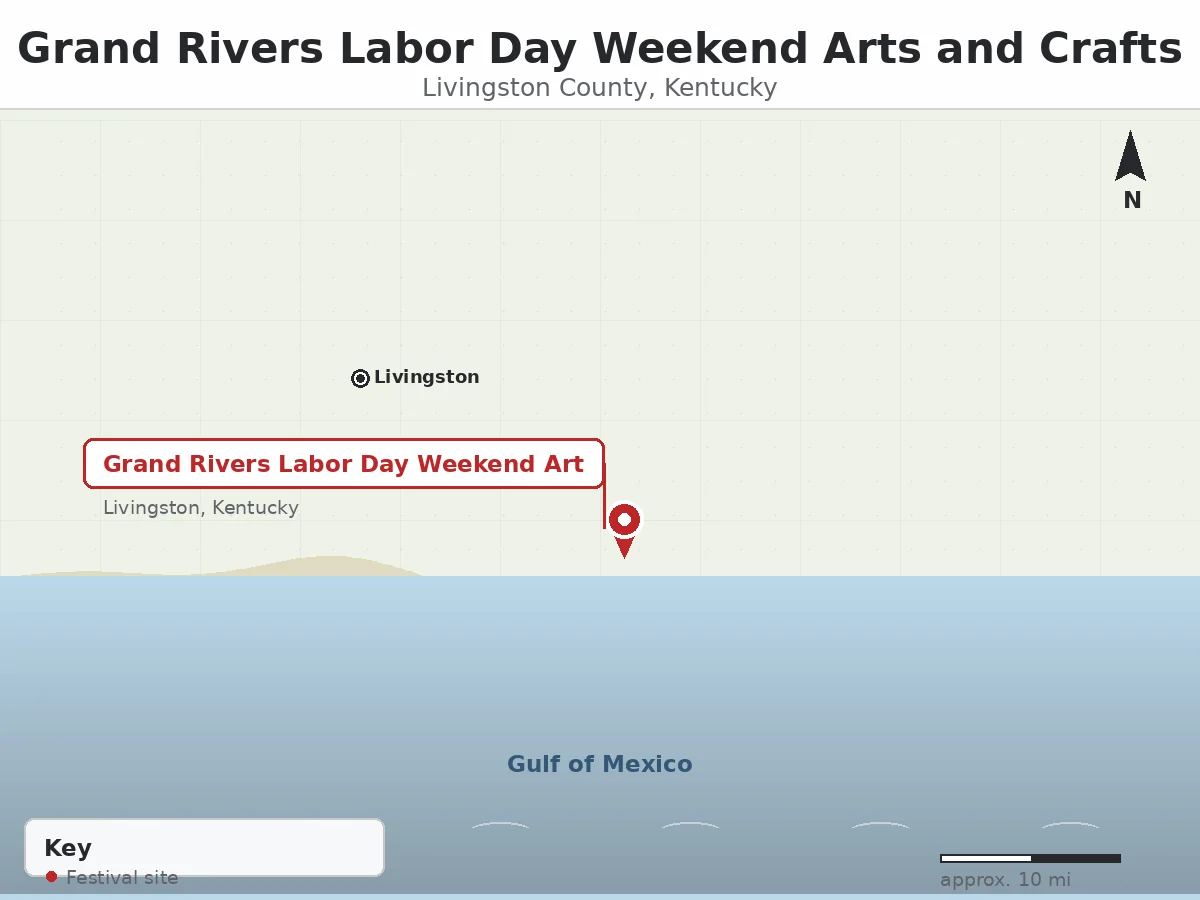
Grand Rivers is a small town in Livingston County, Kentucky, and it is not the county seat: encyclopedia and reference layers name Smithland as the seat of Livingston County. The festival’s home is Little Lake Park, the venue given by organiser and town tourism layers alike. Behind the event stands the Grand Rivers Chamber of Commerce, which a newspaper layer credits with organising the two thousand twenty-six edition and whose vendor documents set the terms for the booths lining the park.
The weekend runs three days across Labor Day weekend, ending on the holiday Monday itself. The organiser’s own page gives the hours: Saturday and Sunday, nine in the morning to five in the evening; Monday, nine to three in the afternoon. Live music plays on all three days, and the documented editions run from two thousand nineteen through two thousand twenty-six, showing a festival of considerable scale.
Quick Facts
| Item | Detail |
| Fullest printed name | Grand Rivers Labor Day Weekend Arts & Crafts Festival |
| Name spelled out in a festival guide layer | Grand Rivers Labor Day Weekend Arts and Crafts Festival |
| Short forms in chamber and tourism layers | Grand Rivers Arts & Crafts Festival; Arts & Crafts Festival |
| Town and county | Grand Rivers, Livingston County, Kentucky |
| County seat | Smithland; Grand Rivers does not hold that role |
| Venue | Little Lake Park, Grand Rivers |
| Organiser | Grand Rivers Chamber of Commerce |
| Weekend shape | Three days over Labor Day weekend; Saturday and Sunday nine to five, Monday nine to three |
| Editions documented in the record | Two thousand nineteen, two thousand twenty-three, two thousand twenty-four and two thousand twenty-six |
| Gate admission in the layers | Two dollars per person per day on foot, or five dollars per vehicle |
History
The deepest root the record offers comes from a resort guide layer, which states that the festival’s seeds were sown in nineteen seventy-five by Kentucky’s Western Waterland. That sentence is carried exactly as the layer gives it: an origin account, not a founding date proved by documents.
Separate from that account, the billings printed for recent editions run on their own track. An event-listing layer billed the two thousand twenty-four weekend as the 49th Annual, and the newspaper layer’s report of two thousand twenty-six called that edition the 50th annual. Both are recorded as printed, neither merged with the nineteen seventy-five account nor used to work backwards to a first year. The town tourism body, for its part, bills the event as the largest and longest-running arts and crafts festival in the Lakes area and in western Kentucky, a characterisation belonging to the tourism body itself.
For a useful comparison, see the Lincoln County Kentucky Christmas on the Wilderness Road Festival for another county festival.
The record also holds one interruption: the organiser’s own newsletter layer states that the two thousand twenty edition was postponed to Labor Day weekend two thousand twenty-one, leaving a visible gap before the documented editions resume with two thousand twenty-three. Across the later years the weekend’s shape stays constant — three days, the same park, the same Monday finish, and gate hours matching between the two thousand twenty-four listing layer and the organiser’s own page for two thousand twenty-six.
What to Expect
The vendor field is the centre of the weekend. Across the layers, the festival draws craft, fine art and fine craft vendors in numbers that shift by edition: a resort guide layer counted more than one hundred twenty crafters and artisans at Little Lake Park in two thousand twenty-three, an event-listing layer put the two thousand twenty-four figure at over one hundred fifty craft vendors, and the newspaper report of two thousand twenty-six recorded over one hundred twenty vendors. Because those counts come from different years and different kinds of sources, they read best as a range — over one hundred fifteen to one hundred fifty sellers — rather than a single settled figure.
Around the stalls, the documented programme is simple: food booths, named directly in the two thousand twenty-four listing, and a live-music stage running all three days, per the organiser’s own page. The two thousand twenty-six newspaper account adds the human scale — the fiftieth-billed edition began on the fifth of September, concluded on Labor Day, and drew thousands through the park. Nothing in the layers read promises demonstrations, contests or rides beyond the vendor rows, the food and the music: picture a large outdoor market with a stage, in a town park.
Planning Your Visit
Little Lake Park is the fixed point for the whole weekend, and the published hours reward an early start. Gates on Saturday and Sunday run from nine in the morning to five in the evening, while Monday’s closing comes at three in the afternoon, so the final day is the shortest of the three. Anyone travelling for the widest choice of stalls will find Saturday and Sunday fuller, with Monday suiting a shorter, quieter pass.
Admission is documented across layers rather than on a single current price list, and the figures agree closely. A regional tourism layer for the two thousand nineteen edition gives two dollars per person per day at the walk-in gate, or five dollars per vehicle covering everyone in it, with children under twelve free. The same figures appear in the two thousand twenty-four event-listing layer, and a chamber newsletter layer for a later edition likewise states admission of two dollars. Those are the gate prices; the booth charges in the organiser’s own vendor documents are fees charged to sellers, not admission. The Chamber prints its telephone number and postal address on the organiser’s pages for questions about a coming edition; those details are noted here for their existence only.
A Sample Itinerary
A first day, Saturday, can begin at the nine o’clock opening, with the full day ahead. Work the vendor rows slowly in the morning, break for lunch from the food booths, and give the afternoon to the live-music stage and a second pass over stalls that caught your eye earlier.

Sunday repeats the hours, nine to five, and suits a return visit with a shorter list: pieces you went home thinking about, food lines you skipped, more time at the stage. With vendor counts running well past one hundred, few visitors will exhaust the field in a single day, and the two long days divide the ground comfortably.
Monday is the short day, nine to three, and carries the weekend’s meaning, since the festival concludes on Labor Day itself. Arrive in the morning for final purchases and one last set of music before the close.
Comparing Recent Editions
Side by side, the documented editions show growth and steadiness. The two thousand nineteen edition, documented by a regional tourism layer, already ran the familiar three-day span from the thirty-first of August to the second of September, and it preserves the gate prices in their fullest form. Two thousand twenty-three, seen through a resort guide layer, put more than one hundred twenty crafters and artisans into Little Lake Park across the second to the fourth of September.
The two thousand twenty-four edition carries the fullest listing detail: billed the 49th Annual, it ran from the thirty-first of August to the second of September with over one hundred fifty craft vendors, festival food and live music, and hours identical to the organiser’s two thousand twenty-six page. That later edition, reported by a newspaper layer, began on the fifth of September, ran to the seventh, drew thousands, and fielded over one hundred twenty vendors. The vendor totals move between layers, but the structure — three days ending on Labor Day, with a shorter Monday — never changes across the record.
A Checklist for the Weekend
- Small bills for the gate: two dollars a person, or five dollars a vehicle
- A sturdy tote or two for carrying fragile craft purchases
- Comfortable shoes, since the vendor field at Little Lake Park rewards hours of slow browsing
- Sun protection and water for a September weekend spent mostly outdoors
- A note of Monday’s earlier finish at three in the afternoon
- A short list of stalls to revisit on a second day, drawn from your first pass through the rows
Beyond the Festival
Grand Rivers keeps a fuller calendar than this one weekend. Its calendar also carries a Hunter’s Moon Festival in October and a Bluegrass, Brew & BBQ Festival in April — separate events whose programmes are not borrowed into this account.
For county business rather than festival business, the reference layers point to Smithland, the seat of Livingston County. Grand Rivers’ role in the county’s year is different: its tourism pages present this festival as a flagship — the largest and longest-running gathering of its kind in the Lakes area and in western Kentucky, in the tourism body’s own billing. A visitor coming for the stalls is seeing the event the town itself puts forward first.
Why the Festival Matters
Few small-town markets in the record can point to a run like this one. The printed billings carry the weekend to a 49th Annual in two thousand twenty-four and a 50th annual in two thousand twenty-six, and the resort guide layer’s account reaches back to seeds sown in nineteen seventy-five, even though the two strands are never fused into one founding claim here. The postponement of the two thousand twenty edition, and its return on Labor Day weekend the following year, shows an organiser and a town treating the date as worth keeping.
Its scale gives it weight beyond Grand Rivers. Thousands of visitors at the two thousand twenty-six edition, and well over one hundred vendors in every recent documented year, make it a significant marketplace for the region’s craft and fine art sellers, run not by a promoter passing through but by the Grand Rivers Chamber of Commerce, the town’s own body. For Livingston County, the festival stands as the best-documented recurring event in the layers read for this article.
Frequently Asked Questions
Why does one festival appear under so many different names?
Each form belongs to a real layer. The fullest, Grand Rivers Labor Day Weekend Arts & Crafts Festival, appears in a festival-listing layer and on the town’s own tourism pages; a festival guide layer spells out Grand Rivers Labor Day Weekend Arts and Crafts Festival; and chamber and tourism layers shorten the name to Grand Rivers Arts & Crafts Festival or Arts & Crafts Festival. None is an error; all are left unmerged here.
What will a carload of visitors pay at the gate?
The fullest pricing in the record comes from a regional tourism layer for two thousand nineteen: five dollars per vehicle, with admission included for everyone riding in it, against two dollars per person per day for those walking in, and children under twelve free. The two thousand twenty-four listing layer repeats the figures, and a later chamber newsletter still states admission of two dollars. Charges in the organiser’s vendor documents are booth fees for sellers, not gate prices.
How large is the vendor field, really?
It depends on the year. The record gives more than one hundred twenty crafters and artisans in two thousand twenty-three, over one hundred fifty craft vendors in two thousand twenty-four, and over one hundred twenty vendors in two thousand twenty-six, which is why the honest summary is a range, over one hundred fifteen to one hundred fifty, rather than one number. Food booths and a live-music stage running all three days do not vary.
Why does the festival end on a Monday?
Because its anchor is Labor Day itself. The weekend is built across the holiday, with full days on Saturday and Sunday and a shorter closing day, nine in the morning to three in the afternoon, on the Monday holiday. The two thousand twenty-six newspaper report underlines it by noting the edition concluded on Labor Day.
What to Expect From the Next Livingston County Kentucky Grand Rivers Labor Day Weekend Arts and Crafts Festival
How often is Livingston County Kentucky Grand Rivers Labor Day Weekend Arts and Crafts Festival held?
The documented pattern is a yearly return tied to Labor Day weekend. Editions appear in the record for two thousand nineteen, two thousand twenty-three, two thousand twenty-four and two thousand twenty-six, and the single break is explained by the organiser’s own newsletter layer: the two thousand twenty edition was postponed into Labor Day weekend two thousand twenty-one.
When is the next Livingston County Kentucky Grand Rivers Labor Day Weekend Arts and Crafts Festival?
The layers consulted close with the two thousand twenty-six edition, which ran from the fifth to the seventh of September and concluded on Labor Day. No announcement of a following edition appears in those layers. Working from the pattern they do establish, the natural place to look is the next Labor Day weekend, but confirmed dates would have to come from the Chamber’s own pages.
Will the dates change?
The calendar anchor has held steady across every documented edition: the festival sits on Labor Day weekend, so its exact days move as the holiday moves, falling across late August and early September. Within that anchor, real change has happened once in the record, when the two thousand twenty edition was postponed by a full year. A shift away from Labor Day, by contrast, appears nowhere in the layers read.
Closing Thoughts
The Grand Rivers Labor Day Weekend Arts and Crafts Festival, in all its printed name forms, is the kind of event a small town builds slowly and guards carefully: a park full of makers, a stage playing three days, a gate priced in single dollars, and a Monday finish on the holiday itself. The record behind it — organiser’s pages, vendor documents, a newspaper report, listings across seven years — is solid enough to plan by.