Harlan County Kentucky Kingdom Come Swappin’ Meetin’ Festival
On the first weekend of October, a community college campus in the Cumberland valley becomes a working showcase of Appalachian folk life. Demonstrators churn butter and shell corn, storytellers hold a main stage, and the whole gathering unfolds along a creek at the foot of the highest ground in Kentucky. This is the Kingdom Come Swappin’ Meetin’, a campus festival hosted by Southeast Kentucky Community and Technical College in Cumberland, Harlan County. The college’s own news layers document it across a long run of autumn editions, billing the gathering the forty-sixth in two thousand ten and the sixtieth in two thousand twenty-four.

About
The first thing to settle is the name itself. Every layer read for this article prints the event as Kingdom Come Swappin’ Meetin’, sometimes without the apostrophes as Kingdom Come Swappin Meetin, and sometimes in the shortened form Swappin’ Meetin’. The word Festival appears in the catalogue title at the head of this page, but the college’s own coverage never adds it, and no other layer prints the sheet’s county-prefixed title either. Readers should search under the shorter published name, the one the host itself uses.
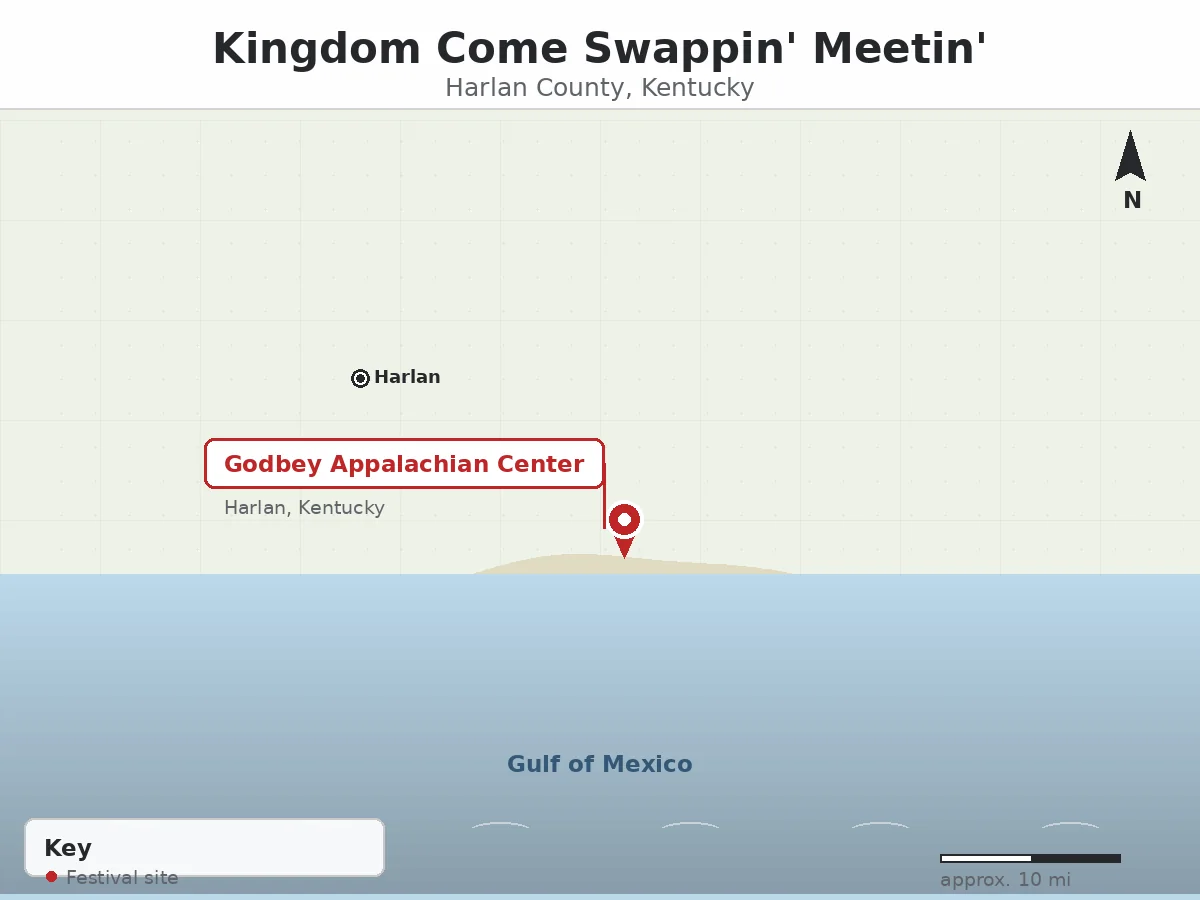
The gathering belongs to Cumberland, a small city in Harlan County. Cumberland does not hold the county seat — Harlan does. The setting is the Cumberland campus of Southeast Kentucky Community and Technical College, whose grounds run along Cloverlick Creek at the base of Black Mountain. Performances also fill the Edsel Godbey Appalachian Center, whose theatre hosted a Friday-evening concert during the forty-sixth edition in two thousand ten.
The college is both host and organiser. Its news layers present the Meetin’ as the institution’s own campus event, prepared under its long-time festival director. The programme the college publishes mixes music, crafts, visual arts, theatre, storytelling, games, food, folk-life demonstrations, and traditional contests, a blend consistent across the documented editions.
Quick Facts
| Item | Detail |
| Published name | Kingdom Come Swappin’ Meetin’ |
| Host town | Cumberland, Harlan County, Kentucky |
| County seat note | Cumberland is not the county seat; Harlan is |
| Venue | Cumberland campus of Southeast Kentucky Community and Technical College |
| Grounds | Along Cloverlick Creek at the base of Black Mountain |
| Organiser | Southeast Kentucky Community and Technical College |
| Documented editions | Five dated editions between two thousand ten and two thousand twenty-four |
| Programme core | Folk-life demonstrations, music, storytelling, contests, and food |
| Admission | The layers read give no gate price and no free-entry statement |
History
None of the college’s layers puts a founding year into words, so this article does not offer one. What the layers provide instead is a sequence of numbered billings. The edition of Friday the first and Saturday the second of October two thousand ten was billed the forty-sixth. The forty-eighth followed on Friday the fifth and Saturday the sixth of October two thousand twelve, and the forty-ninth a year later. In two thousand sixteen the edition of Friday the thirtieth of September and Saturday the first of October was billed the fifty-second, and the weekend of Friday the fourth and Saturday the fifth of October two thousand twenty-four was billed the sixtieth. Turning any of those numbers into a first year would require arithmetic the sources themselves never perform.
For a useful comparison, see the Harlan County Kentucky PossumFest Festival for another county festival.
The documented editions carry more texture than the bare numbers. The forty-sixth edition in two thousand ten leaned heavily on demonstration, with a dozen folk crafts worked live on the grounds, from apple cider making and lye soap making to chain-saw carving and sorghum molasses. By two thousand twelve the college was recording crowds of several thousand across the two days. The college’s account of the two thousand ten concert names its performers, and that billing detail continues in later years, with demonstrators and musicians named in two thousand twelve and main-stage acts named in two thousand twenty-four. The forty-ninth edition in two thousand thirteen ran under the theme Pride in My Mountain Heritage and added a Mini Olympics, youth storytelling and art contests, and the Glow Run 5K with a one-mile walk.
The fifty-second edition in two thousand sixteen stands apart: for that year alone, the Meetin’ shared its campus and weekend with the twelfth annual Kentucky Black Bear Festival, under a stated decision to combine the two gatherings on one site. The sixtieth, in two thousand twenty-four, brought over sixty food, arts, craft, and informational vendors, artisan demonstrations, main-stage performers from storytellers to bands and solo acts, and collections for flood relief.
What to Expect
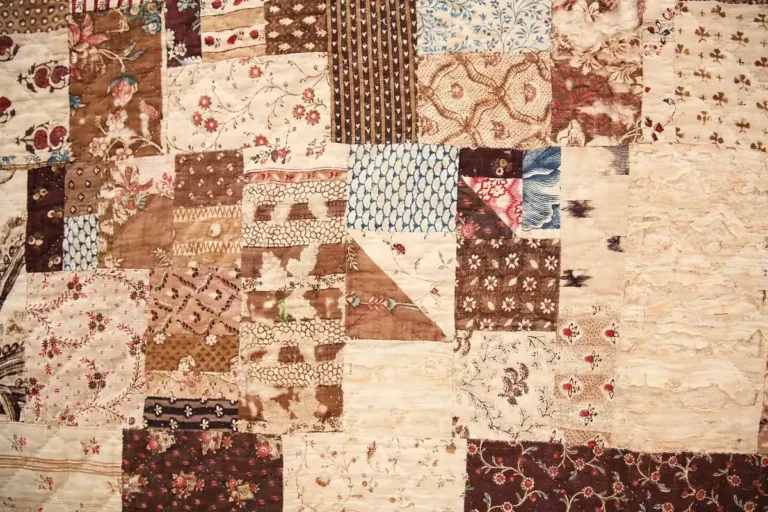
Arrive expecting a festival that behaves like a fairground and a classroom at the same time. The demonstration ground is the heart of it. In the two thousand ten account, visitors could watch cider pressed, soap rendered, iron worked at a forge, quilts pieced, brooms bound, butter churned, pots thrown, wood carved, corn shelled, baskets woven, and sorghum boiled down into molasses. Artisan demonstrations remained part of the bill in two thousand twenty-four, so the working-craft element continues.
Music and performance run on parallel tracks. The Godbey Appalachian Center gives the college an indoor theatre, used for the Friday-evening concert in two thousand ten, while the two thousand sixteen programme spread performances between the Black Box Theater and an outdoor concert tent. Storytelling holds a named place on the main stage in the two thousand twenty-four account, where storytellers shared the billing with bands and solo acts. Games and visual arts sit inside the programme the college describes as well, so the weekend’s stages and grounds carry performance, display, and play at the same time.
Contests give competitive visitors plenty to enter or watch. The two thousand sixteen edition listed contests in quilting, baked goods, horseshoes, pickles, jams and jellies, checkers, a cake walk, an art contest, and a photography contest. Youth contests in storytelling and art appeared in two thousand thirteen. Runners get their moment through the Glow Run 5K, documented in two thousand thirteen with a one-mile walk beside it, and again as a Thursday-night opener for the combined two thousand sixteen weekend.
Food is woven through the grounds rather than corralled into one court: the two thousand twenty-four edition counted over sixty vendors across food, arts, crafts, and information, so eating, shopping, and browsing happen in the same wander.
Planning Your Visit
Timing comes first, because the documented editions cluster tightly. Every dated edition in the college’s layers falls on a Friday and Saturday in late September or the opening days of October, from the second of October in two thousand ten to the fifth of October in two thousand twenty-four.
The college’s news layers print telephone numbers for festival information, and those numbers are the documented route for questions about a coming edition, noted here by existence only and never reproduced. The grounds run along Cloverlick Creek beneath Black Mountain, performances split between outdoor spaces and the Edsel Godbey Appalachian Center, and the programme rewards anyone who can give it both days.

Because the Meetin’ is a campus event, demonstrations, contests, and stage shows share one site, so moving between a blacksmithing display and a storytelling set is a short walk. Reports from two thousand sixteen describe a carnival on the grounds, but the carnival belonged to the Kentucky Black Bear Festival, not to the Meetin’. The layers read state neither a gate price nor that general entry is free, so a careful visitor confirms the admission position for the year in question before travelling. Visitors coming from beyond Harlan County should also count the mountain drive to Cumberland in their timing, since the campus sits at the base of Black Mountain and the approach is part of the journey rather than an afterthought.
Sample Itinerary
A Friday built from the documented programme might begin among the demonstrators, watching a blacksmith or a basket weaver at work, then drift to the creek-side booths. In two thousand ten the Friday closed with a concert inside the Godbey Appalachian Center theatre, so a day of crafts pairs naturally with an indoor evening of music. Anyone in town by Thursday of a combined-style year would have found the Glow Run 5K opening the two thousand sixteen weekend under lights.
Saturday carries the fullest load. Start with the contest tables, then move between artisan demonstrations and the main stage. Save the middle of the day for the vendor rows; the two thousand twenty-four edition spread over sixty of them across food, arts, crafts, and information. Close the weekend with whichever performance space runs latest, tent or theatre. Between those anchors, the grounds reward unhurried wandering, since demonstrations, booths, and stages all share the one campus.
Comparing the Weekend
The Meetin’ invites comparison with its one-time partner. The Kentucky Black Bear Festival, which shared the Cumberland campus on the two thousand sixteen weekend as its twelfth annual edition, brought the carnival and a Thursday-night Glow Run into the shared programme, while the Meetin’ brought demonstrations, contests, and its heritage theme. The two events remain distinct festivals with separate records, and neither history should be folded into the other’s.
Against a typical county fair, the difference is one of emphasis. A fair centres on midway rides, livestock, and grandstand shows; the Meetin’ centres on process — how soap is made, how a quilt is pieced, how sorghum becomes molasses. Its organiser is a college rather than a fair board, and its contests reward preserves, carving, and photography alongside the cake walk.
Checklist
- Check the college’s announcements for the year’s dates before booking travel
- Plan for a Friday and Saturday in late September or early October
- Give the demonstration ground a full morning rather than a passing glance
- Build in time for both the Godbey Appalachian Center and the outdoor stages
- Browse the contest tables for quilts, preserves, and photography
- Leave space in the day for the vendor rows and festival food
- Confirm the admission position for the current year before setting out
- Keep the Kentucky Black Bear Festival’s record separate when reading older coverage
Beyond the Campus
The setting does quiet work for this festival. The demonstrations of mountain folk skills happen in a landscape that explains them: Cloverlick Creek below the grounds, Black Mountain rising behind the campus. The Godbey Appalachian Center gives the weekend a permanent cultural home rather than a rented one.
The two thousand twenty-four edition showed how the event reaches past entertainment. Collections for flood relief were taken during the sixtieth weekend, folding neighbourly aid into a heritage celebration. The gathering doubles as a homecoming for skills that might otherwise fade from view. For the college, the weekend also turns its campus outward, opening grounds that serve students all year to the several thousand visitors the festival draws across its two days.
Significance
The verdict of the research behind this article calls the Meetin’ one of the state’s oldest documented folk festivals, and the billings support the weight of that description: a gathering numbered in the forties by two thousand ten and reaching its sixtieth billing in two thousand twenty-four has outlasted most events of its kind. Its deeper value lies in transmission. Each documented edition puts working demonstrators — soap makers, smiths, quilters, carvers, broom makers, sorghum cooks — in front of several thousand visitors.
Because Southeast Kentucky Community and Technical College hosts and organises the weekend, the Meetin’ is tied to an institution built to keep regional knowledge alive. Its contests, stages, and themes — Pride in My Mountain Heritage in two thousand thirteen among them — say plainly what the weekend is for.
Frequently Asked Questions
Which demonstrations anchor the festival programme?
The forty-sixth edition in two thousand ten gives the fullest answer, listing a dozen live crafts from cider making and lye soap making to blacksmithing, quilting, butter churning, chain-saw carving, basket weaving, and sorghum molasses work. Artisan demonstrations still featured in the two thousand twenty-four account, so the demonstration ground remains the programme’s anchor.
How did the two thousand sixteen weekend differ from other years?
That edition was deliberately combined with the twelfth annual Kentucky Black Bear Festival on the same campus, under a stated one-year decision. The bear festival supplied the carnival, and the shared programme added a Thursday-night Glow Run 5K. The two festivals remain separate events with separate histories despite the shared weekend.
What role does the Edsel Godbey Appalachian Center play during the weekend?
The center is the festival’s indoor stage home. Its theatre hosted the Friday-evening concert of the two thousand ten edition, and its Black Box Theater held performances during the combined two thousand sixteen weekend. Outdoor stages and a concert tent carry part of the programme, but the center gives the Meetin’ its roofed stage home.
Why do the annual numbers matter when reading the festival’s history?
Because they are nearly all the chronology the published record offers. The college bills editions the forty-sixth, forty-eighth, forty-ninth, fifty-second, and sixtieth across two thousand ten to two thousand twenty-four, yet states no founding year in words. Reading the numbers as billings, exactly as printed, respects the record; converting them into a first year would add a claim no layer actually makes.
What to Expect From the Next Harlan County Kentucky Kingdom Come Swappin’ Meetin’ Festival
How often is Harlan County Kentucky Kingdom Come Swappin’ Meetin’ Festival held?
The college’s billings number the editions in a rising annual sequence, running from the forty-sixth in two thousand ten to the sixtieth in two thousand twenty-four. That pattern points to a yearly rhythm kept across the documented span.
When is the next Harlan County Kentucky Kingdom Come Swappin’ Meetin’ Festival?
The layers read for this article stop at the sixtieth edition, held on Friday the fourth and Saturday the fifth of October two thousand twenty-four, and none of them names a date for an edition after that one. Anyone watching for the next announcement should follow the host college’s announcements.
Will the dates change?
The documented dates have stayed inside a narrow window while shifting within it: late September in two thousand sixteen, the opening days of October in the other documented years. A future edition could land on either side of that seam, so confirm the exact Friday and Saturday each year rather than assuming the previous year’s weekend repeats.
Closing
The Kingdom Come Swappin’ Meetin’ endures because it keeps showing its work. On a creek-side campus beneath Black Mountain, demonstrators still churn, carve, weave, and boil sorghum in front of crowds counted in the thousands. Whatever name a catalogue gives it, the published record describes a festival that has carried mountain folk life across six numbered decades of editions, in the open, one October weekend at a time.