Fleming County Kentucky Browning Orchard Festival
On a handful of autumn Sundays in the late twenty tens, a working orchard on Wallingford Road opened its rows to neighbours, alumni and families for an afternoon of traditional music, hayrides and fresh cider. The event those visitors attended was published simply as the Browning Orchard Festival, a name carried by a university news layer and by the university’s student newspaper layer. The longer title at the top of this page is a constructed label: no source prints it in full, and its county and state prefix belongs to the listing rather than the festival. What the record does support is a modest, well documented run of editions between two thousand sixteen and two thousand nineteen, each a single Sunday afternoon at Browning Orchard near Wallingford in Fleming County, followed by a pause that the documentation never shows ending. This page stays inside that record. It sets out what the university layers document about the orchard, the hosts, the editions, the programme and admission, and it is plain about where the trail stops: the hold announced in two thousand twenty, after frost destroyed that year’s crop.
About the Festival
The Browning Orchard Festival is a university-run orchard celebration in Fleming County, Kentucky. University news layers say the festival is held by the university’s Department of Agricultural Sciences together with its Office of Alumni Relations and Development. The student newspaper layer prints the hosts in the other order, naming the Office of Alumni Relations and Development and the agriculture science department of the same university. Those two wordings are kept apart here rather than blended, because each layer prints its own version. The setting is Browning Orchard, on Wallingford Road near the community of Wallingford. Wallingford is not the Fleming County seat; a state reference layer names Flemingsburg as the seat of Fleming County, and the two places should not be confused. One further point of geography matters. The university itself sits in Rowan County, yet the orchard and the festival sit in Fleming County, and nothing in the record moves the event to the university’s home town. University news layers print alumni office contact details for the festival; they exist but are not reproduced here.
Quick Facts
| Item | Record |
| Published festival name | Browning Orchard Festival |
| Venue | Browning Orchard, Wallingford Road, Fleming County |
| Setting | Near Wallingford; the county seat is Flemingsburg |
| Hosts | The university’s Department of Agricultural Sciences and its Office of Alumni Relations and Development |
| Documented editions | Two thousand sixteen, two thousand seventeen, two thousand eighteen and two thousand nineteen |
| Documented hours | Noon to four in the afternoon in two thousand sixteen and two thousand eighteen |
| Admission position | Free to the public in two thousand sixteen; no statement found for other years |
| Printed billings | Sixth annual in two thousand seventeen; ninth annual in two thousand nineteen |
| Present status | Placed on hold in two thousand twenty; no later edition documented |
| Orchard origins | Purchased by E.P. Browning in eighteen ninety-nine |
History
The orchard behind the festival carries a longer story than the festival itself. University layers state that the property was originally purchased in eighteen ninety-nine by E.P. Browning, who grew peaches there. His son, Francis Browning, converted the planting into a commercial apple orchard during the nineteen twenties, and the Browning family later donated the property to the university in two thousand eight. Those names and dates are the orchard’s documented history, carried here exactly as the university layers print them. One university layer calls the festival a nod to a tradition the Browning family started as early as nineteen twenty-six. That description is that layer’s own claim, and it is fenced to that layer rather than adopted as settled fact. The festival’s own chronology is thinner. A university news layer billed the two thousand seventeen edition as the sixth annual, and another billed the two thousand nineteen edition as the ninth annual. Both billings are recorded here as billings only, never converted into a founding year, because billing arithmetic is not evidence of a first edition. The documented run ends abruptly. In two thousand twenty, a university news layer reported the festival placed on hold after a late May frost killed that year’s apples, with the university saying it planned to resume once the orchard’s health allowed. No edition after two thousand nineteen is documented in the layers read.
What to Expect
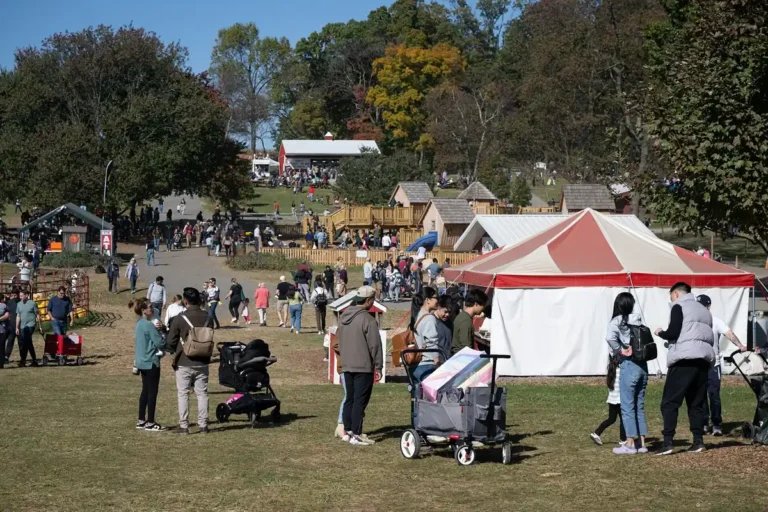
An afternoon at this festival, judged by the documented editions, is a compact orchard programme rather than a sprawling fairground. The fullest surviving list comes from a two thousand eighteen university layer. It records music from the university’s Kentucky Center for Traditional Music, hayrides around the orchard, pony rides provided by the university equestrian team, a children’s hay-maze, concessions and a pig roast. A university recap layer for two thousand nineteen adds apple picking and games, confirming that the edition was held and describing what visitors did there. The university’s agriculture department also sells farm and Kentucky Proud products at the festival, with apples, cider, mums and pumpkins named among the goods. The two thousand sixteen and two thousand eighteen editions each ran from noon to four in the afternoon, a single autumn afternoon rather than a full weekend. The picture to hold is that scale: music under the trees, rides through the rows, children working through a maze of hay, and a sales table carrying the orchard’s own produce.
Planning Your Visit
Honesty has to come first in this section, because the documented festival is not currently running. The last edition the record confirms took place in two thousand nineteen, and the two thousand twenty edition was placed on hold, so any trip planned around it today would rest on an announcement the layers read do not contain. Anyone hoping to attend a future edition should watch for word from the university, whose news layers print contact details for the alumni office in connection with the event. Beyond that caution, the documented pattern still tells a prospective visitor a good deal. Every documented edition fell on a Sunday in late September or early October: the second of October, the first of October, the thirtieth of September and the twenty-ninth of September across the four years. The two editions with printed hours ran from noon to four in the afternoon, a four hour window that rewards arriving near the start. The venue is Browning Orchard on Wallingford Road near Wallingford, in Fleming County. Flemingsburg, the county seat, is a separate town, and directions aimed at the seat will not deliver a visitor to the orchard gate.
For a useful comparison, see the Fleming County Kentucky FFA Tractor Parade Festival for another county festival.
A Sample Festival Afternoon
This itinerary is drawn from the documented two thousand eighteen and two thousand nineteen programmes, which carry the fullest particulars. Arrive at noon, when the documented editions opened, and begin with the sales table, where the agriculture department offers apples, cider, mums and pumpkins before the afternoon crowd gathers. Move on to the music from the Kentucky Center for Traditional Music, which gives the afternoon its soundtrack. Take a hayride around the orchard while the light is still high, then let children tackle the hay-maze and the games the two thousand nineteen recap records. Families with younger children should fit in the pony rides run by the university equestrian team before the final hour. Keep the pig roast and the concession stands for a late lunch between activities. Finish with apple picking, the addition the two thousand nineteen recap layer names, and a last look down the rows before the four o’clock close. The schedule is gentle by design, matching the documented festival itself.
Comparing the Documented Editions
The four documented editions differ mainly in how completely the record preserves them. The two thousand sixteen edition survives through the student newspaper layer, which reported it in advance and stated that it was free to the public; because the report looks forward, it describes intention more than outcome. The two thousand seventeen edition is the thinnest of the four, preserved chiefly through its sixth annual billing in a university news layer, with no hours and no programme list attached in the record. The two thousand eighteen edition is the best documented of the run: its university layer prints the date, the noon to four hours and a full programme of music, rides, maze, concessions and pig roast. The two thousand nineteen edition is the only one confirmed afterwards by a recap layer, which verifies that it was held and adds apple picking and games to the known programme. Read together, the four editions show a stable format, a Sunday afternoon orchard gathering, described with uneven fullness. The two thousand twenty announcement then breaks the sequence entirely, replacing an edition with an explanation about frost and a promise to resume.
Checklist
- Confirm before travelling that a new edition has actually been announced, since none is documented after two thousand nineteen.
- Aim for the noon opening on a festival Sunday to use the full documented four hour window.
- Bring cash or payment for orchard goods, including apples, cider, mums and pumpkins.
- Dress for grass, orchard rows and changeable early autumn weather.
- Keep children close during hayrides and pony rides, and allow time for the hay-maze.
- Plan the drive to Wallingford Road near Wallingford, not to the county seat of Flemingsburg.
- Leave time for apple picking and games, the additions recorded in two thousand nineteen.
Beyond the Orchard
The festival is only the most visible day in the orchard’s year. Browning Orchard remains a piece of working agricultural ground whose history runs from E.P. Browning’s peach planting in eighteen ninety-nine, through Francis Browning’s conversion of the property into a commercial apple orchard in the nineteen twenties, to the family’s gift of the land to the university in two thousand eight. The university’s agriculture department sells farm produce at the festival itself, tying the celebration directly to the orchard’s continuing purpose. Around the orchard, Fleming County keeps its own geography straight: Flemingsburg is the county seat, Wallingford is the orchard’s community, and the university whose departments host the festival sits across the line in Rowan County. A visitor who understands the orchard as a donated family farm, still worked and still bearing fruit, understands why a late May frost could stop the festival outright. The celebration depends on the crop in a way a street fair never does, and the two thousand twenty hold proved it.
Why the Festival Matters
Within its small compass, the festival joins several threads that rarely meet in one afternoon. It gives a university’s agriculture students and alumni a shared occasion on land their institution holds in trust from a farming family. It keeps traditional music in front of a general audience through the Kentucky Center for Traditional Music. It turns a harvest into a public event, with apple picking, cider and pumpkins connecting visitors to the work of the orchard itself. One university layer frames the gathering as a nod to a tradition the Browning family started as early as nineteen twenty-six, and even treated cautiously, that framing explains the festival’s character: a family custom widened into a community invitation. The hold announced in two thousand twenty gives the story an elegiac edge. A single late frost erased a season’s apples, the university spoke of resuming when the orchard recovered, and the layers read for this page record no resumption. The significance of the festival now includes that silence. It stands as a documented example of how completely a harvest celebration depends on the health of one particular piece of ground.
Frequently Asked Questions
Which name do the sources actually give this festival?
Every source in the record calls it the Browning Orchard Festival. A university news layer and the university’s student newspaper layer both use that shorter name. The county and state prefix in this page’s title appears in no source and is a listing construction, so search for the event under the published name.
Which editions can be pinned to exact dates?
Four editions carry exact dates in the record. The student newspaper layer reported Sunday the second of October two thousand sixteen in advance. University news layers document Sunday the first of October two thousand seventeen, Sunday the thirtieth of September two thousand eighteen, and Sunday the twenty-ninth of September two thousand nineteen, with a recap layer confirming the last of those was held.
Was entry charged at the documented editions?
The record answers that question for one year only. The student newspaper layer states that the two thousand sixteen edition was free to the public. No admission statement was found for two thousand seventeen, two thousand eighteen or two thousand nineteen, so the free entry of two thousand sixteen must not be stretched across the whole run.
Why is there no recent edition to report?
A university news layer reported in two thousand twenty that the festival was placed on hold after a late May frost killed that year’s apples. The same report said the university planned to resume once the orchard’s health allowed. The layers read for this page document no edition after two thousand nineteen, so the resumption, if it has occurred, sits outside this record.
What to Expect From the Next Fleming County Kentucky Browning Orchard Festival
How often is Fleming County Kentucky Browning Orchard Festival held?
The documented editions gathered once each autumn, on single Sunday afternoons in two thousand sixteen, two thousand seventeen, two thousand eighteen and two thousand nineteen. That rhythm belongs to the documented past. Since the hold announced in two thousand twenty, no further edition appears in the layers read, so no current frequency can be stated honestly.
When is the next Fleming County Kentucky Browning Orchard Festival?
No next edition is documented in the layers read for this page. The university said in two thousand twenty that it planned to resume once the orchard’s health allowed, but the record contains no announcement of a revived date. A future edition would begin with such an announcement, most plausibly through the university’s own news channels and its alumni office.
Will the dates change?
The documented dates already wandered within a narrow band, falling on the second of October, the first of October, the thirtieth of September and the twenty-ninth of September in successive years. Any revived edition would set its own date, and the orchard’s condition would plainly matter, since frost damage to the apple crop caused the two thousand twenty hold in the first place.
Closing Thoughts
The Browning Orchard Festival, as the record preserves it, is a small event with an unusually clear paper trail and an unusually honest ending. Four autumn Sundays are documented with dates, hosts and programme details; the billings are printed without being inflated into a founding story; the single free admission statement is confined to the year it describes; and the pause of two thousand twenty is explained by the university itself. Until a new edition is announced and documented, that is where the story rests: a family orchard, a university’s stewardship, and a festival waiting on the health of its trees.