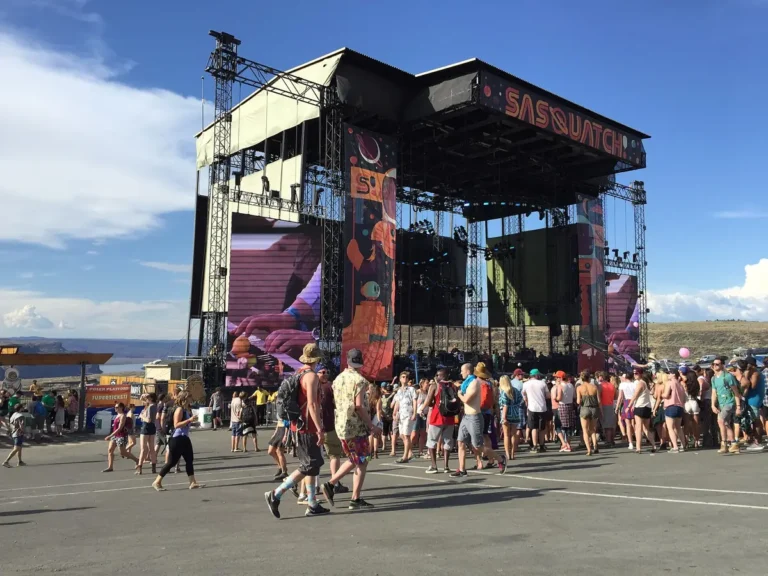
Estill County Kentucky Ravenna Railroad Festival
Ravenna owes its very existence to the railroad, and once each year, in late summer, the town throws a party for the industry that created it. The Estill County Kentucky Ravenna Railroad Festival brings residents and visitors together on a working steam heritage campus raised over the town’s old rail yard, where the hiss of live steam shares the bill with a children’s parade, gatherings of railroad workers, rows of exhibits, and the familiar pleasures of fair food, handmade crafts and live music. Plenty of Kentucky festivals borrow a theme for the weekend; this one never has to, because the tracks, the yard and the locomotives are the reason the ground exists.
The published record behind this celebration is sturdier than most small-town events can offer: announcements from the organiser, a county development alliance layer, an event-listing layer and reference layers document dated editions, a stated start year and a change of host. Two printed name forms circulate for it and are kept separate here rather than blended into one, and where the layers fall silent, the silence is reported rather than filled with guesses.
About the Festival
The form used by the county development alliance layer and by the organiser’s own layers is Ravenna Railroad Festival. One organiser press release carried a longer headline form, Ravenna Railroad Days Festival, showing the event answering to slightly different billings in its own publicity. Neither form displaces the other in the sources, so both stand.
Ravenna sits in Estill County in east central Kentucky, paired with Irvine across the Kentucky River. A reference layer settles the civic geography: Irvine, not Ravenna, is the county seat, and the two function as adjacent twin cities divided by the river and the rail yard between them.
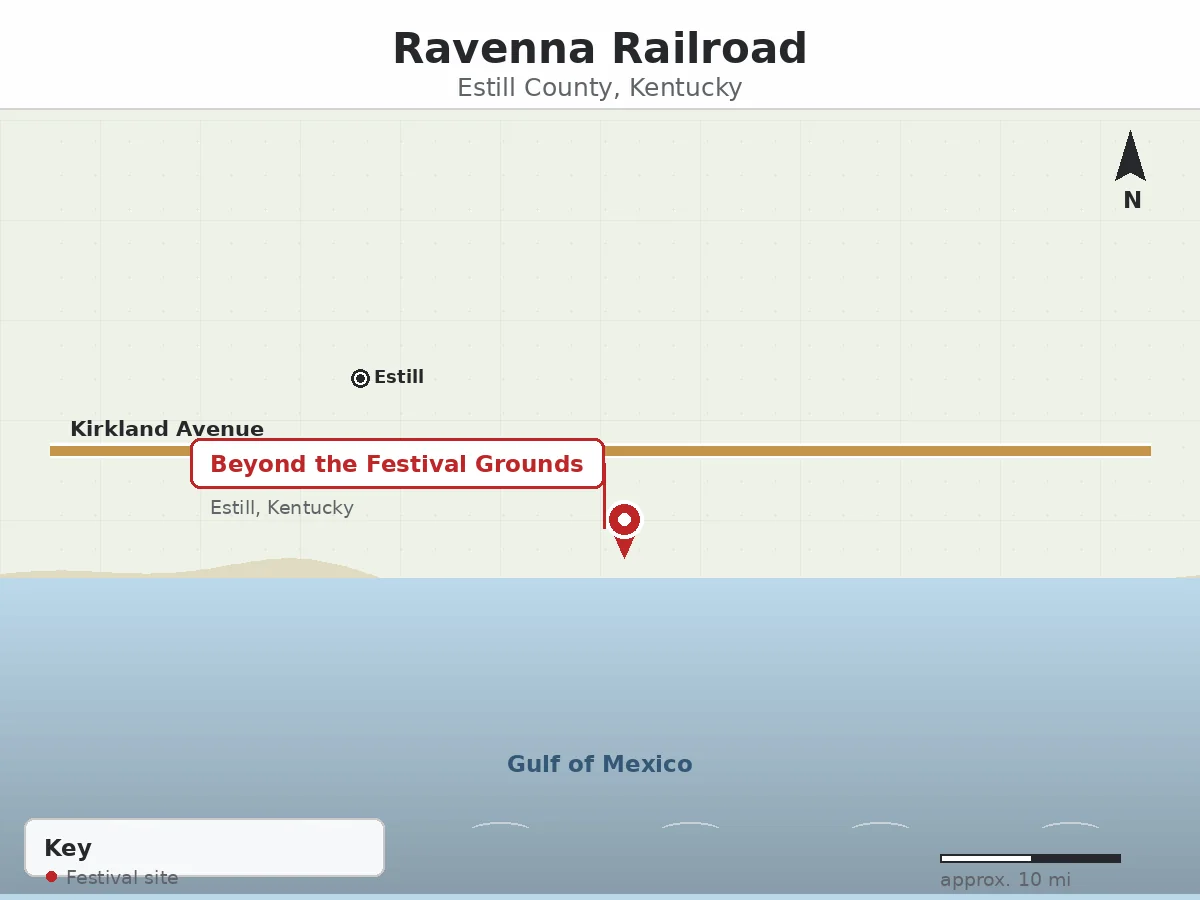
Those grounds are the Kentucky Steam Heritage Corporation campus, known as The Yard, standing on Kirkland Avenue where the former CSX rail yard once separated Ravenna from Irvine. The organiser’s layers print an Irvine address for the campus, a detail that captures how completely the yard straddles the two towns. A railroad festival on an actual railroad property, amid a heritage organisation’s locomotives and equipment, enjoys a setting no rented fairground could imitate.
For a useful comparison, see the Estill County Kentucky River to Grow Music Festival for another county festival.
For years the festival was organised by the City of Ravenna’s own festival managers. From two thousand twenty-one onward, the organiser’s layers show it hosted by the Kentucky Steam Heritage Corporation, and an event-listing layer goes a step further, describing the festival as operating as a division of that corporation. Those accounts are related but not identical, and they stand unmerged here. The organiser’s and the festival’s own sites print contact and vendor application routes, noted here by existence only.
Quick Facts
| Item | Detail |
| Published name | Ravenna Railroad Festival |
| Alternate billing | Ravenna Railroad Days Festival, in one organiser press release headline |
| Host community | Ravenna, Estill County, Kentucky |
| County seat | Irvine, the neighbouring twin city across the Kentucky River |
| Grounds | The Yard, the Kentucky Steam Heritage Corporation campus on Kirkland Avenue |
| Present host | Kentucky Steam Heritage Corporation, from two thousand twenty-one |
| Earlier organisers | The City of Ravenna’s festival managers |
| Season | Late summer, each year |
| Documented editions | Saturday the eleventh of September two thousand twenty-one; the seventh and eighth of September two thousand twenty-four |
| Gate admission | None of the layers read publishes a price for entering the grounds |
History
Two different beginnings run through this story, and keeping them apart matters. Ravenna itself was founded in nineteen fifteen as a railroad town, created when the Louisville and Nashville Railroad established a terminal there, according to a reference layer. That is the town’s history. The festival’s own start comes nearly a century later: the county development alliance layer states that the celebration has been hosted since two thousand nine. A reader who merges those two dates would invent a centenarian festival that no source describes.
The early editions belonged to the city. Under Ravenna’s festival managers, the event settled into its late-summer place on the county calendar and built the programme of parades, exhibits and rail worker reunions that still defines it. The arrangement lasted until the Kentucky Steam Heritage Corporation developed its campus on the old yard and the celebration gravitated toward the people preserving the machinery it celebrates.
The pandemic interrupted the run. The organiser’s layers record that the two thousand twenty edition was cancelled, and they document the comeback in detail. On Saturday the eleventh of September two thousand twenty-one, the festival returned with gates opening at nine in the morning, a kids’ parade at ten, and a remembrance ceremony at eleven marking twenty years since the attacks of the eleventh of September. That same edition carried a genuine milestone: the first steam train rides in the festival’s history, run behind the former Lehigh Valley Coal Company number one hundred twenty-six, nicknamed Sadie.
From that year the hosting credit belongs to the Kentucky Steam Heritage Corporation. An event-listing layer lists the two thousand twenty-four edition at the Kentucky Steam grounds across the seventh and eighth of September, running from ten in the morning to five in the afternoon, a two-day format in place of the single-day return.
What to Expect
Live steam is the headline act, and everything else arranges itself around the locomotives. Train rides behind a working steam engine anchor the programme, the organiser’s and development alliance layers agree, and the two thousand twenty-one edition proved the draw by putting passengers behind Sadie for the first time in festival history. Alongside the rides sit throttle-time experiences, the programme’s hands-on offering built around time at the controls of a working engine.
The morning belongs to children. The festival’s mini-parade sends youngsters through the grounds on decorated bicycles, tricycles, wagons and power wheels. In two thousand twenty-one that parade rolled at ten in the morning, an hour after the gates opened, and a remembrance ceremony followed at eleven.
Railroad people get their own thread of the weekend. A reunion of past and present railroad employees runs through the programme, giving retired and working rail staff a standing appointment with one another. Around it, railroad exhibits and railroad-history displays lay out the artefacts, photographs and stories of the line that built Ravenna.
The rest of the bill is the classic festival mixture. Food vendors, craft stalls and displays of local arts fill the grounds, and music plays across the day, all of it documented in the organiser’s layers for the two thousand twenty-one edition. The two thousand twenty-four listing kept the same campus and stretched the hours from ten in the morning until five in the afternoon across two days, a roomier shape than the single crowded Saturday of the return year.
Planning Your Visit
Late summer heat is the first fact of any visit to the Kentucky River valley, and the open rail yard offers little shade, so light clothing, water and sun protection earn their place in the day bag. The grounds are a working heritage property of gravel, rails and equipment rather than a paved midway, which argues for sturdy shoes.

No source read for this article fixes the festival to one permanent weekend; the documented editions fell on a single Saturday in two thousand twenty-one and across two days in two thousand twenty-four, so checking the organiser’s current announcements for the year’s dates and hours is the reliable route.
None of the layers read puts a price on walking through the gate, and this article draws no conclusion from that silence either way. The one firm figure in the record is a component charge: in two thousand twenty-one, tickets for the train excursions started at five dollars. Riding the steam train is a separate purchase from attending, and the excursions, food and crafts should be budgeted as individual costs.
Families with small children should aim to arrive near opening time: the children’s parade is a morning fixture, and the exhibits reward an unhurried start before the grounds fill toward midday.
A Sample Festival Day
A workable day can be sketched from the running order the organiser documented for two thousand twenty-one, while remembering that later editions have rearranged the hours. Arrive before the gates open at nine in the morning and watch the campus come awake, with crews raising steam and vendors lifting their shutters along the yard.
Give the ten o’clock hour to the children’s mini-parade, then stay in place for the eleven o’clock programme; in two thousand twenty-one that slot held the remembrance ceremony, and the late morning suits the railroad exhibits and history displays while the crowds are still thin.
Spend midday on food and crafts, drift through the reunion gathering to hear railroad people swap yard stories, and save the train ride for the afternoon, when a seat behind the locomotive brings a breeze of the festival’s own making. Anyone booked for throttle time should guard that appointment carefully, since it is the one experience on the grounds that cannot be repeated at will.
Close the day with the music and a final circuit of the exhibits. The two thousand twenty-four edition ran until five in the afternoon: a festival day long enough for every element, short enough to leave the evening free.
How the Festival Compares
Estill County keeps another well-known celebration in Irvine, the Mountain Mushroom Festival, and the two events could hardly be less alike. That festival belongs to a different town and a different subject altogether; Ravenna’s weekend is about coal smoke and steel rather than spring foraging. A county supporting both plainly lets each town celebrate the thing that made it.
Against the wider run of Kentucky county festivals, Ravenna’s stands out for the fit between subject and site. Most events occupy a fairground and decorate it to suit the theme. This one unfolds where its theme actually happened, on a yard laid out by the railroad, hosted by the corporation restoring the locomotives. The reunion element adds another distinction: few festivals build a formal homecoming for the workers of a single industry.
A Visitor Checklist
- Confirm the year’s dates and hours in the organiser’s current announcements before travelling
- Arrive near opening time if the children’s mini-parade is on your list
- Carry money for the separately ticketed steam train excursions
- Leave unhurried time for the railroad exhibits and history displays
- Book or guard any throttle-time slot as the day’s fixed appointment
- Dress for a working rail yard of gravel, rails and open sun
- Stop by the railroad employees’ reunion gathering and listen for a while
Beyond the Festival Grounds
The twin-city geography rewards a visitor who lingers. Ravenna and Irvine face each other across the Kentucky River, joined by the yard that once decided both towns’ fortunes, and the festival grounds sit precisely in that seam. Walking the campus with the river in view explains the region quickly: the towns grew where the terminal stood.
Irvine, the county seat, sits a short distance away, so a festival trip can comfortably take in both communities in a single outing. Even stripped of stalls and crowds, a steam yard is a compelling place, and the festival simply opens the gates on a preservation project that runs all year.
Why the Festival Matters
Ravenna is a town an industry founded, and industries do not always leave their towns with a way to remember them kindly. The railroad festival converts that inheritance into an annual act of memory with a working locomotive at its centre. The reunion of railroad employees gives the remembering a human register, while the exhibits and displays hand the story to visitors who never heard a yard whistle at work.
When the Kentucky Steam Heritage Corporation took over in two thousand twenty-one and delivered the first steam rides in the festival’s history that same year, the celebration stopped being only about the past. A festival that runs trains argues for preservation with its hands, and the crowds documented at the campus suggest the argument lands.
Frequently Asked Questions
Who looks after the festival these days?
The Kentucky Steam Heritage Corporation has hosted the event from two thousand twenty-one onward, per the organiser’s layers, and an event-listing layer describes the festival as operating as a division of that corporation. Before the change, the City of Ravenna’s festival managers ran it for years.
What set the two thousand twenty-one edition apart?
The festival was returning from its two thousand twenty cancellation, its programme included a remembrance ceremony marking twenty years since the attacks of the eleventh of September, and it offered steam train rides for the first time ever, behind the locomotive nicknamed Sadie.
Do the train rides cost extra on top of attending?
No layer read states a gate price for the festival itself, while the organiser’s layer puts the starting price of the two thousand twenty-one train excursions at five dollars. The rides are therefore a separately charged component of the day, whatever the position at the gate.
Why does the campus carry an Irvine address if the festival is Ravenna’s?
Because the old rail yard divided the twin cities and the campus stands in that seam. The organiser’s layers print an Irvine address for the grounds, while the festival is Ravenna’s own; Irvine holds the county seat and Ravenna does not.
What to Expect From the Next Estill County Kentucky Ravenna Railroad Festival
How often is Estill County Kentucky Ravenna Railroad Festival held?
A reference layer describes the celebration as an annual fixture of late summer, and the county development alliance layer traces the hosting back to two thousand nine. The documented editions and the stated pattern agree on a yearly rhythm tied to the end of summer rather than to any fixed weekend.
When is the next Estill County Kentucky Ravenna Railroad Festival?
The layers read here document editions through the seventh and eighth of September two thousand twenty-four and set out no later date. Following the established pattern, the next edition belongs to late summer on the Kentucky Steam Heritage Corporation campus, its precise days to come from the organiser’s announcements.
Will the dates change?
They already have, within limits. The two thousand twenty-one edition occupied a single Saturday, while two thousand twenty-four spread across two days, so the exact shape of the weekend is not fixed. The late-summer placement is the stable element; the particular days are set edition by edition.
Closing Thoughts
Some festivals celebrate a crop, a season or a famous native. Ravenna celebrates the machine that summoned it into being, on the ground where that machine still steams. For a small Estill County town, that is a story worth gathering for every late summer, and the record shows a festival grown into its setting rather than out of it.