Daviess County Kentucky Pumpkin and Pickle Festival
Two harvest staples share top billing at one Owensboro farm stand each autumn, and the event’s name makes the pairing plain. A city tourism layer prints it as the Pumpkin and Pickle Festival. A local parent-magazine layer and a city tourism blog layer swap the conjunction for an ampersand, printing Pumpkin & Pickle Festival and Pumpkin & Pickle Fest, while a festival-guide layer lengthens the name to Pumpkin and Pickle Festival at The Cottage. No layer consulted prints the county-prefixed wording used at the head of this article, but the core name is stable everywhere.
The setting is The Cottage Farm Stand in Owensboro, the seat of Daviess County, Kentucky, and the documented weekends mix market and fairground in roughly equal measure: rows of vendor booths, food trucks, live entertainment, a pumpkin patch, a corn maze, pony rides and a petting zoo, all orbiting the host’s homemade pickles. Three editions are documented between two thousand twenty-four and two thousand twenty-six, and the most recent carries a loose end, because two layers place it on different September weekends. That disagreement is preserved below rather than resolved.
About
The festival’s home ground is The Cottage Farm Stand, a farm business in Owensboro whose fuller name, printed by the local magazine layer, is The Cottage Farm Stand & Baking Co. That magazine layer names the business as the event’s host. The city tourism layer promotes the weekend without identifying any separate organiser, so the record supplies a host and no second organising body, and no other organiser name is adopted here.
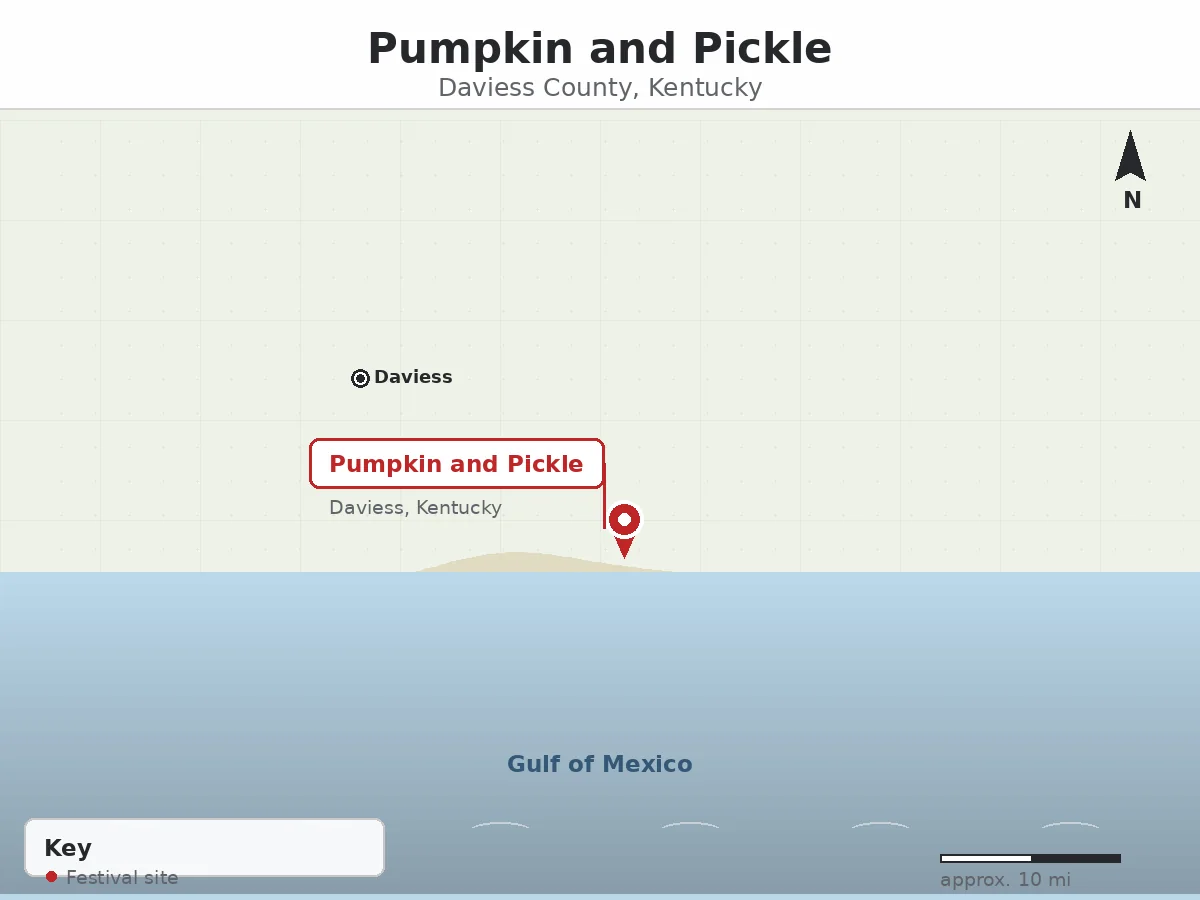
Owensboro’s place in the county is settled by a reference layer: a county encyclopedia entry and the city tourism office both treat Owensboro as the seat of Daviess County. The event sits there, on the grounds of a working farm stand and bakery, rather than on a fairground or a closed street.
Dated documentation begins with the nineteenth and twentieth of October two thousand twenty-four, billed as the fourth annual edition by the local magazine layer; the city tourism layer gives the same dates and hours. A year later, the state history museum layer bills the twenty-fifth and twenty-sixth of October two thousand twenty-five as the fifth annual. For two thousand twenty-six, the city tourism layer’s weekly roundup moves the event to late September, the twenty-sixth and twenty-seventh, while a festival-guide layer lists the twenty-fifth and twenty-sixth of September with an unconfirmed-date marker. Both September forms are carried below, each attached to its layer.
For a useful comparison, see the Daviess County Kentucky Blue Bridge Squatch Fest Festival for another county festival.
The city tourism office prints its own address and telephone number in the layers read; those details belong to the office rather than to the festival, and are recorded here by existence only.
Quick Facts
| Detail | What the record shows |
| Name as printed | Pumpkin and Pickle Festival |
| Other printed forms | Pumpkin & Pickle Festival; Pumpkin & Pickle Fest; Pumpkin and Pickle Festival at The Cottage |
| Earlier name | Sunflower and Pickle Festival |
| Host town | Owensboro, Kentucky |
| County position | Owensboro is the seat of Daviess County |
| Venue | The Cottage Farm Stand, Owensboro |
| Host | The Cottage Farm Stand & Baking Co. |
| Documented editions | October two thousand twenty-four; October two thousand twenty-five; September two thousand twenty-six |
| Admission | Free entry; parking charged at five dollars in the layers read |
| Signature items | Pumpkin dishes and the host’s homemade pickles |
History
The deepest root the record shows is not a pumpkin at all. A state history museum layer records that the event was formerly the Sunflower and Pickle Festival, and that the organisers changed the theme, trading the sunflower for the pumpkin while keeping the pickle half of the identity intact. The pickle is the continuity: it survives the rebranding, while the partner crop rotates.
Beyond that change of theme, the layers offer billings rather than a founding narrative. The local magazine layer bills the two thousand twenty-four weekend as the fourth annual edition, and the state history museum layer bills two thousand twenty-five as the fifth annual. Those numbers are reported here exactly as printed, as billings only. No layer consulted states a first year in words, and none is worked backwards from the annual counts here.
What can be traced across the run is growth, and a calendar move. The two thousand twenty-four edition filled over one hundred vendor booths; the two thousand twenty-five edition drew over one hundred fifty vendors. By two thousand twenty-six, the city tourism roundup had shifted the weekend from October into late September, a move the festival-guide layer only partly matches, since it prints the twenty-fifth and twenty-sixth of September against the roundup’s twenty-sixth and twenty-seventh and flags its own dates as unconfirmed.
What to Expect
Food comes first, in keeping with the name. The layers describe pumpkin- and pickle-themed foods across the grounds, and the city tourism layer names the host’s homemade pickle range outright: kosher dill, bread-and-butter and hot-and-spicy. A farm stand and baking company hosting the weekend can put its jars at the centre of the day, and the listings suggest that is what happens, with specialty treats added in the two thousand twenty-six roundup.
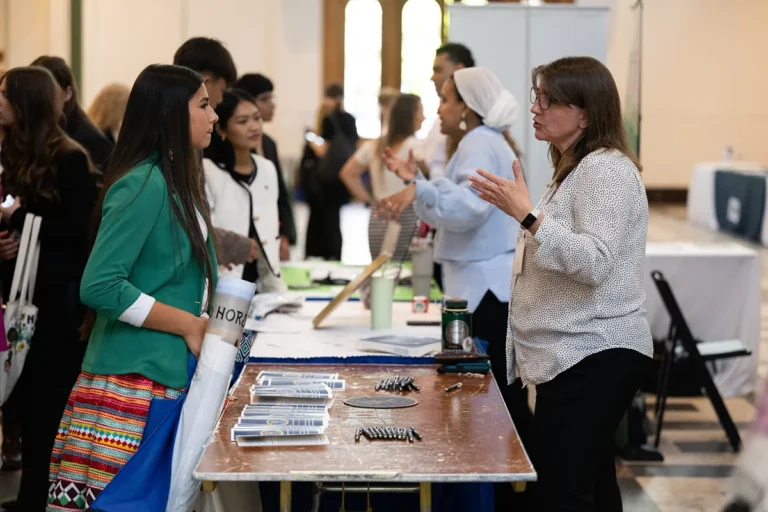
Around the food sits a market of considerable size. Over one hundred vendor booths are documented for two thousand twenty-four, and over one hundred fifty vendors for two thousand twenty-five, with food trucks alongside in the later listings. Live entertainment appears in every edition’s account. The grounds supply the rest of the programme: a pumpkin patch, a five-acre corn maze documented for two thousand twenty-four, and, in the two thousand twenty-five account, pony rides and a petting zoo. Photo opportunities are named among the two thousand twenty-six attractions.
The balance of elements shifts slightly from year to year. The corn maze and pumpkin patch anchor the earliest documented edition; the pony rides and petting zoo belong to the two thousand twenty-five listing; the photo opportunities and specialty treats are the two thousand twenty-six roundup’s additions. Older coverage should be read with that in mind: each element belongs to the edition that printed it.
Planning Your Visit
The practical facts begin with the calendar wrinkle. Two thousand twenty-four ran on the nineteenth and twentieth of October, and two thousand twenty-five on the twenty-fifth and twenty-sixth of October, but the two thousand twenty-six edition moved to September, and its two listings disagree by a day: the city tourism roundup prints the twenty-sixth and twenty-seventh of September, and the festival-guide layer prints the twenty-fifth and twenty-sixth with an unconfirmed-date marker. Anyone travelling that weekend should check the newest listing before setting out, because the record has not settled the question.

Hours lengthened across the documented editions. The grounds ran from nine in the morning to four in the afternoon in two thousand twenty-four, and from nine in the morning to five in the afternoon in both two thousand twenty-five and the two thousand twenty-six roundup. Admission, on the evidence of the local magazine layer for two thousand twenty-four and two thousand twenty-five and of the city tourism layer, is free, with a parking fee of five dollars; no layer states any other gate charge. Carrying the parking fee in cash and arriving near opening time keep the day smooth, since vendor counts above one hundred mean the grounds build steadily.
A Sample Day at the Festival
A day shaped by the documented hours might run as follows. Arrive at nine in the morning, when the grounds open, settle the five-dollar parking fee, and walk the vendor rows while they are still easy to browse. Late morning belongs to the host’s own table: taste through the three pickle styles and pick out jars before the midday crowd reaches the stand.
Give the middle of the day to the grounds themselves. The corn maze documented at five acres in two thousand twenty-four rewards an unhurried hour, and the pumpkin patch suits the same part of the visit, before a food-truck lunch and a first pass at the themed dishes. Live entertainment runs through the editions’ accounts without fixed times, so the afternoon is best kept loose: entertainment when it starts, pony rides and petting zoo for younger visitors, and the photo opportunities named for two thousand twenty-six. Finish with specialty treats and a slower second circuit of the vendors before closing, at four in the afternoon on the two thousand twenty-four pattern or five on the later pattern.
How It Compares
Daviess County’s autumn calendar holds other names, and two of them are useful chiefly as boundaries. Reid’s Orchard’s former Apple Festival and the Lions Club Harvest Festival are separate Daviess County events; neither is this festival, and none of their details belongs to its record. This event is set apart by its setting and host: a single farm business staging a themed weekend on its own grounds, rather than an orchard celebration or a civic club’s production.
Measured against its own earlier editions, the event’s trajectory is one of steady enlargement. Vendor numbers rose from over one hundred booths in two thousand twenty-four to over one hundred fifty vendors in two thousand twenty-five; the day lengthened by an hour; elements like pony rides and a petting zoo entered the listings; and the calendar slot moved, from October weekends into late September. The identity, though, has stayed fixed since the theme change the museum layer records: pumpkins up front, pickles beside them, and the host’s jars as the edible signature.
A Visitor’s Checklist
- Check the newest listing before travelling, because the two thousand twenty-six dates are printed two ways
- Carry five dollars for the parking fee
- Arrive near the nine in the morning opening for the vendor rows
- Taste all three documented pickle styles: kosher dill, bread-and-butter and hot-and-spicy
- Leave time for the corn maze and the pumpkin patch
- Keep the afternoon loose for live entertainment and food trucks
- Bring a bag or box for jars and market purchases
Beyond the Festival
The festival is one entry in the wider calendar the city tourism office promotes for Owensboro, the Daviess County seat, and a visitor in town for the weekend is in the county’s principal community rather than at its edge. The office’s own address and telephone number appear in the layers read, noted here by existence only; they are the starting point the record offers for planning more of a Daviess County stay.
The two neighbouring names in the record deserve a sentence each, to keep the map straight. Reid’s Orchard’s former Apple Festival belongs to a different host and tradition, and the Lions Club Harvest Festival is a separate Daviess County event. Neither shares this festival’s grounds, host or theme, and neither should be expected on the same weekend on this record.
Why the Festival Matters
A festival billed as the fourth annual in two thousand twenty-four is a young event, yet it already carries two assets that help young festivals last: a host with something of its own to sell, and a theme nobody nearby is using. The Cottage Farm Stand & Baking Co. does not need to import an identity for the weekend; its pickle jars supply one, and the theme change recorded by the state history museum layer shows organisers willing to adjust the formula while keeping its distinctive half.
The growth in the listings points the same way. A vendor count climbing past one hundred fifty, an extra hour in the day, and a move into a new calendar slot all suggest an event being actively shaped rather than merely repeated. For Daviess County, the festival fills a particular niche: a harvest weekend anchored by a single farm business in the county seat, themed around preserved and fresh produce at once, and free to enter.
Frequently Asked Questions
Which pickle varieties does the host put its name to?
The city tourism layer names three homemade styles: kosher dill, bread-and-butter and hot-and-spicy. They are the host’s own range, made by The Cottage Farm Stand & Baking Co., and they give the festival the edible signature that survived its change of theme.
Why do the two thousand twenty-six dates appear in two versions?
Because the layers themselves disagree. The city tourism layer’s weekly roundup prints the twenty-sixth and twenty-seventh of September two thousand twenty-six, while a festival-guide layer prints the twenty-fifth and twenty-sixth and marks its dates unconfirmed. Both forms are carried here unchosen, and visitors should confirm against the freshest listing.
What does a visit cost at the gate?
On the evidence read, nothing: admission is free in the local magazine layer’s accounts of two thousand twenty-four and two thousand twenty-five and in the city tourism layer. The one charge documented is parking, at five dollars. No layer states another gate charge.
What did the festival call itself before the pumpkin theme?
A state history museum layer records the earlier name as the Sunflower and Pickle Festival, and says the organisers changed the theme. The pickle stayed; the sunflower gave way.
What to Expect From the Next Daviess County Kentucky Pumpkin and Pickle Festival
How often is Daviess County Kentucky Pumpkin and Pickle Festival held?
The documented pattern is a single autumn weekend in each year covered: October in two thousand twenty-four and two thousand twenty-five, then late September in two thousand twenty-six. The billings printed for the first two editions, fourth annual and fifth annual, point the same way, although the record carries billings rather than an organiser’s statement of frequency.
When is the next Daviess County Kentucky Pumpkin and Pickle Festival?
The layers consulted run through the two thousand twenty-six edition and no further, so the next date is not in this record. On the established pattern it would fall in autumn, and the host and city tourism listings are where a confirmed weekend would appear; the unsettled two thousand twenty-six dates argue for waiting for that confirmation rather than assuming a weekend.
Will the dates change?
They already have, once, within the documented run: the weekend moved from October to late September between two thousand twenty-five and two thousand twenty-six, and even that September weekend is printed two ways. Nothing in the record promises a fixed weekend, so dates should be checked each year.
A Final Word
The Pumpkin and Pickle Festival is, on the documented evidence, a small festival with an unusually memorable name and a host whose own products carry the theme. Three editions are on record, the vendor crowds have grown with each, and the only uncertainty the layers leave behind is a one-day disagreement over its most recent weekend. For a reader planning around it, that is a manageable unknown; for the festival itself, the record so far is encouraging.