Daviess County Kentucky Blue Bridge Squatch Fest Festival
On Saturday the twenty-sixth of September two thousand twenty-six, Owensboro’s festival calendar gained an entry devoted to something none of the city’s other gatherings celebrate: Bigfoot, Kentucky folklore and the wider world of cryptids. Billed across its coverage as the first annual, inaugural edition, the Blue Bridge Squatch Fest filled The Kentucky Sound Stage with expert presentations, contests, music and families, all of it free, and all of it capped by a scheduled appearance from the festival’s own resident Sasquatch, a character the coverage calls Sid. The documentation behind the event is compact — a tourism bureau layer published in August two thousand twenty-six, joined by regional radio layers — yet for a first-year festival it is remarkably detailed, itemising the day piece by piece. Two printed name forms move through that coverage and they are kept apart throughout this article: Blue Bridge Squatch Fest, the form used by the tourism bureau layer and by regional radio layers, and Blue Bridge Squatch Festival, the form a regional radio layer used while previewing the event back in two thousand twenty-five. No layer prints the full county-prefixed title under which this article is filed, so the shorter published forms carry the story.

About the Festival
Owensboro hosts the event, and a reference encyclopedia layer’s county list records the city as the seat of Daviess County. The single documented edition unfolded at The Kentucky Sound Stage, the venue named by the tourism bureau layers. One of those layers prints a street address for the venue; the address is acknowledged here by its existence alone and is not reproduced. Admission could hardly be simpler. Both tourism bureau layers describe the day as free, one calling it a free, family-friendly festival and the other stating plainly that admission is free, and nothing in the record contradicts them. The organising side of the festival, however, stays anonymous in print. No organiser name appears in any layer read, and none is adopted here. Regional radio layers attribute the preview coverage to reporting by a local newspaper, which described unnamed organisers and a charity aim behind the event. That charitable intention belongs to the record; the people pursuing it do not, because no layer names them. What emerges instead is a portrait of a themed gathering built around storytelling and spectacle: presentations by Bigfoot and paranormal experts, cryptid investigations, local stories, live music, food trucks and vendors, a costume contest, a Bigfoot-calling contest, face painting, photo opportunities, a bounce house, a film screening served with popcorn, and Sid himself.
Quick Facts
| Item | Detail |
| Published name forms | Blue Bridge Squatch Fest; Blue Bridge Squatch Festival |
| Host town | Owensboro, Kentucky |
| County | Daviess County, whose seat is Owensboro |
| Venue | The Kentucky Sound Stage |
| Documented edition | Saturday the twenty-sixth of September two thousand twenty-six |
| Billing | First annual, inaugural edition |
| Gates open | Nine in the morning |
| Admission | Free, per the tourism bureau layers |
| Subject matter | Bigfoot, Kentucky folklore and cryptids |
| Signature guest | Sid, the festival’s resident Sasquatch |
History
A festival billed as inaugural has, by definition, almost no past, and this one is honest about that from the first line of its coverage. The tourism bureau layer and the regional radio layers agree that the two thousand twenty-six gathering was the first annual edition, which means no earlier running of the event is documented anywhere in the record. The earliest trace of the festival is a regional radio layer from two thousand twenty-five that previewed it under the Blue Bridge Squatch Festival form of the name, evidence that the idea was already public a year before the first edition took place. Beyond that preview, the inaugural billing itself and the tourism bureau’s August two thousand twenty-six announcement, the layers offer no founding narrative: no origin story, no named founder, no account of how the theme was chosen. The charity aim mentioned in the newspaper reporting carried by the radio layers hints at a purpose behind the launch, but the coverage stops there. This article therefore treats the twenty-sixth of September two thousand twenty-six as both the festival’s documented beginning and, so far, its entire history. Anything about a longer tradition would be invention, and the record is respected here exactly as far as it reaches and no further.
What to Expect
The programme, as the tourism bureau layer and the radio coverage itemise it, mixes stage talks with hands-on fun. Presentations by Bigfoot and paranormal experts anchor the serious end of the day, joined by cryptid investigations and sessions of local stories, the folklore strand that ties the event to Kentucky rather than to any generic monster theme. Live music runs through the schedule, while food trucks and vendors handle the practical side of a full day out. The contests lean into the joke and the craft of the subject at once: a costume contest for those who arrive dressed for the occasion, and a Bigfoot-calling contest for those willing to test their lungs in front of a crowd. Children are woven through the planning rather than added as an afterthought, with face painting, photo opportunities and a bounce house among the listed attractions. A film screening with popcorn gives the day an indoor, sit-down interlude, and the appearance of Sid, the resident Sasquatch, supplies the roaming photo opportunity that ties the theme together. Trade experts, storytellers and a costumed Sasquatch share one bill here, and the coverage frames the whole mixture as family-friendly from the nine in the morning start onward.
Planning Your Visit
Because the entire documented record describes one Saturday, planning revolves around making that single day count. The festival opens at nine in the morning at The Kentucky Sound Stage in Owensboro, so an early arrival puts the presentations and the quieter first pass at the vendors within reach before the contests draw their crowds. Admission costs nothing, which the tourism bureau layers state twice over, so the day’s spending is limited to whatever the food trucks and vendor stalls tempt out of a visitor. Families will want to pace the children’s attractions — the bounce house, the face painting, the photo opportunities — against the timed elements such as the expert presentations and the film screening, since the coverage lists the ingredients of the day rather than a minute-by-minute timetable. Anyone hoping to enter the costume contest or the Bigfoot-calling contest should arrive ready rather than assemble an entry on the spot. The tourism bureau’s pages print that body’s own office address and phone number; those are the bureau’s contacts, not the festival’s, and they are noted here by existence only. The venue’s street address likewise appears in a tourism layer and is left unreproduced, so travellers should confirm the Kentucky Sound Stage location through ordinary visitor channels before setting out.
For a useful comparison, see the Daviess County Kentucky Multicultural Festival for another county festival.
A Sample Day at the Festival
Begin at the nine in the morning opening, when the Kentucky Sound Stage is at its calmest, and take a first circuit of the vendor stalls and food trucks while the day is still being set up around you. Settle into the morning presentations by the Bigfoot and paranormal experts, then drift toward the local stories sessions, where the Kentucky folklore strand of the programme comes forward. Let the middle of the day belong to the contests: watch or enter the costume contest, and save your voice, or your laughter, for the Bigfoot-calling contest. Children can rotate through face painting, the bounce house and the photo opportunities while adults browse the vendors or follow the cryptid investigations. When a rest is needed, the film screening with popcorn offers a seated pause without leaving the theme behind. Keep an eye out throughout for Sid, whose appearances are part of the advertised programme, and finish the day with the live music and one last pass by the food trucks before the inaugural edition winds down.
How It Compares
Owensboro already had a brush with this subject before the Squatch Fest arrived. A radio layer documents a separate Bigfoot Day held at the city’s Joe Ford Nature Park on the twenty-fifth of October two thousand twenty-five, described in the record as a smaller, different event at a different venue; it is not this festival, and none of its detail is carried into this article. The Squatch Fest, by contrast, is a full-day, venue-based production with expert presentations, contests and a film screening, launched under first annual billing. Looking further afield, radio layers also mention Sasquatch festivals in Stanton, Kentucky and in Harrisburg, Illinois; those are other towns’ events and form no part of the Owensboro record. Within Daviess County itself, the festival occupies a niche nothing else in the documented calendar claims: where the county’s better-known gatherings revolve around food, music or aircraft, this one is built entirely on folklore and cryptid culture, and it is the only event in the record whose headline guest is a resident Sasquatch named Sid.
Festival Checklist
- Arrive near the nine in the morning opening to catch the presentations before crowds build
- Bring a costume if you plan to enter the costume contest
- Warm up your voice for the Bigfoot-calling contest
- Carry some spending money for the food trucks and vendor stalls
- Set aside time for the film screening and its popcorn
- Watch for an appearance by Sid, the resident Sasquatch
- Plan face painting, photo opportunities and the bounce house time for younger visitors
- Confirm the Kentucky Sound Stage location before travelling, since this article prints no address
- Check the tourism bureau’s visitor information for the bureau’s own contact details
- Keep the whole day free, because admission is charged at nothing and the programme runs from morning onward
Beyond the Festival Grounds
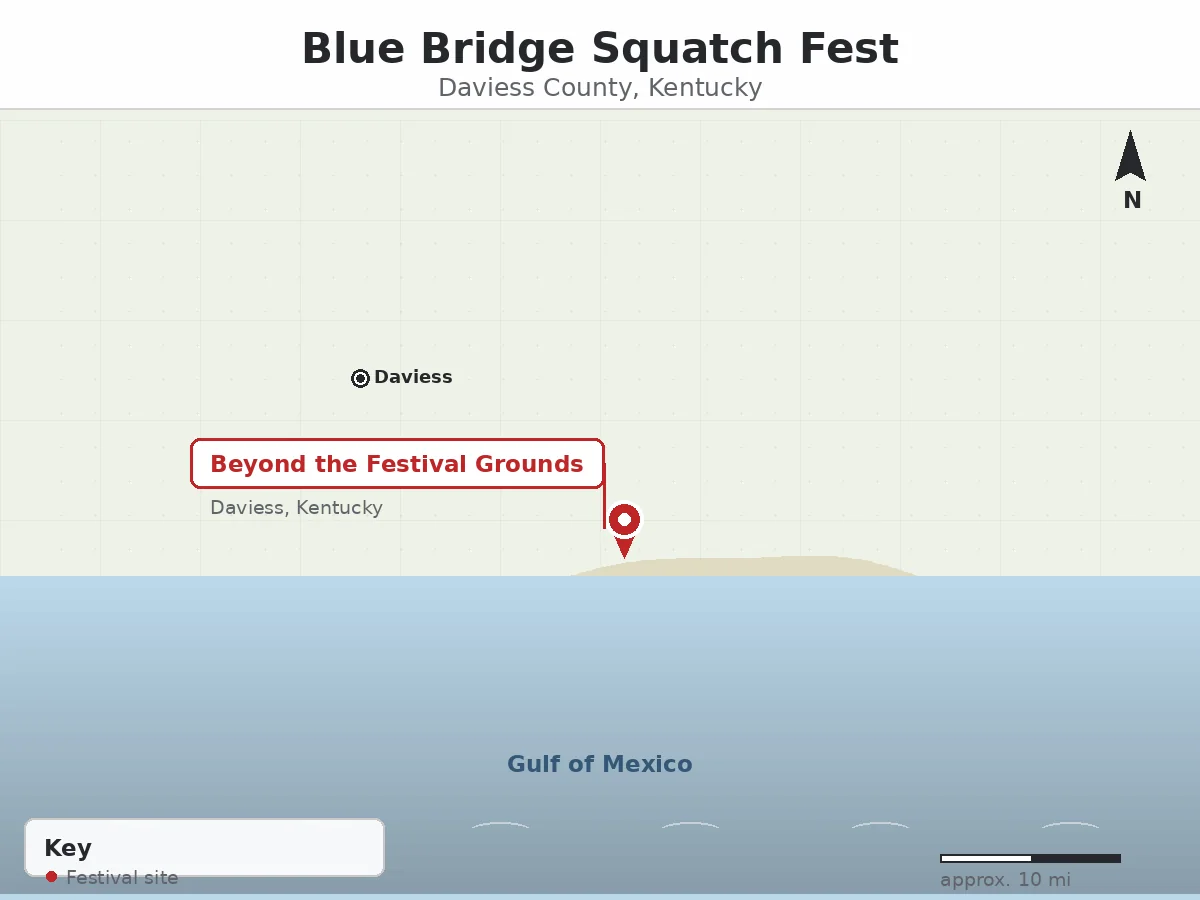
The Kentucky Sound Stage sits within Owensboro, a city whose documented calendar is broad enough that a cryptid festival reads as an addition rather than an oddity, and the tourism bureau’s willingness to publish the event alongside its other listings signals how the city presents it: as one more reason to visit. The folklore strand of the programme reaches beyond the venue, since the local stories sessions draw on Kentucky traditions that visitors can keep exploring through the region’s storytelling and heritage attractions long after the Saturday ends. The separate Bigfoot Day at Joe Ford Nature Park, held the previous October, suggests the city’s appetite for the theme predates the festival itself, even though the two events share nothing but a subject. For travellers building a wider trip, Daviess County’s riverfront, food traditions and music heritage fill the days around the festival, while the Stanton and Harrisburg Sasquatch gatherings offer committed enthusiasts a small circuit of similar events elsewhere, each firmly its own town’s affair.
Why It Matters
A first annual festival is a wager, and the interest of this one lies in what it wagers on. Rather than extending an established food or music format, the organisers described in the coverage built a day around folklore, enquiries into the unexplained and a costumed Sasquatch, and attached a charity aim to it. The tourism bureau’s detailed announcement, treating the event as a genuine visitor draw complete with expert presentations and a film screening, shows that cryptid culture has become a marketable part of Kentucky’s festival landscape. For Daviess County, the festival adds a theme no other documented event in the county covers, broadening the calendar’s appeal to families and to the curious. Whether the billing of first annual turns into a durable tradition is a question only later editions can answer; the inaugural record, at least, documents a fully formed programme rather than a tentative experiment.
Frequently Asked Questions
What themes does the Blue Bridge Squatch Fest celebrate?
The tourism bureau layer frames the day around Bigfoot, Kentucky folklore and cryptids. Those three strands explain the mixture on the bill: expert presentations and cryptid investigations for the Bigfoot strand, local stories for the folklore strand, and contests and characters for the lighter side of the theme.
Who is Sid?
Sid is the festival’s resident Sasquatch, whose appearance is listed among the advertised attractions for the inaugural edition. The coverage presents him as part of the programme alongside the photo opportunities, so visitors should expect to encounter him during the day at The Kentucky Sound Stage.
Which parts of the day suit younger visitors?
The family-friendly billing is backed by specific items in the record: face painting, a bounce house, photo opportunities and a film screening served with popcorn. The costume contest also invites dressed-up participation, and admission being free keeps the cost of bringing children down to whatever the food trucks and vendors add.
Is the Owensboro Bigfoot Day the same event under another name?
It is not. The Bigfoot Day documented by a radio layer took place at Joe Ford Nature Park on the twenty-fifth of October two thousand twenty-five, at a different venue and on a smaller scale. The Squatch Fest is a separate, first annual festival held at The Kentucky Sound Stage in September two thousand twenty-six.
What to Expect From the Next Daviess County Kentucky Blue Bridge Squatch Fest Festival
How often is Daviess County Kentucky Blue Bridge Squatch Fest Festival held?
The billing carried by the tourism bureau and radio layers is first annual, a form of words that presents the festival as a yearly undertaking. Only the inaugural edition is documented so far, on the twenty-sixth of September two thousand twenty-six, so the yearly rhythm remains a stated intention rather than an observed pattern.
When is the next Daviess County Kentucky Blue Bridge Squatch Fest Festival?
The layers read for this article document the inaugural edition only, and no second date appears in them. A follow-up edition would presumably be announced through the same channels that carried the first, the tourism bureau’s pages and regional radio coverage, closer to the time.
Will the dates change?
For a festival with a single documented edition, there is no established date to change from. The inaugural gathering fell on a Saturday in late September; whether future editions keep that placement is something the coverage does not address, and this article leaves the question with the organisers the record leaves unnamed.
Closing
The Blue Bridge Squatch Fest arrived in Owensboro on the twenty-sixth of September two thousand twenty-six as a fully itemised, free and family-friendly celebration of Bigfoot, Kentucky folklore and cryptids, and the coverage it earned — a tourism bureau announcement and regional radio attention — preserves it in unusual detail for a first-year event. Between the expert presentations, the calling contest, the popcorn screening and Sid’s appearances, the inaugural edition set out a clear identity on its first attempt. Its future is unwritten, but its beginning is on the record.