Daviess County Kentucky Multicultural Festival
On one August Saturday in each documented year, the lawn of a Presbyterian church in Owensboro turns into a compact atlas of the wider world. The occasion is the Owensboro Multicultural Festival, a day built by a single congregation and filled by the many cultures carried by people who now live in this part of Kentucky. Booths spread across the grass, an international food court sends up a dozen different cooking smells at once, and a stage keeps music and dance moving from morning into the afternoon. No layer read prints the full county-prefixed form; the published name is the Owensboro Multicultural Festival, shortened in some coverage simply to the Multicultural Festival. The two printed forms are kept apart throughout, and every dated edition is reported only as far as its own layer describes it.
About
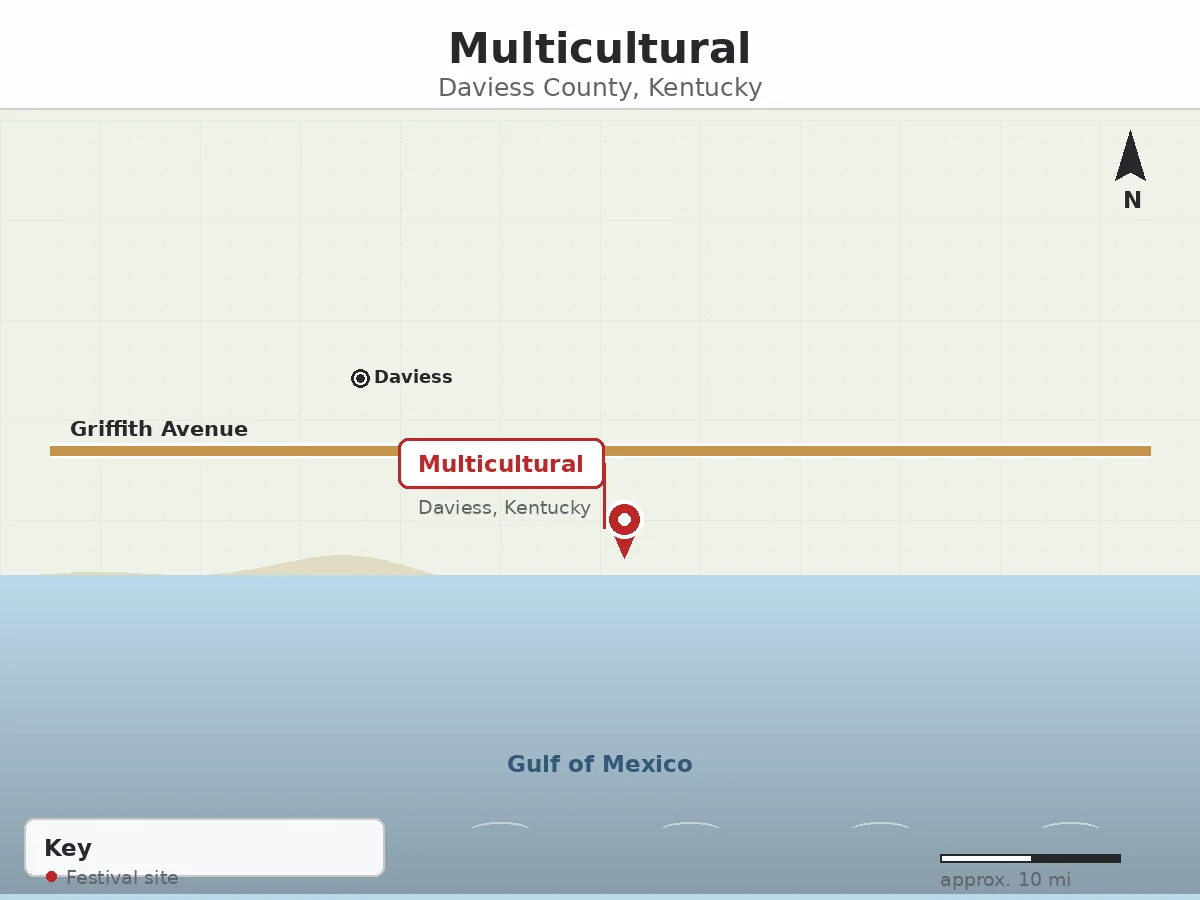
The festival belongs to Owensboro, which a reference encyclopedia layer’s county list gives as the seat of Daviess County. Its home ground is the lawn of First Presbyterian Church on Griffith Avenue, a venue stated by the organiser’s own church site, by tourism bureau layers and by a regional newspaper layer. Tourism and radio coverage alike describe the gathering as the church’s festival and as an initiative of the church, and the congregation’s own site presents it in the same way, so the organiser throughout this article is First Presbyterian Church of Owensboro. Regional radio coverage names an individual as the festival committee chair; that person is referred to here by role alone. The church’s site also prints a street address and a telephone number for the congregation, noted here as existing only.
What the church has built is a single-day meeting of cultures, offered to the whole community. The organiser’s own church site, in both its two thousand twenty-six and its two thousand twenty-one layers, states that the festival is free for the whole community, and a tourism bureau layer from two thousand twenty-four says the same. No contrary price statement was found in any layer read, so the lawn stands open to everyone.
Quick Facts
The essentials below gather what the layers agree on, with each billing kept in the words its own layer printed.
| Item | Detail |
| Published name | Owensboro Multicultural Festival |
| Host town | Owensboro, seat of Daviess County, Kentucky |
| Venue | Lawn of First Presbyterian Church, Griffith Avenue |
| Organiser | First Presbyterian Church, Owensboro |
| First organised | Nineteen ninety-nine, by Winny Lin, per regional radio layers |
| Documented editions | Two thousand twenty-one, two thousand twenty-three, two thousand twenty-four, two thousand twenty-six |
| Billings as printed | 22nd annual; 25th anniversary; 26th year; 28th annual |
| Admission | Free for the whole community |
| Signature elements | Culture booths, an international food court, a parade of flags |
| Attendance note | Over two thousand people drawn in two thousand twenty-six, per the church site |
History
The deepest root the record offers comes from regional radio layers, which state that the first Owensboro Multicultural Festival was organised in nineteen ninety-nine at First Presbyterian Church by Winny Lin. The same radio coverage marks two thousand twenty-three as the festival’s 25th anniversary year, and the anniversary is carried here exactly as those layers print it. Winny Lin is named because the record names her as the organiser of the first festival; she is its documented originator.
For a useful comparison, see the Daviess County Kentucky Owensboro Air Show Festival for another county festival.
Against that origin, the later billings arrive one edition at a time, each in the words of a different layer, and they are not reconciled with one another anywhere in this article. A tourism bureau layer bills the twenty-first of August two thousand twenty-one edition as the 22nd annual. Regional radio layers present the nineteenth of August two thousand twenty-three as the 25th anniversary edition, while a local festival-guide layer calls that same year’s gathering the 25th annual. A regional newspaper layer and a tourism bureau layer bill the seventeenth of August two thousand twenty-four edition as held for the 26th year. The organiser’s own church site bills the fifteenth of August two thousand twenty-six edition as the 28th annual. The numbers do not march in a single straight line; the layers were written by different hands in different years, and each billing stands here as printed rather than corrected into agreement.
Between the first festival in nineteen ninety-nine and the documented editions of the present decade, the layers read offer no year-by-year chronicle. The honest shape of the history is a founded beginning, a long middle that the coverage largely skips, and a recent run of August days. What the recent layers show is a festival resident at the same church lawn, in the same late-summer slot, drawing over two thousand people by two thousand twenty-six.
What to Expect
Booths are the load-bearing structure of the day. For the two thousand twenty-three edition, regional radio layers describe thirty to forty culture booths, while elsewhere in the coverage of that year the count is given as over forty, and both figures are left standing as printed. The cultures represented that year, again per the radio coverage, included Bolivia, Cuba, Cyprus, Ghana, Korea, Myanmar/Burma, Native Hawaiian and Native American, New Zealand, Scotland, Spain and Thailand. A booth in this setting is part exhibit and part conversation: cultural information and exhibit material, traditional costume on display or being worn, and people ready to explain where a dish or a dance comes from.
Food holds the centre of the lawn. The two thousand twenty-one tourism bureau layer describes an international food court among that edition’s features, and the food court reappears in the general programme as the festival’s second anchor. Around those two anchors the day arranges vocal and instrumental music, dance, storytelling and demonstrations, all of which the two thousand twenty-one layer lists, with onstage entertainment in two thousand twenty-four reported by the regional newspaper layer as running from ten in the morning.
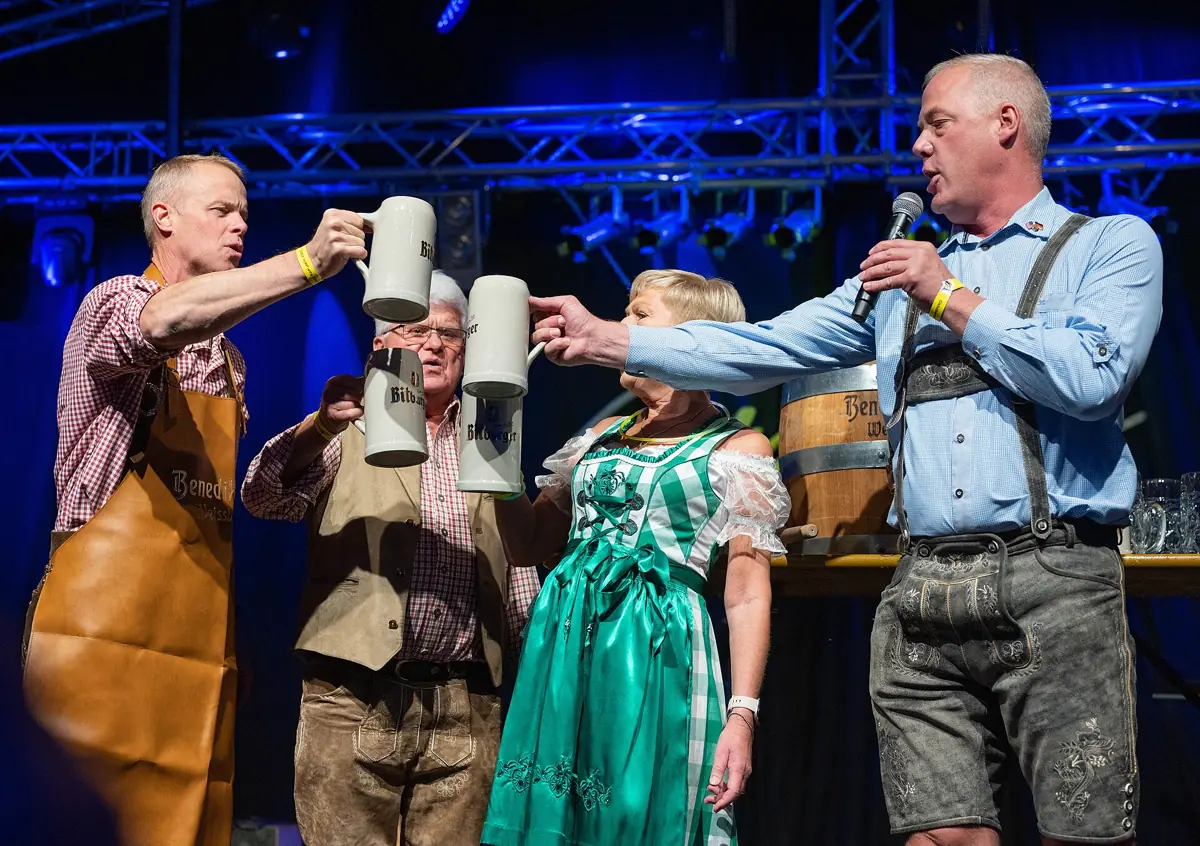
Certain editions add a flourish of their own. The two thousand twenty-three gathering opened with a ceremony at ten in the morning that included a bagpiper, under the theme “One Community, Many Voices”. The two thousand twenty-four edition carried the theme “Threads of Unity” and brought a parade of flags onto the programme, a procession that suits a festival whose booths are organised by homeland. Children’s activities appear in the two thousand twenty-one layer’s list and in the programme generally, so younger visitors are folded into the day rather than parked at its edges. The organiser’s own church site describes the two thousand twenty-six edition as held on the third Saturday of August, and a local festival-guide layer places the two thousand twenty-three edition on the third weekend in August with hours from ten in the morning to four in the afternoon.
Planning Your Visit
The documented editions all occupy a single August day, so planning reduces to giving that one day properly. The two thousand twenty-three festival-guide layer gives hours of ten in the morning to four in the afternoon, and two separate layers describe entertainment or ceremony beginning at ten, which argues for arriving near the start rather than drifting in at midday. Anyone who wants the bagpiper and the opening ceremony of a year like two thousand twenty-three should be standing on the lawn before ten.
Admission asks nothing of a visitor’s wallet: the church site and the tourism bureau agree the festival is free for the whole community, across editions stretching from two thousand twenty-one to two thousand twenty-six. The costs a visitor might still choose are the pleasant ones, centred on the international food court, where grazing widely is the point. A sensible rhythm is booths first while the morning is cool, the food court when hunger arrives, and the stage whenever a dance troupe or a storyteller draws a crowd. Griffith Avenue is a residential street and the venue is a church lawn, so the day has the scale of a neighbourhood gathering rather than a fairground; children can be kept within sight across most of it. Because themes change — “One Community, Many Voices” one year, “Threads of Unity” another — a glance at the church’s own announcements before the day will tell a returning visitor what this year’s edition is emphasising.
A Sample Day on the Church Lawn
No single edition’s minute-by-minute schedule survives in the record, so this itinerary is assembled from elements the layers document across recent editions. Arrive shortly before ten in the morning and take a place near the stage for the opening ceremony, which in two thousand twenty-three began at ten with a bagpiper. Spend the later morning walking the booths row by row, giving the thirty to forty culture displays slow attention, and noting which kitchens in the food court are drawing the longest lines. Eat at midday from the international food court, choosing dishes from at least two continents. Give the early afternoon to the stage — music, dance, storytelling and demonstrations rotate there — and be in place whenever the parade of flags, documented in two thousand twenty-four, crosses the lawn. Close the day with a last circuit of the booths and the children’s activities before the four in the afternoon finish the festival-guide layer records.
Comparing the Documented Editions
Set side by side, the four dated editions show a festival growing more articulate about itself. The two thousand twenty-one edition, as the tourism bureau describes it, is a catalogue of components: educational booths, the food court, music, dance, storytelling, demonstrations, costume and children’s activities. By two thousand twenty-three the coverage adds numbers and a theme, counting the booths and naming the day “One Community, Many Voices”, with a bagpiper opening the ceremony. The two thousand twenty-four edition keeps the thematic habit with “Threads of Unity” and adds the parade of flags as a set piece. The two thousand twenty-six edition, in the church site’s telling, is measured by its crowd: over two thousand people on the third Saturday of August. The venue, the organiser and the free admission never change across the four accounts; what changes is the detail each layer records, and the confidence of a festival that themes itself.
A Pocket Checklist
- Reach the lawn before ten in the morning if the opening ceremony is on your list
- Leave appetite in reserve for the international food court at midday
- Allow unhurried time for thirty or more culture booths
- Bring the children; activities are provided for them
- Carry sun protection for a day spent on open grass
- Check the church’s announcements beforehand for the year’s theme
- Plan a final booth circuit before the four in the afternoon close
Beyond the Church Lawn
The festival’s setting explains part of its reach. Owensboro is the seat of Daviess County, and Griffith Avenue’s lawn places the day inside a residential neighbourhood rather than behind a fence at a showground, which fits an event whose booths are staffed by the neighbours themselves. The tourism bureau’s repeated coverage treats the festival as part of the town’s public calendar, and the cultures named in the two thousand twenty-three coverage — from Ghana to Korea, from Scotland to Thailand — describe a community considerably wider than one county’s borders. Around the festival day, the rest of Owensboro’s ordinary August life goes on as usual.
Why the Festival Matters
The themes the festival chooses for itself amount to a small manifesto. “One Community, Many Voices” in two thousand twenty-three and “Threads of Unity” in two thousand twenty-four both insist that difference is the material the community is woven from rather than a problem to be solved. That a single congregation founded the day in nineteen ninety-nine, still hosts it on its own lawn, and still offers it free to the whole community gives the sentiment an institutional spine. Over two thousand people accepting the invitation in two thousand twenty-six suggests the town hears the argument.
Frequently Asked Questions
Which cultures have been represented at the booths in recent years?
Regional radio coverage of the two thousand twenty-three edition lists Bolivia, Cuba, Cyprus, Ghana, Korea, Myanmar/Burma, Native Hawaiian and Native American, New Zealand, Scotland, Spain and Thailand among the cultures represented, across thirty to forty booths, a count given elsewhere in that year’s coverage as over forty.
Who organised the very first festival, and in what year?
Regional radio layers state that Winny Lin organised the first Owensboro Multicultural Festival at First Presbyterian Church in nineteen ninety-nine, and the same coverage marks two thousand twenty-three as the twenty-fifth anniversary year.
What does the opening ceremony involve?
For the two thousand twenty-three edition, regional radio layers describe an opening ceremony at ten in the morning that included a bagpiper, opening a day themed “One Community, Many Voices”. Ceremony details are documented for that edition in particular rather than for every year.
How does the day provide for younger visitors?
Children’s activities appear in the two thousand twenty-one tourism bureau layer’s account of the festival and in the programme the layers describe generally, sitting alongside the booths, the food court, storytelling and demonstrations as part of the day’s furniture.
What to Expect From the Next Daviess County Kentucky Multicultural Festival
How often is Daviess County Kentucky Multicultural Festival held?
The layers bill the event as an annual one — the billings run from the 22nd annual through the 25th anniversary and the 26th year to the 28th annual — and every documented edition falls on a single day in August, on the third Saturday or third weekend of the month in the layers that specify.
When is the next Daviess County Kentucky Multicultural Festival?
The most recent edition the layers document is the fifteenth of August two thousand twenty-six, billed the 28th annual by the organiser’s own church site and described there as held on the third Saturday of August. The layers read carry the record up to that date; a visitor planning further ahead should watch the church’s own announcements for the next August date.
Will the dates change?
The documented editions have all stayed inside August while moving with the calendar: the twenty-first in two thousand twenty-one, the nineteenth in two thousand twenty-three, the seventeenth in two thousand twenty-four and the fifteenth in two thousand twenty-six. That drift is the ordinary movement of a third-Saturday fixture, and nothing in the layers read suggests the festival intends to leave its late-summer place.
A Last Word
Some festivals are built around a crop, a craft or a competition. Owensboro’s is built around the people who live there, and it asks each of them to bring the place they came from along. A church lawn, a few dozen booths, a food court and a stage have carried that idea from nineteen ninety-nine to a crowd of over two thousand, which is a respectable distance for one August Saturday to travel.