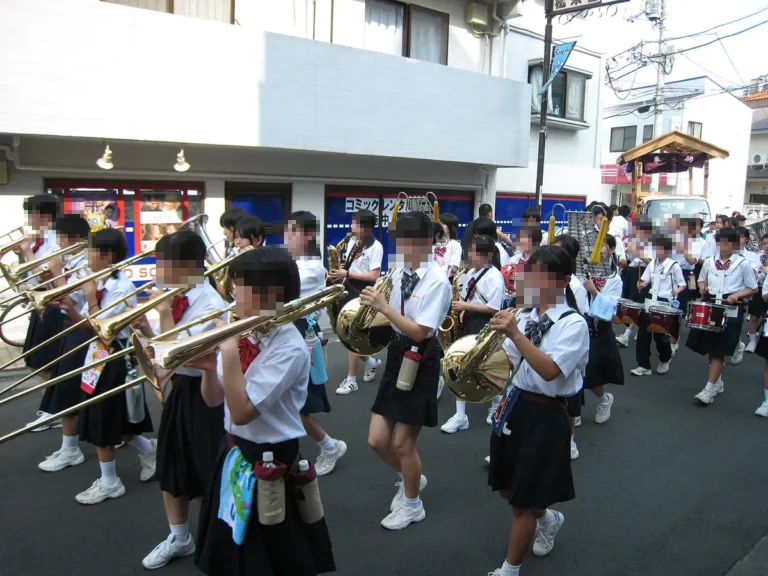
Barren County Kentucky Hispanic Heritage Festival
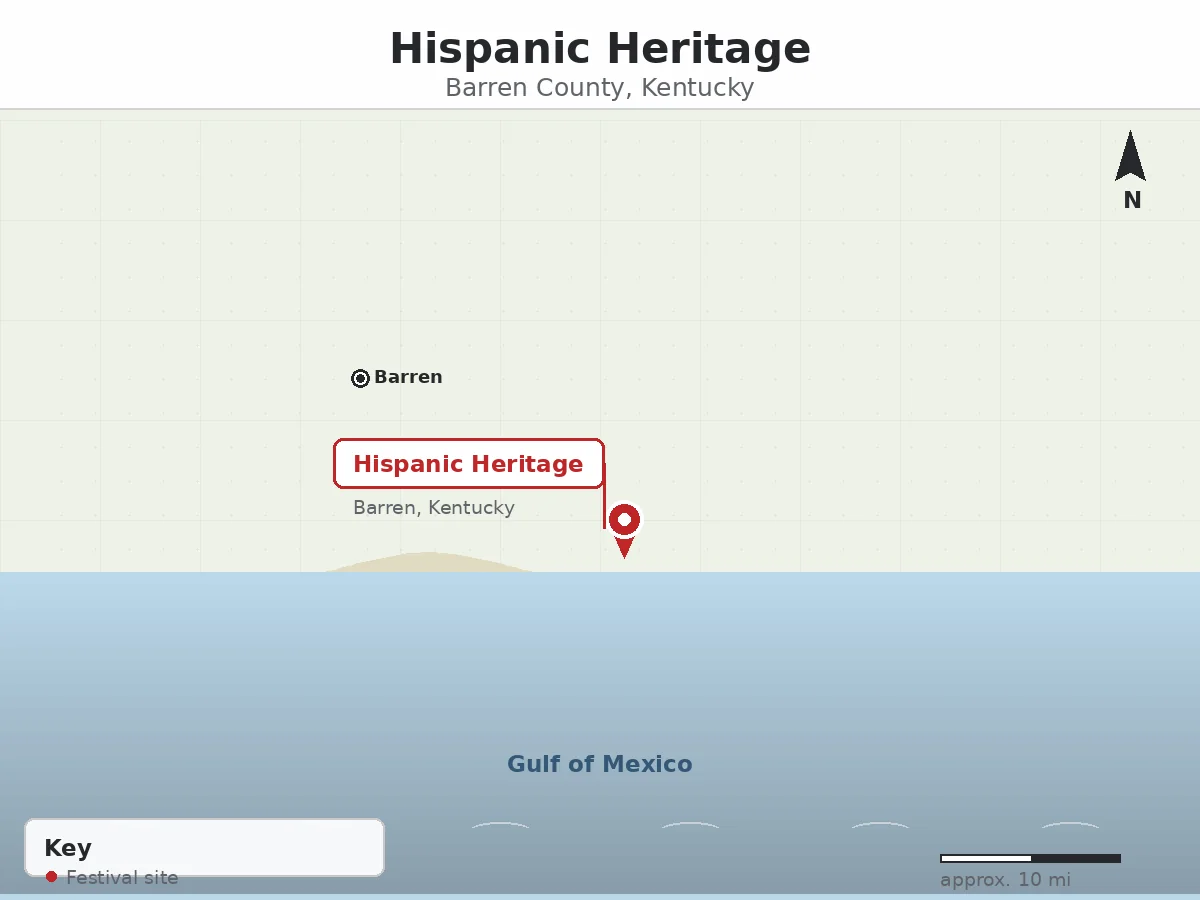
In Glasgow, the county seat of Barren County, a single autumn afternoon can carry a great deal of meaning for neighbours who might otherwise pass one another only in passing. The Barren County Kentucky Hispanic Heritage Festival, printed simply as the Hispanic Heritage Festival, gathers residents around shared plates, live sound and a broad celebration of Hispanic culture. Its host is the Barren County YMCA, an organiser rooted in everyday community life rather than in a travelling show circuit. Two separate local accounts, one carried in print and one carried on air, preserve the outline of this gathering across two consecutive autumns. Together they describe an event modest in scale yet deliberate in purpose, built to welcome the whole community through the doors of a familiar local institution. Anyone curious about Barren County should understand this festival on those terms: locally hosted, community facing, and documented by the local voices closest to it.

About the Festival
The published name is Hispanic Heritage Festival, and both of the local layers that document it print that name in exactly that form. The longer county title used for this article simply attaches the Barren County prefix, a construction of the listing rather than a different event name. Glasgow supplies the setting. An encyclopedia layer confirms that Glasgow serves as the seat of Barren County, which places the festival at the administrative and social heart of the county rather than out on its edges. The Barren County YMCA supplies the hosting. A local newspaper layer describes the YMCA preparing to host its own Hispanic Heritage Festival, using possessive language that ties the celebration directly to the organisation. A local radio layer points the same way, connecting the event to the Barren County YMCA when a representative of the organisation spoke about it on air. According to that account, a member of the YMCA staff secured a Welcoming Week grant, Welcoming Week being described as a national YMCA initiative, and that funding helped bring the festival to life.
Quick Facts
| Item | Detail |
| Published name | Hispanic Heritage Festival |
| Host town | Glasgow, Kentucky |
| County | Barren County |
| County seat standing | Glasgow is the seat of Barren County |
| Host and organiser | Barren County YMCA in Glasgow |
| Earlier documented edition | Sunday the fifth of October, two thousand twenty-five |
| Hours for that edition | Eleven in the morning to four in the afternoon |
| Later documented edition | The eighteenth of October, two thousand twenty-six |
| Programme described in print | Food, music and cultural celebration |
| Funding note in print | A Welcoming Week grant helped bring the festival to life |
History
Tracing the roots of this celebration requires restraint, because the surviving local accounts concentrate on two recent autumns rather than on origins. Nothing in the layers examined assigns the festival a founding year, and no first gathering is singled out for commemoration. The grant story is sometimes the sort of detail that gets mistaken for a beginning, so it deserves precise handling. The newspaper layer presents the Welcoming Week grant as help that brought the festival to life, which speaks to funding and effort behind one documented edition. It does not declare that edition to be the inaugural one, and this article does not promote it into one. The earliest firmly placed edition in the record belongs to two thousand twenty-five, when the newspaper layer set the festival on Sunday the fifth of October, running from eleven in the morning until four in the afternoon and open to the community. The following year brought a second documented edition, carried this time by the radio layer, which shows the celebration returning to the local calendar rather than vanishing after a single outing. A temporary closure of the Y disrupted the original plan for two thousand twenty-six, and the gathering moved to the eighteenth of October. Between those two autumns, the documented history is brief, but it shows continuity of name, host and town.
What to Expect
Flavours, rhythms and shared celebration form the core of the afternoon, at least in the edition the newspaper layer describes in any detail. That account promises food, music and cultural celebration, three elements that reinforce one another rather than compete for attention. Food invites people to linger and talk. Music gives the gathering a pulse that carries across a room even when conversations pause. Cultural celebration supplies the purpose binding the meal and the performance together, framing both as expressions of heritage rather than as background entertainment. The newspaper layer also stresses openness, presenting the afternoon as available to the wider community rather than reserved for members of the host organisation or for any single neighbourhood. A visitor arriving with that description in mind should picture a convivial community occasion rather than a sprawling fairground production. Equally, the detailed programme belongs specifically to the two thousand twenty-five edition as printed. The radio layer’s two thousand twenty-six coverage placed its further particulars in broadcast audio instead of on the printed page, which means the later edition cannot be dressed up with borrowed specifics.
Planning Your Visit
Fix the date first, and fix it from the host’s most recent word, because this festival has already demonstrated that its calendar can move. The two thousand twenty-six edition shifted to the eighteenth of October after a temporary closure of the Y interrupted the original arrangement. That single fact teaches the central planning lesson: confirm before travelling, especially if the trip involves gathering family members from across the county or beyond it. The documented two thousand twenty-five hours, eleven in the morning until four in the afternoon, sketch a comfortable day trip window. That span allows a relaxed arrival, an unhurried meal and time to enjoy the music without watching the clock, though visitors should confirm the hours for whichever year they plan to attend rather than assuming the pattern repeats. Glasgow’s standing as county seat makes it the natural anchor for the trip, since the host organisation sits in the town itself. Questions about entry deserve the same caution as questions about timing. The layers examined give no price and make no promise about free admission, so a careful planner simply arrives prepared for either possibility and checks the host’s current announcements in advance.
For a useful comparison, see the Barren County Kentucky Autumn Railfest Festival for another county festival.
A Sample Itinerary for Festival Day
A gentle schedule helps a short afternoon feel generous, and the documented eleven to four window for the two thousand twenty-five edition lends itself to a simple shape. Treat the outline below as pacing for your own visit rather than as an official programme, since the host has not published a minute by minute running order in the layers examined. Arrive near the opening hour, when the room is still settling and the first food is appearing, and use those early minutes to get your bearings inside the YMCA and greet people you know. Late morning can belong to eating slowly. Move between offerings at an easy pace, taste more than one dish, and let conversation at the table stretch as long as it wants to stretch. Around the middle of the day, shift attention toward the music and the wider cultural celebration, the part of the afternoon that turns lunch into a festival rather than a meal. As four in the afternoon approaches, wrap up conversations rather than starting new ones, thank the people who cooked, performed and organised, and step out with the feeling of a day used well.
Comparing the Two Documented Editions
Placing the two autumns side by side sharpens what each account contributes. The two thousand twenty-five edition arrives through a local newspaper layer with a full set of particulars: a Sunday date on the fifth of October, hours from eleven in the morning to four in the afternoon, and a programme summarised as food, music and cultural celebration open to the community. The two thousand twenty-six edition arrives through a local radio layer, published on the ninth of October that year, and its printed trace is deliberately thinner. It records a representative of the Barren County YMCA promoting the festival on air and explains that a temporary closure of the Y forced the gathering onto the eighteenth of October. Print left a schedule behind; broadcast put its particulars into audio, where they were heard rather than archived on the page. Both layers nevertheless agree on the essentials that define the event: the same published name, the same host organisation and the same town. The earlier edition reads as the festival’s fullest portrait, while the later one reads as proof of persistence under awkward circumstances.

Festival Day Checklist
- Confirm the date against the host’s latest announcement before setting out
- Recheck the starting and finishing times for the edition you plan to attend
- Bring an appetite suited to an afternoon centred on shared food
- Allow the full span of the event rather than dropping in briefly
- Carry a little patience in case a venue closure has shifted arrangements
- Invite a friend or relative who has never joined a heritage celebration
- Keep a small amount of money handy, since entry terms are not stated in print
- Plan the drive into Glasgow with time to spare before the opening hour
- Charge your phone so you can check last minute updates from the host
- Leave room in the day for lingering over music and conversation
Beyond the Festival
A trip into Glasgow for the festival need not end when the music stops, even though this article names no neighbouring attractions, because a county seat naturally rewards a slower departure. Visitors can let the afternoon widen into an unhurried evening in town, talking over the dishes and performances that stayed with them while the day is still fresh. Heritage celebrations tend to send ripples outward in quieter ways as well. A dish tasted in October becomes a recipe asked after in November. A song heard once becomes a request the next time neighbours gather. Conversations begun across a crowded table have a habit of continuing in shops, schools and workplaces long after the decorations come down. The value beyond the festival is therefore not a list of sights. It is the familiarity the day creates between a visitor, a town and an institution that serves that town all year.
Why This Festival Matters
Small celebrations carry weight precisely because they happen at human scale, in rooms where faces are recognisable and newcomers are noticeable enough to be welcomed properly. The Hispanic Heritage Festival gives Hispanic culture a public, festive presence in the seat of Barren County, presented by the community’s own YMCA rather than by an outside promoter passing through. That local sponsorship changes the meaning of the event. It says the heritage being honoured belongs to the county itself, to neighbours whose food, music and traditions form part of Barren County life. The Welcoming Week connection deepens the point. A grant tied to a national YMCA initiative about welcome helped bring the gathering to life, according to the newspaper account, which aligns the festival’s funding with its purpose: opening doors wider. Finally, the two thousand twenty-six rescheduling carries its own quiet significance. When closure disrupted the plan, the response was to move the date and promote the festival on local radio, not to let it lapse. Persistence of that kind signals that the celebration has earned its place on the local calendar.
Frequently Asked Questions
Which organisation presents the celebration in Glasgow?
The Barren County YMCA hosts the festival, a point made by both the local newspaper layer and the local radio layer. The newspaper account describes the YMCA preparing to host its own Hispanic Heritage Festival, and the radio account likewise ties the event to the organisation through its representative.
What did the printed account promise for the afternoon?
The newspaper layer describes an afternoon of food, music and cultural celebration, open to the community. It places that edition on Sunday the fifth of October, running from eleven in the morning to four in the afternoon, in the context of two thousand twenty-five.
Why did the two thousand twenty-six gathering move dates?
The radio layer explains that a temporary closure of the Y forced the festival to be rescheduled, landing on the eighteenth of October in two thousand twenty-six. A representative of the Barren County YMCA promoted the event on air, with the coverage published on the ninth of October that year.
How was the gathering helped into existence?
The newspaper layer credits a member of the YMCA staff with securing a Welcoming Week grant, Welcoming Week being a national YMCA initiative, and says the funding helped bring the festival to life. That account covers how one edition was supported, and it is not presented as a founding date or a first edition claim.
What to Expect From the Next Barren County Kentucky Hispanic Heritage Festival
How often is Barren County Kentucky Hispanic Heritage Festival held?
The documented record shows the celebration appearing in two consecutive autumns, two thousand twenty-five and two thousand twenty-six, each time in October and each time under the same published name and host. That pattern suggests an annual rhythm centred on the autumn heritage season, although the layers examined stop short of printing a formal statement of frequency.
When is the next Barren County Kentucky Hispanic Heritage Festival?
No future date appears in the layers examined, so the honest answer rests on the pattern rather than on a printed announcement. Both documented editions fell in October, with the earlier one on the fifth and the later one, after rescheduling, on the eighteenth. Anyone planning ahead should watch for word from the Barren County YMCA as autumn approaches and should treat any October date as provisional until the host confirms it.
Will the dates change?
They already have, in the only way the record can prove. The two thousand twenty-six edition moved to the eighteenth of October because a temporary closure of the Y disrupted the original arrangement, which shows the date responds to the host’s circumstances. A future edition could likewise shift if the venue or the organisation required it. Confirming the day shortly before travelling remains the simplest protection against disappointment.
Closing Thoughts
The Barren County Kentucky Hispanic Heritage Festival occupies a small, well-lit corner of the county’s calendar: one host, one town, two documented autumns and a clear purpose. Its printed portrait shows food, music and cultural celebration shared openly with the community, and its broadcast trace shows an organisation determined to keep the celebration alive even when a closure forced a change of date. A festival that feeds its neighbours, fills its hall with music and returns the following year after an interruption has already made its case. When the next October announcement comes from the Barren County YMCA, Glasgow will know what to do: gather, taste, listen and welcome.